

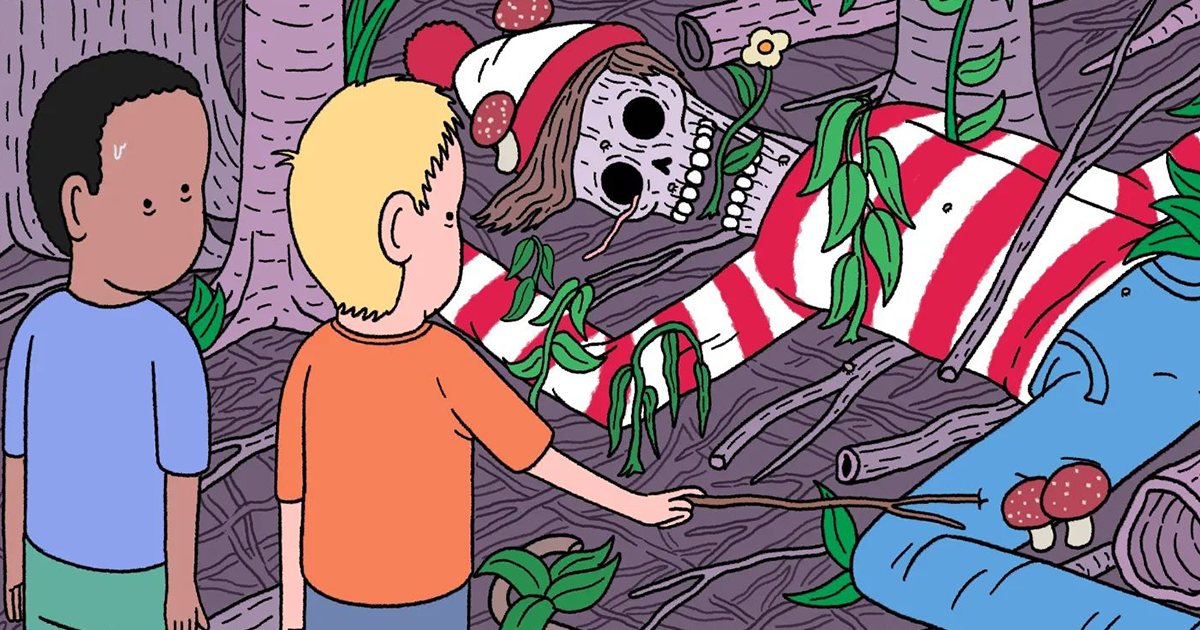
Some comics make you chuckle. Some make you think. And then there are Alex Gamsu Jenkins comics, which make you laugh, squint, panic slightly, and wonder whether your toaster has been judging you all along. The South London illustrator, cartoonist, and animation director has built a recognizable universe where everyday life melts into absurdity, anxious people meet bizarre creatures, and the punchline often arrives wearing a weird little hat made of dread.
In “37 Darkly Humorous Comics That Illustrate Surreal Stories, By Alex Gamsu Jenkins,” readers are invited into a strange visual playground: wordless panels, grotesque bodies, deadpan setups, unexpected transformations, and humor that lands somewhere between “that’s hilarious” and “should I call someone?” It is precisely this uncomfortable balance that makes his work so memorable.
Jenkins is not simply drawing odd images for shock value. His surreal comics work because they are built on recognizable human feelings: embarrassment, loneliness, burnout, social awkwardness, boredom, digital anxiety, fear of time passing, and the suspicion that modern life is secretly a poorly managed escape room. His characters may look distorted, but their problems feel suspiciously familiar.
Who Is Alex Gamsu Jenkins?
Alex Gamsu Jenkins is a freelance illustrator and animation director from South London. He studied illustration at Camberwell College of Arts and graduated in 2015. His official portfolio presents him as an illustrator, cartoonist, and animator, while his broader body of work includes editorial illustration, animation, comics, commercial projects, and gallery-worthy visual storytelling.
What separates Jenkins from many online comic artists is his instantly identifiable visual language. His figures often have rounded heads, sweaty brows, limp limbs, strange proportions, and expressions that look trapped between confusion and spiritual defeat. The colors are bright, sometimes almost candy-like, but the subject matter can be eerie, critical, or bleakly funny. It is the artistic equivalent of finding a birthday cake in a haunted basement.
His work has appeared across major creative and media spaces, and his client list and public features point to a career that extends far beyond social media. Yet Instagram and online comic platforms have been especially important in introducing his wordless, surreal stories to a wide global audience. These are comics built for scrolling, pausing, sharing, and sending to a friend with the message: “This is us, unfortunately.”
Why These Darkly Humorous Comics Feel So Different
Dark humor in comics is nothing new, but Jenkins gives it a distinctly surreal engine. Instead of relying only on sarcasm, punchlines, or dialogue, he often lets the image do the damage. A normal scene begins calmly: a person walks, sits, works, exercises, shops, or stares blankly into space. Then the ordinary world bends. A body mutates. A familiar object becomes threatening. A harmless activity reveals a terrifying emotional truth. Suddenly, the comic is no longer about a character on the page; it is about the reader’s own private little nervous breakdown.
Wordless Storytelling With a Loud Impact
Many Alex Gamsu Jenkins comics are wordless, which makes them unusually flexible. Without dialogue, the reader has to assemble the story through facial expressions, posture, framing, and sequence. This creates a tiny mystery in every strip. You do not just read the comic; you decode it. That decoding process is part of the pleasure.
For example, a character might encounter a bizarre creature, slide through time, or become trapped inside a physical symbol of their own anxiety. The panels rarely explain themselves. Instead, they trust the reader to catch the emotional logic. That trust makes the comic feel smarter, stranger, and more personal.
Surrealism That Starts With Real Life
Surreal humor works best when it has one foot in reality and the other foot in a suspicious puddle. Jenkins understands this. His comics do not begin in fantasy castles or distant galaxies. They often begin in the office, the street, the home, the gym, or the ordinary routines of modern adulthood. Then reality politely removes its mask and reveals something slimy underneath.
This is why his surreal stories connect so easily with readers. The monster is rarely just a monster. It may represent exhaustion, vanity, consumerism, shame, isolation, or the way a simple errand can become an existential crisis by 3:15 p.m. on a Tuesday.
The Humor Is Dark, But Not Empty
Dark humor can fail when it tries too hard to be edgy. Jenkins avoids that trap by making his comics emotionally grounded. The joke may be bizarre, gross, or unsettling, but it usually reveals something human. His work laughs at modern life without pretending modern life is easy.
Several interviews and features about Jenkins have emphasized anxiety, satire, mundanity, and the pressures of contemporary adulthood as recurring ingredients in his work. That makes sense. His characters often look like they are trying to survive not a grand apocalypse, but the smaller daily apocalypse of being alive, online, overworked, self-conscious, and maybe a little hungry.
The result is comedy with an aftertaste. You laugh first, then think, then maybe laugh again because thinking made it worse.
Visual Style: Grotesque, Bright, and Strangely Charming
One of the most interesting parts of Jenkins’ comic art is the contrast between his playful palette and his unsettling subject matter. The colors can be soft, vivid, pastel, or cartoon-bright. The linework feels accessible and direct. But the scenes themselves can involve distorted bodies, strange creatures, psychological dread, and visual metaphors that feel pulled from a dream you had after eating cheese too late.
This contrast creates tension. If the drawings were dark and muddy, the weirdness might feel heavy-handed. Instead, the cheerful colors lure the reader in. By the time the unsettling twist arrives, it is too late. You are already inside the comic, holding a tiny umbrella while the sky rains teeth.
Character Design With Emotional Efficiency
Jenkins has discussed how his characters became more simplified over time, with emotion often carried through eyes, brows, and posture rather than realistic facial detail. That economy is crucial. A raised brow, a blank stare, a sweating head, or a slumped body can communicate dread faster than a paragraph of dialogue.
His characters are not traditionally beautiful, heroic, or polished. They are awkward, lumpy, vulnerable, and expressive. In other words, they are perfect vessels for modern comedy. A flawless hero cannot properly capture the experience of opening your inbox and realizing the day has chosen violence. A sweaty little Jenkins character can.
What Makes the “37 Darkly Humorous Comics” Collection So Engaging?
The title promises 37 comics, but the appeal is not merely quantity. The strength of the collection lies in variety. Some panels feel like tiny horror stories. Others read as social satire. Some are almost philosophical. A few are funny in a direct, slapstick way, while others sit in your brain like an unpaid tenant.
Readers may interpret the same comic differently. One person might see a joke about self-isolation. Another might see a comment on consumer culture. Someone else may simply enjoy the absurd image of a character doing something wildly irrational with complete confidence. That openness is part of Jenkins’ power. His comics do not close the door after delivering a punchline. They leave it slightly ajar, with suspicious breathing coming from the hallway.
Specific Themes Readers Will Notice
Modern anxiety: Many images seem to reflect the nervous energy of daily life: social pressure, work stress, body discomfort, and the emotional static of being constantly connected.
The absurdity of routine: Jenkins often turns ordinary tasks into surreal events. Exercising, commuting, shopping, or sitting in a room can become a weird ritual of self-destruction or transformation.
Body horror without pure horror: Bodies in Jenkins’ work can stretch, melt, crack, or behave in ways bodies should not. Yet the tone remains funny, oddly casual, and sometimes even cute.
Silent emotional collapse: His characters frequently look like they are experiencing a crisis without the dramatic soundtrack. That restraint makes the comedy sharper.
Satire of contemporary culture: Whether he is poking at wellness trends, digital habits, consumer life, or social behavior, Jenkins uses surreal exaggeration to expose familiar absurdities.
Why Surreal Comics Work So Well Online
Online audiences move quickly. A comic must catch the eye, make sense fast enough to reward attention, and still offer enough mystery to encourage sharing. Jenkins’ wordless surreal comics are especially well suited to this environment. They do not require translation. They do not depend on topical jokes that expire in three days. They travel because the feelings behind them are universal.
That is a major reason darkly humorous comics have become such a strong format across platforms. A strange image can say what a status update cannot. It can capture dread, absurdity, frustration, and embarrassment without turning into a lecture. In Jenkins’ case, the comic becomes a compact emotional machine: bright colors in, existential discomfort out.
Alex Gamsu Jenkins and the Tradition of Surreal Satire
Jenkins’ work belongs to a long creative tradition where humor and grotesque imagery are used to examine society. Surrealism has always enjoyed pulling the floor out from under reality. Satire has always enjoyed pointing at human behavior and saying, “Are we sure this is wise?” Jenkins combines both impulses with the speed and accessibility of modern comics.
His art can recall the spirit of underground comics, absurdist animation, editorial cartoons, and dream logic, but it never feels like a museum exercise. It feels current. The anxieties are contemporary. The awkwardness is contemporary. The jokes understand the emotional climate of people who are tired, overstimulated, and still somehow expected to answer emails politely.
Why Readers Love Being Uncomfortable
It may seem strange that people seek out comics that unsettle them. But discomfort can be satisfying when it is handled with intelligence and humor. Jenkins gives readers a safe way to look at unpleasant feelings. Instead of saying, “I am afraid of wasting my life,” a comic might show a playground slide turning youth into old age. Instead of saying, “Technology is making me weird,” a comic might present a grotesque scene where the human body and modern habits collide in ridiculous fashion.
The joke creates distance. The surreal image creates surprise. Together, they make difficult thoughts easier to approach. That is the secret strength of dark humor: it does not remove the darkness, but it hands you a flashlight shaped like a rubber chicken.
How to Read Jenkins’ Comics Without Overthinking Them
There is a temptation to treat every surreal comic like a locked academic puzzle. Resist that urge, at least at first. The best way to read Alex Gamsu Jenkins is to let the image hit emotionally before trying to analyze it. Ask what the comic makes you feel. Amused? Uneasy? Seen? Personally attacked by a fictional blob? Good. That reaction is part of the story.
After that, look again. Notice the composition. Notice what changes from panel to panel. Notice where the character looks, what the background reveals, and how the final image redefines the first one. His comics reward both casual reading and deeper analysis, which is why they work for quick entertainment and serious visual study.
The Lasting Appeal of Jenkins’ Darkly Funny Universe
Alex Gamsu Jenkins has created a comic world that is unmistakably his own: absurd, uncomfortable, colorful, critical, and very funny in a “laughing during a fire drill” kind of way. His work speaks to readers who enjoy humor with teeth, surreal storytelling with emotional weight, and comics that do not explain themselves like nervous PowerPoint slides.
The 37 darkly humorous comics in this collection show how much can be said without words. They prove that a simple sequence of images can explore anxiety, mortality, routine, identity, and social absurdity while still being entertaining enough to send to a friend at midnight.
In a digital world packed with forgettable jokes, Jenkins’ comics linger. They are strange enough to stop the scroll, funny enough to share, and thoughtful enough to revisit. That is a rare combination. Also, let’s be honest: any artist who can make existential dread look this colorful deserves applause, preferably from a safe distance.
Personal Experience and Reflection: Why These Comics Hit So Hard
Reading “37 Darkly Humorous Comics That Illustrate Surreal Stories, By Alex Gamsu Jenkins” feels a little like walking through a dream version of your own day. At first, everything seems recognizable. There are people, rooms, streets, pets, furniture, screens, and ordinary human routines. Then the comic tilts. The familiar becomes absurd. The private worry you were ignoring suddenly appears as a creature, a mutation, a trap, or a visual joke so weirdly accurate that you feel both entertained and exposed.
That is the experience that makes Jenkins’ work powerful. Many readers do not come to these comics looking for a tidy moral. They come for the feeling of recognition. The characters may be bizarre, but their emotional situations are common. Who has not felt trapped inside their own head? Who has not performed normal adulthood while secretly feeling like a confused little goblin in shoes? Who has not looked at the routines of work, health, shopping, technology, or social life and thought, “This is objectively ridiculous, but apparently we are all still doing it”?
Jenkins’ dark humor gives shape to that feeling. The surreal elements do not push the reader away; they pull the reader closer because they exaggerate what daily life already feels like. A treadmill becoming monstrous is funny because exercise culture can feel monstrous. A body changing in impossible ways is unsettling because people already experience their bodies as unpredictable, embarrassing, or socially judged. A character silently enduring a bizarre situation is funny because many of us spend entire weeks silently enduring bizarre situations while calling them “meetings.”
The best way to experience these comics is slowly. Scroll culture encourages quick reactions, but Jenkins’ work rewards a second look. The first viewing delivers the joke or shock. The second reveals the structure. The third may reveal the sadness hiding behind the gag. That layered quality is what separates strong surreal comics from random weirdness. Random weirdness says, “Look, a strange thing.” Jenkins’ comics say, “Look, a strange thing that somehow understands your Tuesday.”
There is also comfort in the lack of neat explanation. Life rarely explains itself clearly, and neither do these comics. They allow confusion to remain part of the experience. That makes them feel honest. Not every anxiety can be solved with a caption. Not every absurdity needs a speech bubble. Sometimes the most accurate response to modern life is a silent four-panel sequence where everything goes wrong in bright colors.
For readers, artists, and writers, Jenkins’ work is a reminder that humor does not have to be light to be enjoyable. Comedy can be grotesque, smart, nervous, and beautifully strange. It can laugh at the mess without pretending the mess is not real. That is why these 37 darkly humorous comics are more than a collection of odd images. They are tiny surreal stories about the weird pressure of being human, told with enough wit to make the discomfort feel strangely delightful.
Conclusion
Alex Gamsu Jenkins’ surreal comics stand out because they transform everyday discomfort into sharp, colorful, darkly funny visual stories. His work uses absurd characters, wordless sequences, grotesque humor, and satirical imagination to explore the strange emotional machinery of modern life. Whether a comic makes you laugh immediately or stare at it like it has just revealed your browser history, the effect is memorable.
“37 Darkly Humorous Comics That Illustrate Surreal Stories, By Alex Gamsu Jenkins” is a perfect entry point for readers who enjoy alternative comics, surreal illustration, dark humor, and visual storytelling that refuses to behave. It is funny, unsettling, clever, and oddly relatablethe kind of art that proves the world may be absurd, but at least it is giving us excellent material.