

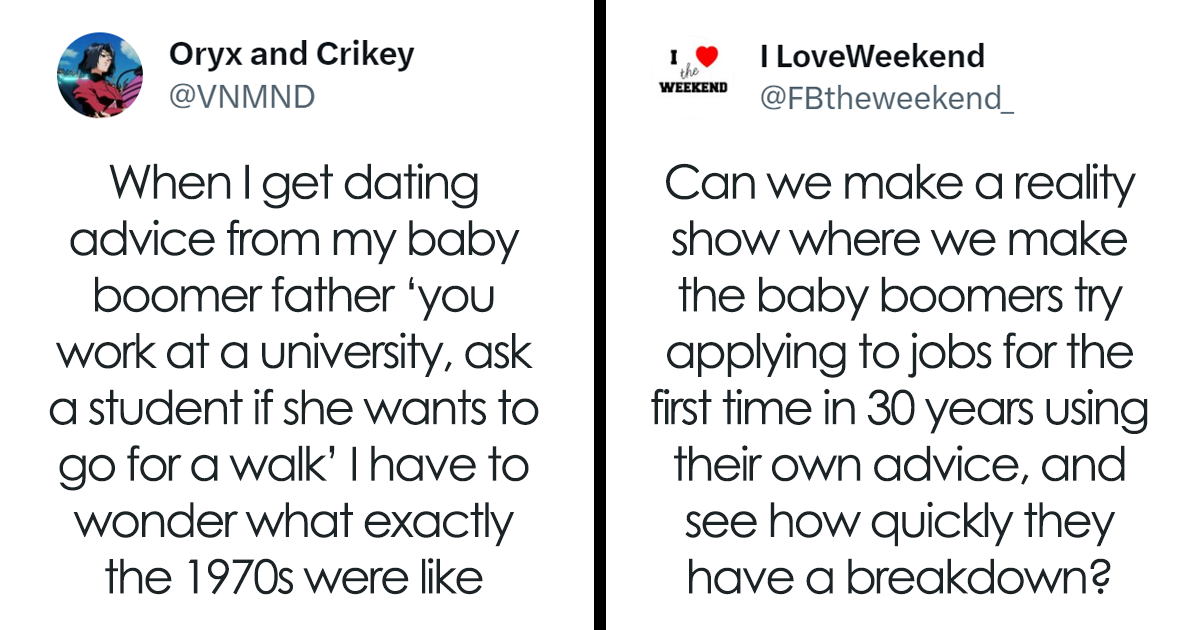
Note: This article is written in a humorous, analytical style and is not a war declaration against every Baby Boomer with a lawn chair and a suspiciously powerful garden hose. Many Boomers give excellent advice. This is about the outdated advice that still wanders around modern life wearing white sneakers and asking why nobody “just walks in with a resume anymore.”
Introduction: When Old Wisdom Meets New Wi-Fi
Every generation has advice it swears by. Baby Boomers were raised in a world where one income could sometimes support a household, college did not require a financial blood oath, jobs were often found through handshakes, and buying a starter home did not feel like bidding on a castle guarded by mortgage dragons.
Today, younger adults face a very different American economy. Housing costs are high, job applications disappear into online portals, student loans can follow people around like a clingy ex, credit card interest is brutal, and “just work hard” is no longer a full financial strategy. It is a nice bumper sticker, but bumper stickers do not pay rent.
So let’s laugh, analyze, and gently retire some outdated advice. Here are 45 absurd pieces of advice from Baby Boomers who may mean wellbut sometimes sound like they are giving instructions for a world that closed in 1998.
45 Absurd Pieces Of Boomer Advice That Need A Software Update
1. “Just walk into the office and ask for the manager.”
Today, many workplaces send applicants to online systems before a human ever sees their name. Walking in unannounced may get you a polite smile, a QR code, and a security guard named Mike.
2. “Print your resume on fancy paper.”
Nice paper will not charm an applicant tracking system. A clean, keyword-rich resume matters more than ivory cardstock that feels like a wedding invitation.
3. “Stay at one company for 40 years.”
Loyalty is lovely, but companies restructure, automate, outsource, merge, and “pivot.” Staying forever can be noble, but it can also mean watching your raise get replaced by a branded water bottle.
4. “Buy a house as soon as possible.”
Great ideaafter someone locates the magical affordable house hiding behind the $403,000 national median sale price. For many people, renting while saving and investing is not failure. It is math wearing sensible shoes.
5. “A starter home should be easy to find.”
The modern starter home often has three competing offers, an inspection waiver, and a kitchen last updated when disco was considered risky.
6. “Just put 20% down.”
On a $400,000 home, that is $80,000 before closing costs. For many young buyers, “just” is doing Olympic-level heavy lifting in that sentence.
7. “College is always worth it, no matter the cost.”
Education can be valuable, but the price tag matters. Students today must compare majors, debt, job outcomes, scholarships, community college options, and whether their dream school is secretly a luxury resort with exams.
8. “Work your way through college like I did.”
Part-time work helps, but it rarely covers tuition, rent, food, books, transportation, and the occasional emergency burrito. The old summer-job-to-tuition pipeline now leaks from every joint.
9. “Don’t talk about salary.”
Silence benefits employers more than workers. Salary transparency helps people negotiate fairly and avoid being paid in “growth opportunities,” which are not accepted by landlords.
10. “Never job-hop.”
Strategic job changes can increase income, skills, and opportunities. Staying underpaid forever to prove character is not career wisdom; it is financial cosplay.
11. “Take any job and be grateful.”
Gratitude is healthy. So are wages, benefits, safe conditions, and a manager who does not communicate exclusively through panic.
12. “If you can’t afford it, don’t use a credit card.”
That part is partly fair. But modern credit cards are also tied to credit scores, fraud protection, rentals, travel, and emergencies. The real advice should be: use credit carefully, pay balances fast, and fear high APRs like a raccoon fears daylight.
13. “Credit scores don’t matter that much.”
Credit scores can affect loans, apartments, insurance rates, and financial options. Ignoring credit is like ignoring smoke because you prefer surprises.
14. “Just call customer service.”
Wonderful. After 42 minutes of hold music, a chatbot named Skylar, and three transfers to departments that may or may not exist.
15. “Go to the bank and ask for a personal loan.”
Modern lending depends heavily on credit history, income, debt-to-income ratio, interest rates, and algorithms. A firm handshake is not collateral.
16. “Retire at 60.”
Many Americans are working longer because life expectancy, healthcare costs, savings gaps, and Social Security timing all matter. Retiring early sounds great until the budget starts clearing its throat.
17. “Social Security will handle retirement.”
Social Security is important, but it was not designed to fund every vacation, prescription, utility bill, and surprise roof repair until age 95.
18. “Never rent. Renting is throwing money away.”
Renting buys shelter, flexibility, and time. A mortgage also includes interest, taxes, insurance, maintenance, and mysterious noises behind walls.
19. “Move somewhere cheaper.”
Lower-cost areas can help, but jobs, healthcare, transportation, family support, childcare, and internet access matter. “Just move” is easy advice from someone not packing the boxes.
20. “Stop buying coffee and you’ll be rich.”
Skipping a $5 latte helps if you buy 16,000 fewer of them. Housing, healthcare, tuition, and childcare are the real budget monsters. Coffee is just the tiny villain with foam art.
21. “Coupons solve everything.”
Coupons are useful. They are not a national economic policy. Nobody has ever clipped their way out of a $2,200 rent payment.
22. “Just get married and buy a house together.”
Marriage should not be treated as a mortgage hack. Love is wonderful, but “we both hate rent” is not a complete relationship foundation.
23. “Have kids while you’re young.”
Children are beautiful. They are also expensive, loud, sticky, and apparently committed to outgrowing shoes every 11 minutes.
24. “One parent can stay home if you budget right.”
For some families, yes. For many, one income cannot cover housing, insurance, food, transportation, childcare alternatives, savings, and the cost of being alive in high-definition.
25. “Don’t put personal things online.”
This is actually good adviceuntil it becomes “never use LinkedIn, never network, never build a portfolio, and why are you on the TikTaks?” Online presence can be a career tool when used wisely.
26. “Remote work isn’t real work.”
Remote workers still answer emails, attend meetings, hit deadlines, and question their life choices in Slack. The commute is shorter, not the job.
27. “Dress up every day to prove you care.”
Professionalism matters, but results matter more. A person can do excellent work in a blazer or in a hoodie that has seen things.
28. “Don’t change careers after 30.”
People change careers at 30, 40, 50, and beyond. Skills transfer. Industries evolve. Nobody’s life path should be permanently locked because of a decision made before their frontal lobe finished loading.
29. “Follow your passion and money will come.”
Passion is useful. Market demand is also useful. Ideally, find the overlap between what you enjoy, what you do well, and what someone will pay for without calling it “exposure.”
30. “Don’t waste time learning tech.”
Technology is now part of nearly every field. Even plumbers, artists, teachers, nurses, and small-business owners use digital tools. Avoiding tech is like refusing electricity because candles have character.
31. “You don’t need a side hustle.”
Nobody should need three jobs to survive, but many people use side income to pay debt, save, or build independence. The problem is not ambition; it is an economy where rest became a luxury subscription.
32. “Never discuss mental health at work.”
Oversharing is not required, but mental health is part of overall health. Burnout, stress, and anxiety affect performance, retention, and real human beings with nervous systems.
33. “Hard work always pays off.”
Hard work helps, but it is not magic. Pay also depends on industry, bargaining power, discrimination, location, timing, education, networks, and whether your boss thinks pizza counts as compensation.
34. “If you’re poor, you’re just bad with money.”
Some people make bad financial choices. Many are dealing with low wages, medical bills, high rent, unstable work, family obligations, or one emergency away from chaos. Personal responsibility matters, but so does reality.
35. “Just save 10% of every paycheck.”
Excellent advice for people with room in the budget. Absurd for someone whose paycheck is already being eaten by rent, groceries, gas, insurance, and the electric bill’s villain era.
36. “Don’t lease, don’t finance, just pay cash.”
Paying cash avoids interest, but many people need transportation before they have thousands saved. The better advice is to compare total costs, avoid predatory terms, and never let a monthly payment hypnotize you.
37. “You don’t need therapy; just toughen up.”
Therapy is not weakness. It is maintenance. Nobody tells a car with bad brakes to “develop character.”
38. “Never take a gap year.”
A thoughtful gap year can involve work, saving, caregiving, travel, service, or figuring out what not to major in before spending tuition money like confetti.
39. “All debt is bad.”
Some debt is dangerous. Some can be strategic. The key is cost, purpose, terms, and repayment plan. Debt is a tool, though admittedly one that sometimes acts like a chainsaw.
40. “Ignore online reviews and just trust the company.”
Modern consumers research everything because scams, fees, fake discounts, and terrible customer service exist. Reading reviews is not paranoia; it is digital street smarts.
41. “Don’t ask for flexibility.”
Flexibility can improve productivity, health, caregiving, and retention. Asking respectfully is not laziness; it is adult scheduling.
42. “A firm handshake will get you hired.”
A firm handshake is nice. So are skills, references, a portfolio, interview prep, and not smelling like you wrestled a cologne factory.
43. “If you don’t like America’s costs, work harder.”
Working harder does not automatically lower rent, tuition, insurance premiums, or interest rates. Sometimes the spreadsheet is not failing because of attitude.
44. “Don’t question authority.”
Healthy workplaces and societies improve when people ask smart questions. Blind obedience is not professionalism; it is how bad policies get a retirement party.
45. “Things were just as hard for us.”
Every generation struggles, but the details change. Boomers faced inflation, recessions, wars, layoffs, and social upheaval. Younger generations face different pressures: expensive housing, digital hiring, student debt, healthcare costs, climate anxiety, and a job market that sometimes wants five years of experience for an entry-level role. Pain is not a contest. It is a group project nobody volunteered for.
Why This Advice Feels So Absurd Today
The problem is not that older adults are foolish. Many Baby Boomers built careers, families, businesses, communities, and savings through discipline and sacrifice. The issue is that advice expires when the conditions that made it useful disappear.
“Buy a house early” made more sense when home prices were lower relative to income and lending rules were different. “Work your way through college” made more sense when tuition was cheaper. “Stay loyal to one employer” made more sense when pensions were more common and employers rewarded tenure more predictably. “Walk in and ask for the manager” made more sense before job applications became digital obstacle courses.
Modern advice needs to be more specific. Instead of “save money,” say: automate savings when possible, build an emergency fund, reduce high-interest debt, compare insurance, and negotiate bills. Instead of “get a good job,” say: build marketable skills, maintain a portfolio, network ethically, learn how applicant tracking systems work, and compare total compensation. Instead of “buy a home,” say: calculate total ownership costs, understand interest rates, compare renting versus buying, and avoid becoming house-poor for Instagram.
What Younger Generations Can Actually Learn From Boomers
Now for the plot twist: not all Boomer advice belongs in the museum next to fax machines and decorative soap nobody was allowed to touch. Some principles still matter.
Consistency matters. Showing up matters. Saving matters. Repairing things instead of replacing them can be smart. Community matters. Cooking at home helps. Reading the fine print is still undefeated. Calling instead of texting can sometimes solve a problem faster. And yes, touching grass is healthy, even if the grass now costs $650,000 and has an HOA.
The best approach is not to reject every old lesson. It is to translate the useful parts into today’s world. “Be loyal” becomes “build a strong reputation, but do not underprice yourself.” “Avoid debt” becomes “understand interest and borrow carefully.” “Work hard” becomes “work hard on the right things, with boundaries and leverage.”
Real-Life Experiences: When Outdated Advice Runs Into Modern Reality
Almost everyone has a story about outdated advice landing with the grace of a folding chair. Maybe an uncle told you to “march into headquarters” for a tech job where the company does not even list its office address. Maybe a parent said, “Why don’t you just buy a small house?” as if Zillow has a secret button labeled “cheap but charming.” Maybe a grandparent suggested paying for college with a summer job, not realizing that a summer job now might cover textbooks, snacks, and half a parking permit if the moon is in a generous mood.
One common experience is the resume ritual. A young applicant spends hours tailoring a resume, writing a cover letter, adjusting keywords, uploading everything into a portal, then manually retyping the exact same information into 47 tiny boxes designed by someone who clearly hates hope. Then a Boomer says, “You should call them tomorrow to follow up.” Sometimes that works. Often, there is no phone number, no hiring manager name, and no evidence the company exists outside an automated rejection email sent at 2:13 a.m.
Housing advice creates even more comedy, though it is the kind where everyone laughs and then quietly checks their bank account. Older relatives may remember buying a modest home with a manageable mortgage. Younger adults often see listings that require two incomes, excellent credit, a giant down payment, and the emotional strength to lose a bidding war to someone paying cash. When a Boomer says, “We sacrificed too,” they may be right. But sacrifice today can mean skipping vacations, driving an aging car, cooking at home, working full time, and still being priced out by interest rates and inventory shortages.
Workplace advice is another battlefield. A Boomer may say, “Never talk about your pay.” A younger worker may reply, “That is how people get underpaid for ten years.” A Boomer may say, “Remote workers are lazy.” A remote worker may be answering emails at 7:30 p.m. while eating cereal over the sink. The old visual cues of workdesk, tie, commute, fluorescent lightingno longer prove productivity. Sometimes the most productive person on the team is wearing slippers and managing three dashboards from a kitchen table.
Money advice can be the most frustrating because it often sounds moral rather than practical. “Stop eating out” may be sensible if someone spends wildly, but it does not solve structural problems. A person cannot budget-hack their way out of every crisis. When rent, insurance, student loans, medical bills, groceries, and transportation rise together, the budget starts to resemble a Jenga tower in an earthquake.
The best experiences happen when generations stop arguing and start comparing numbers. Sit down with the actual rent, paycheck, loan balance, insurance premium, grocery bill, and home price. Suddenly, the conversation changes. The goal is not to shame Boomers or dismiss young people as dramatic. The goal is to update the advice. Because wisdom is useful only when it knows what year it is.
Conclusion: Retire The Bad Advice, Keep The Good Intentions
Absurd Boomer advice is usually not malicious. It is often recycled from a world where the rules were different. But when advice ignores modern housing costs, digital hiring, student debt, credit realities, childcare expenses, and changing workplace norms, it stops being wisdom and starts being nostalgia with a speaking role.
The better path is generational translation. Younger people can respect the resilience and discipline many Boomers developed. Boomers can recognize that the economy has changed dramatically. Everyone can agree that “just work hard” sounds better when paired with fair wages, realistic costs, updated career strategies, and maybe a little less judgment about coffee.