

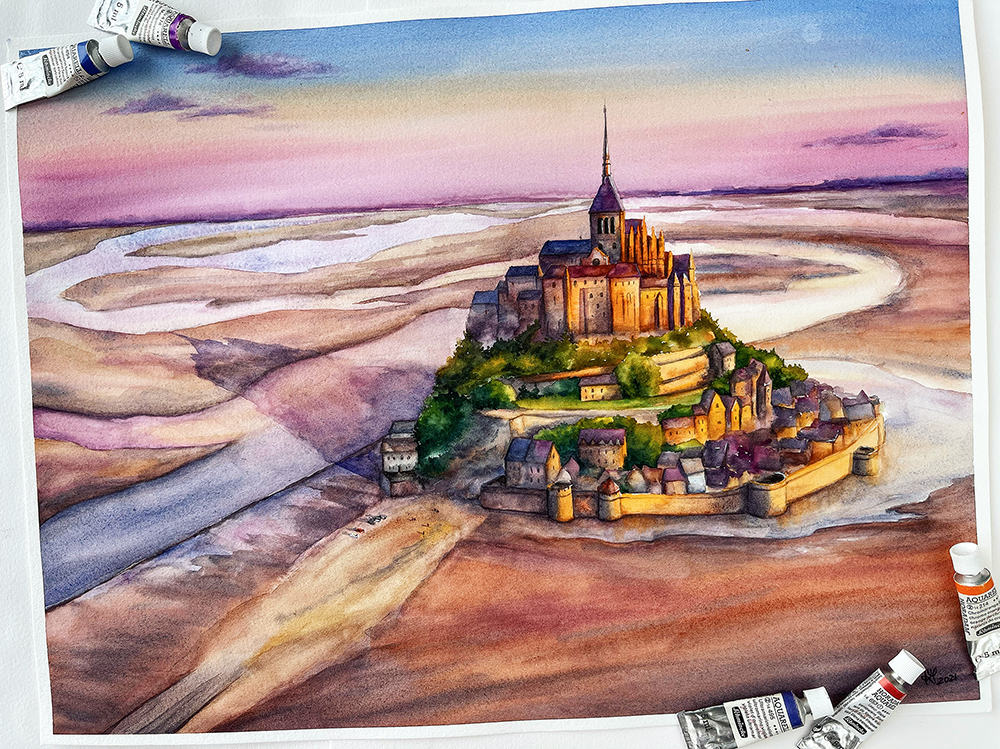
There is something wonderfully stubborn about choosing one theme and staying with it for an entire year. It sounds simple at first: paint watercolor landscapes, repeat, improve, maybe sip tea dramatically near a window. Then month six arrives, the sky refuses to behave, the paper buckles like it has personal complaints, and suddenly the project becomes less about “pretty scenery” and more about patience, observation, and learning how water has a mind of its own.
“6/12: I Create Watercolor Landscapes With One Theme Within A Year” is not just a title. It is a checkpoint. The “6/12” suggests the halfway mark in a 12-month creative journey: six months of painting landscapes through the same central idea, six months of noticing patterns, mistakes, surprises, and small victories that do not always look impressive on Instagram but quietly change the artist behind the brush.
Watercolor is famous for its luminous transparency, delicate washes, and ability to capture light with very little fuss. It is also famous for ignoring your plans. That makes it perfect for landscape painting. Nature is never perfectly still, and watercolor is never fully obedient. Together, they create a partnership that feels alive, unpredictable, and occasionally mischievous.
Why Choose One Theme for a Full Year?
A yearlong art project may sound restrictive, but creative limits often produce better work than unlimited freedom. When everything is possible, the blank page becomes a tiny white monster. When the theme is clear, the artist can focus on deeper choices: mood, composition, light, season, color temperature, and emotional tone.
For this watercolor landscape project, the theme acts like a compass. It could be “the same hill in different weather,” “quiet water,” “trees at the edge of town,” “morning light,” or “places that feel like memory.” The exact theme matters less than the commitment to return to it again and again. Repetition becomes research. Each painting asks the same question from a slightly different angle.
This approach mirrors how many artists build stronger visual language. By narrowing the subject, you begin to notice what truly changes: the angle of sunlight, the weight of clouds, the rhythm of branches, the temperature of shadows, the personality of a dirt path. Yes, dirt paths have personality. Some are charming. Some look like they know secrets.
The Beauty of Watercolor Landscapes
Watercolor landscapes are beloved because the medium naturally suits atmosphere. A transparent wash can suggest a pale morning sky. A soft wet-on-wet passage can become distant fog. Dry brush can describe grass, bark, rock, or the rough edge of a field. Granulating pigments can settle into paper texture and create the feeling of stone, soil, or storm clouds without painting every tiny detail.
Unlike oil or acrylic painting, watercolor often depends on preserving the light of the paper. The white surface shines through transparent layers, giving the painting a glow that is difficult to fake. This is why watercolor rewards planning, even when the final result looks loose and effortless. The best loose paintings are often secretly well-organized. They are like relaxed people who somehow own labeled storage bins.
Light Is the Main Character
In a landscape, the subject may be a mountain, lake, road, or forest, but the real star is light. Watercolor makes that obvious. A simple scene can become dramatic when the sky is warm and the shadows are cool. A flat field can feel cinematic when a band of sunlight crosses it. A row of trees can become emotional when the background is softened and the foreground carries stronger values.
During a one-year theme project, studying light becomes a natural habit. The same place in January feels completely different in June. Midday light can flatten a scene, while early morning or late afternoon light gives forms more depth. Over time, the artist stops looking only for “nice views” and starts looking for value contrast, edge variety, and color relationships.
Building a Simple Watercolor Landscape Process
A consistent process helps keep a yearlong project from becoming chaos with paint tubes. The goal is not to make every painting identical. The goal is to create a dependable routine so the artist can compare results and grow intentionally.
1. Start With a Small Value Sketch
Before touching watercolor paper, a tiny value sketch can solve many problems. This sketch does not need to be beautiful. It only needs to answer a few questions: Where is the lightest area? Where is the darkest shape? What is the main focal point? Are the big shapes interesting?
Many landscape paintings fail not because the artist lacks skill, but because the composition was never clear. A value sketch is like a map. It prevents the painter from wandering into the swamp of “I’ll figure it out later.” That swamp is very real, and it contains many abandoned paintings.
2. Choose a Limited Palette
A limited palette is especially helpful for watercolor landscapes. Three to six colors can create harmony across a series and reduce muddy mixtures. For example, a simple landscape palette might include a warm yellow, a cool blue, an earthy red, a deep neutral, and a green that can be modified instead of used straight from the tube.
Using fewer colors also makes the yearlong theme feel more connected. The viewer can sense continuity from one piece to the next, even when the scenes change. More importantly, the artist learns what each pigment can do. Some colors lift easily. Some stain aggressively. Some granulate beautifully. Some behave like they were raised by wolves.
3. Paint From Large Shapes to Small Details
Watercolor landscapes usually work best when the artist begins broadly. A sky wash, a distant hill, or a large shadow shape can establish the mood before details are added. Working from large to small keeps the painting unified. It also prevents the common beginner mistake of lovingly painting 200 leaves on a tree before realizing the tree is in the wrong place.
Details should arrive late, like guests who know not to interrupt dinner. A few sharp grasses, fence posts, branches, reflections, or rock edges can make a painting feel complete. Too many details, however, can flatten the scene and remove the freshness that makes watercolor so appealing.
Techniques That Make Watercolor Landscapes Feel Alive
A yearlong watercolor project becomes more interesting when each month focuses on a technique. The theme stays the same, but the method evolves. This creates variety without losing direction.
Wet-on-Wet for Skies and Atmosphere
Wet-on-wet painting means applying wet paint onto wet paper or into another wet wash. It is ideal for skies, fog, distant trees, and soft transitions. The results can be dreamy and atmospheric, but timing is everything. Too wet, and the paint spreads wildly. Too dry, and the edges become awkward. Somewhere in the middle is magic.
For landscapes, wet-on-wet can create cloud shadows, misty hills, or reflected color in water. It teaches the artist to watch the paper, not just the brush. In watercolor, the paper has stages: shiny wet, damp, almost dry, and dry. Each stage gives a different effect.
Glazing for Depth and Color
Glazing means layering transparent washes after earlier layers have dried. It is one of the most useful watercolor painting techniques for building depth. A pale hill can become richer with a second transparent layer. A shadow can gain complexity when a cool glaze is added over a warm base. A flat sky can become more dimensional with subtle color shifts.
The trick is patience. Each layer must dry before the next one goes down, unless the goal is accidental chaos. And accidental chaos, while sometimes charming, should not be the only member of the creative team.
Dry Brush for Texture
Dry brush involves using less water so the brush catches on the texture of the paper. It is excellent for tree bark, grasses, rocky ground, old fences, and rough shoreline edges. On cold press or rough watercolor paper, dry brush can create texture quickly without overexplaining the subject.
This matters because landscapes need suggestion more than description. A viewer does not need every blade of grass. They need just enough visual information for the brain to complete the scene. The artist’s job is not to count leaves. The artist’s job is to make the viewer feel the air between them.
Month Six: What Changes Halfway Through the Project?
By month six, a watercolor landscape series usually begins to reveal patterns. The artist may notice repeated strengths: perhaps skies are improving, values are clearer, or color choices feel more confident. The artist may also notice recurring struggles: overworked foregrounds, timid darks, muddy greens, or a suspicious habit of putting the horizon line exactly in the middle every time.
This halfway point is valuable because it is early enough to adjust and late enough to see evidence. Six months of work creates a small archive. Looking back at the first paintings can be humbling, but it is also encouraging. Progress is rarely dramatic day to day. It appears quietly over dozens of attempts.
Review the Series Like a Curator
At the 6/12 stage, lay out the paintings in order. Do not judge them one by one at first. Look for the story across the whole series. Which paintings feel most alive? Which ones feel stiff? Are there color combinations that keep working? Are there compositions that repeat too often? Does the theme still feel rich, or does it need a sharper question?
This review can guide the next six months. Maybe the project needs more plein air sketches. Maybe the artist should paint the same scene in different weather. Maybe larger paper would create more freedom. Maybe smaller paper would encourage speed and freshness. The point is not to criticize the past but to design the next chapter.
Choosing Paper, Brushes, and Pigments
Materials matter in watercolor because the medium is sensitive. Paper is not just a surface; it is an active partner. Cold press paper is a popular choice for landscapes because it has enough texture for expressive marks while still allowing controlled washes. Hot press paper is smoother and better for fine detail, while rough paper can create dramatic texture for rocks, trees, and stormy skies.
For a yearlong project, consistency helps. Using the same paper size and type for several months makes it easier to compare technique. Later, changing paper intentionally can become part of the experiment. A landscape on rough paper may feel rugged and spontaneous. The same scene on hot press may feel cleaner, quieter, and more designed.
Brushes do not need to be fancy. A large round brush, a smaller round brush, and a flat brush can handle most landscape needs. The large brush protects freshness by preventing fussy strokes. The small brush handles final accents. The flat brush is useful for washes, edges, buildings, waterlines, and the satisfying feeling of owning a brush that looks serious.
Common Mistakes in a Yearlong Watercolor Landscape Project
Painting Too Many Details Too Soon
Details are tempting because they feel productive. Unfortunately, early details can trap the painting. If the big shapes are weak, no amount of delicate grass will save the scene. Start with structure, then atmosphere, then detail.
Using Greens Straight From the Tube
Natural greens are complex. Straight tube greens can look artificial unless adjusted with yellow, red, blue, or earth colors. Landscape painters often create more believable greens by mixing them from blues and yellows, then neutralizing them slightly. A touch of red or burnt sienna can rescue a green from looking like plastic lawn furniture.
Being Afraid of Dark Values
Many watercolor painters stop too early with pale middle tones. Strong darks can make light areas glow. In a landscape, a dark tree line, shaded bank, or foreground accent can give the painting structure. The key is to place darks thoughtfully, not sprinkle them everywhere like artistic pepper.
Overworking the Paper
Watercolor paper can tolerate only so much scrubbing, lifting, and rewetting before the surface becomes damaged. Freshness often comes from leaving some passages alone. This is emotionally difficult. Painters are natural fixers. But sometimes the bravest choice is to step away before the painting files a complaint.
How One Theme Builds a Stronger Artistic Voice
Painting one theme for a year does not make the work boring. It makes the artist more observant. Instead of chasing novelty, the project asks for depth. What happens when the same landscape is painted in fog, rain, sunset, snow, wind, or summer heat? What happens when the view is cropped, simplified, abstracted, or painted from memory?
This kind of discipline helps develop artistic voice. Style is not something an artist usually invents in one dramatic afternoon. It emerges from repeated choices: the edges they prefer, the colors they return to, the subjects they notice, the moods they cannot stop painting. A yearlong watercolor landscape project gives those choices room to become visible.
Experience Notes: What It Feels Like to Paint Watercolor Landscapes for Half a Year
After six months of creating watercolor landscapes around one theme, the biggest surprise is not technical improvement. It is how differently you begin to see ordinary places. A puddle stops being a puddle and becomes a tiny sky rehearsal. A row of trees becomes a value study. A cloudy afternoon becomes a lesson in soft edges. Even a dull patch of grass starts acting suspiciously paintable.
In the beginning, the project feels romantic. You imagine a neat stack of finished paintings, each one glowing with poetic confidence. In reality, the first weeks include uneven washes, strange perspective, accidental cauliflower blooms, and at least one sky that looks like soup. But those awkward paintings matter. They are not failures; they are field notes. They show where the hand, eye, and judgment have not yet learned to cooperate.
The most useful habit is keeping the work small enough to finish. A postcard-sized watercolor can teach composition, color, and timing without turning every session into a dramatic life event. Small paintings also reduce fear. If one fails, it is not a tragedy; it is paper. You can make another. This simple attitude keeps the project moving when motivation becomes unreliable.
Another lesson is that landscapes are less about objects than relationships. The tree matters, but so does the space around it. The mountain matters, but so does the sky pressing against its edge. The river matters, but so does the reflection that breaks into uneven shapes. Once you start thinking this way, painting becomes less like copying a scene and more like arranging a quiet conversation between light, shape, and color.
There is also a strange emotional rhythm to a long project. Some months feel productive and clear. Other months feel repetitive. That repetition is where growth hides. Painting the same theme again forces you to solve old problems in new ways. You may try a higher horizon, a cooler shadow mixture, a bolder foreground, or a looser sky. Each experiment adds another tool to your visual vocabulary.
By the halfway point, you also become more forgiving. You learn that not every painting needs to be framed, posted, praised, or even liked. Some paintings are simply practice with evidence attached. The real achievement is showing up, watching more carefully, and learning to let watercolor be watercolor. It will bloom, drift, stain, granulate, and surprise you. Your job is not to control every drop. Your job is to guide the beautiful mess toward meaning.
Conclusion
“6/12: I Create Watercolor Landscapes With One Theme Within A Year” captures the honest middle of a creative journey. It is the point where excitement has matured into discipline, mistakes have become teachers, and the theme has started revealing more than expected. Watercolor landscape painting is not only about learning washes, paper, pigments, and composition. It is about learning how to pay attention.
A single theme can open a wide creative world. Through repeated landscapes, the artist studies light, atmosphere, memory, weather, and mood. The yearlong structure creates momentum, while the watercolor medium keeps the process fresh and unpredictable. Halfway through, the project is no longer just a collection of paintings. It becomes a record of looking closely, returning often, and finding new beauty in familiar scenes.