

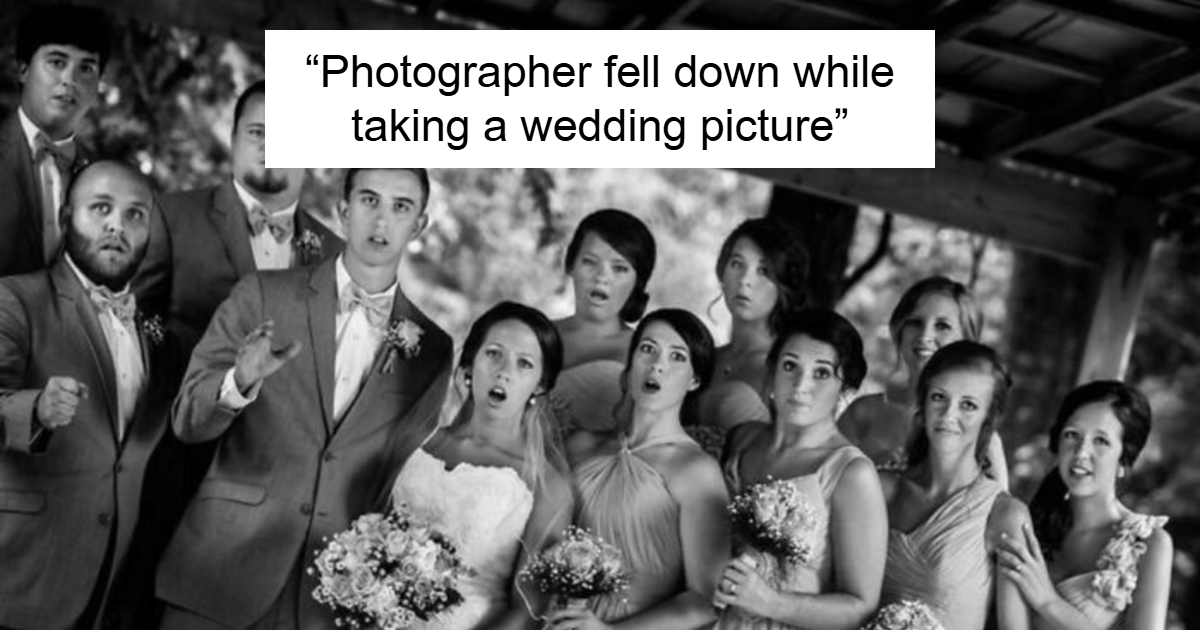
Some photographs are carefully planned with professional lighting, expensive equipment, color charts, assistants, and enough cables to restrain a small dinosaur. Others become unforgettable because somebody pressed a button half a second before chaos arrived.
That second group is where perfectly timed photos live. These images catch reality during its brief rebellion against common sense: a bird appears to replace someone’s head, a wave becomes a glass crown, a dog suddenly grows human arms, or a shadow gives an innocent pedestrian the mustache of a silent-movie villain.
The 88 funny, interesting, and weird pics in a collection like this are more than random snapshots. They demonstrate how timing, perspective, movement, visual perception, and outrageous luck can turn an ordinary scene into a miniature comedy. No special effects are required. Reality is apparently willing to do its own editing when the mood strikes.
Why Perfectly Timed Photos Are So Satisfying
A photograph removes one tiny fraction of time from the continuous movement of life. Most fractions are not especially exciting. A person takes a step. A pigeon flaps. A child lifts an ice cream cone. Then, for one fleeting instant, those unrelated movements line up and create something completely different.
That transformation is the secret behind the best funny pictures taken at the perfect time. The camera records exactly what was physically present, but the resulting image suggests an impossible alternative. Your brain may know that a woman has not sprouted eagle wings, yet the alignment is convincing enough to make you look twice.
This idea has deep roots in photography. The famous concept of the “decisive moment” describes the instant when action, meaning, and visual structure come together inside one frame. In serious photojournalism, that instant might reveal the emotion of a historic event. In a weird internet photo, it might make a Labrador appear to be driving a car. The artistic principle is surprisingly similar, even if the Labrador has no license.
The Most Common Types of Perfectly Timed Pictures
1. Accidental Animal-Human Hybrids
Animals are naturally talented at destroying dignified photographs. They walk into wedding portraits, leap across vacation selfies, inspect cameras with wet noses, and position themselves behind people in ways that seem biologically alarming.
Imagine a horse standing behind its owner so that the horse’s head replaces the person’s face. Picture a dog jumping beside a seated man and appearing to supply him with four furry legs. A bird spreading its wings behind a tourist can transform an ordinary travel photo into a low-budget superhero poster.
These images work because the subjects overlap along the camera’s line of sight. The brain briefly combines separate bodies into a single figure before logic catches up. It is perspective photography at its funniest.
2. Water Frozen Into Impossible Shapes
Water is one of the greatest supporting actors in perfectly timed photography. A fast exposure can freeze a splash into a crown, a veil, a transparent hat, or a suspiciously accurate imitation of a ghost.
A swimmer emerging from a pool may appear to wear a helmet made of water. A person being hit by a wave can look as though the ocean has developed hands. A dropped object may produce a splash shaped like a flower, while a dog shaking itself can create a perfect circular halo of droplets.
Our eyes normally experience these events as fast, messy motion. A photograph reveals structures that last too briefly to be noticed in real time. Suddenly, water looks less like a liquid and more like a sculptor with a very short attention span.
3. Sports Moments That Look Completely Wrong
Sports photography is full of peak action, strained expressions, flying equipment, and bodies moving in ways that seem medically unwise. That makes it ideal territory for strange images.
A basketball can cover a player’s face and resemble a perfectly round head. A gymnast photographed upside down may appear to be missing half a body. A soccer player’s kick can align with another athlete’s backside so precisely that viewers instinctively wince.
Fast shutter speeds help preserve these moments without turning them into blur. Continuous shooting can also increase the chance of capturing the exact frame when a ball, limb, facial expression, and background element achieve maximum confusion. Technology improves the odds, but anticipation remains essential. Holding down the shutter for ten seconds may produce hundreds of files and one masterpiece buried beneath 247 photographs of somebody’s elbow.
4. Photobombs That Steal the Entire Scene
Sometimes the main subject behaves perfectly while the background launches a hostile takeover. A smiling family poses for a vacation picture as a stranger trips behind them. A romantic couple embraces while a bored child produces a legendary expression. Someone carefully photographs a meal just as a pet begins an unauthorized inspection.
The humor often comes from contrast. The foreground says, “This is a beautiful and meaningful occasion.” The background says, “A goose is chasing your uncle.” Because both stories occupy the same frame, the supporting character frequently becomes the star.
Great photobombs also reward careful viewing. The joke may not be obvious at first. Viewers notice the intended subject, scan the rest of the image, and then discover the tiny face, unexpected animal, awkward gesture, or looming disaster. That delayed recognition creates a second punch line.
5. Shadows With Their Own Personalities
Shadows can make normal scenes look delightfully suspicious. A street sign may cast horns onto a pedestrian’s head. A tree branch can give someone an enormous nose. The shadow of a bicycle might resemble an animal, while a person’s shadow appears to interact with an object several feet away.
Unlike a conventional photobomb, the intruding character does not physically exist. It is created by light, angle, and the brain’s enthusiasm for finding familiar shapes. Humans are excellent pattern seekers. Give us three vague marks and we will locate a face, assign it an emotion, and probably name it Kevin.
When Perspective Turns Reality Into an Optical Illusion
Many weird photos taken at the perfect time rely on forced perspective. Objects at different distances appear to touch, merge, or share a scale because a photograph compresses a three-dimensional scene into a flat image.
A person standing far away may look small enough to fit inside another person’s hand. The setting sun can appear to balance on a fingertip. A construction crane may seem to lift the moon. A tiny dog close to the lens can look large enough to challenge a building.
These scenes may happen accidentally, but photographers can also create them deliberately by adjusting their position rather than moving the subjects. A step to the left can place a statue’s hand on a stranger’s head. Crouching lower can turn a distant cloud into smoke rising from a coffee cup. The camera does not lie in these cases, exactly. It merely tells the truth with the confidence of someone leaving out several important details.
Luck Helps, but Observation Creates More Opportunities
It is tempting to assume every perfectly timed picture is a once-in-a-lifetime accident. Luck is certainly involved, especially when animals, weather, or unpredictable strangers enter the scene. However, photographers can dramatically increase their chances by learning to anticipate movement.
Someone photographing a child with a balloon can watch for the moment the balloon crosses in front of another person’s face. A wildlife photographer may recognize the body language that appears just before a bird takes flight. A sports photographer learns when a batter will swing or when a player is about to jump.
The most useful habit is looking beyond the main subject. Check the background, reflections, shadows, and edges of the frame. Notice objects that are moving toward alignment. Sometimes the approaching joke is obvious several seconds before it happens. Other times, it hides unnoticed until the photographer reviews the image later and wonders why Grandpa appears to have a duck growing from his shoulder.
Camera Techniques for Catching the Right Millisecond
Use a Fast Shutter Speed for Quick Action
A fast shutter speed reduces the amount of time the camera records movement, helping freeze flying water, jumping pets, moving balls, and airborne snacks. The ideal setting depends on the speed of the action and available light. Faster exposures often require a wider aperture, a higher ISO setting, or brighter conditions.
Smartphones perform many exposure adjustments automatically, but photographers can still improve their chances by shooting in good light and using action or sports modes when available.
Try Short Bursts Instead of Endless Spraying
Burst mode captures multiple frames in rapid succession. It is useful when the exact peak of an action is difficult to predict. Short, controlled bursts generally work better than holding the shutter continuously and hoping a masterpiece eventually wanders into the memory card.
Modern cameras may also offer pre-capture functions that save frames from immediately before the shutter is fully pressed. This can help with unpredictable movement, although it does not replace awareness and timing.
Pre-Focus on the Expected Action
When you know where something is likely to happen, focus there in advance. At a baseball game, that location might be home plate. At a dog park, it could be the end of a jumping obstacle. During a family gathering, it may be the exact area where a toddler is preparing to launch cake across the room.
Pre-focusing reduces the delay between recognizing the moment and capturing it. It also allows the photographer to concentrate on expression, composition, and the incoming dessert.
Leave Space for Movement
A subject moving rapidly can leave the frame before the photographer reacts. Composing with extra space in the direction of motion makes it easier to capture the complete action. The image can always be cropped later, but a missing foot, wing, or flying sandwich is difficult to recover honestly.
Why These Images Make Us Laugh
Humor often depends on violated expectations. We think we are looking at a normal person, animal, or landscape, and then the image supplies information that does not belong. The surprise is immediate, harmless, and visually understandable.
Perfectly timed photos also contain a small puzzle. The viewer initially sees the impossible version, then mentally separates the overlapping elements and reconstructs what actually happened. That moment of recognition is rewarding. It feels like solving a mystery, except the mystery involves a cat that appears to have the legs of a dining table.
Another source of comedy is exaggerated expression. Faces captured during sneezes, jumps, collisions, and sudden surprises rarely resemble carefully practiced smiles. They reveal the wonderfully unpolished side of being human. Nobody looks sophisticated while discovering that a seagull has stolen lunch directly from their hand.
Real Moment or Digital Trick?
The rise of advanced editing tools and generative imagery has made viewers more skeptical of extraordinary pictures. That skepticism is healthy. Not every viral photo represents an untouched instant, and images can be manipulated or shared with false explanations.
Clues such as inconsistent shadows, broken reflections, warped background lines, repeated textures, strange anatomy, and missing context may justify a closer look. Reverse image searches and the original uploader’s post can also help establish where an image came from.
However, authenticity should not be judged solely by whether a photograph looks bizarre. Reality produces genuinely unbelievable alignments. A convincing shadow, a split-second splash, or a perfectly positioned bird can appear more artificial than an edited image. The best approach is curiosity without instant certainty.
Sharing Funny Photos Without Creating a Different Kind of Disaster
Before publishing a funny candid image, consider the people shown in it. A harmless family snapshot is different from an embarrassing photograph of a stranger who did not expect to become internet entertainment.
Context also matters. A frozen frame can make an ordinary action appear aggressive, reckless, or inappropriate. Captions should not invent accusations simply because an awkward millisecond suggests a dramatic story. Humor works best when it does not depend on misleading or humiliating someone.
Publishers should verify ownership, obtain permission where appropriate, credit the creator, and avoid removing watermarks. A viral image is still somebody’s work. “I found it online” is not a magical copyright exemption, no matter how confidently it is typed.
Experiences From Chasing the Perfectly Timed Shot
Trying to capture a perfect moment changes the way a person watches the world. A normal afternoon at a park stops being just an afternoon at a park. It becomes a live-action puzzle filled with moving dogs, bouncing balls, unpredictable children, ambitious pigeons, and relatives who refuse to stand where the light is good.
Consider a typical attempt to photograph a dog catching a flying toy. The plan sounds easy: throw toy, point camera, create masterpiece. In practice, the first throw leaves the frame before the camera focuses. The second produces a technically sharp photograph of the dog’s backside. On the third, the photographer presses the shutter too late and records an empty patch of grass with impressive clarity.
Then something changes. The photographer begins watching the dog instead of the screen. The dog lowers its body before running, fixes its eyes on the toy, and jumps at roughly the same point each time. The next throw can be anticipated. A short burst begins just before the leap, capturing the approach, takeoff, catch, and landing. One frame shows the toy directly in front of the dog’s mouth, making the animal look as though it has grown a brightly colored duck bill.
That accidental comic frame may become more memorable than the technically perfect catch. It teaches an important lesson: the best photograph is not always the one originally imagined.
Public events provide similar experiences. A photographer might wait beside a parade route hoping to catch a polished image of a marching band. The uniforms are sharp, the instruments gleam, and everyone is moving in formation. Just as the shutter is pressed, a child in the foreground attempts to imitate the drum major with a half-eaten pretzel. The official performance remains visible, but the child supplies the personality.
Family photography is even less controllable. Someone blinks. Someone else leaves to find a missing shoe. The baby begins crying, the dog walks away, and an uncle who promised to take one picture somehow activates video mode. Yet those imperfect sessions frequently produce the images families treasure most: the instant everybody laughs after the formal pose collapses, the pet jumps into the group, or a gust of wind attacks every carefully arranged hairstyle at once.
Reviewing photographs later adds another layer of discovery. During the event, attention is fixed on the main subject. On a larger screen, the background begins confessing its secrets. A stranger mirrors the subject’s pose. A bird hovers in an unlikely position. A reflection creates a second scene. A sign contributes an unintentionally perfect caption.
These experiences encourage patience but also readiness. The camera needs to be accessible, the lens reasonably clean, and the battery preferably not displaying one percent at the exact moment a squirrel steals a slice of pizza.
Most attempts will not become famous pictures. Many will be blurry, late, badly framed, or dominated by a thumb. That is part of the pleasure. Perfect timing cannot be ordered on demand. It appears after repeated observation, mild persistence, and occasional cooperation from a universe that enjoys visual jokes.
Conclusion: Reality Has Excellent Comic Timing
The appeal of these 88 funny, interesting, and weird pics lies in their ability to make everyday life feel surprising again. A photograph taken at precisely the right instant can transform a routine walk, sporting event, family gathering, or animal encounter into something wonderfully impossible.
Some images result from technical skill and careful anticipation. Others are happy accidents discovered long after the shutter was pressed. The finest examples usually contain a little of both: an observant person, a ready camera, and circumstances that align for less than a second.
So keep watching the backgrounds, reflections, shadows, pets, waves, and approaching birds. The next perfectly timed photo may be forming directly in front of you. Just remember to press the button before reality returns to behaving normally.