

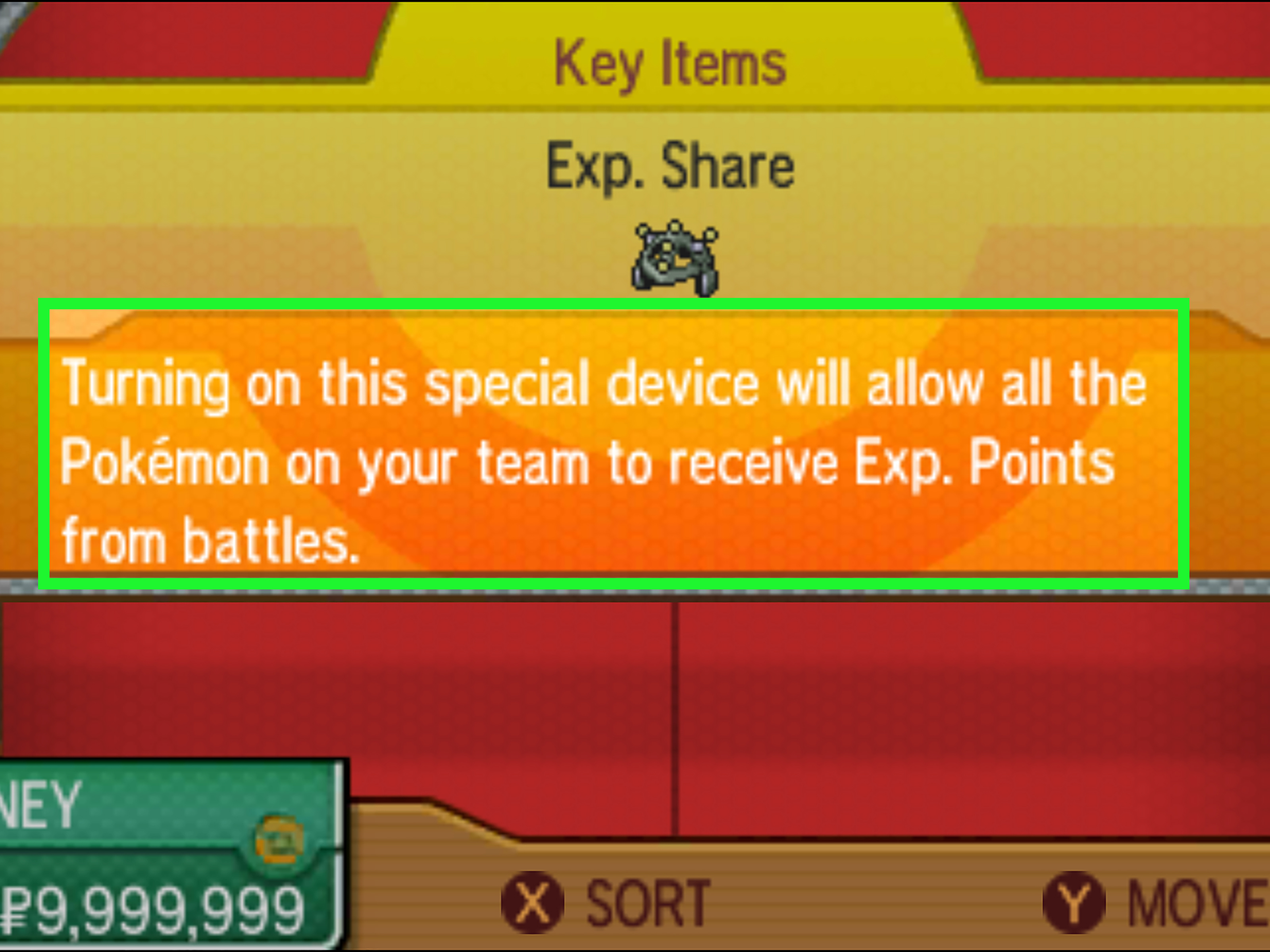
If Pokémon leveling has ever made you feel like a tired daycare worker managing six hyperactive dragons, the Exp. Share is your best friend. This famous item, sometimes called Exp. All in the earliest games, lets Pokémon gain experience even when they do not personally jump into battle and risk being flattened by a suspiciously angry Zubat.
But here is the tricky part: Exp. Share does not work the same way in every Pokémon game. In older titles, you must hunt it down as a rare item. In the middle generations, it becomes a held item. In newer games, it becomes a Key Item. In the Switch era, it often stops being an item at all and becomes a built-in party experience system.
This complete guide explains how to get Exp. Share in every main Pokémon game, what requirements you need to meet, and how to use it wisely without turning your team into overleveled gym-destroying lawnmowers.
What Is Exp. Share in Pokémon?
Exp. Share is a leveling tool that distributes experience points to Pokémon that did not directly participate in battle. Its purpose is simple: reduce grinding and help weaker Pokémon catch up. Its actual history, however, is a little more complicated than a Psyduck trying to file taxes.
In Generation I, the item is called Exp. All. It spreads experience across the team, but the mechanics are clunky. In Generations II through V, Exp. Share becomes a held item. Give it to one Pokémon, and that Pokémon receives part of the experience from battle. In Generations VI and VII, Exp. Share becomes a Key Item that can be turned on or off, sharing experience with the entire party. Starting with Pokémon: Let’s Go, Pikachu! and Let’s Go, Eevee!, the effect becomes automatic in many games and cannot be disabled.
Quick Exp. Share Location Chart
| Game | Where to Get Exp. Share | Requirement |
|---|---|---|
| Red, Blue, Yellow | Route 15 gate, 2F, from Professor Oak’s aide | Own 50 Pokémon |
| Gold, Silver, Crystal | Mr. Pokémon on Route 30 | Trade the Red Scale |
| Ruby, Sapphire, Emerald | Devon Corporation in Rustboro City | Deliver Steven’s Letter |
| FireRed, LeafGreen | Route 15 gate, 2F, from Professor Oak’s aide | Own 50 Pokémon |
| Diamond, Pearl, Platinum | Route 206 northern gate | See 35 Pokémon |
| HeartGold, SoulSilver | Mr. Pokémon on Route 30 | Trade the Red Scale |
| Black, White | Battle Company in Castelia City; also Icirrus Fan Club | Defeat key NPCs or meet Fan Club condition |
| Black 2, White 2 | Battle Company, Icirrus City, and gift Pokémon method | Progress through story and side content |
| X, Y | Santalune City from Alexa | Defeat Viola |
| Omega Ruby, Alpha Sapphire | Petalburg Woods | Rescue the Devon employee |
| Sun, Moon, Ultra Sun, Ultra Moon | Trainer School area from Professor Kukui | Early story progress |
| Let’s Go, Sword, Shield, BDSP, Legends: Arceus, Scarlet, Violet | Built in automatically | No item to collect |
How to Get Exp. Share in Generation I
Pokémon Red, Blue, and Yellow
In the original Kanto games, Exp. Share is known as Exp. All. To get it, travel to the Route 15 gate, east of Fuchsia City. Go upstairs and speak to Professor Oak’s aide. He will give you Exp. All if you have obtained 50 Pokémon.
Important wording: the requirement is based on Pokémon obtained, not simply seen. That means you need to catch, evolve, trade, or otherwise own enough Pokémon to reach the number. If your Pokédex looks like you have only met Pidgey and five cousins of Pidgey, keep catching.
Exp. All affects the whole party, but it is slow and awkward compared with modern Exp. Share. It also takes up space in your bag, which is painful in Generation I because the bag has the storage capacity of a sandwich wrapper.
How to Get Exp. Share in Generation II
Pokémon Gold, Silver, and Crystal
In Johto, Exp. Share becomes a held item. First, progress until you reach the Lake of Rage and battle or catch the famous shiny Red Gyarados. After the encounter, you receive the Red Scale.
Take the Red Scale to Mr. Pokémon on Route 30. He will exchange it for Exp. Share. From there, give the item to the Pokémon you want to train. That Pokémon will receive experience even while sitting safely in the party, pretending it absolutely helped.
You can also win additional Exp. Shares through lottery-style systems, but the Red Scale trade is the main guaranteed method.
How to Get Exp. Share in Generation III
Pokémon Ruby, Sapphire, and Emerald
In Hoenn, you get Exp. Share from Mr. Stone, the president of the Devon Corporation in Rustboro City. The key story step is delivering the Letter to Steven in Granite Cave. After that errand, return to Devon Corporation and speak with Mr. Stone to receive Exp. Share.
This is one of the most useful early-to-midgame Exp. Share pickups because Hoenn has several Pokémon that evolve late or begin weak. Ralts, Magikarp, Slakoth, and Trapinch all appreciate the help. They may not send a thank-you card, but they should.
Pokémon FireRed and LeafGreen
The Kanto remakes use the Route 15 method again. Head to the Route 15 gate east of Fuchsia City, go upstairs, and speak with Professor Oak’s aide. You must have obtained 50 Pokémon to receive Exp. Share.
Unlike Generation I, this version is a held item. Give it to one Pokémon, and it will gain experience from battles without entering the fight. This is excellent for training low-level catches from the Safari Zone, weak baby Pokémon, or anything that currently faints when someone sneezes near it.
Pokémon Colosseum and Pokémon XD: Gale of Darkness
In the GameCube story RPGs, Exp. Share also appears. In Pokémon Colosseum, it is obtained in Agate Village. In Pokémon XD: Gale of Darkness, you can get it in Phenac City after rescuing the city and speaking with Mayor Trest.
These games feature Shadow Pokémon purification, so Exp. Share is especially handy when you need to raise a teammate without repeatedly throwing it into risky battles.
How to Get Exp. Share in Generation IV
Pokémon Diamond, Pearl, and Platinum
In Sinnoh, visit the northern gate of Route 206, near Cycling Road. Dawn or Lucas’s father gives you Exp. Share if you have seen 35 Pokémon in your Pokédex.
This requirement is easier than catching 50 Pokémon because “seen” entries count. Battle trainers, explore routes, and avoid sprinting past every NPC like you are late for school. The more trainers you battle, the sooner you meet the requirement.
You may also obtain extra Exp. Shares from the Jubilife TV lottery if the number matches the last three digits of one of your Pokémon’s Trainer ID numbers. That is useful, but it is not exactly something to build your life around.
Pokémon HeartGold and SoulSilver
The Johto remakes keep the classic method. Defeat or catch the Red Gyarados at the Lake of Rage, take the Red Scale to Mr. Pokémon on Route 30, and exchange it for Exp. Share.
Because HeartGold and SoulSilver have a famously steep late-game level curve, Exp. Share is more than a convenience. It is emotional support with pixels. Use it to train Pokémon for Clair, the Elite Four, and the long road toward Red at Mt. Silver.
How to Get Exp. Share in Generation V
Pokémon Black and White
In Unova, you can get Exp. Share in Castelia City at the Battle Company. Battle your way through the building and defeat the key manager NPC to receive the item.
A second Exp. Share is available from the Pokémon Fan Club Chairman in Icirrus City. This gives you more flexibility if you want to train two Pokémon at once. Just remember that held-item Exp. Share does not magically feed the entire party. The Pokémon must hold it.
Pokémon Black 2 and White 2
Black 2 and White 2 also provide Exp. Share through Castelia City’s Battle Company and the Icirrus City Pokémon Fan Club. There is also a special method involving a gift Pokémon: in Black 2, a gift Gible may hold Exp. Share; in White 2, a gift Dratini may hold it after specific postgame-related progress.
Unova’s experience formula also considers level differences, so lower-level Pokémon can catch up faster in many situations. This makes Exp. Share a strong tool for rotating new teammates into your squad without turning grinding into a second job.
How to Get Exp. Share in Generation VI
Pokémon X and Y
X and Y completely change how Exp. Share works. It becomes a Key Item that shares experience with the whole party when turned on. To get it, defeat Viola, the Santalune City Gym Leader. Afterward, Alexa gives you Exp. Share as you leave Santalune City toward Route 4.
This is one of the earliest and most generous Exp. Share pickups in the series. When it is on, your entire party grows quickly. If you want a harder run, you can turn it off in the Key Items pocket. If you want a smoother adventure, leave it on and enjoy the sweet sound of six level-up jingles trying to form a marching band.
Pokémon Omega Ruby and Alpha Sapphire
In the Hoenn remakes, Exp. Share is also a Key Item. You receive it in Petalburg Woods after rescuing the Devon employee from the Team Magma or Team Aqua grunt.
This is much earlier than the original Ruby, Sapphire, and Emerald method. Because ORAS gives you party-wide experience so soon, you can experiment with more Pokémon without constantly switching them into battle for one turn and then panicking.
How to Get Exp. Share in Generation VII
Pokémon Sun, Moon, Ultra Sun, and Ultra Moon
In Alola, Professor Kukui gives you Exp. Share near the Trainer School on Route 1 during the early story. Like X, Y, ORAS, and the rest of the 3DS-era games, it is a Key Item that can be turned on or off.
Sun and Moon are built around island trials rather than gyms, so party balance can matter. Leaving Exp. Share on helps new captures stay useful. Turning it off can make Totem Pokémon feel more threatening, especially if you enjoy a challenge and also enjoy shouting at your screen politely.
Pokémon: Let’s Go, Pikachu! and Let’s Go, Eevee!
In the Let’s Go games, there is no Exp. Share item to collect. The experience-sharing effect is built into the game from the start and cannot be turned off.
These games also reward experience for catching Pokémon, not only for trainer battles. That means catching chains can level your team quickly. If your party starts becoming too strong, rotate Pokémon into the box and bring in fresh teammates.
How Exp. Share Works in Generation VIII and Later
Pokémon Sword and Shield
Sword and Shield do not give you a traditional Exp. Share item. Party-wide experience is automatic. Every Pokémon in your party receives experience from battles, and there is no official toggle to disable it.
The practical strategy is team rotation. If a Pokémon is getting too strong, place it in a box. The game gives you easy box access, so you can manage your team without running back to a Pokémon Center every five minutes like a very organized delivery driver.
Pokémon Brilliant Diamond and Shining Pearl
Although BDSP remake the Sinnoh games, they do not use the old Route 206 held-item method. Instead, Exp. Share functions as an automatic background mechanic from the start of the game and cannot be turned off.
This is one of the biggest differences between Diamond, Pearl, Platinum and their Switch remakes. If you are returning from the Nintendo DS originals, do not waste time looking for Dawn or Lucas’s father to hand you the item. The game has already decided everyone is invited to the experience buffet.
Pokémon Legends: Arceus
Legends: Arceus also uses automatic party experience. You do not need to find Exp. Share, equip it, or toggle it. Your party gains experience through battles and catches as part of the core design.
Because Legends: Arceus focuses heavily on catching, research tasks, and wild Pokémon encounters, the automatic system fits the rhythm of the game. You will still need to manage your team carefully, especially when Alpha Pokémon look at your level 18 partner like it is an appetizer.
Pokémon Scarlet and Violet
In Scarlet and Violet, Exp. Share remains automatic. There is no item to collect and no standard in-game option to turn it off. Battle experience and modern progression systems are balanced around the assumption that your party will grow together.
Open-world structure makes this both helpful and dangerous. Helpful because you can train a variety of Pokémon while exploring Paldea. Dangerous because if you wander into easier areas after clearing high-level content, your team may flatten everything with the emotional intensity of a Snorlax sitting on a sandwich.
Pokémon Legends: Z-A
For modern releases such as Pokémon Legends: Z-A, the safest expectation is the Switch-era approach: do not search for a classic Exp. Share pickup unless the game specifically presents one. Recent Pokémon RPGs have moved toward automatic team experience rather than a collectible item.
When playing newer Pokémon games, check the Options menu and Key Items pocket first. If there is no Exp. Share listing, the effect is probably built into the game’s experience system. To control leveling, rotate party members, use boxes, and avoid carrying Pokémon you do not want to train.
Best Ways to Use Exp. Share Without Overleveling
Exp. Share is powerful, but power needs manners. If you leave it on constantly in newer games, your team may become overleveled. That can make battles easier than intended, especially if you battle every trainer, catch everything, and never rotate your party.
Rotate Your Team
The simplest trick is rotation. Instead of using only six Pokémon for the entire adventure, train eight, ten, or even twelve. Box your strongest members for a while and let newer catches join the fun. This keeps levels balanced and gives you more type coverage.
Use Exp. Share for Weak Evolutions
Some Pokémon are famously awkward before they evolve. Magikarp, Abra, Ralts, Bagon, Deino, and many baby Pokémon benefit enormously from Exp. Share. Let them gain experience safely until they can fight without immediately needing a motivational speech.
Turn It Off When Possible
In X, Y, Omega Ruby, Alpha Sapphire, Sun, Moon, Ultra Sun, and Ultra Moon, Exp. Share can be toggled off. Use that option if your team is outpacing the story. Turn it back on when you catch a new Pokémon or need to prepare for a difficult battle.
Know the Difference Between Held Item and Key Item
In Generations II through V, Exp. Share must be held by a Pokémon. If you simply own it, nothing happens. In Generations VI and VII, it sits in the Key Items pocket and affects the whole team when active. In many Switch-era games, it is not an item at all.
Common Exp. Share Mistakes
The most common mistake is looking for Exp. Share in the wrong place because you remember a different version. For example, Diamond and Pearl have a Route 206 Exp. Share, but Brilliant Diamond and Shining Pearl do not require that pickup. Ruby and Sapphire give Exp. Share through Devon Corporation, while Omega Ruby and Alpha Sapphire give it much earlier in Petalburg Woods.
Another mistake is confusing “seen” and “owned” Pokédex requirements. Red, Blue, Yellow, FireRed, and LeafGreen require Pokémon obtained for the Route 15 aide reward. Diamond, Pearl, and Platinum require Pokémon seen for the Route 206 aide reward. That difference can save you a lot of unnecessary catching.
A final mistake is forgetting that Exp. Share affects effort values in several older systems. If you are casually playing through the story, do not worry too much. If you are training competitive Pokémon in older games, be careful about which battles your Exp. Share holder benefits from.
Personal Experience: What Exp. Share Teaches You About Better Pokémon Training
Using Exp. Share well is not just about getting levels faster. It changes the way you build a team. In older Pokémon games, many players used the same pattern: put the weak Pokémon in front, switch it out on turn one, send in the real fighter, repeat until sanity begins to leak from your ears. This works, but it is slow. Exp. Share turns that process into something smoother and more strategic.
One of the best experiences with Exp. Share is raising Pokémon that start weak but become amazing later. Magikarp is the classic example. Without Exp. Share, training Magikarp can feel like babysitting a wet sock with dreams. With Exp. Share, you let it sit in the party while your stronger Pokémon handle battles. Eventually, it evolves into Gyarados, and suddenly the wet sock has become a flying sea monster with anger issues.
Ralts is another great example. In Hoenn and Sinnoh, Ralts can be fragile early on, but it grows into a valuable Psychic-type attacker. Exp. Share lets you train it without throwing it into matchups where it gets knocked out instantly. The same applies to late bloomers like Larvitar, Bagon, Deino, or Gible. These Pokémon reward patience, and Exp. Share makes that patience less painful.
Exp. Share also encourages experimentation. When leveling is slow, players often stick to the same six Pokémon because switching teams feels like punishment. With Exp. Share, you can test new captures without committing hours of grinding. Maybe that random Mareep becomes your MVP. Maybe the Zubat you caught as a joke turns into a Crobat and starts carrying the team. Maybe you finally learn that “ugly early-route bug” sometimes evolves into something surprisingly useful. Pokémon loves rewarding curiosity.
In modern games, the experience is different. Automatic Exp. Share makes team training easier, but it also asks players to manage difficulty themselves. If you carry the same six Pokémon from start to finish, battle every trainer, catch tons of Pokémon, and use experience candies, you may become overleveled. The solution is not necessarily to complain into the void, although we have all done it. The better solution is to rotate your roster.
A rotating team keeps the game fresh. Use your starter for major battles, then box it for a while. Bring in a newly caught Pokémon from the latest route. Train a type you usually ignore. Build a backup team for gyms, trials, Titan Pokémon, or rival fights. This makes Exp. Share feel less like an easy-mode button and more like a tool for variety.
For Nuzlocke-style players, Exp. Share creates another layer of planning. In games where it can be turned off, you can control level caps more tightly. In games where it is automatic, you need to box Pokémon before they exceed your chosen cap. That sounds annoying, but it also makes party planning more deliberate. You learn to think ahead, preserve options, and avoid accidentally turning your starter into a level 62 celebrity before the fourth badge.
The biggest lesson is simple: Exp. Share is only as balanced as the way you use it. It can rescue underleveled Pokémon, reduce boring grinding, and help you enjoy more of the Pokédex. It can also make the game too easy if you never adjust your team. Used thoughtfully, it is one of the best quality-of-life features in the series. Used carelessly, it becomes a conveyor belt that launches your entire party into the level stratosphere.
So the next time you pick up Exp. Share, do not just slap it on the weakest Pokémon and forget it forever. Think about your team’s future. Which Pokémon needs help? Which one is already too strong? Which new catch deserves a test run? That little experience-sharing device is more than a shortcut. It is permission to train creatively, try weird teams, and discover new favorites without spending three hours beating up the same patch of grass.
Conclusion
Learning how to get Exp. Share in every Pokémon game saves time, reduces grinding, and makes team building more flexible. The key is remembering how much the item changes across generations. In Kanto, you may need 50 Pokémon. In Johto, you trade the Red Scale. In Hoenn, you visit Devon Corporation or rescue a Devon employee, depending on the version. In Sinnoh, you meet a Pokédex requirement. In Unova, you battle through Castelia City. In Kalos and Alola, Exp. Share becomes a convenient Key Item. In modern Switch-era Pokémon games, it is usually automatic.
Whether you love Exp. Share or think it should come with a warning label reading “may cause accidental overleveling,” it remains one of the most important tools in Pokémon history. Use it wisely, rotate your team, and let your weakest Pokémon grow into champions. Even Magikarp gets there eventually, and honestly, that is the kind of inspirational content we need.