

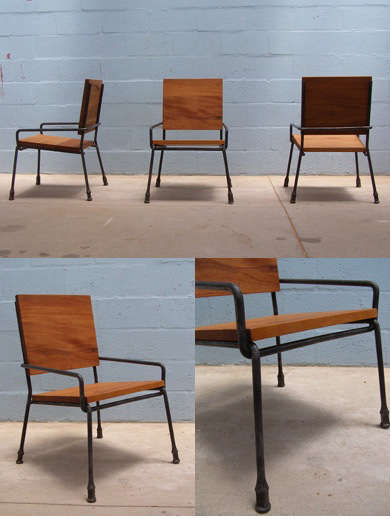
If furniture could squint into the West Texas sun and somehow still look cool, it would probably look like Benton/Garza in Marfa. The name feels half design credit, half secret password whispered by people who know where the good chairs are. And in a town like Marfa, where art, architecture, landscape, and myth all seem to hang out at the same coffee counter, that kind of reputation makes sense.
To understand why Benton/Garza matters, you have to understand Marfa itself. This is not a place that rewards excess. It rewards restraint, material honesty, strong silhouettes, and the confidence to let empty space do some of the work. In other words, it is the perfect place for furniture that does not beg for attention yet somehow steals the room anyway.
Benton/Garza represents an early, memorable Marfa design story tied to Jamey Garza and Joey Benton, two makers whose work reflected the town’s hard light, industrial leftovers, and minimalist spirit. Later, that story evolved as Jamey Garza and Constance Holt-Garza built Garza Marfa into a broader furniture-and-textiles brand. But the Benton/Garza chapter still matters because it captures a particular Marfa mood: rougher, leaner, and unmistakably shaped by place.
So this is not just an article about furniture. It is an article about atmosphere, geography, craftsmanship, and the rare design language that can make steel, leather, canvas, and wood feel both rugged and poetic. Very poetic, actually. Cowboy poetry, but with better proportions.
What Benton/Garza Means in the Story of Marfa Design
The Benton/Garza name points back to an earlier collaboration in Marfa involving Jamey Garza and Joey Benton. Design coverage from that period linked the duo to furnishings for the Thunderbird Hotel and described their work as Donald Judd-inspired, fabricated in Marfa, and made with salvaged oil-yard metal. That combination tells you almost everything you need to know about why the work stood out: it was local, materially direct, and visually disciplined without turning sterile.
That matters because Marfa is not the kind of town where furniture lives as background decoration. In Marfa, furniture gets judged by the same standards as buildings, artworks, and the horizon itself. It has to hold its shape. It has to belong. It has to be quiet, but not boring. If it can also survive dust, sun, and the occasional dramatic person in a linen jacket, even better.
The Benton/Garza work seems to have landed right in that sweet spot. It was industrial but not cold, simple but not dumbed down, and modern without feeling imported from some generic design district where everyone drinks tiny coffees and pretends plywood is a personality.
Why Marfa Makes Furniture Look Different
The Judd Effect
Any serious conversation about Marfa design eventually runs into Donald Judd, and for good reason. Judd’s presence in Marfa permanently altered how people think about the relationship between object, space, light, and landscape. The Judd Foundation and the Chinati Foundation preserve that legacy, and together they help explain why Marfa developed such a distinctive visual culture. In this context, furniture is not just useful. It is spatial.
That is part of why Benton/Garza reads so clearly. The furniture belongs to a place where geometry matters, where proportion matters, where a chair is not just a chair but a form in dialogue with adobe walls, wide skies, and long shadows. No pressure, chair.
The Desert Effect
Marfa also imposes its own practical rules. The light is intense. The air is dry. The town’s scale encourages a slower, more deliberate visual rhythm. Furniture that succeeds there tends to avoid fluff. It leans toward honest materials, exposed structure, and pieces that age with dignity rather than panic at the first sign of life.
That is why Benton/Garza’s material vocabulary makes so much sense. Salvaged metal, saddle leather, canvas, and sturdy woods do not merely look appropriate in West Texas. They feel inevitable. They wear in instead of wearing out. They collect patina instead of pleading for forgiveness.
The Benton/Garza Design Language
Industrial Bones
One of the most compelling parts of the Benton/Garza story is the use of salvaged oil-yard metal. That detail gives the work more than texture; it gives it biography. These materials are not pretending to be rugged. They already are. In a region where extraction, utility, ranching, and labor are part of the visual and economic landscape, reclaimed metal carries local meaning.
That kind of reuse also keeps the work from feeling overdesigned. There is a plainspoken confidence in using what the region gives you and turning it into something precise. It is the design equivalent of saying, “We had this steel, so naturally we made it handsome.”
Warm Surfaces
What prevents the aesthetic from becoming too hard-edged is the counterweight of softer materials. Leather, especially saddle leather, has become central to the Garza side of the lineage. Canvas also appears again and again. These surfaces soften the geometry and introduce touch, wear, and the human body into the equation.
That balance is crucial. Bare steel alone can feel severe. Leather alone can drift into rustic cliché. But the combination of steel frame and leather sling, or steel base and canvas seat, produces something smarter: a modern object with frontier memory. Not nostalgia, exactly. More like a respectful wink at the past.
Shapes That Know When to Stop
Benton/Garza furniture does not rely on ornamental tricks. The forms are clear. Lines are legible. Structure is visible. You can usually tell how a piece is made just by looking at it. That transparency is part of the appeal. It creates trust.
In design, stopping at the right moment is a superpower. Benton/Garza seems to understand that. A curve is there because it needs to be there. A welded line is present because the structure asks for it. Nothing is fussed into existence just to prove the designer had feelings.
Color as Accent, Not Chaos
As the story evolves into Garza Marfa, color becomes even more pronounced. Powder-coated steel bases in whites, yellows, blues, reds, and other high-desert tones add a fresh, almost playful edge to otherwise disciplined forms. The result is not loud. It is strategic. Color shows up the way a well-placed bandana shows up in a black-and-white Western: suddenly the whole frame has more life.
That use of color is one of the defining reasons the Benton/Garza legacy still feels relevant. Minimalism often gets flattened into beige seriousness. Marfa’s best designers know that restraint and joy are not enemies. A clean silhouette can still have a pulse.
From Benton/Garza to Garza Marfa
If Benton/Garza captures an earlier Marfa furniture moment, Garza Marfa shows how that language matured and expanded. Jamey Garza and Constance Holt-Garza relocated to Marfa in 2003 after years of living and working together in California. From there, they developed a furniture-and-textiles line rooted in desert living, the myths of the American West, and a strong sense of craft.
That evolution is important because it clarifies the distinction many readers might miss. Benton/Garza is not simply a random label from an old blog post. It is part of the origin story. Garza Marfa, as it exists today, carries forward much of the same DNA while broadening the palette, deepening the textile work, and sharpening the identity.
The current line includes pieces such as round and oval leather chairs, canvas lounge chairs, cots, stools, tables, and upholstered designs built around steel bases and natural materials. The famous round saddle leather chair, introduced around 2010, became a signature because it distills the entire ethos into one piece: curved, sturdy, tactile, airy, and unmistakably place-aware.
Meanwhile, the textile side of Garza Marfa adds another layer. Stripes, bold piping, handloomed blankets, and desert-based color combinations turn the furniture from pure object into environment. You start with a chair, and next thing you know you are rearranging your whole room because the chair made the old sofa look emotionally unprepared.
Where the Legacy Shows Up
Part of the appeal of Benton/Garza and Garza Marfa is that the work is not trapped in a showroom fantasy. It has appeared in real hospitality spaces people actually use. Design coverage has tied the work to the Thunderbird Hotel in Marfa and Hotel San José in Austin, two properties known for relaxed, design-forward atmospheres rather than stiff museum-politeness.
That matters because furniture often reveals its true character in hospitality settings. Does it look good after a weekend of use? Does it still feel inviting after someone leaves a jacket on it, spills coffee nearby, or sits in it while trying to look profoundly artistic? In the case of this Marfa lineage, the answer seems to be yes.
The Garzas also extended that sensibility into guesthouses and other residential work, proving the look is not only photogenic but livable. That is a big difference. Lots of furniture is “great in pictures.” Far less furniture looks just as convincing when the room is messy, the weather is strange, and the dog has claimed the best seat.
What Designers Can Learn from Benton/Garza in Marfa
1. Start with Place
The best lesson here is that regional design does not have to be literal. Benton/Garza is not successful because it decorates furniture with cowboy clichés. It is successful because it absorbs the actual logic of place: available materials, climate, scale, light, and cultural history.
2. Let Materials Speak Clearly
Furniture becomes more convincing when its materials are allowed to act like themselves. Metal should feel like metal. Leather should show age. Canvas should crease honestly. Good design does not silence materials; it directs them.
3. Restraint Works Better Than Hype
Marfa has helped popularize a kind of edited visual intelligence. The furniture associated with Benton/Garza proves that restraint is not absence. It is focus. Strip away the extra gestures and what remains has a better chance of lasting.
4. Warmth Matters
Minimal forms can still feel soulful. That may be the most enduring insight in this whole design lineage. The best Marfa furniture does not merely look right; it feels inhabited, even before anyone sits down.
How to Bring the Look Home Without Relocating to a Tiny Art Town
If you love the Benton/Garza-in-Marfa mood, the key is not to copy it too literally. Start with a clean silhouette. Choose one or two honest materials: leather and steel, canvas and wood, oak and powder-coated metal. Keep shapes simple and let negative space breathe.
Then add color carefully. A rusty red base, a faded blue textile, a mustard stripe, or a dusty mauve pillow can go a long way. The point is not to create “Southwestern theme décor.” The point is to create a room that feels edited, grounded, and awake to light.
Also, do not underestimate the power of contrast. A strong chair feels stronger in a room with plaster, adobe tones, unfinished wood, or plain white walls. Marfa style thrives when furniture has room to hold the stage without competition from a hundred decorative side quests.
Why Benton/Garza Still Feels Relevant
Design trends come and go, but furniture tied to real place tends to outlast trend cycles. Benton/Garza still feels relevant because it sits at the intersection of several ongoing values: craftsmanship, material honesty, restrained form, regional identity, and emotional warmth.
It also dodges the trap that catches a lot of contemporary furniture. It does not feel generic. You could not drop Benton/Garza into any city and mistake it for the local default. It belongs to West Texas, yet it speaks fluently to a much wider audience. That is difficult to do. It is also why people keep talking about Marfa furniture long after the first design pilgrimages were posted online.
In a world full of fast interiors and algorithm-approved sameness, Benton/Garza offers something sturdier: furniture with a spine, a point of view, and just enough desert swagger.
Extended Experience: What Benton/Garza in Marfa Actually Feels Like
Imagine arriving in Marfa in the late afternoon, when the light starts performing like it knows people drove a long way to see it. The town does not shout. It barely raises an eyebrow. Buildings sit low. The streets feel unhurried. The silence is not empty; it is shaped. Then you step into a space furnished with Benton/Garza sensibility, and suddenly the room makes perfect sense in a way many “designed” rooms do not.
The first thing you notice is air. The furniture is present, but it is not bulky. It allows space to remain space. Chairs do not sprawl. Tables do not overexplain themselves. A steel frame traces a line across the room like a drawing. A leather seat softens it. A wood top catches the sun and throws back a warmer version of the desert.
You sit down, and that is when the second thing happens: the work stops being visual and becomes physical. The leather has a little give. The frame feels steady. The proportions feel strangely calm, as if somebody designed the piece for an actual human body instead of a catalog fantasy life involving one lemon, one art book, and zero remote controls.
Now look around again. The furniture is not trying to be the main attraction, yet it changes how you see everything else. The wall texture matters more. The floor looks better. The window suddenly feels intentional. Even the shadows get involved. This is the quiet power of good furniture in Marfa: it edits your attention. It makes you notice what belongs.
There is also a psychological effect. Benton/Garza style does not make a room feel precious. It makes a room feel ready. Ready for coffee in the morning, ready for a long conversation at night, ready for boots on the floor, ready for a blanket thrown over the chair when the temperature drops after sunset. It is design with manners. It welcomes life instead of flinching from it.
And then there is the mood. Marfa furniture of this kind carries a particular emotional blend that is hard to fake: independence, practicality, beauty, and a faint sense that the person who owns it might also know how to repair a gate or discuss minimalism before breakfast. It feels self-possessed. It feels like it came from somewhere specific.
That is why the experience sticks. You do not just remember the shape of the chair or the color of the frame. You remember how the room felt disciplined without being cold, rustic without being corny, modern without being smug. You remember the way the furniture seemed to belong to the land, even indoors. And once you have felt that combination, regular furniture can seem a little too eager, a little too padded, a little too desperate for compliments.
In the end, the experience of Benton/Garza in Marfa is not flashy. It is more persuasive than that. It slips up on you. It says very little. Then somehow, days later, you are still thinking about that chair.
Conclusion
Benton/Garza in Marfa is more than a design footnote. It is a snapshot of how a place can shape objects until they feel inevitable. The collaboration’s early Marfa work, its connection to the Thunderbird Hotel, its use of salvaged industrial material, and its relationship to the Judd-influenced visual culture of West Texas all help explain why it still resonates. The later evolution into Garza Marfa only reinforces the point: this was never about trend-chasing. It was about building a furniture language that could stand up to the desert, the light, and the expectations of a town where form really matters.
If you are drawn to furniture with clean lines, tactile materials, and a genuine sense of place, Benton/Garza offers a compelling model. It proves that modern furniture can be disciplined without being lifeless, regional without being kitschy, and beautiful without putting on a show. In Marfa, that may be the highest compliment of all.