

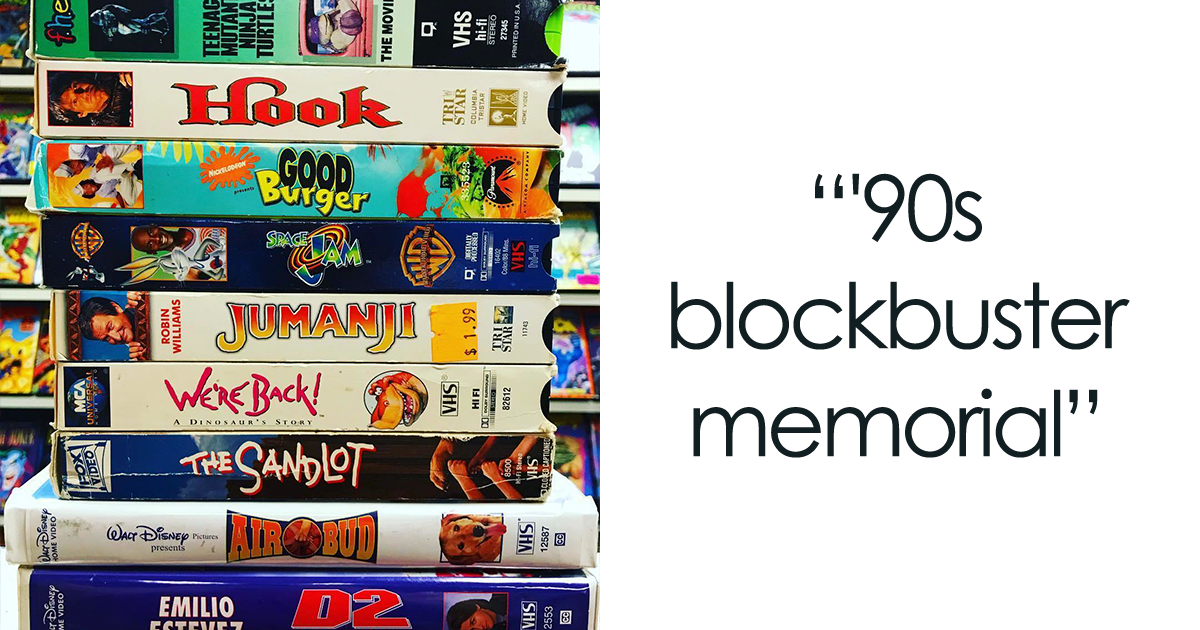
Some people remodel their basements into home gyms. Others install a tasteful wine cellar. Nick Collins chose a more important mission: bringing the neighborhood video store back from the deadone VHS tape, candy display, and gloriously retro sign at a time.
A Basement That Looks Like a Portal to the 1990s
Walk downstairs, turn the corner, and suddenly streaming services have not been invented. The walls are lined with colorful VHS covers, movie displays compete for attention, and the whole room carries the cheerful visual chaos of a classic video rental store.
This remarkable basement VHS store belongs to collector Nick Collins. Instead of simply stacking his tapes in plastic storage bins, Collins transformed part of his home into an affectionate tribute to the video shops that once anchored American weekends.
The project is more than a media room with shelves. Its store-like layout, decorations, genre sections, promotional materials, and old-school snacks recreate the ritual of choosing a movie. It resembles the kind of place where families once spent 40 minutes debating what to rent, only to leave with a comedy everyone had already watched six times.
For anyone who remembers Blockbuster, Hollywood Video, or a locally owned rental shop with slightly mysterious carpeting, the 16-photo tour delivers a powerful blast of nostalgia. Younger visitors may simply wonder why people traveled to another building to obtain one movie. It was a different age. We had patience, rewinding fees, and no idea whether a film was terrible until it was too late.
How Nick Collins Became a VHS Collector
Collins began collecting retro video games in 2012. As that collection approached completion, VHS tapes felt like a natural next step. Both hobbies revolve around physical media, distinctive packaging, obsolete technology, and the thrill of finding something forgotten in a thrift-store pile.
His inspiration also came from filmmaker and video game critic James Rolfe, widely known as the Angry Video Game Nerd. Rolfe had created a video-store-style room of his own, demonstrating that a private collection could become an immersive environment rather than a wall of crowded shelving.
Collins initially worked with a room only slightly larger than a closet. He gradually developed and improved that space over approximately four years. Eventually, the growing collectionand presumably the VHS cases beginning to reproduce after midnightrequired an expansion.
The larger renovation took about two months. Collins and his uncle handled much of the work themselves, learning and solving problems as they went. The most dramatic setback came when part of the drop ceiling collapsed after an old wall was removed. Fortunately, the incident became a construction problem rather than the opening scene of a low-budget disaster movie.
With his uncle’s practical experience and his own commitment to the concept, Collins completed the room. What started as additional storage developed into a full Blockbuster-inspired homage designed to maximize every available inch.
Inside the 16-Picture VHS Store Tour
The photo series works like a miniature renovation documentary. It begins with an ordinary basement project and ends in a remarkably convincing retro video store. Here are the details that make the transformation so effective.
-
1. The Original Basement Space
The early construction view reveals how unremarkable the room once was. Bare surfaces and unfinished areas make the final transformation feel even more impressive.
-
2. Removing the Interior Wall
Opening the room created space for additional shelving and wider browsing aisles. It also triggered the partial ceiling collapse, because every memorable renovation apparently requires one moment of pure panic.
-
3. Rebuilding the Ceiling
Repairing the damaged drop ceiling became an unexpected lesson in hands-on construction. The clean final result conceals the project’s most difficult surprise.
-
4. Planning the Store Layout
Shelving was arranged to make the collection feel browsable rather than merely stored. The layout encourages visitors to move through the room and examine individual covers.
-
5. Installing Wall-to-Wall Movie Shelves
Rows of tapes establish the room’s identity immediately. Each colorful VHS spine becomes part of a larger visual mosaic celebrating decades of home entertainment.
-
6. Creating a Blockbuster-Inspired Look
Familiar colors, signs, and retail-style displays transform the basement into a recognizable tribute without making it feel like an ordinary storage room wearing a novelty sign.
-
7. Organizing the VHS Collection
Grouping movies by genre recreates the pleasure of browsing. Horror fans can head in one direction, comedy lovers in another, and indecisive guests can circle the room until someone orders pizza.
-
8. Displaying Memorable Cover Art
VHS packaging once had an important job: persuading people to rent a movie using one dramatic image and a handful of optimistic sentences. The covers now function as miniature pieces of commercial art.
-
9. Building the Horror Section
Horror is one of Collins’ favorite genres, and it is especially well suited to VHS. Weathered artwork, lurid typography, and analog picture quality give older scary movies an atmosphere that polished digital menus cannot quite reproduce.
-
10. Celebrating Classic Comedies
Comedy shares top billing in the collection. Collins has named movies such as Son in Law and The Cable Guy among his favorites, proving that a personal archive does not need to behave like a solemn film museum.
-
11. Adding Retro Candy and Decorations
Movie-night snacks and retail decorations complete the illusion. Without them, the basement would be an excellent archive. With them, it becomes a destination.
-
12. Showcasing Rare Tapes
One of Collins’ rarest finds is a 1995 WWF release titled In Your House: Lumberjacks. He believes the difficult-to-find cassette may have been offered primarily as a mail-away release rather than distributed widely in stores.
-
13. Decorating the Store for Easter
Seasonal displays keep the room from becoming static. Easter decorations create the unusual but charming combination of pastel colors, plastic cassettes, and movie-store nostalgia.
-
14. Giving Halloween Its Proper Spotlight
Halloween is an obvious match for a VHS collection dominated by horror favorites. This is the season when grainy tapes, vintage masks, and ominous cover art finally look completely at home.
-
15. Preparing for Thanksgiving
The Thanksgiving arrangement brings a warmer mood to the store. It also suggests an ideal holiday schedule: eat too much, select a movie, and fall asleep before the second act.
-
16. Turning the Basement Into a Christmas Video Shop
Christmas decorations make the finished basement resemble a rental store during its busiest season. The only missing ingredients are a line at the register and someone discovering that every copy of the newest holiday release is gone.
Why VHS Nostalgia Still Feels So Powerful
VHS was introduced in the 1970s and became the dominant home-video format of the 1980s and 1990s. Its longer recording capacity helped it compete successfully against Betamax, while increasingly affordable VCRs allowed millions of households to record television and watch rented movies on their own schedules.
The technology changed American entertainment habits. By the mid-1980s, thousands of video rental stores were operating across the country. These shops turned movie selection into a social event. Customers asked employees for recommendations, met neighbors in the aisles, studied cover art, and negotiated with family members over the evening’s single precious choice.
Streaming is more convenient, but convenience is not the same as ceremony. A digital service can offer thousands of titles instantly, yet viewers often spend an entire evening scrolling through thumbnails. A video store offered fewer choices, but each choice felt tangible. You picked up the box, read the description, carried it to the counter, and committed.
Psychological research helps explain why a basement replica can trigger such an emotional response. Nostalgia may strengthen feelings of social connection, reduce loneliness, and reinforce a sense of continuity between the past and present. The shelves do not merely remind people of old technology; they revive memories of sleepovers, family movie nights, first dates, and Friday trips with friends.
The imperfections matter too. VHS images are soft, tapes hiss, tracking occasionally misbehaves, and rewinding takes longer than anyone remembers. Those limitations create a physical experience. Watching a tape involves handling an object with its own history instead of selecting an invisible file licensed temporarily by a platform.
Physical Media Offers Something Streaming Cannot
A VHS collection remains accessible as long as the owner has a functioning player and a usable tape. It does not disappear because a licensing agreement expires, a company changes its catalog, or a monthly subscription ends.
Physical collections also preserve titles that never received a DVD, Blu-ray, or streaming release. Seattle’s nonprofit Scarecrow Video, for example, maintains thousands of works available only on VHS or other discontinued formats. Collections like these demonstrate that obsolete media can still hold material with cultural and historical value.
However, magnetic videotape is not immortal. Preservation experts warn that tapes can deteriorate over several decades. Heat, humidity, dust, mold, and repeated playback may damage the cassette or its recording layer. Collectors should store tapes upright in a cool, dry, stable environment and keep them away from magnets and direct sunlight.
Rare home movies, independent productions, and recordings unavailable elsewhere should be digitized before deterioration or equipment failure makes playback impossible. A collector can enjoy the original artifact while maintaining a digital preservation copy. It is the media equivalent of wearing a vintage jacket while keeping an umbrella nearby.
Lessons for Anyone Starting a VHS Collection
Buy Collections in Lots
Collins recommends purchasing tapes in groups, keeping the desired titles, and selling or trading the rest. He built much of his collection one cassette at a time but later recognized that bulk buying can be far more efficient.
Collect What You Actually Enjoy
Not every sealed tape is a retirement plan. Most VHS releases were mass-produced, and asking prices online do not prove that buyers are paying those amounts. Begin with favorite genres, memorable childhood movies, unusual cover designs, or titles that are difficult to find digitally.
Inspect Before Playing
Check the cassette shell and visible tape for mold, dirt, or physical damage. A contaminated tape can harm a VCR and potentially spread debris to other cassettes. When in doubt, consult an experienced media-transfer or tape-preservation service.
Design a Space, Not Just a Stack
The strongest idea in Collins’ basement is not the number of tapes. It is the presentation. Genre labels, face-out covers, period decorations, a television, and a comfortable viewing area can turn even a modest collection into an engaging retro movie room.
A Personal Experience: What It Feels Like to Visit a Basement VHS Store
Entering a basement designed like an old video store would likely produce a strange sequence of reactions. First comes recognition: the bright signs, crowded shelves, plastic cases, and familiar movie artwork. Then comes disbelief. This is not a commercial business frozen in time. It is someone’s home, and the “employee” probably knows exactly who moved Halloween III into the comedy section.
The experience begins before a tape even reaches the VCR. Browsing physical shelves forces the visitor to slow down. Instead of seeing titles selected by an algorithm, the guest encounters whatever happens to be nearby. A famous blockbuster may sit beside a forgotten direct-to-video sequel, a wrestling tape, or a comedy whose cover promises considerably more excitement than the movie contains.
That accidental discovery is part of the fun. In a streaming interface, every title is reduced to a similarly sized rectangle. On a VHS shelf, the packaging has personality. Oversized clamshell cases stand out. Rental stickers reveal where a cassette once traveled. Faded corners, handwritten labels, and “Please Rewind” reminders transform mass-produced objects into artifacts with individual histories.
Choosing only one or two movies also changes the mood. Scarcity encourages conversation. One person argues for horror. Another wants a comedy. Someone suggests a three-hour drama and is immediately removed from the selection committee. The group eventually reaches a compromise that satisfies nobody completelywhich is the authentic video-store experience.
Then comes the mechanical ritual. The cassette slides into the VCR with a solid clunk. Internal gears pull the tape into position. A blue screen flickers, the tracking settles, and perhaps an old preview begins. These previews cannot always be skipped instantly, so the room watches them. A trailer for a forgotten movie suddenly becomes part of the evening rather than an obstacle to it.
The picture is not sharp by modern standards. Colors may bleed at the edges, dark scenes can become murky, and the screen may briefly fill with static. Yet those flaws can make an older film feel more atmospheric. A 1980s horror movie on VHS looks as though it has survived something. Even an ordinary comedy gains the texture of a memory.
Seasonal decorations would deepen the effect. At Halloween, the basement could become a neighborhood horror headquarters. At Christmas, familiar holiday tapes could be displayed like new releases from 1994. Guests might choose films according to the shelf arrangement rather than whatever a recommendation engine predicts they will finish.
The most memorable part, however, would probably be sharing the room with its creator. A carefully organized collection becomes a map of someone’s interests. Each shelf invites a story: where a rare tape was found, why a critically disliked comedy remains beloved, or how a collapsed ceiling nearly interrupted the entire project.
That human element explains why Collins’ basement resonates beyond VHS fandom. He did not merely preserve old objects. He reconstructed a place where entertainment once involved anticipation, conversation, and a small amount of inconvenience. Ironically, the inconvenience may be what people miss most.
When the movie ends, the tape still needs to be rewound. Nobody will enjoy waiting, but everyone will understand the assignment. Be kind, rewindand try not to think about late fees.
Conclusion: A Home Renovation With Real Rewind Power
Nick Collins’ basement VHS store succeeds because it captures an experience, not simply an aesthetic. The shelves, genre sections, rare tapes, candy displays, holiday decorations, and Blockbuster-inspired design recall a period when choosing a movie was part of the entertainment.
The project also shows what personal collections can become when they are thoughtfully displayed. With imagination, persistence, and help from a handy uncle, an undersized basement room evolved into an immersive tribute to physical media and 1990s movie culture.
Streaming may remain faster, cleaner, and easier. But it cannot reproduce the feeling of wandering between shelves, judging a questionable thriller by its cover, and carrying one carefully selected tape home for the weekend. Collins brought that feeling backand he did it without charging anyone a late fee.