

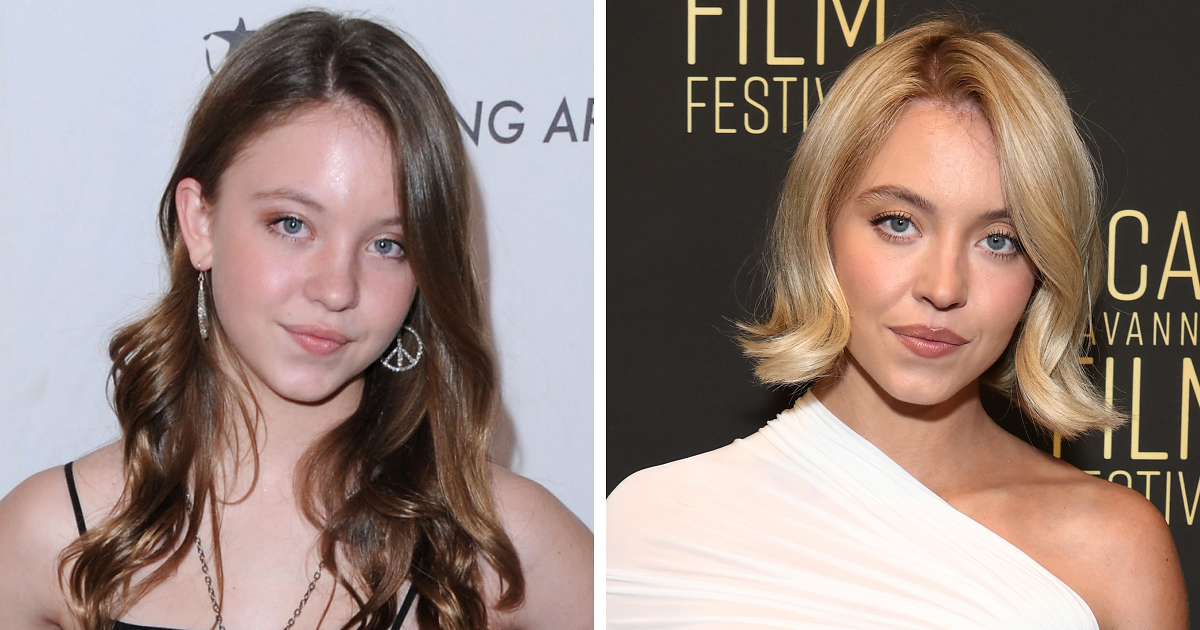
Sydney Sweeney has spent the last few years doing what many rising Hollywood stars do: acting in prestige television, walking red carpets, launching brand campaigns, taking on physically demanding roles, and occasionally becoming the internet’s favorite human debate topic. The latest round of discussion centers on her natural beauty claim after she publicly denied having cosmetic work done. Soon after, fans and critics began circulating side-by-side photos, arguing that the images told a different story.
As with most celebrity beauty debates, the conversation quickly became louder than a group chat after someone types “we need to talk.” Some people accused Sweeney of hiding cosmetic enhancements. Others defended her, pointing out the obvious: a person can look different at 26 than they did at 12, especially when professional makeup, lighting, styling, angles, and photo quality are involved. In other words, comparing childhood snapshots to polished Hollywood images is not exactly forensic science. It is more like trying to solve a mystery with a glitter filter and Wi-Fi confidence.
The controversy matters because it says as much about celebrity culture as it does about Sydney Sweeney. It touches on beauty standards, online suspicion, image editing, cosmetic procedure transparency, and the strange modern habit of treating famous faces like public evidence boards. Below is a closer look at what happened, why fans pushed back, and what the reaction reveals about the internet’s complicated relationship with natural beauty.
What Did Sydney Sweeney Say About Cosmetic Work?
The discussion intensified after Sweeney addressed beauty rumors during a public interview segment with her The Housemaid co-star Amanda Seyfried. When asked what rumor she wanted to debunk, Sweeney said she had never had cosmetic work done and explained that she is afraid of needles. She also pushed back against online comparisons that use photos from different stages of her life, saying that it is unfair to compare a picture of her as a child with a professionally styled photo of her as an adult.
Her point was simple: time changes faces. So do puberty, makeup, lighting, camera lenses, facial expression, hair color, skincare, weight fluctuation, stress, sleep, and the small matter of having access to an entire glam team. A teenager in a candid image and an actress at a premiere are not operating under the same visual conditions. One has hallway lighting. The other has a beauty team, designer clothing, professional photography, and probably a moisturizer that costs more than a small appliance.
Sweeney has also spoken before about wanting to age naturally and about the pressure she faced early in her career. She has said that someone once suggested she get Botox when she was only 16 because of her expressive face. That detail added another layer to the conversation: she is not simply rejecting rumors; she is also responding to an industry that has long told young women to fix themselves before they have even finished growing up.
Why Fans Started Posting Side-By-Side Photos
After Sweeney’s denial, some social media users began sharing side-by-side photos as supposed proof that her appearance had changed. These comparisons generally placed older images beside more recent ones and invited viewers to inspect differences. The tone ranged from skeptical to harsh, with some people insisting that changes in facial features or body proportions could not be explained by aging alone.
But side-by-side celebrity photos are tricky. A comparison can feel persuasive even when it is not reliable. A photo taken with flash in 2016 can make someone look completely different from a studio-lit image in 2025. A wide-angle lens can distort proportions. Lip liner can reshape the mouth. Contouring can change how the nose appears. A hairstyle can alter the face’s perceived structure. Even posture can change how the body looks in a still image.
That does not mean every fan question is automatically unfair. People are allowed to notice that celebrities operate in a world where cosmetic procedures, injectables, filters, and image editing are common. Transparency around beauty work has become a major topic because audiences increasingly feel that “effortless beauty” is often anything but effortless. The issue is that noticing a change is not the same as proving a procedure. The internet, unfortunately, tends to treat the two as identical twins.
The Internet’s Obsession With “Natural Beauty”
The phrase “natural beauty” has become one of the most loaded phrases in pop culture. On the surface, it sounds complimentary. Underneath, it often carries a complicated set of expectations. A celebrity is praised for looking flawless, but only if the public believes she did not work too hard to look that way. She is admired for glamour, but criticized if the glamour seems manufactured. She is expected to be honest, but punished for the details of that honesty. Basically, it is a beauty obstacle course, and the finish line keeps moving.
Sydney Sweeney’s case fits into a larger pattern. When famous women deny cosmetic work, fans often accuse them of lying. When they admit to cosmetic work, they may be accused of insecurity, vanity, or setting unrealistic standards. When they say nothing, silence becomes “suspicious.” The public asks for transparency, but the response can become invasive, judgmental, or oddly personal.
This is why the Sweeney debate became more than a celebrity gossip story. It became a case study in how audiences process beauty in the social media era. The public sees perfectly edited images every day, then becomes suspicious of anyone who looks polished. At the same time, fans still want the fantasy of natural perfection. That contradiction creates a loop: admire, inspect, doubt, accuse, repeat.
Why Sydney Sweeney Is Such a Frequent Target
Sweeney’s public image has made her an especially visible figure in beauty conversations. She broke through with high-profile roles in Euphoria and The White Lotus, earning major awards attention and becoming one of the most recognizable young actresses in Hollywood. Her characters are often emotionally messy, visually memorable, and heavily discussed online. That kind of visibility makes every red-carpet look, campaign, and interview a potential headline.
She has also been part of several cultural debates that had little to do with acting alone. Her American Eagle “great jeans” campaign sparked controversy because critics interpreted the “jeans/genes” wordplay as tone-deaf or tied to narrow beauty ideals, while defenders argued it was just a denim pun blown wildly out of proportion. Whether people loved or disliked the campaign, it placed Sweeney’s appearance at the center of a national conversation about advertising, desirability, race, and branding.
That context matters. Once a celebrity becomes a symbol in one debate, the internet often carries that energy into the next one. Sweeney is not just being discussed as an actress. She is being treated as a canvas for arguments about femininity, confidence, body image, beauty privilege, and authenticity. That is a lot to load onto one person’s face.
Side-By-Side Photos Are Not Medical Evidence
One of the most important points in this debate is also the least exciting: photos are not medical evidence. A person online can compare two images and form an opinion, but that opinion is not proof. Cosmetic procedures can only be confirmed by the person involved or by qualified medical documentation, not by a comment section with a zoom function.
Before-and-after comparisons can be misleading because they freeze a person in two moments and pretend everything between those moments is irrelevant. But human appearance changes constantly. A fuller face in one photo may reflect age, weight, hydration, makeup, or camera distance. A more defined face in another may reflect lighting, contour, expression, or styling. Even eyebrows can transform a face dramatically. Anyone who survived the thin-brow era knows this truth in their soul.
The problem is not that fans are curious. Curiosity is normal in celebrity culture. The problem is when curiosity becomes certainty without evidence. That leap can turn a conversation about beauty standards into a public trial where the defendant is someone’s body.
The Role of Makeup, Lighting, and Professional Styling
Modern celebrity images are built by teams. Red-carpet photos involve makeup artists, hairstylists, stylists, photographers, editors, publicists, lighting crews, and brand partners. The final image may look effortless, but it is often the result of hours of planning. This does not make the celebrity fake; it means the image is produced.
Makeup alone can create dramatic differences. Contour can sharpen cheekbones. Highlight can lift certain areas of the face. Overlining can make lips appear fuller. False lashes or lash extensions can change the perceived size and shape of the eyes. Strategic blush placement can alter facial balance. Even the finish of foundation can affect how youthful, sculpted, or smooth someone appears on camera.
Lighting is just as powerful. Soft front lighting can blur texture and minimize shadows. Harsh overhead lighting can exaggerate lines and angles. A camera lens can widen or compress features depending on distance and focal length. In other words, the same person can look like three different cousins in three different photos, and none of those cousins had to book a cosmetic appointment.
Why Some Fans Still Want Celebrities to “Own Up”
Some of the backlash comes from a real frustration: audiences are tired of being sold perfection as natural. In the beauty industry, “I just drink water” has become the celebrity version of “the dog ate my homework.” Fans know that many stars have access to expensive treatments, trainers, dermatologists, nutritionists, med spas, stylists, and editing tools. When a famous person claims to be completely natural, some viewers instinctively raise an eyebrow.
There is also a growing movement toward cosmetic transparency. Many people believe public figures should be open about procedures because secrecy can create unrealistic expectations for fans. If a celebrity has had work done but presents the result as natural, audiences may compare themselves unfairly. That concern is valid. Beauty marketing has often blurred the line between genetics, money, medical intervention, and branding.
However, transparency should not become entitlement. A celebrity can choose what medical information to share. Fans can discuss media literacy and beauty standards without demanding a personal inventory of someone’s body. The healthiest version of the conversation is not “prove your face to us.” It is “let’s stop pretending all celebrity images are simple, natural, and spontaneous.”
Sweeney’s Response: Confidence Over Explanation
Sweeney has often framed her public image around confidence and personal choice. She has said that people assume they know her because of the characters she plays or the way she appears in campaigns, but those assumptions do not necessarily reflect who she is. That statement is especially relevant here. The internet can mistake visibility for access. Because fans see a person constantly, they begin to feel qualified to interpret everything about her.
Her denial of cosmetic work may not satisfy everyone, but it is still her statement. Unless she changes it, the responsible way to cover the topic is to say that she denies having cosmetic procedures and that some fans remain skeptical. Anything beyond that becomes speculation.
That distinction is important for SEO content as well as ethical writing. A headline may focus on fan reaction, but the article should not present guesses as facts. A strong article can analyze the debate, quote the public conversation, and explain why the issue went viral without declaring that a procedure happened. Responsible entertainment writing can still be sharp, readable, and funny. It just does not need to carry a magnifying glass like it is solving a crime scene.
What This Says About Celebrity Beauty Standards
The Sydney Sweeney natural beauty debate reveals how suspicious audiences have become. Social media has trained people to inspect images for filters, edits, procedures, and hidden effort. That skepticism makes sense in a world where faces are routinely polished before publication. Yet constant inspection can become exhausting and unfair.
For young fans especially, these conversations can be confusing. On one hand, they expose the illusion of effortless celebrity beauty. On the other hand, they can reinforce the idea that every feature must be analyzed, judged, and explained. That is not media literacy. That is body surveillance wearing a detective hat.
A healthier approach is to separate image critique from personal attack. It is fair to question beauty marketing. It is fair to challenge unrealistic standards. It is fair to ask brands and publications to be more honest about editing, styling, and paid promotion. But it is not necessary to mock someone’s body to make those points.
How Brands Benefit From the Debate
There is another player in this story: the attention economy. Every argument about Sydney Sweeney’s appearance generates clicks, shares, reaction videos, and comments. Celebrity controversy does not just happen online; it becomes a product. Websites cover the backlash, social platforms boost the most emotional takes, and brands benefit from visibility even when the conversation turns negative.
This is why beauty controversies rarely disappear quickly. A simple interview answer can become a headline. A headline becomes a TikTok discussion. A TikTok discussion becomes a comment war. A comment war becomes another article. Then everyone acts shocked that the topic is still trending, even though the entire system has been feeding it snacks.
For Sweeney, the debate may be frustrating, but it also shows how central she has become to pop culture. Not every actress becomes the subject of national conversations about advertising, beauty, authenticity, and celebrity image. That level of visibility can be powerful, but it comes with a cost: people feel invited to debate details that would be considered rude in almost any normal social setting.
Conclusion: The Real Evidence Is About Us
Fans may continue to debate Sydney Sweeney’s natural beauty claim, and side-by-side photos will probably keep circulating because the internet loves a comparison collage. But the most revealing evidence may not be in the photos. It is in the reaction.
The debate shows how hard it is for modern audiences to trust celebrity images. It shows how quickly admiration can turn into inspection. It also shows how beauty standards trap women in a no-win situation: be beautiful, but not too curated; be honest, but not too private; be confident, but not too confident; age naturally, but please do so in high definition without looking different.
Sydney Sweeney has denied having cosmetic work done. Some fans believe her. Others do not. But the broader takeaway is bigger than one actress. The culture around celebrity beauty needs more honesty, more media literacy, and fewer comment-section courtroom dramas. Side-by-side photos may spark conversation, but they should not become a license to reduce a person to a set of zoomed-in features.
Experience Section: What This Debate Feels Like in Real Life
Anyone who has ever posted an old photo online knows how strange visual comparison can be. One picture from high school, one picture from today, and suddenly people act like they have discovered a government secret. The truth is usually much simpler. People grow up. Their faces change. Their style improves. Their eyebrows recover from past decisions. Their camera quality gets better. Their makeup skills stop looking like a group project gone wrong.
The Sydney Sweeney debate feels familiar because ordinary people experience a smaller version of it all the time. Maybe someone posts a glow-up photo and gets accused of using filters. Maybe a friend changes their hair color and suddenly everyone comments on how “different” they look. Maybe someone loses or gains weight, learns how to pose, or starts using better lighting, and people immediately assume there must be a dramatic hidden explanation. Social media has made appearance feel like public property, even for people who are not famous.
One useful lesson from this controversy is that photos should be read with context. A candid picture taken in bad lighting does not define someone. A polished image does not necessarily reveal a secret. A red-carpet face is not the same as a morning face, and that is fine. Nobody owes the world identical lighting conditions for every stage of life.
Another experience many people relate to is the pressure to explain beauty choices. If someone wears makeup, people say they are hiding. If they skip makeup, people ask if they are tired. If they get a cosmetic procedure, people judge them. If they deny getting one, people may call them dishonest. This constant demand for explanation can make beauty feel less like self-expression and more like paperwork.
That is why the healthiest response to celebrity beauty debates is not blind belief or aggressive doubt. It is perspective. Fans can enjoy red-carpet glamour while remembering that it is produced. They can discuss beauty standards without turning a woman’s body into a public investigation. They can criticize marketing without attacking a person’s appearance. Most importantly, they can stop treating “natural” as the only acceptable way to be beautiful.
The real-world takeaway is simple: do not let comparison culture become your mirror. Whether the topic is Sydney Sweeney or someone in your own feed, a photo is only a moment. It is not a full biography, a medical record, or a moral statement. Sometimes a person looks different because life happened. Sometimes the lighting is better. Sometimes the lip liner is doing heroic labor. And sometimes the internet should simply take a deep breath, drink water, and log off before declaring itself a board-certified expert in celebrity faces.
Note: This article discusses public reactions, celebrity interviews, and media coverage. It does not claim that Sydney Sweeney has had cosmetic procedures. The focus is on online debate, beauty culture, and responsible media interpretation.