

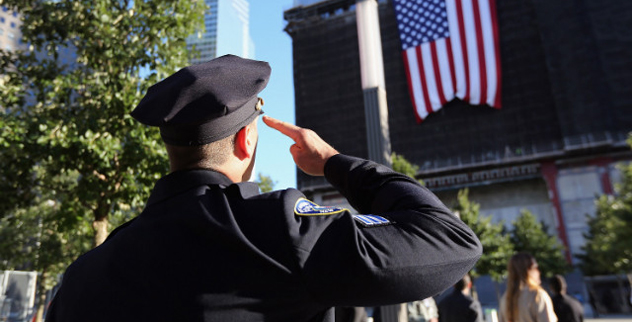
September 11, 2001, began as a bright Tuesday morning and became one of the darkest days in American history. Yet inside that darkness, thousands of ordinary people made extraordinary choices. Among them were police officers who ran toward danger while others were running for their lives. They did not have perfect information, superhero capes, or a movie soundtrack swelling behind them. They had radios, badges, training, courage, and the kind of stubborn sense of duty that says, “Someone needs help, so I’m going.”
During the September 11 attacks, law enforcement officers from multiple agencies responded to the World Trade Center. The New York City Police Department lost 23 officers. The Port Authority Police Department lost 37 officers, the largest single-day loss of life for any police department in American history. In total, 72 law enforcement officers died that day while serving others. This article honors 10 heroic police officers who gave their lives on 9/11, not as statistics, but as people: parents, spouses, runners, teachers, rescue workers, mentors, pranksters, leaders, and neighbors.
This is not a ranking. Heroism is not a sports scoreboard, and courage does not come with a top-ten trophy. These 10 stories are windows into a much larger legacy of sacrifice, public service, and humanity.
Why Police Officers Ran Toward the Towers
When the planes struck the World Trade Center, police officers responded from precincts, bridges, tunnels, transit posts, headquarters, and off-duty locations. Some were assigned to emergency units. Others were not on duty at all. Many knew the buildings well because the World Trade Center was not just a landmark; it was a workplace, transportation hub, tourist destination, and daily part of New York life.
Their mission was simple in wording and nearly impossible in reality: get people out, control chaos, guide the injured, keep evacuation routes moving, and support firefighters and medical personnel. The job demanded quick judgment under extreme pressure. A badge is small enough to fit in a wallet, but on 9/11 it represented something enormous: the promise to protect strangers.
10 Heroic Police Officers Who Gave Their Lives on 9/11
1. Police Officer Moira Ann Smith, NYPD
Officer Moira Ann Smith of the New York City Police Department became one of the most widely remembered police heroes of 9/11. Assigned to the 13th Precinct, she was the only female NYPD officer killed in the attacks. Photographs and survivor accounts helped preserve her image as an officer calmly guiding people through panic, helping the injured, and returning again to assist more people.
Smith’s courage was not loud or theatrical. It was practical. She directed evacuations, reassured frightened civilians, and kept moving when fear would have frozen almost anyone else in place. She left behind a husband and young daughter, but she also left behind a model of public service that continues to inspire NYPD recruits and citizens who visit the 9/11 Memorial.
Her story reminds us that heroism is often quiet. Sometimes it sounds like a steady voice in a stairwell. Sometimes it looks like a police officer pointing the way out when the world has suddenly stopped making sense.
2. Police Officer John William Perry, NYPD
Officer John William Perry was not supposed to be rushing into danger that morning. He was off duty and reportedly at police headquarters handling retirement-related paperwork. Instead of continuing with his own plans, he ran toward the World Trade Center to help.
Perry had joined the NYPD in 1993 and was remembered as energetic, intelligent, and full of life. He was also a runner who had participated in marathons, including the New York City Marathon. That detail feels almost symbolic: on 9/11, he made one final run, not for a finish line, but for people who needed help.
Officer Perry’s story speaks to the heart of duty. No supervisor had to pull him by the sleeve. No one had to explain that the situation was dangerous. He understood, and he went anyway. In an age when many people ask, “What’s in it for me?” Perry’s final act answered a better question: “Who needs me right now?”
3. Police Officer Ramon Suarez, NYPD
Officer Ramon Suarez of the NYPD was among the officers who died while attempting to rescue people trapped at the World Trade Center. He served in the Transit Bureau, a part of city policing that millions of New Yorkers depend on but may not think about unless a train is delayed and everyone suddenly becomes a transportation critic.
Transit officers know crowds, confusion, underground spaces, exits, platforms, and the art of keeping people moving safely. On 9/11, that experience mattered. Suarez responded in a moment when the city’s transportation systems and emergency systems were under overwhelming strain.
His sacrifice reflects a powerful truth: not every hero’s story is preserved in a famous photograph. Some legacies live through the names read aloud each anniversary, the family members who keep memories alive, and the colleagues who remember how an officer served long before history called his name.
4. Police Officer Walter Edward Weaver, NYPD
Officer Walter Edward Weaver was another NYPD officer killed while trying to rescue victims at the World Trade Center. He served with the Emergency Service Unit, a specialized branch trained for high-risk rescue, tactical response, and crisis situations. In plain English, ESU officers are often the people called when the situation is already well past “ordinary.”
Weaver’s colleagues remembered him as skilled, dependable, and deeply committed to the work. Emergency Service Unit officers train for danger, but training does not erase fear. It gives people a way to act despite fear. On 9/11, Weaver and his fellow officers put that training into motion under conditions no training manual could fully imagine.
His name continues to be honored in memorial events, tower climbs, and law-enforcement remembrances across the country. When people carry the name of a fallen officer during a memorial climb, they are doing something more than exercise. They are carrying a story upward, step by step.
5. Police Officer Ronald Philip Kloepfer, NYPD
Officer Ronald Philip Kloepfer was killed while responding to the terrorist attacks at the World Trade Center. Like so many NYPD officers who died that day, his final hours were spent in service to people he may never have met.
Kloepfer’s remembrance pages include tributes from family members, colleagues, and citizens who continue to thank him for his bravery. Those messages matter. They show how a life of service does not end when the radio goes silent. It continues in children, friends, fellow officers, and strangers who pause each September to say a name and mean it.
His story is part of the larger NYPD legacy of 9/11: officers from different commands, backgrounds, and stages of life converging on the same mission. They were not thinking about history books. They were thinking about hallways, stairwells, exits, and people who needed a way out.
6. Captain Kathy N. Mazza, Port Authority Police Department
Captain Kathy N. Mazza was one of the highest-ranking women in the Port Authority Police Department. She was also the first female PAPD officer killed in the line of duty. On 9/11, Mazza responded to the World Trade Center and helped evacuate people from the North Tower.
Accounts of her actions describe a leader who made fast decisions in a collapsing situation. She helped create an escape route and assisted people who could not move quickly on their own. Her courage was leadership in its purest form: not giving speeches, not waiting for perfect conditions, but doing the next necessary thing.
Mazza had already broken barriers in law enforcement before 9/11. She served as a police academy commander and helped shape future officers. On that morning, she became a final example of what she had taught: preparation, courage, compassion, and command presence when seconds matter.
7. Police Officer George G. Howard, Port Authority Police Department
Officer George G. Howard served with the Port Authority Police Department and helped build its Emergency Service Unit. He was also a volunteer firefighter in Hicksville, New York, and was known for training others in rescue and safety work. In other words, helping people was not his side hobby; it was practically his operating system.
Howard had responded to danger before, including the 1993 World Trade Center bombing. On 9/11, he again moved toward the crisis. His badge later became part of a national moment when his mother, Arlene Howard, presented it to President George W. Bush. The badge became a symbol of sacrifice, resolve, and the families behind every fallen officer.
George Howard’s life shows how service can ripple outward. He served as a police officer, firefighter, trainer, father, and community member. His legacy is not just that he died heroically, but that he lived usefully.
8. Director of Public Safety Fred V. Morrone, Port Authority Police Department
Fred V. Morrone was the Superintendent of Police and Director of Public Safety for the Port Authority of New York and New Jersey. He was one of the highest-ranking law-enforcement officials to die on September 11, 2001.
Morrone’s career included service as a New Jersey State Trooper and leadership in the Port Authority Police Department. On the morning of the attacks, he responded as both a commander and a police officer. Leadership, at its best, does not point from a safe distance. It steps forward.
His death was a profound loss for the PAPD, but his influence continued through training, international public-safety cooperation, and the officers he helped lead. A strong leader leaves behind more than a title. Morrone left behind a standard.
9. Police Officer Dominick Pezzulo, Port Authority Police Department
Officer Dominick Pezzulo had served with the Port Authority Police Department for about one year before 9/11. He was assigned to the Port Authority Bus Terminal, a place where a police officer learns quickly how to handle crowds, confusion, complaints, and the occasional commuter who treats a delayed bus like a personal betrayal by civilization.
On September 11, Pezzulo responded with other officers and helped in rescue efforts. Accounts describe him commandeering transportation with fellow officers and later trying to help free another officer. His story stands out because it shows that heroism is not limited by years of service. A veteran can be a hero. A newer officer can be a hero. Courage does not check seniority.
Pezzulo was remembered by friends as someone who knew people, connected with them, and showed up when needed. On 9/11, he showed up for New York in the fullest possible way.
10. Police Officer David P. LeMagne, Port Authority Police Department
Officer David P. LeMagne was only 27 years old. Before becoming a Port Authority police officer, he had years of emergency medical experience, beginning with volunteer ambulance work when he was very young. He later became an EMT and paramedic, building a life around helping people in crisis.
When the World Trade Center was attacked, LeMagne reportedly asked to respond because of his paramedic training. He was later remembered as part of evacuation efforts in the North Tower. Friends and family described him as funny, motivating, and full of energy. He was the kind of person who pushed others to do better, probably with a joke ready in case the motivational speech got too serious.
LeMagne’s story is especially moving because it combines youth, skill, humor, and courage. He had already spent much of his life learning how to save others. On 9/11, he used that training when it mattered most.
The Larger Legacy of 9/11 Police Heroes
These 10 officers represent only a fraction of the law-enforcement sacrifice on September 11. The NYPD, PAPD, court officers, federal agents, and other law-enforcement personnel responded under extreme uncertainty. Many survived the day but later faced long-term health consequences from their work at Ground Zero. Families carried grief into birthdays, graduations, weddings, and quiet mornings when someone’s chair at the table remained empty.
It is tempting to reduce 9/11 remembrance to numbers because numbers feel manageable: 23 NYPD officers, 37 PAPD officers, 72 law-enforcement officers. But numbers cannot tell you who loved fishing, who sang at retirement parties, who ran marathons, who trained rookies, who made coworkers laugh, or who had a child waiting at home. Names do that. Stories do that.
That is why memorials matter. A memorial is not just stone, bronze, water, or carefully arranged names. It is a public promise that memory will not be outsourced to dusty archives. It says: these people were here, they mattered, and we are still learning from them.
Experiences and Lessons from Remembering 9/11 Police Officers
Visiting the 9/11 Memorial or reading the names of fallen officers is not like reading a normal history chapter. It feels personal, even for people who were not alive in 2001. You stand before the names and realize that every engraved letter represents someone’s entire world. A police officer’s name is not merely a line in a ceremony. It belongs to a family story, a locker-room joke, a favorite meal, a vacation photo, a half-finished plan, and a thousand everyday moments that were interrupted.
One experience many visitors describe is the quiet. New York is not famous for quiet. The city honks, hums, argues, sings, sells pretzels, and somehow has construction happening at all hours like concrete is a houseplant that needs constant attention. But at the Memorial, people often lower their voices without being told. That silence becomes a form of respect. It gives visitors space to understand that the officers who died on 9/11 were not abstract symbols. They were real people who made real choices in real time.
Another lesson comes from the variety of their lives. Some officers were senior leaders; others were newer to the job. Some were assigned to emergency units; others came from transit, precinct, or Port Authority posts. Some had decades of experience. Some had only begun their police careers. The common thread was not rank, age, or assignment. It was service. That matters because it makes heroism feel both extraordinary and human. These officers were not born knowing exactly how history would test them. They built habits of responsibility day by day, and when the test came, those habits held.
For families, remembrance is not limited to anniversaries. It is daily life. It is telling children and grandchildren what kind of person their loved one was. It is preserving photographs, badges, stories, uniforms, letters, and memories that might seem small to outsiders but mean everything to those who loved them. For fellow officers, remembrance is also professional. The stories of Moira Smith, Kathy Mazza, George Howard, John Perry, David LeMagne, and many others become lessons in courage, preparation, teamwork, and compassion under pressure.
For the rest of us, the experience should lead to gratitude and responsibility. Gratitude is the easy part, though it should never become lazy. Responsibility is harder. It means treating history with care, resisting the urge to turn tragedy into background noise, and teaching younger generations that public service is built on people willing to help strangers. The best way to honor 9/11 police heroes is not only to say “never forget,” but to live like we remember: with courage, empathy, and a readiness to help when help is needed.
Conclusion
The 10 heroic police officers highlighted here gave their lives on 9/11 while serving others in a moment of unimaginable danger. Their stories are solemn, but they are also deeply human. They remind us that courage can wear a uniform, carry a radio, crack a joke, train a rookie, comfort a stranger, or run toward a building because people inside need help.
September 11 changed America forever. But the actions of these officers also revealed something enduring about America: when terror tried to create only fear, ordinary people answered with service. The names of Moira Smith, John Perry, Ramon Suarez, Walter Weaver, Ronald Kloepfer, Kathy Mazza, George Howard, Fred Morrone, Dominick Pezzulo, and David LeMagne deserve to be remembered not only for how they died, but for how they lived: with purpose, courage, and devotion to others.