

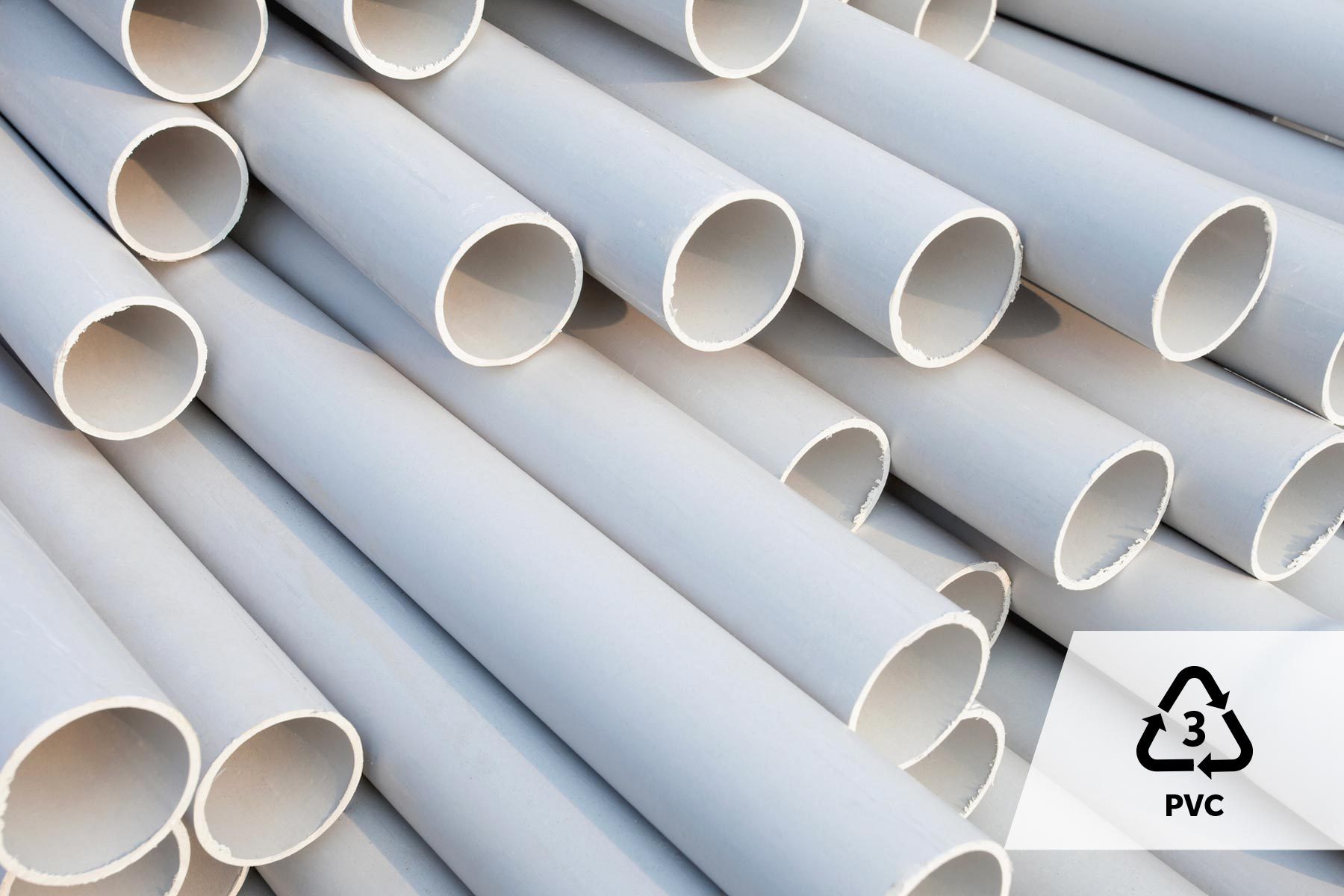
If you’ve ever peeked under a sink or wandered through the plumbing aisle, you’ve met the two plastic celebrities of
American drain systems: ABS (usually black) and PVC (usually white). They both move water where it needs to go
(away from you), they’re both widely used in the U.S., and they both inspire the same question from homeowners:
“Okay… which one is actually better?”
The fun (and mildly annoying) truth is: there’s no universal winner. The best choice depends on
where the pipe is going, how it’s installed, your local plumbing code, and the
real-world conditions it’ll live throughlike cold snaps, sunlight, and that one time your teenager “accidentally”
shoves a storage bin into the basement drain line.
The 30-Second Answer
- For typical indoor DWV (drain, waste, vent) plumbing: both ABS and PVC can be excellent when installed correctly and allowed by local code.
- If you want easier, faster assembly: ABS often wins because it typically uses cement without a primer step.
- If you care about quieter drains: PVC often has the edge for noise reduction in everyday use.
- If you’re dealing with cold temperatures or impact risk: ABS is often favored for toughness in the cold.
- If you’re connecting to an existing system: match what’s already there (and follow code-approved transition methods if you must mix materials).
ABS vs. PVC at a Glance
| Feature | ABS (Black) | PVC (White) |
|---|---|---|
| Common U.S. use | DWV (drains/vents), some building sewers | DWV, building sewers; also widely used for pressure applications (with the right pipe/fittings) |
| Joining method (typical) | ABS cement (often one-step) | PVC primer + PVC cement (often two-step) |
| Cold-temp handling | Often preferred in cold climates for impact resistance | Can become more brittle as temps drop; handle carefully in cold weather |
| Noise | Can be louder in some installs | Often quieter (better sound damping) |
| Sunlight/UV exposure | Typically more sensitive; protect if exposed | Still needs protection, but often considered more UV-tolerant than ABS |
| Availability | Varies by region and supplier | Very widely available |
First, a Quick Reality Check: What These Pipes Are (and Aren’t) For
They’re mainly for DWV, not your pressurized water supply
In most U.S. homes, ABS and PVC are primarily used for DWV systemsthe network that drains wastewater and vents sewer gases.
Your pressurized water supply lines are typically copper, PEX, or CPVC, depending on region and the age of the home.
(So if you’re dreaming of running hot, pressurized water through “whatever plastic is cheapest,” kindly let that dream go.)
Not all “PVC” is the same
A common confusion: people hear “PVC” and assume any PVC pipe works for any job. But there’s a big difference between
DWV-rated PVC and pressure-rated PVC. DWV fittings are shaped to help solids and waste flow smoothly.
Pressure-pattern fittings and certain high-pressure pipes are not automatically appropriate for drainage.
Material Differences That Actually Matter
1) Impact resistance and cold weather toughness
If you’ve ever dropped a tool in the basement and heard that ominous crack, you already understand why impact resistance matters.
In general, ABS is known for higher impact resistance, and many pros like it for areas where the plumbing could get bumpedlike unfinished basements,
garages, or utility rooms. Cold weather can also make plastics less forgiving. PVC can become more brittle as temperatures drop,
which means it may be more prone to cracking from impact when it’s really cold.
Practical takeaway: if your drain line runs through a cold area (unheated crawl space, garage wall, chilly basement) and you’re worried about knocks or drops,
ABS may feel like the tougher friend who shows up wearing steel-toe boots.
2) Noise: the “why does my shower sound like Niagara Falls?” factor
Drain noise depends on pipe type, pipe support, framing, and whether the line is wrapped or insulated. Still, many homeowners and installers report that
PVC tends to muffle water noise better than ABS in typical residential installs.
Practical takeaway: if the drain line runs behind a bedroom wall or above a finished ceilingand you want peace, quiet, and fewer “what is that gurgling?!” momentsPVC often gets the nod.
3) Sunlight and UV exposure
Both ABS and PVC can degrade with long-term UV exposure, but ABS is commonly considered more UV-sensitive.
If either material will be exposed outdoors, it usually needs protectionsuch as paint or a UV-rated wrapfollowing manufacturer guidance and local code requirements.
Practical takeaway: for outdoor runs or exposed sections, plan protection. “It’s plastic” is not a weatherproofing strategy.
4) Temperature limits for typical DWV use
In normal residential DWV service, both materials are designed for typical household wastewater temperatures, not nonstop near-boiling discharge.
As a rule of thumb, DWV thermoplastics are commonly limited to around 140°F operating temperature in many system specifications.
That’s fine for everyday sinks, showers, washing machines, and dishwashersbut it’s not an invitation to pipe lava.
5) Chemical resistance (what’s going down the drain?)
For standard household wastewater, both ABS and PVC hold up well. If you’re draining unusual chemicals (a workshop sink, lab-style uses, certain solvents),
PVC is often described as having broader chemical resistance in many applications. The key point:
your drain system shouldn’t be a chemistry experiment. If it is, consult local code and product data for a pipe system designed for the specific chemicals.
Installation Differences: Where the Real “Better” Often Shows Up
ABS is often a one-step solvent-weld process
ABS joints are typically made with ABS cement. In many common residential applications, it’s essentially:
cut → deburr → dry-fit → cement → assemble. Fewer steps can mean faster installation and fewer chances to mess it up.
(Though, to be fair, plumbers can mess up anything if rushedhuman creativity is boundless.)
PVC typically uses primer + cement (two-step)
PVC joining is commonly a two-step process: primer (often purple, and yes, it stains like a grape crime scene) followed by PVC cement.
Primer softens/cleans the surface to help ensure a strong solvent-weld.
Don’t use primer on ABS
A big rule many manufacturers and guides repeat: primer is not for ABS. Using primer on ABS can harm the material and compromise the joint.
If you’re transitioning between materials (ABS to PVC), follow the instructions for an approved transition methoddon’t improvise.
Plumbing is not the place for “I saw a hack on the internet.”
Code and Compatibility: The “My Inspector Said No” Section
Local code decides what you can use
Model codes like the International Plumbing Code (IPC) and the Uniform Plumbing Code (UPC) influence what’s allowed,
but your local jurisdiction is the final boss. Some areas allow both ABS and PVC; others strongly prefer one.
The “better” pipe is often the one you’re allowed to install without a redo.
Can you connect ABS to PVC?
Sometimesbut the details matter. Many inspectors and trade groups treat ABS/PVC mixing inside a system as a no-go unless done in a very specific, code-permitted way.
In IPC language, one common allowance is a single transition joint between ABS and PVC
at the end of a building drain and the beginning of a building sewer, using a solvent cement that complies with ASTM D3138.
Outside of those limited cases, you’ll often see requirements (or strong recommendations) for mechanical shielded couplings or approved transition fittings.
Practical takeaway: if you must transition, use listed transition materials and follow local code. If you don’t have to transition, don’t.
Your future self (and your future plumber) will thank you.
Cost: Which One Is Cheaper?
Pricing fluctuates by region, supply chain, and project size. In many markets, the difference between comparable ABS and PVC DWV fittings and pipe lengths is
not huge compared to labor and the cost of opening walls. More important than a small price difference:
- Availability: what your local suppliers stock consistently
- Code acceptance: what your jurisdiction approves
- Installation time: extra steps add labor cost
- Callbacks: the most expensive pipe is the one you install twice
So… Which Pipe Is Better for Common Home Scenarios?
Scenario A: You’re replacing or repairing an existing drain line
Best move: match the existing material if possible. If your house already has ABS throughout, replacing a section with ABS keeps things simpler.
If it’s PVC, stick with PVC. Mixing is where you invite complexity, code headaches, and extra parts.
Scenario B: You’re remodeling a bathroom and want a quiet drain
Consider PVC, especially if the drain runs through walls near bedrooms or living spaces. Also consider pipe supports and insulationsound control is a system, not a single product.
Scenario C: Unfinished basement, garage, or a place where the pipe might get bumped
Consider ABS for toughness and impact resistance, especially in colder spaces. It’s also common to hear that ABS is straightforward to assemble quickly.
Scenario D: Exterior exposure or sunlight risk
Either material may need protection outdoors, but ABS is often treated as the more UV-sensitive option.
If you’re forced into an exposed outdoor section, plan on UV protection and follow manufacturer instructions and local requirements.
Scenario E: Transition from house drain to building sewer
If you’re at the specific, code-permitted transition point, use an approved transition methodoften involving
ASTM D3138-listed transition cement (commonly green) or an approved mechanical coupling, depending on local rules.
Common Mistakes to Avoid
- Using the wrong cement: ABS cement for ABS, PVC cement for PVC, and listed transition cement only where permitted.
- Priming ABS: don’t do it. Primer is for PVC/CPVC processes, not ABS.
- Assuming any PVC is fine for DWV: DWV needs DWV-rated pipe/fittings, not random pressure fittings with the wrong geometry.
- Skipping proper support: sagging drains collect gunk. A “slow drain” sometimes starts as “lazy strapping.”
- Ignoring local code: the best pipe is the one that passes inspection and doesn’t get ripped out.
Conclusion: The Real Winner Is the Right Pipe in the Right Place
If you want a simple verdict: ABS and PVC are both great DWV materials when they’re code-approved and installed correctly.
ABS often wins on quick installation and cold/impact toughness. PVC often wins on noise control and broad availability.
The smartest choice is usually the boring one: use what your local code allows, match what’s already installed whenever possible,
and use the correct joining method (including approved transition products only where permitted).
Because nothing ruins a weekend like discovering your “quick plumbing fix” has turned into “open the wall again, but sadder this time.”
Real-World Experiences: What Homeowners and Pros Commonly Notice (About )
Here’s what tends to show up in real projectsnot the glossy “everything went perfectly” version, but the honest, slightly dusty reality that happens when you’re
under a sink with a flashlight in your mouth.
1) The “Why is the pipe black?” moment. Many homeowners first meet ABS during a repair: they cut into a wall and find black pipe.
The immediate assumption is that black means “old,” “weird,” or “probably haunted.” In practice, it usually just means ABS was common (or preferred) when the home was built
or in that region’s supply chain. People often decide to “upgrade” to PVC because it looks newerbut matching materials (when allowed) can be the easiest, most reliable repair path.
The best-looking pipe is the one that doesn’t leak.
2) PVC primer leaves… memories. If you’ve ever watched someone use purple primer, you know it has one setting: “permanent evidence.”
DIYers often learn quickly that primer isn’t a cosmetic stepit’s a process stepbut it will also decorate your hands, the cabinet floor, the dog’s tail (somehow), and your confidence.
People who switch to ABS for a small DWV repair often rave about skipping primernot because primer is “bad,” but because fewer steps can feel more forgiving in tight spaces.
3) Noise becomes a topic when walls are closed. During a remodel, everything seems quiet when the studs are open.
Then drywall goes up, and suddenly the upstairs shower sounds like it’s auditioning for a waterfall documentary.
Many people report that PVC can be a bit quieter, but they also discover the bigger lesson: pipe support, routing, and insulation matter a lot.
A well-strapped ABS line can be less annoying than a poorly supported PVC line that drums against framing every time someone drains a tub.
4) Cold basements teach “handle with care.” In colder climates, it’s common to hear stories of winter repairs where plastics feel less cooperative.
People notice that pipe and fittings can be more brittle when cold, especially if they’re knocked or stressed.
That’s one reason ABS sometimes earns loyalty in chilly basements or garagesinstallers like how it behaves in real-life conditions where the temperature isn’t always room-perfect.
The broader takeaway is simple: store materials properly, avoid impact in cold temps, and don’t force misaligned joints.
5) Transitions are where projects get “interesting.” A classic scenario is a homeowner replacing a section of drain pipe and discovering the old system is ABS while the new fittings they bought are PVC.
At that point, people either (a) run back to the store, (b) Google frantically, or (c) commit the universal DIY sin: “I’m sure this glue works on everything.”
The better experiences come from choosing a code-appropriate transition methodwhether that’s a listed transition cement where permitted or a proper mechanical coupling where required.
The universal lesson, repeated across many successful repairs: when in doubt, don’t mix materials casually. Make transitions deliberate, approved, and boring.
In plumbing, boring is beautiful.