

There is a very specific kind of artistic compliment that feels great for about five seconds and then quietly starts to haunt you: “Your emotes are so cute.” Cute is good. Cute pays bills. Cute gets commissions. Cute also becomes a tiny velvet prison if that is the only thing people ever expect from you.
That tension sits at the center of I Made Some Art, Trying To Break Away From Being An Emote Only Artist (7 Pics), a title that sounds casual on the surface but carries a surprisingly big emotional payload underneath. It is not just a collection of seven images. It is a creative pivot. It is an artist saying, “Hey, I can do more than tiny faces yelling in Twitch chat.” And honestly? That deserves a standing ovation, a retweet, and maybe a dramatic spotlight.
For artists who build their early reputation around emotes, badges, overlays, and other stream-related graphics, stepping into fuller illustration work can feel both thrilling and terrifying. You already have proof that people will pay you for one thing. The problem is that one thing can become your entire identity online. The algorithm learns it. Your audience learns it. Potential clients learn it. Before long, you are not “an artist” anymore. You are “the emote artist.” Useful label. Annoying box.
This article takes a closer look at why this post resonates, what the seven artworks communicate, and why so many digital artists will see themselves in this creative leap. It is also a reminder that growth in art rarely arrives with a trumpet fanfare. More often, it arrives as a nervous post uploaded into the void, asking strangers on the internet, “What do you think of my art?”
Why This Story Hits Home for So Many Digital Artists
Digital artists often begin with highly specific freelance work because it is practical. Emotes are in demand. Streamers need custom assets. Small commissions are easier to book than giant illustration projects. The work is fast, repeatable, and tied to communities that are active every day. On paper, it is a fantastic niche.
But niches have a sneaky habit of becoming cages if artists do not keep expanding. Once you are known for one format, clients start requesting that same format again and again. Your portfolio begins to lean heavily toward it. Your social feed becomes full of similar deliverables. Your personal style may still be growing, but your public identity freezes in place.
That is why this post feels bigger than a simple image roundup. It captures a familiar creative moment: the point where technical skill is no longer the issue, but visibility is. The artist is not asking whether they can make full illustrations. They already did. The real question is whether people will notice them outside the niche that first gave them traction.
And that question is painfully modern. Many artists do not struggle because they lack ability. They struggle because platforms reward consistency so aggressively that experimentation can look like a mistake. Post what worked before, says the feed. Stay in your lane, whispers the audience. Meanwhile, the artist is over there drawing fan art, line art, original characters, and polished illustrations like a kid trying to break out of a school talent show by suddenly performing full Broadway.
The Seven Pieces That Signal a Bigger Creative Identity
The beauty of this collection is that it does not feel random. The seven images work like a small portfolio sampler, showing range without turning into chaos. That balance matters. If an artist wants to move beyond “emote only” work, they need to prove two things at once: first, that they have variety; second, that their voice still feels consistent.
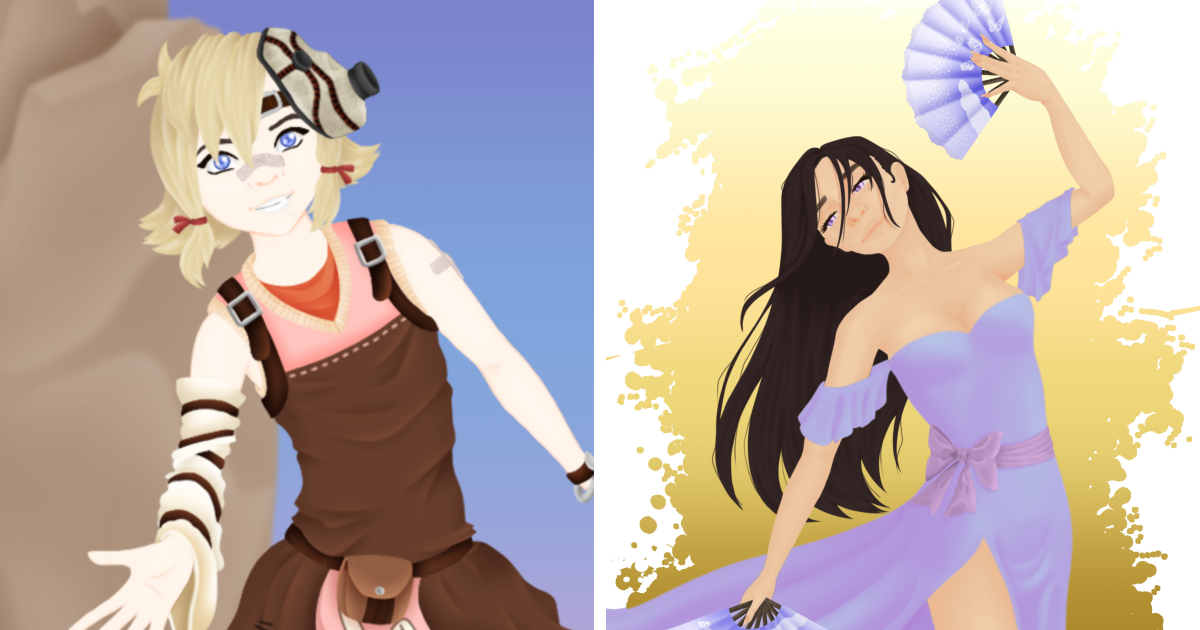
1. Original Art, Dancer
Starting with an original piece is smart. It immediately shifts the conversation away from commissioned utility and toward imagination. A dancer as a subject also suggests motion, rhythm, and anatomy, which are a world away from the compressed facial shorthand of emote design. This is the artist saying, “I can build a full scene and a full feeling, not just a tiny reaction image.”
2. Kingdom Hearts Halloweentown Outfits
Here, the artist leans into stylization and fandom. That matters because fan art is often the bridge between commercial niche work and broader illustration visibility. It lets artists demonstrate costume design, recognizable characters, and atmosphere while still tapping into an audience that is eager to share. Also, let us be honest: if you are going to flex your visual imagination, spooky alternate outfits are an excellent way to do it.
3. Borderlands’ Tiny Tina Fanart
This piece likely serves as a tone test. Tiny Tina is chaos in human form, which means fan art around her has to carry personality, energy, and attitude. That is a different skill from clean, branded streamer assets. It requires storytelling through pose, expression, and visual intensity. In other words, it is a portfolio signal that the artist can handle character-driven illustration with punch.
4. Happy Birthday Illustration For A Friend
This is where the work becomes personal in a different way. A birthday illustration suggests relationship, specificity, and emotion. It shows that the artist can create custom art that feels intimate rather than transactional. That is a valuable middle ground between fandom and commission work, because it hints at an ability to make images that mean something to the person receiving them.
5. Line-Art Of Wonho
Line art can be brutally revealing. Without flashy rendering, the artist cannot hide behind effects. Structure, proportion, flow, and confidence have to do the heavy lifting. Including a line-art piece in a seven-image set is a bold move, and a smart one. It tells viewers that the work is not just about surface polish. There is actual draftsmanship underneath the sparkle.
6. Klonoa: Door To Phantomile
This piece widens the portfolio again, likely tapping into nostalgia and game-inspired aesthetics. That matters because artists who come from streaming culture often overlap with gaming communities. A piece like this can connect with audiences who already understand character art, fan culture, and stylized worlds. It shows that the artist is not abandoning their roots; they are expanding them.
7. Genshin Impact’s Zhongli Fanart
Ending on a more recent work gives the collection momentum. It tells viewers that this is not an old experiment pulled from a dusty folder labeled “maybe someday.” It is current. It is active. It is where the artist is heading. And when an artist includes their most recent piece in a set like this, they are quietly saying that this direction is not a detour. It is the road.
What “Emote Only Artist” Really Means
The phrase sounds simple, but it carries a lot. On one hand, being known for emotes means you have a marketable skill. Emotes matter on Twitch and similar platforms because they are part branding, part community language, and part digital identity. Streamers care about them because viewers use them constantly. Good emote work is not lesser art. It is focused art.
The trouble starts when focused art becomes total branding. Emotes are tiny by design. They reward readability, exaggeration, and instant recognition. Full illustrations play a different game. They ask for composition, mood, world-building, color storytelling, and patience from the viewer. One discipline can absolutely feed the other, but the public does not always see that connection.
So when an artist says they are trying to break away from being an emote-only artist, they are not insulting their earlier work. They are asking for permission to be seen as larger than their most marketable format. That is a big difference. It is the gap between “I make a product” and “I have a creative voice.”
This is why the post feels vulnerable. It is one thing to upload work that matches what your audience already expects. It is another thing to interrupt the pattern and say, “I know you came here for one thing, but this is also me.” That kind of post is not just content. It is identity negotiation with an audience, an algorithm, and your own self-doubt all at once. No pressure, right?
Why Breaking Out of a Niche Is So Hard Online
The internet loves labels because labels make people easy to sort. The problem is that artists are not socks. You cannot fold them into neat categories forever and expect them to stay there without wrinkling.
Artists who want to branch out usually run into four problems. First, their existing audience may only engage with one type of work. Second, new viewers often discover them through older, narrower posts. Third, platforms tend to reward repeatable content patterns. And fourth, artists themselves can become hesitant to share experiments because those pieces may perform worse in the short term.
That last point is brutal. Low engagement does not necessarily mean weak art, but it sure knows how to pretend. Many artists have posted strong personal work only to watch it sink beneath a sea of more practical, more clickable content. Over time, that can train creators to make safer choices. Not because they are less imaginative, but because disappointment is exhausting.
That is what makes this seven-image post compelling. It pushes against that pattern. Instead of waiting for a perfect rebrand or a magical audience reset, the artist simply shows the work. Sometimes that is the move. Not a manifesto. Not a complicated strategy thread. Just art, presented clearly, asking to be seen.
What Other Artists Can Learn From This Post
Build a bridge, not a total identity swap
This post does not reject the artist’s history with emotes and streaming culture. It builds from it. The collection includes fan art, stylized work, and pieces that still feel connected to internet-native creative communities. That is a smart transition. Reinvention works better when it feels like evolution.
Show range without looking scattered
Range is important, but random is not a strategy. The seven pieces work because they highlight different strengths while still feeling connected by sensibility. Artists trying to expand their portfolio should think in terms of themes, not chaos. You want viewers to say, “Wow, you can do a lot,” not, “Did three different people post this?”
Use personal work to attract the work you actually want
One of the oldest truths in creative careers is also one of the most annoying: you often get hired for what you show. If your portfolio is all emotes, clients will ask for emotes. If your portfolio includes polished character art, fan illustrations, and original concepts, you give people more ways to imagine hiring you.
Ask for visibility without apologizing for ambition
There is a humility to the original post, but also a quiet boldness. The artist is asking for feedback, yes, but also claiming space. That matters. Artists do not need to pretend they are casually, accidentally good at things. It is okay to want your fuller work to be seen. It is okay to say you are growing. It is okay to outgrow the label that once helped you start.
The Bigger Conversation: Small Assets, Big Talent
There is also something worth saying about emote artists themselves. Internet culture has a habit of treating small-format creative work as if it is somehow less serious. That is nonsense. Making art that reads clearly at tiny scale is difficult. Designing expressive faces, readable silhouettes, and brand-consistent visuals in a compact format takes real skill.
In fact, artists who come from emotes often have excellent fundamentals in clarity, expression, and stylization. Those are not limitations. They are strengths. The challenge is not escaping those skills. The challenge is convincing people that those skills can blossom into larger, more layered work.
This is why posts like this matter. They help break the false divide between “practical online art” and “real art.” Both are real. Both are work. Both require craft. The difference is scale, intention, and context. What this artist is doing is not abandoning one form for a more respectable one. They are widening the frame around what they have always been capable of.
Conclusion
I Made Some Art, Trying To Break Away From Being An Emote Only Artist (7 Pics) works because it captures a turning point that many digital creators know by heart. It is about visibility, yes, but it is also about artistic self-definition. These seven pieces are not just portfolio samples. They are evidence of a creator trying to be seen in full instead of in miniature.
That makes the post quietly powerful. Beneath the fan art, original work, line art, and character pieces is a familiar creative truth: the internet may discover you through one thing, but that does not mean it gets to decide everything you are. Sometimes the most important move an artist makes is not chasing the next commission. It is posting the work that proves they are bigger than the lane they started in.
And if that post feels a little brave, a little awkward, and a little like tossing your heart into the timeline wrapped in PNG files, well, that probably means you are doing it right.
Experiences Artists Commonly Face When Trying To Move Beyond Emote Work
One of the strangest experiences for artists in this position is realizing that success can create its own problem. At first, getting known for emotes feels like a win, because it is one. People hire you. Streamers recommend you. You build workflow speed, client communication skills, and a reputation for delivering exactly what a niche audience wants. Then one day you open your gallery and realize half your work looks like it belongs in a very expressive sticker drawer. A profitable sticker drawer, sure, but still a drawer.
That is usually when the itch starts. Maybe it begins with a personal piece you make on the weekend. Maybe it is fan art you post because no client asked for it and that freedom feels weirdly luxurious. Maybe it is an original character that has been living in your sketchbook for months, tapping their foot impatiently like, “Hello, are we ever leaving chat-bubble town?” Suddenly, you remember that you did not start making art just to crop faces at tiny sizes. You started because you wanted to build worlds, moods, outfits, stories, and people.
Then comes the second experience: fear that nobody will care. This is where many artists get stuck. Your emote posts may get reliable engagement, but your full illustrations can feel harder to “sell” to an audience trained for fast, familiar content. The reaction is often quieter. The comments are fewer. And because artists are human beings with beating hearts and internet access, they immediately wonder whether the new work is worse. Often it is not worse at all. It is simply asking the audience to look differently, and not every audience member is ready for that.
There is also the weird guilt. Some artists feel guilty for wanting more than the niche that helped them earn money. They worry that branching out sounds ungrateful, or that leaving a known lane means betraying the community that supported them. But growth is not betrayal. Expanding your portfolio does not erase where you came from. It adds context to it. The same artist who can make a perfect emote can also create a dramatic character illustration, a thoughtful original composition, or a piece of fan art packed with emotion. Those skills are cousins, not enemies.
Another common experience is discovering that personal work changes the kind of clients who approach you. The moment you post fuller illustrations, you may start attracting people who want posters, character sheets, cover art, social graphics, or personal commissions with more storytelling. That shift does not always happen overnight, but it does happen. People can only hire the version of you that they can see. If you never show the bigger work, they never imagine asking for it.
Finally, there is the most important experience of all: relief. Relief that your art can breathe again. Relief that you do not have to be one thing forever. Relief that experimenting did not break your identity, but expanded it. For many artists, that is the real reward of posting work like these seven images. It is not just about likes or visibility. It is about hearing yourself say, “Yes, this is also me,” and believing it a little more each time you create.