

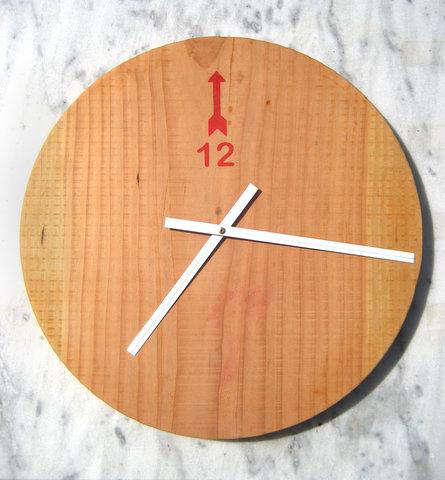
Some home accessories shout. Others politely clear their throat, adjust their tiny design glasses, and somehow make the whole room look smarter. The Minimal Wooden Clock by Merrick Angle belongs firmly in the second group. It is simple, handmade, warm, graphic, and quietly confidentthe kind of wall clock that does not need chrome, flashing digits, fake vintage distressing, or a motivational quote about coffee to earn attention.
Originally spotlighted as a design accessory, this minimal wooden clock captures several ideas that still feel fresh today: reclaimed materials, honest craft, warm minimalism, graphic clarity, and the useful beauty of an analog object. In an age when most of us check the time on phones, laptops, ovens, microwaves, cars, and occasionally the expression on a teacher’s face, a wall clock has to do more than tell time. It has to belong.
Merrick Angle’s clock does exactly that. Handmade from reclaimed Limousin Douglas timber and screenprinted with a simple “Arrow 12” design, it turns a practical object into a small piece of functional wall art. It is not loud. It is not fussy. It is not trying to become the main character of your living room. But give it a clean wall, a little daylight, and a calm interior, and suddenly the room feels edited in the best possible way.
Who Is Merrick Angle?
Merrick Angle is a British designer and illustrator associated with Double Merrick, a creative identity rooted in rural France. His work often draws from vintage ephemera, old educational charts, retro advertising, language books, and mid-century graphic references. That background matters because the Minimal Wooden Clock is not just “a round piece of wood with hands.” It carries the eye of an illustrator: strong shape, restrained detail, and a bold but simple visual idea.
The “Arrow 12” motif is a perfect example. Rather than crowding the face with numerals, minute marks, decorative flourishes, or a tiny brand logo trying to look important, the clock uses one strong directional graphic. It tells your eye where noon lives. The rest of the face is left open, allowing the wood grain to do what wood grain does best: look quietly interesting without asking for applause.
Product Snapshot: What Makes This Clock Special?
Handmade from Reclaimed Limousin Douglas Timber
The clock was crafted from reclaimed Limousin Douglas timber, a wood known for its warm orangey-red tone. This is one of the reasons the piece feels different from mass-market minimalist clocks. Many minimalist wall clocks rely on flat white plastic, powder-coated metal, or pale plywood. Those can look crisp, but they may also feel cold. This clock has warmth built into its material.
Reclaimed timber also gives the accessory an extra layer of character. It suggests reuse rather than waste, story rather than sameness, and texture rather than sterile perfection. In a minimal interior, that matters. Minimalism can become lifeless if every object is too polished. Wood, especially reclaimed wood, introduces natural variation. No two boards behave exactly the same, which means the clock feels designed but not robotic. Very important: your wall does not want to live inside a spreadsheet.
A Simple Screenprinted “Arrow 12” Design
The screenprinted design gives the clock its graphic personality. The arrow at the 12 o’clock position acts as both a time marker and a visual signature. It is practical, but it also has the charm of old signage, workshop labels, and vintage instructional graphics. This is where Merrick Angle’s illustration background quietly steps forward.
Screenprinting also suits the object. It is direct, tactile, and slightly human. Unlike a glossy factory decal, a screenprinted mark can feel integrated with the surface. On a wooden clock, that makes the design look less like decoration pasted on top and more like part of the object’s identity.
Waxed Finish and Quartz Mechanism
After being cut, sanded, screenprinted, dried, and waxed, the clock was fitted with a quartz mechanism. The waxed finish is important because it supports the natural look of the wood rather than burying it under a heavy, shiny coating. A high-gloss finish might have made the clock feel more formal, but wax keeps it approachable.
The quartz mechanism adds everyday practicality. This is still a clock, after all. Design objects are lovely, but if they cannot do their job, they become expensive wall guests who refuse to help with dinner. A simple battery-powered movement makes the piece easy to live with.
Why Minimal Wooden Clocks Still Work in Modern Interiors
Wall clocks have had a strange journey. Once essential, they became less necessary when phones took over timekeeping. But that did not make them useless. It made them more decorative, more intentional, and more expressive. A wall clock now works like art with a job. It fills space, adds rhythm, and gives a room a focal point without requiring a museum label.
A minimal wooden clock is especially useful because it balances function with atmosphere. The wood adds warmth. The simple face prevents visual clutter. The analog hands introduce movement, but not the exhausting kind. There is no blinking screen, no notification, no tiny digital drama. Just time, moving politely.
That is why a clock like Merrick Angle’s fits so well into warm minimalist homes, Scandinavian-inspired rooms, rustic-modern spaces, creative studios, kitchens, entryways, and quiet work corners. It looks considered without looking precious. It can live with linen curtains, white walls, plaster finishes, black-framed art, open shelving, ceramic bowls, and that one chair everyone bought because the internet said it was “timeless.”
The Design Language: Warm Minimalism, Not Empty Minimalism
Minimalism often gets misunderstood as “own almost nothing and make your house look like a very expensive waiting room.” Good minimalism is not about emptiness. It is about editing. It keeps what matters, removes what distracts, and lets materials breathe.
The Minimal Wooden Clock by Merrick Angle fits this philosophy because it has enough personality to matter but not so much personality that it hijacks the room. The round shape softens walls and furniture with straight lines. The timber warms up neutral palettes. The printed arrow adds graphic contrast. The lack of numbers creates visual calm.
This is the difference between plain and minimal. Plain says, “I forgot to finish decorating.” Minimal says, “I made a choice.” The Merrick Angle clock clearly belongs to the second camp.
How to Style a Minimal Wooden Clock
1. Let It Breathe on a Clean Wall
This clock looks best when it has a little space around it. Do not crowd it with too many frames, shelves, hooks, calendars, keys, postcards, and one mysterious receipt from 2021. Negative space gives the clock authority. A blank wall above a bench, console, small desk, or dining nook can be enough.
The clock’s approximately 17-inch diameter gives it presence without making it oversized. It can anchor a small wall on its own or join a carefully edited arrangement. If the wall is narrow, the round shape can soften the vertical line. If the room is wide, it can serve as a calm punctuation mark.
2. Pair It with Natural Textures
Because the clock is made of wood, it pairs beautifully with other natural materials. Think linen, cotton, stoneware, wool, rattan, cork, leather, clay, and matte metal. The goal is not to turn your home into a woodland cabin unless that is your dream. The goal is to create a layered, comfortable room where the clock feels connected to the rest of the space.
For example, place it above a pale oak console with a ceramic lamp and a woven basket underneath. Or use it in a kitchen with open shelves, handmade mugs, and a small herb pot. In a home office, it can sit above a simple desk with a wooden tray, a black task lamp, and a notebook that absolutely contains brilliant plans and not just snack reminders.
3. Use It to Warm Up White or Gray Rooms
White walls and gray furniture can look elegant, but they can also drift into “conference room where joy goes to update spreadsheets” territory. A wooden wall clock helps. Its red-orange Douglas timber tone adds warmth without introducing a loud color scheme. It is a subtle accent, not a paint emergency.
In rooms with cool palettes, wood creates balance. It makes the space feel more grounded and human. This is especially helpful in rentals, apartments, studios, and modern homes where architecture may be simple and surfaces may be flat.
4. Contrast It with Black Details
A minimal wooden clock works beautifully with black accents. Black picture frames, black cabinet pulls, black sconces, or a black-framed mirror can echo the graphic strength of the arrow print. This pairing creates a clean modern look while keeping the wood from feeling rustic in the farmhouse sense.
The result is crisp but warm. It says “modern home,” not “barn wedding centerpiece.” That is an important distinction.
Where This Clock Works Best
Kitchen
The kitchen is a natural home for an analog clock. It helps with timing coffee, pasta, meetings, homework, and the exact moment when everyone suddenly appears because snacks are involved. A wooden clock adds softness to tile, stone, stainless steel, and painted cabinetry.
Dining Room
In a dining room, the clock can act as a low-key focal point. Place it above a sideboard or on a wall opposite a window. Its quiet design keeps the room relaxed, while the wood tone complements dining chairs, table finishes, or woven lighting.
Home Office
A minimal analog clock is ideal for a workspace because it keeps time visible without inviting digital distraction. Unlike a phone, it will not tempt you into checking messages, watching videos, or discovering that somehow you have spent 18 minutes comparing desk organizers.
Entryway
An entryway needs objects that are useful and attractive. This clock can help you leave on time while making the first impression of the home feel thoughtful. Pair it with a simple bench, hooks, and a small tray for keys.
Bedroom
If the mechanism is quiet enough for your sensitivity, a wooden wall clock can work beautifully in a bedroom. Its natural material and simple shape support a calmer mood than bright digital displays. Keep the styling soft: linen bedding, warm neutrals, and one or two personal objects rather than a crowded wall.
Why Reclaimed Wood Adds Meaning
The reclaimed wood element is more than a design detail. It connects the clock to a broader movement toward reuse, sustainability, and thoughtful consumption. A small accessory will not save the planet by itselfno clock has that kind of superhero capebut choosing reclaimed materials does encourage better design habits.
Reclaimed wood reduces the need for newly harvested material and gives existing timber another life. It also brings visual depth that newly manufactured surfaces often lack. Knots, grain variation, color shifts, and tiny imperfections are not flaws in this context. They are the reason the piece feels alive.
In home decor, sustainability works best when it does not feel like homework. The Merrick Angle clock is a good example: it is attractive first, responsible second, and preachy never. Nobody wants a wall clock that lectures guests during dinner.
Minimal Does Not Mean Boring
The clock’s design proves an important point: minimal accessories can still have wit. The single arrow at noon is slightly playful. It turns the clock face into a graphic statement while remaining useful. It is the design equivalent of a raised eyebrowsubtle, but definitely doing something.
This is where many minimalist products fail. They remove so much that the object loses character. Merrick Angle’s design avoids that trap. The warm wood, round form, hand-finished surface, and screenprinted arrow give it enough identity to be memorable.
What to Consider Before Buying a Minimal Wooden Clock
Scale
Measure your wall before choosing a clock. A 17-inch clock can look perfect above a small console or in a kitchen, but it may feel small on a very large open wall unless paired with furniture or other decor. The clock should look intentional, not lost.
Color Temperature
Wood tones matter. Douglas timber with an orangey-red hue pairs well with warm whites, creams, muted greens, soft grays, black accents, terracotta, and natural textiles. If your room has very cool flooring or blue-gray paint, the clock can add welcome contrast.
Noise
Quartz clocks vary in sound. If you plan to use a clock in a bedroom or study, check whether the movement is silent or ticking. Some people find ticking charming. Others hear it at 2 a.m. and begin negotiating with the ceiling.
Availability
Because this clock was originally featured years ago, availability may vary. Treat the design as both a specific product and a reference point: reclaimed wood, simple graphics, analog warmth, and handmade character. If the original is not available, those qualities can guide your search for a similar piece.
Design Experience: Living with a Minimal Wooden Clock
There is something surprisingly calming about having a simple wooden clock in a room. I first noticed this in a small workspace where the wall above the desk looked unfinished. Art felt too decorative, shelves felt too busy, and leaving it blank made the whole corner look like it had given up halfway through getting dressed. A minimal wooden clock solved the problem because it added shape, warmth, and purpose all at once.
The experience is different from using a digital clock. A digital display gives information instantly, but it also feels connected to devices, deadlines, alarms, and the general circus of modern life. An analog wooden clock feels slower, even though time is obviously moving at the same speed. The hands create a visual rhythm. You glance at it, understand the hour, and return to what you were doing without being pulled into a screen.
In a kitchen, a wooden clock becomes part of daily rituals. It watches over breakfast, late lunches, boiling water, and the heroic attempt to cook dinner while answering messages. The natural material looks especially good near mugs, cutting boards, fruit bowls, and open shelving. It does not need a dramatic spotlight. Morning light is enough.
In a living room, the clock can help organize a wall without making it feel decorated to death. One of the best styling approaches is to hang it slightly off-center above a low cabinet, then balance it with a lamp, a stack of books, and a plant. The result feels casual but composed. Nothing screams “designer was here,” which is usually a good thing. The best rooms look lived in, not staged for a furniture catalog where nobody owns charging cables.
The wood also changes how the room feels emotionally. Smooth white walls can be beautiful, but too many flat surfaces create a cold atmosphere. A wooden clock introduces grain, warmth, and evidence of the natural world. It is a small biophilic gesture, but small gestures matter. You do not need to install a living moss wall or move your sofa into a greenhouse to bring nature indoors. Sometimes a single honest material does the job.
Another benefit is flexibility. A minimal wooden clock can move from room to room as your home changes. It may start in the kitchen, shift to a home office, then end up in an entryway years later. Because the design is restrained, it does not lock you into one trend. It can work with Scandinavian, rustic-modern, Japandi, contemporary, cottage, or eclectic interiors. The clock is adaptable because it is simple, and simplicity is one of the few design decisions that rarely asks for an apology later.
The most enjoyable part, though, is that a clock like Merrick Angle’s feels human. It has a maker’s sensibility. The reclaimed timber suggests place. The screenprinted arrow suggests hand and eye. The waxed finish suggests touch. Together, these details create an object that is useful without being boring and decorative without being silly. That is a difficult balance to achieve, especially for something as familiar as a wall clock.
If you are trying to make a room feel calmer, warmer, and more intentional, this kind of accessory is a smart place to start. It does not require repainting, renovation, or a furniture budget that causes dramatic music to play in your head. It simply asks for a wall, a battery, and enough breathing room to be noticed.
Conclusion: A Quiet Design Object with Lasting Charm
The Minimal Wooden Clock by Merrick Angle is a reminder that good accessories do not need to be complicated. Its appeal comes from a clear design idea: reclaimed wood, simple shape, hand-finished warmth, and one confident graphic mark. It belongs to the world of useful objects that make a home feel more thoughtful without making it feel overdesigned.
For anyone drawn to minimal decor, warm natural materials, handmade accessories, and analog charm, this clock offers a strong lesson: simplicity works best when it has soul. The reclaimed Douglas timber gives it warmth. The screenprinted arrow gives it wit. The quartz movement gives it function. Together, they create an accessory that does what the best home objects doit quietly improves the room, then lets you get on with your life.
Note: This article is written as an editorial-style design feature for web publishing. Product availability, price, and shipping details may have changed since the original feature, so readers should verify current details before purchasing.