

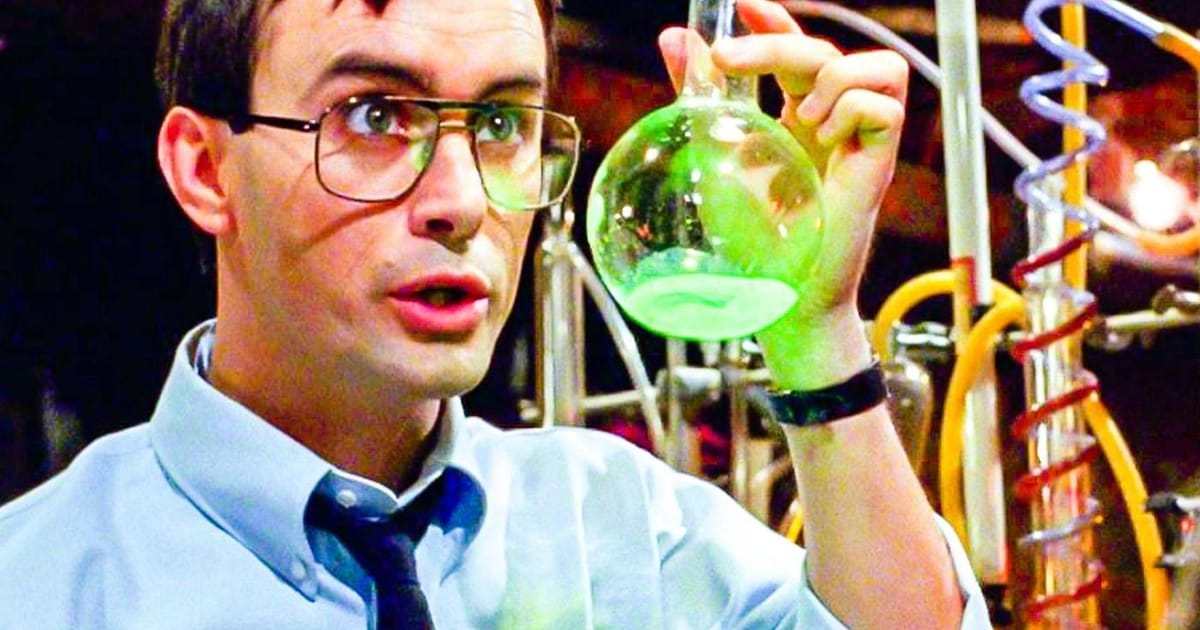
Bride of Re-Animator is the kind of horror sequel that walks into the laboratory wearing mismatched shoes, carrying a jar of glowing green reagent, and somehow still expects to be taken seriously. Released in 1990 and directed by Brian Yuzna, the film follows Dr. Herbert West and Dr. Dan Cain as they continue their very questionable war against death, common sense, medical ethics, and probably several hospital insurance policies.
As a follow-up to Stuart Gordon’s 1985 cult classic Re-Animator, this sequel has always lived in a strange ranking zone. Some fans see it as a worthy, gooey, practical-effects-loaded continuation. Others feel it cannot match the manic precision, erotic danger, and wicked black comedy of the original. Both opinions are fair. That is what makes Bride of Re-Animator such a fun movie to rank, debate, and revisit.
This article breaks down the film’s place in the Re-Animator franchise, its best scenes, performances, special effects, themes, flaws, and long-term reputation. Consider this a ranking guide with opinions, analysis, and just enough laboratory smoke to make the neighbors concerned.
Quick Overview: What Is Bride of Re-Animator About?
Bride of Re-Animator takes place after the infamous events at Miskatonic University. Herbert West, played with deliciously icy intensity by Jeffrey Combs, is still obsessed with defeating death. Bruce Abbott returns as Dan Cain, whose grief over Meg Halsey gives West a fresh emotional lever to pull. The big idea this time is not merely bringing dead bodies back to life. West wants to build a new human being from separate body parts, using Meg’s preserved heart as the emotional centerpiece.
That premise openly nods to Bride of Frankenstein, but the movie filters classic monster tragedy through splatter comedy, mad-science melodrama, and extremely sticky practical effects. There are severed limbs, flying heads, stitched-together experiments, rejected creations, and one unforgettable Bride who deserves more screen time than she receives.
Overall Ranking: Where Does Bride of Re-Animator Stand?
In the Re-Animator trilogy, the most common ranking usually looks like this:
- Re-Animator the sharpest, funniest, and most influential film in the series.
- Bride of Re-Animator the messier but highly entertaining sequel with excellent practical effects.
- Beyond Re-Animator a later follow-up with fun moments but less of the original chemistry.
That ranking feels right. Bride of Re-Animator is not the strongest film in the franchise, but it is far from a disposable sequel. It has enough imagination, gore, and Jeffrey Combs energy to earn its place as the second-best entry. If the original is a perfect syringe of horror-comedy adrenaline, Bride is the same serum after someone shook the bottle, dropped it down the stairs, and injected it anyway.
Ranking the Best Elements of Bride of Re-Animator
1. Jeffrey Combs as Herbert West
Jeffrey Combs remains the film’s greatest asset. His Herbert West is not loud, sloppy, or cartoonish. He is precise, arrogant, and terrifyingly calm. That is what makes him funny. West can look at a disaster involving multiple dead bodies and speak as if he is troubleshooting a coffee machine.
In Bride of Re-Animator, Combs gets several speeches that reveal West’s warped logic. He does not see himself as evil. He sees himself as a scientist surrounded by cowards, corpses, and people who keep interrupting genius. His performance ranks first because it holds the film together whenever the plot starts wobbling like a reanimated ankle.
2. The Practical Effects
The special effects are the main reason many fans revisit the movie. The film is packed with grotesque invention: crawling limbs, strange hybrid creatures, anatomical puppet-like movement, and body-part experiments that feel like rejected sculptures from the world’s worst medical school art fair.
The practical effects work gives the movie texture. Even when an effect looks rubbery by modern standards, it feels alive in a way digital gore often does not. You can sense the hands, latex, wires, paint, and late-night madness behind each creature. That handmade quality is central to the film’s charm.
3. The Bride Herself
Kathleen Kinmont’s Bride is one of the film’s most tragic and visually striking ideas. Built from pieces and animated by a dead lover’s heart, she represents both West’s scientific ambition and Dan’s unresolved grief. Her awakening should be the emotional and thematic peak of the movie, and in many ways it is.
The problem is that the Bride arrives late. She is powerful, sad, confused, and memorable, but the movie spends so much time on subplots that her presence feels too brief. Still, as a horror image, she ranks extremely high. She is beautiful, horrifying, and heartbreaking all at once.
4. Brian Yuzna’s Wild Sequel Energy
Brian Yuzna does not simply copy Stuart Gordon’s style. He pushes the sequel toward body-horror surrealism. The result is less disciplined than the first film, but also more visually unhinged. Yuzna seems fascinated by the idea of bodies as unstable machines, which makes Bride of Re-Animator feel like a cousin to his earlier cult film Society.
This direction works best when the film embraces chaos. The basement lab, the cemetery, the stitched experiments, and the collapsing finale all show Yuzna at his most gleefully grotesque.
5. The Frankenstein Influence
The movie’s connection to Bride of Frankenstein is obvious from the title, but the influence goes deeper than a simple reference. Like classic Frankenstein stories, Bride of Re-Animator asks what happens when scientific creation becomes emotional possession. Dan wants love restored. West wants proof. The Bride wants identity. Nobody gets exactly what they want, because this is not that kind of wedding.
Ranking the Weakest Parts of the Film
1. The Script Is Not as Tight as the Original
The biggest criticism of Bride of Re-Animator is that it lacks the original film’s clean narrative drive. Re-Animator moves like a machine. Every scene builds pressure. Every joke has teeth. Every escalation feels insane but inevitable.
Bride, by comparison, sometimes feels like three or four weird ideas stitched together. That is thematically appropriate, yes, but it still affects the pacing. The movie can be fascinating in pieces while feeling uneven as a whole.
2. Dan Cain’s Character Choices Are Frustrating
Dan Cain is meant to be the emotional center, but he often comes across as shockingly easy to manipulate. After everything Herbert West caused in the first film, Dan still allows himself to be pulled back into the nightmare. Grief explains some of it. Curiosity explains more. But at a certain point, viewers may want to sit Dan down and say, “Buddy, maybe stop helping the corpse enthusiast in your basement.”
3. Dr. Hill’s Return Feels Forced
David Gale’s Dr. Hill is unforgettable in the original, but his return in Bride of Re-Animator is not always smoothly integrated. The flying head concept is outrageous and fun, yet the subplot sometimes distracts from the stronger Bride storyline. Hill adds spectacle, but he also makes the movie feel crowded.
4. The Bride Needed More Screen Time
The title promises the Bride, but the film saves her most important moments for the final stretch. That is a risky choice. Her scenes are among the best, but they arrive so late that the character feels more like a grand finale than a fully explored figure. A longer focus on her confusion, desire, and horror could have elevated the film from entertaining sequel to tragic masterpiece.
Best Scenes Ranked
1. The Bride Awakens
This is the film’s signature sequence. The Bride’s awakening combines gothic emotion, body horror, and mad-science spectacle. It is the moment when the movie’s title finally pays off. The scene is strange, sad, and visually unforgettable.
2. West Demonstrates Reanimated Body Parts
Herbert West experimenting with independent body parts is exactly the kind of absurd horror-comedy the sequel does well. The scene is ridiculous, but it also expands the mythology of the reagent. Apparently, death can be reversed in pieces, which is both scientifically impressive and socially unacceptable.
3. The Cemetery and Crypt Finale
The climax throws everything into the blender: zombies, failed experiments, collapsing stone, screaming characters, and West trying to maintain authority over creatures that absolutely should not exist. It is messy, but gloriously so.
4. The Peruvian Opening
The opening places West and Cain in a war-zone setting, giving the story a larger sense of madness. It suggests that wherever death is plentiful, West will treat it like a buffet of research opportunities. It is a sharp way to reintroduce his character.
Performance Rankings
- Jeffrey Combs as Herbert West: The clear winner. Cold, funny, brilliant, and horrible.
- Kathleen Kinmont as the Bride/Gloria: Visually iconic and emotionally effective despite limited screen time.
- Bruce Abbott as Dan Cain: Solid and sincere, though the character’s decisions are questionable.
- David Gale as Dr. Hill: Memorable, bizarre, and entertaining, even when the subplot feels forced.
- Fabiana Udenio as Francesca Danelli: Adds energy and contrast, though the script does not give her enough depth.
Critical Opinion: Why Is the Film So Divisive?
Bride of Re-Animator divides viewers because it is both ambitious and uneven. Fans who value practical effects, cult-horror weirdness, and Jeffrey Combs’ performance often defend it passionately. Viewers who want the tight structure and wicked momentum of the first movie may find it disappointing.
The film’s reputation has improved in some circles because modern horror fans often appreciate handmade effects and oddball sequels more than critics did in the early 1990s. What once looked like a lesser follow-up now looks like a snapshot of a specific era in horror: messy, latex-heavy, ambitious, funny, and completely uninterested in good taste.
My Opinion: Is Bride of Re-Animator Good?
Yes, Bride of Re-Animator is good, but it is good in a very particular way. It is not elegant. It is not perfectly paced. It is not as sharp as the original. But it is imaginative, gross, funny, and strangely emotional. It understands that a sequel should not simply repeat the first movie; it should mutate.
The movie works best when viewed as a tragic body-horror farce. West believes he is conquering death. Dan believes he is recovering love. The Bride briefly believes she has been born into a world that might accept her. Everyone is wrong, and the film knows it. Under all the slime and severed limbs, there is a surprisingly sad idea: creating life does not mean understanding it.
Who Should Watch Bride of Re-Animator?
This movie is ideal for viewers who enjoy cult horror, practical effects, mad scientists, gothic monster references, and horror-comedy that gets very messy very quickly. If you love Re-Animator, From Beyond, Society, Frankenhooker, or old-school splatter cinema, this sequel belongs on your watchlist.
However, newcomers should watch the original Re-Animator first. Bride depends heavily on the earlier film’s character relationships and consequences. Jumping straight into the sequel is possible, but it would be like walking into a wedding halfway through the vows and realizing the groom is made of stolen medical supplies.
Final Ranking Score
On a cult-horror scale, Bride of Re-Animator earns a strong 7.5 out of 10. It loses points for its uneven script, late arrival of the Bride, and overstuffed subplots. It gains major points for Jeffrey Combs, outrageous practical effects, gothic ambition, and a finale that goes completely off the rails in the best possible way.
As a sequel, it ranks below the original but above Beyond Re-Animator. As a practical-effects showcase, it ranks extremely high. As a romantic medical drama, it should not be used as relationship advice under any circumstances.
500-Word Experience Section: Watching Bride of Re-Animator Today
Watching Bride of Re-Animator today is a different experience from watching a polished modern horror film. Modern horror often emphasizes atmosphere, slow-burn dread, prestige performances, or clean digital imagery. Bride comes from another planet, one where basements are always full of fog, scientists have no supervision, and every corpse is apparently available for extracurricular activities.
The first experience many viewers have with the film is surprise. It is stranger than expected, even for a sequel to Re-Animator. The original film is already wild, but it has a strong forward rhythm. Bride feels more like entering a haunted laboratory after the staff has gone home and all the experiments have started networking with each other. That unpredictability can be frustrating, but it is also part of the fun.
One of the best ways to experience the movie is with friends who enjoy horror but do not take every plot point too seriously. This is a film that rewards group reactions. Someone will laugh at the wrong moment. Someone will say, “Wait, why is that head flying?” Someone else will admire the effects work while simultaneously wondering who had to clean the set afterward. The movie creates conversation because it constantly makes choices that are too strange to ignore.
Another rewarding experience is watching it after revisiting classic Frankenstein films. The connection to Bride of Frankenstein becomes much clearer. Both films deal with creation, loneliness, rejection, and the arrogance of men who think life is something they can assemble. The difference is that James Whale used poetic gothic style, while Brian Yuzna uses gore, slime, and a sense of humor sharp enough to require stitches.
For practical-effects fans, the film is almost a museum exhibit of late-1980s and early-1990s splatter craftsmanship. The creatures do not feel computer-perfect; they feel touched, built, painted, and puppeteered. That makes them more charming. Even when the illusion is visible, the effort is impressive. You are not just watching a monster. You are watching artists solve bizarre physical problems with foam latex, cables, fake blood, and imagination.
The emotional experience is also stronger than the film’s reputation suggests. Dan’s grief over Meg gives the story a tragic core, even when the script handles it unevenly. The Bride’s brief existence is disturbing because she is not merely a monster. She is a being created from obsession and loss, then immediately rejected by the world that made her. Her heartbreak gives the finale a sadness that cuts through the comedy.
In the end, Bride of Re-Animator is best experienced as a flawed cult treasure. It is not a perfect sequel, but perfection would almost feel wrong here. The movie is stitched together, unstable, funny, grotesque, and oddly touching. In other words, it is exactly what its title promises: a Bride built from strange parts, shocking choices, and one very stubborn heartbeat.
Conclusion
Bride of Re-Animator remains one of horror cinema’s most fascinating second chapters. It cannot fully revive the anarchic brilliance of the original, but it creates its own identity through grotesque practical effects, gothic tragedy, and another superb Jeffrey Combs performance. The movie deserves its divisive reputation because its flaws are real. Yet its pleasures are just as real: the body-horror creativity, the mad-scientist arrogance, the Bride’s tragic beauty, and the sheer audacity of a sequel willing to become even weirder than expected.
For rankings and opinions, the verdict is clear: Bride of Re-Animator is not the best film in the franchise, but it may be the most interesting one to argue about. And in cult horror, that counts for a lot.
Note: This article was written in original wording for web publication and is based on verified film information, review consensus, home-video release details, and long-running cult-horror discussion.