

There are two kinds of family vacations: the ones where you argue about where to eat, and the ones where you argue
about whether that statue is a PokéStop. Increasingly, families are choosing the second kindand somehow everyone
ends up walking more, whining less, and taking a suspicious number of photos in parks.
Pokémon GO isn’t “just a game” anymore. For many parents, it’s a travel filter: a built-in scavenger hunt that
makes a city feel like a theme park, turns museums into “bonus levels,” and convinces kids to walk “just one more block”
because a raid might be starting. And yes, adults are absolutely the ones saying “just one more raid.”
Why Pokémon GO Became the Family Trip Planner Nobody Asked For
The original promise of Pokémon has always been adventureleave home, explore, meet strange creatures, and return
with stories (and possibly a new hat). Pokémon GO simply moved that fantasy onto sidewalks, boardwalks, and city parks.
And families discovered something delightful: when the itinerary includes catching a rare Pokémon, the usual vacation friction drops.
Parents who grew up with Pokémon get a nostalgia hit. Kids get constant “mini rewards” without needing a souvenir shop every 12 minutes.
Everyone gets a shared mission that’s flexible enough to survive real-life variables: weather, naps, snack emergencies,
and the sudden revelation that the “cute little café” has a 45-minute wait.
The best part? Pokémon GO travel scales. It works for a weekend road trip, a big-city long weekend, or an “event vacation”
built around in-person Pokémon GO festivals and tours. In other words: families can pick their own chaos level.
The New Family Vacation Formula: “Anchor + Adventure + Snacks”
Families planning trips around Pokémon GO tend to follow a surprisingly practical formula. It’s not complicated,
but it is… extremely motivating when you add digital monsters.
1) Choose an “anchor” (the reason you’re going)
Anchors come in three flavors:
- Big live events (the “we’re going to where the Trainers are” approach)
- Iconic hotspots (dense PokéStops, lots of gyms, scenic walking loops)
- Theme days (ballpark day, museum day, boardwalk dayeach one a self-contained mini quest)
Live events are the loudest anchor because they turn a city into a shared playground. The energy is part of the product:
you’re surrounded by people who understand why someone would wake up early on vacation to “spin stops before breakfast.”
2) Design “walkable loops,” not rigid schedules
Traditional sightseeing tries to optimize “must-sees.” Pokémon GO travel optimizes “walkable loops”:
a route that passes parks, landmarks, bathrooms (yes, bathrooms), and food optionswhile also hitting enough PokéStops and gyms
to keep the game feeling alive.
The loop mindset makes families more flexible. If the weather flips or the toddler flips (honestly, same),
you can shorten the loop without “ruining the day.” You still caught things. You still explored. You still earned the right
to eat ice cream.
3) Pack like a responsible adult… with the heart of a 12-year-old Trainer
Pokémon GO vacations have a packing list that looks suspiciously like “field research”:
- Battery packs (pluralbecause hope is not a charging strategy)
- Water + sunscreen (outdoor play is fun until it’s “crispy”)
- Comfortable shoes (the real Legendary item)
- Light snacks (because hunger turns “family bonding” into “family documentary on survival”)
What Makes Pokémon GO Travel So Good for Families
It turns exercise into a side effect
Families often report that Pokémon GO makes them walk farther without noticing. Not because they’re “being healthy,”
but because they’re chasing something. The game’s structure rewards movement, exploration, and short bursts of attention
which is basically the natural operating system of children.
It creates “micro-adventures” inside normal tourism
A museum can feel long to a kid. But a museum with multiple stops, rotating spawns, and a “we’ll check this one gallery,
then we’ll do a quick catch loop” rhythm? Suddenly it’s manageable.
That’s the sneaky brilliance: Pokémon GO doesn’t replace travel; it layers a playful narrative on top of it.
Families still see landmarks, but now the landmark also gives “items,” and that’s apparently extremely persuasive.
It’s social glue (even for kids who hate “organized fun”)
Playing together offers a shared topic and shared wins. Research on family play around Pokémon GO has pointed to
bonding, socialization, and the way parents and kids teach each other strategies. In other words: it becomes a two-way activity,
not a parent-led lecture disguised as a vacation.
U.S. Trips Families Are Building Around Pokémon GO
You don’t need to fly across the world to plan a Pokémon GO trip. In the U.S., families are building vacations around
cities and venues that naturally support walking, public art, parks, and high-density points of interest.
Here are a few categories that show up again and again.
1) “Event city” weekends: when the whole town feels like a party
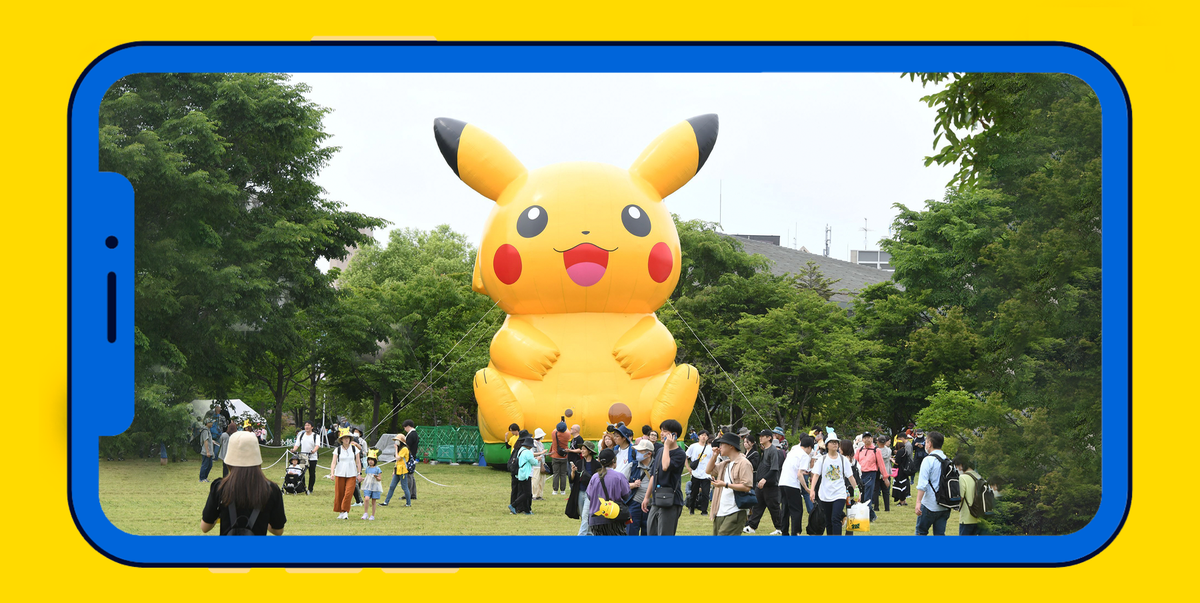
In-person Pokémon GO events can transform a destination into a temporary theme park for Trainers.
Families often treat the event day as the centerpiece and build “normal travel” around it:
Broadway shows, local food, museums, and thenboomback to the park for raids and trading.
The appeal is simple: kids see thousands of other people playing, and suddenly their own enthusiasm feels “normal,”
not “a weird niche thing my parents pretend to understand.” Parents, meanwhile, get a community vibe that makes the trip
feel like a shared festival instead of just a logistics marathon.
2) Big-city walking loops: parks + landmarks + “we can do it without a car”
Dense cities lend themselves to Pokémon GO’s greatest strength: rewarding exploration. Families naturally drift to
places with iconic public spaces, lots of art and monuments, and safe pedestrian paths.
New York City is a classic example of “walk forever, never run out of things to do.”
It supports a mix of park play and neighborhood wandering, with endless opportunities to pause for snacks,
rest in shade, and keep the game moving.
3) Museum-and-monuments days: Washington, D.C. as a “culture + catches” combo
D.C. is a cheat code for families who want educational travel without the “Are we done yet?” soundtrack.
Museums and civic spaces often have public art and historic markersexactly the type of real-world points of interest
that translate well into in-game exploration.
Museums have even acknowledged how Pokémon GO can invite people inside and encourage exploration of galleries.
When kids can break up a museum visit with a quick game loop, the day feels lighterand parents get to enjoy
exhibits without negotiating every five minutes.
4) Boardwalks and beach towns: sunlight, stroller-friendly paths, and easy resets
Beach areas and boardwalk-style destinations are popular because they’re naturally walkable and family-friendly.
You can do short loops, take breaks, and keep the day pleasant even if attention spans melt faster than ice cream.
Places like Santa Monica’s pier-and-park setup get mentioned often in “best spots” lists because of the concentration
of points of interest along a scenic routemeaning it’s fun even if your rare spawns are… not cooperating.
5) Ballpark trips: baseball meets bonus gameplay
If your family already does sports trips, Pokémon GO adds an extra layer: now the ballpark itself can be part of the game day.
In recent seasons, MLB stadiums have introduced official in-game featuresmeaning families can show up for baseball
and still have a shared “side quest” that keeps kids engaged between innings.
The result is a very modern American family outing: a hot dog in one hand, a phone in the other, and at least one adult
pretending they’re checking work email when they’re actually tapping a raid invite.
How to Keep Pokémon GO Travel Fun (Without Making It the Whole Trip)
The sweet spot is using Pokémon GO as the engine for movement and curiositywithout letting it become the only thing that happened.
Families that love these trips tend to set a few simple ground rules.
Set “game windows,” not “game prison”
Try things like:
- Morning loop: a short walk before breakfast (great for energy and fewer crowds)
- Midday pause: museum, lunch, or pool time (phones down)
- Evening loop: a scenic walk + dinner, with a few gyms along the way
Kids appreciate predictability, and parents appreciate not spending the entire vacation staring at a charging indicator.
Safety and etiquette: be a good human, not a chaotic NPC
Pokémon GO is built for exploring, but real-world rules still apply: watch your surroundings, respect private property,
and be mindful in solemn locations. The best family Pokémon GO trips are the ones where you return with great stories
not a “Remember when Dad walked into a fountain?” highlight reel.
Make the city the “main character”
A simple trick: tie catches to real memories. “This is the park where we found that shiny,” or “this is the museum lobby
where we did our trading break.” The game becomes a scrapbook layernot the whole scrapbook.
A Sample 3-Day Pokémon GO Family Weekend
Here’s a practical, low-stress template families usewhether the destination is New York, D.C., Los Angeles, or any walkable city.
Day 1: Arrive + “easy wins” loop
Check in, grab an early dinner, and do a short loop near your hotel. The goal is quick momentum:
spin a few stops, learn the neighborhood layout, and let the kids feel like the trip started the moment you arrived.
Day 2: Big loop + one “anchor” activity
Morning: do your longest walk while energy is highest. Midday: do your anchor activity (museum, ballpark, landmark tour).
Late afternoon: break. Evening: a gentle loop, then dinner.
Day 3: Souvenirs + “one last raid” energy
Keep it light. Families love ending with a final loop that doubles as “goodbye to the city.”
It’s closure, but with snacksand that’s basically the definition of good parenting.
Experiences: Five Family Mini-Stories from the PokéRoad
To make this more real, here are five “day-in-the-life” snapshotsbased on the kinds of moments families consistently describe when they travel with Pokémon GO in the mix.
Consider them the unofficial travel brochure nobody printed because we were all busy catching things.
1) The “Breakfast Raid Pact”
The parents said it would be a “relaxing weekend.” The kids heard “unlimited pastries.” Then everyone discovered the park across the street had a perfect loop:
three stops, two gyms, and a shaded bench that felt like it was designed by someone who understands strollers.
They made a dealone quick loop before breakfast. It turned into a tradition. Each morning, the city woke up slowly while the family collected spins, laughs,
and exactly one argument about whose turn it was to hold the portable charger.
2) The Museum That Didn’t Feel Like Homework
Museums can be a tough sell. But this time, the kids agreed to “just one more gallery” because the lobby had multiple stops and the exhibits had cool art
they could connect to the places they were catching Pokémon. The parents quietly celebrated: nobody asked for the gift shop in the first ten minutes.
The day became a rhythmexplore a wing, take a short game break, pick a favorite piece, repeat. By the end, the kids remembered both the exhibits and the
Pokémon they caught there, which felt like a parenting miracle wrapped in air conditioning.
3) The Boardwalk Loop That Saved the Afternoon
Around 2 p.m., the vacation energy crashed. The sun was loud. The kids were louder. The parents were contemplating a nap that would never happen.
Then the boardwalk offered salvation: a breeze, room to roam, and a loop that made movement feel easy. They walked in short bursts, stopped for cold drinks,
and let the game provide tiny goals“two more stops,” “one more gym,” “let’s see what’s by that statue.” The kids stopped focusing on “how far” and started
focusing on “what’s next,” and suddenly the afternoon wasn’t a crisisit was the highlight.
4) The Ballpark Side Quest
Baseball is wonderful, but it’s also longespecially to a kid who measures time in YouTube clips. The family planned a ballpark day and treated Pokémon GO
as the in-between-innings entertainment. While the parents watched the game, the kids followed an easy “stadium loop” to see interesting corners and collect rewards,
then came back with stories: “We found the coolest mural,” “that hallway has great stops,” “we should sit near that entrance next time.” It turned the ballpark into
an exploration space instead of a sit-still testand everyone left happier (even after the seventh-inning snack meltdown).
5) The “We’re Actually Talking” Evening Walk
The final night, they did a calm loop after dinnerno pressure, no mission beyond “see the city one last time.”
Something sweet happened: they started talking more. The kids pointed out landmarks they recognized from earlier loops.
The parents reminisced about the first time they played Pokémon as kids. The game became background music: a reason to keep strolling, pausing, noticing.
When they got back to the hotel, the kids asked what city they should “play next.” That’s when the parents realized: this wasn’t a game vacation.
It was a family memory machine with a map.