

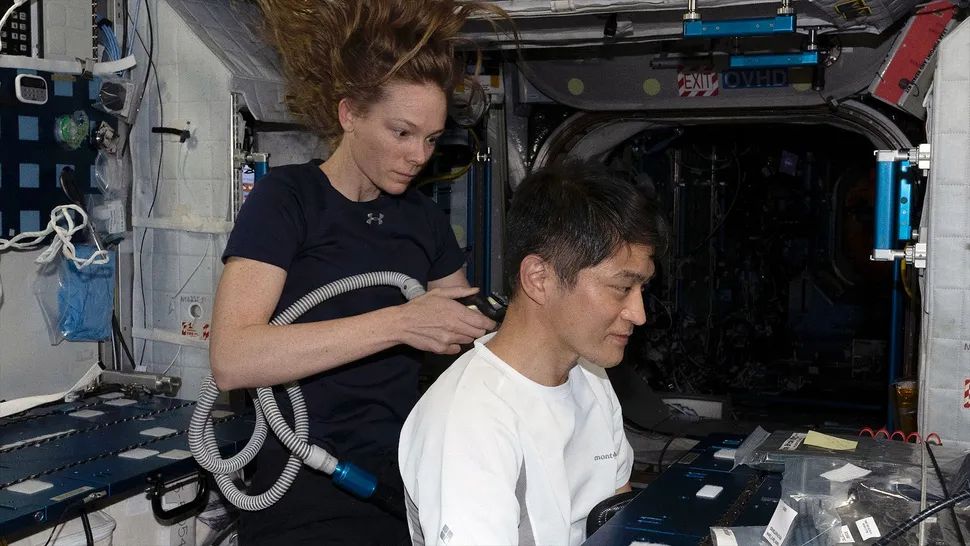
Space travel asks people to do a lot of difficult things: launch into orbit, live in a metal tube, run science experiments while floating like a confused goldfish, and somehow stay calm while Velcro becomes your best friend. But among all the dramatic challenges of life off Earth, one surprisingly persistent question remains: how do astronauts deal with hair?
It sounds silly until you picture the alternative. In microgravity, a loose strand does not politely drift to the floor because there is no “floor” in the usual sense. Hair floats. Clippings float. Tiny bits of beard float. One careless trim can turn a spacecraft into the world’s smallest barbershop snow globe. Suddenly, a routine haircut is not just self-care. It is housekeeping, contamination control, and morale management wrapped into one.
That is why haircuts in space are more than a novelty. They are part of a broader system of astronaut grooming, space hygiene, and smart habitat design. If humans are going to spend longer periods on the International Space Station, the Moon, or eventually Mars, staying neat is not about vanity. It is about comfort, health, teamwork, and keeping the cabin clean enough that nobody has to fish a rogue sideburn out of a vent.
Why Hair Is a Bigger Deal in Orbit Than It Is on Earth
On Earth, a haircut is beautifully low drama. Hair falls. You sweep it up. You complain about the price, nod politely at the mirror, and leave. In orbit, hair becomes a free-floating particle. That means a trim can create debris that drifts through the cabin, lands on equipment, or gets pulled toward filters and fans. In a place packed with electronics, life-support hardware, and shared air, even ordinary human mess becomes a design problem.
This is one reason astronauts are trained to think differently about basic grooming. A spacecraft is a closed environment. Dust does not just disappear. Tiny particles linger, circulate, and collect in places where they are not welcome. That makes loose hair less like harmless salon confetti and more like a maintenance issue wearing a keratin disguise.
The challenge is not limited to haircuts, either. Washing hair is also tricky because water does not flow downward in microgravity. Instead, it beads up, clings to surfaces, and wanders off like it pays rent. Shampoo, rinse water, and droplets from brushing teeth all have to be controlled carefully. In space, the grooming rule is simple: anything that can float, spray, drift, or escape probably will.
How Astronauts Actually Cut Hair on the ISS
The current answer to the ISS haircut problem is wonderfully practical. Astronauts use electric clippers attached to a vacuum system so the cut hair gets sucked away before it can float around the cabin. It is less luxury salon, more orbital shop-vac chic. And honestly? It works.
NASA materials and astronaut demonstrations show a repeatable method: one crew member acts as barber while the cutting happens close to airflow or with a vacuum hose positioned nearby. In some cases, it is basically a two-person operation. One person trims, while the other helps keep the vacuum hose close enough to capture loose clippings. That alone tells you everything you need to know about the difference between a haircut on Earth and a haircut 250 miles up.
There is also a charmingly human detail hidden inside all this engineering: astronauts still care about style. NASA’s own training discussions note that crews may use both barber-style clippers and even regular salon scissors. That means the goal is not just “remove extra hair and hope for the best.” It is “look reasonably presentable while not turning the station into a drifting fuzz farm.” Space may be harsh, but nobody wants emergency bangs.
The unofficial rules of the orbital barbershop
A good space haircut follows a few common-sense principles:
- Use clippers with suction or keep a vacuum hose right next to the cutting area.
- Work near airflow or an air inlet to help guide particles toward filters.
- Move slowly and deliberately so clippings do not escape.
- Clean the area afterward, because in orbit “good enough” has a way of coming back to haunt you.
That last point matters. NASA’s long-duration habitability lessons show that crews often perform clipping tasks near an air inlet, then gather any remaining debris with tape and wipe the area clean. Glamorous? No. Effective? Absolutely. The future of human spaceflight may include advanced habitats and autonomous systems, but there will still be somebody with tape trying to catch a floating eyebrow hair. Progress is beautiful.
Washing Hair in Space Is Its Own Special Adventure
If cutting hair in space is a vacuum problem, washing it is a water problem. Astronauts do not stand under a shower on the ISS. Instead, they use small amounts of water, often from a pouch, along with no-rinse shampoo, a towel, and a comb. The trick is to work slowly so droplets stay under control and do not escape into the cabin air.
This is one of the most fascinating parts of microgravity hair care. On Earth, rinsing is automatic. In orbit, there is no waterfall effect to help. Hair washing becomes a deliberate sequence: add a little water, work it through the scalp and hair, add a little shampoo, massage carefully, towel dry, and let the station’s airflow help with the rest. It is less “spa day” and more “precision moisture management.”
NASA has explained that astronauts use surprisingly little water for personal cleaning compared with what people on Earth might use in a normal shower. That economy is not just efficient; it is necessary. Water in orbit is precious, and every routine is designed to prevent waste, floating droplets, and cleanup headaches.
This also explains why longer hair requires a bit more strategy. Astronauts with long hair often manage it carefully, keeping it tied back or controlled so it does not float into food, equipment, cameras, or fellow crewmates’ faces at the worst possible moment. Space can make hair look dramatic in photos, but real life aboard the station rewards order over shampoo-commercial chaos.
Why Grooming Matters More Than People Think
It is easy to laugh about haircuts in orbit, but grooming has serious psychological value. NASA’s habitability guidance makes this clear: personal hygiene and grooming support self-image, morale, and productivity. That may sound like corporate wellness language that accidentally boarded a rocket, but it is true.
Long missions compress life. Astronauts work, exercise, eat, sleep, fix hardware, talk to family, and share space with the same small group for months. In that environment, the ability to maintain a familiar routine matters. Brushing your teeth the way you like, trimming your beard, washing your hair, or getting a haircut that does not make you look like you lost a fight with static electricity can provide a small but meaningful sense of normalcy.
And let us be honest: astronauts are not hiding in a cave. They appear on camera, participate in media events, record outreach videos, and represent their agencies to the public. Looking reasonably put together helps. Nobody expects a red-carpet blowout in zero-g, but “competent human who has not been defeated by their own hair” is a perfectly respectable target.
Designing a Better Space Barbershop
If you were tasked with building the ideal haircut station for space, you would not start with chrome scissors and mood lighting. You would start with airflow. The best system would combine a controlled work area, built-in suction, easy cleanup, sealed waste capture, and surfaces that do not let hair stick around where it should not.
In practical terms, a next-generation space station living environment should include:
- Integrated vacuum-assisted clippers that are lightweight, quiet, and easy to maintain.
- A grooming zone near air handling so clippings naturally move toward filtration rather than drifting into equipment.
- Mirror, restraint, and lighting features that help the barber and the haircut victim stay stable.
- Easy-to-swap debris capture bags so cleanup does not release yesterday’s beard trimmings back into the cabin.
- Tools for different hair types, because a one-size-fits-all grooming kit is a great way to create unnecessary drama.
That last point matters for inclusion as much as convenience. Human spaceflight is becoming more diverse, and grooming tools need to work for different hair textures, lengths, and styles. A future Moon or Mars crew should not have to choose between comfort, dignity, and a tool designed for somebody else’s head.
What Moon and Mars Missions Will Need
Haircuts in low Earth orbit are one thing. Haircuts on the Moon or Mars are another level of logistical weirdness. Missions will be longer, resupply may be limited, and crews will need systems that are durable, repairable, and flexible enough to handle months or years away from Earth.
That means future exploration missions will need grooming tools that are not just functional, but robust. Vacuum-assisted clipping will still make sense. Careful water use will still matter. Cleanup will still be essential. But the hardware will likely need to be more integrated into habitat design, rather than treated as a nice little side routine squeezed between experiments and treadmill time.
There is also the issue of planetary dust. Moon dust is notoriously clingy and abrasive, which means habitats will already have strict contamination concerns. Add floating hair or beard clippings to that ecosystem, and suddenly your grooming station starts looking like a critical infrastructure node instead of a bathroom accessory. The future astronaut toolkit may need to be part barber kit, part contamination-control system, part morale booster.
Keeping Astronauts Looking Fresh Is Really About Keeping Missions Running Smoothly
At first glance, how astronauts wash their hair or cut it in orbit sounds like trivia. But zoom in a little and it becomes a perfect example of what makes human spaceflight so fascinating. Every normal activity has to be rethought. Every small mess can become a system-level issue. Every comfort item has to justify its place. And yet, even with all that engineering discipline, the human need to feel clean, comfortable, and recognizable still wins a seat on the rocket.
So yes, haircuts in space are funny. The image of astronauts turning each other into part-time barbers with vacuum hoses is objectively delightful. But it is also a reminder that successful missions are built from hundreds of tiny practical choices. Clean air matters. Good filters matter. Smart grooming tools matter. And if you can give someone a decent trim while they are circling Earth at 17,500 miles per hour, you are doing more than keeping them looking fresh. You are making space livable.
Extra Experiences: What a Space Haircut Probably Feels Like From the Chair
Imagine it is a quiet weekend aboard the International Space Station. The major science work is under control, the checklist is shorter than usual, and somebody finally says the words that always sound harmless until they are not: “You need a haircut.” On Earth, that sentence means a quick appointment. In orbit, it means logistics, choreography, and trust in a crewmate holding clippers near your head while both of you float.
You drift into the grooming area, probably near a place with strong airflow, because the station’s ventilation is now part of your haircut team. There is no barber cape snapping dramatically in the air. There is no pile of magazines. There is no overbooked salon receptionist pretending not to hear your name. There is just equipment, a mirror, a vacuum setup, and a fellow astronaut who may have been running experiments on muscle loss an hour earlier and is now somehow your stylist.
The first sensation is probably not the clippers. It is the awareness that everything has to be done on purpose. On Earth, your body naturally stays put in a chair. In space, you need to brace yourself, hook a foot under something, or otherwise keep from gently drifting away while someone tries to line up the back of your neck. That changes the whole experience. A haircut becomes teamwork. The barber is not just cutting hair. They are managing position, tool angle, floating debris, and their own tendency to drift like a slow-motion balloon.
Then the clippers turn on. The vacuum hums nearby, ready to swallow every little clipping before it escapes into the cabin. You can almost picture each loose strand thinking it has found freedom, only to get immediately sucked into orbit’s least glamorous piece of machinery. It is hard not to admire the system. It is also hard not to laugh a little, because this is one of the most advanced environments ever built by humans, and yet here you are, getting a haircut that depends heavily on suction and patience.
Afterward comes the inspection. On Earth, haircuts end with a dramatic reveal and maybe a little brush around the collar. In space, the ending is more practical. Check the mirror. Check the cleanup. Check the vent area. Check that no rebellious clipping has escaped to start a new life behind a panel. The result may not be runway-ready, but it is controlled, comfortable, and mission-friendly.
And that is the real experience of grooming in space: it turns the ordinary into something quietly extraordinary. A trim is no longer just a trim. It is a small ritual of adaptation. It says that humans can take one of the most everyday tasks imaginable and redesign it for microgravity without losing the personal part that makes it matter. Somewhere between the vacuum hose, the floating elbows, and the careful cleanup, a haircut becomes proof that people do not just survive in space. Given enough ingenuity, they learn how to live there with a little style.
Conclusion
Haircuts in space may sound like a punchline, but they reveal something important about human exploration: comfort, cleanliness, and confidence are mission essentials. Astronauts do not simply hack their way through grooming in orbit. They rely on practical systems like vacuum-assisted clippers, careful airflow management, no-rinse shampoo, and cleanup routines designed for a closed environment. More importantly, they preserve the small rituals that help crews feel human during long missions far from home.
As space agencies plan longer stays in orbit and future missions to the Moon and Mars, grooming will remain part of the habitability equation. The better we get at handling the little things, the better we get at sustaining the big adventure. Because in space, even a haircut is a systems-engineering story.