

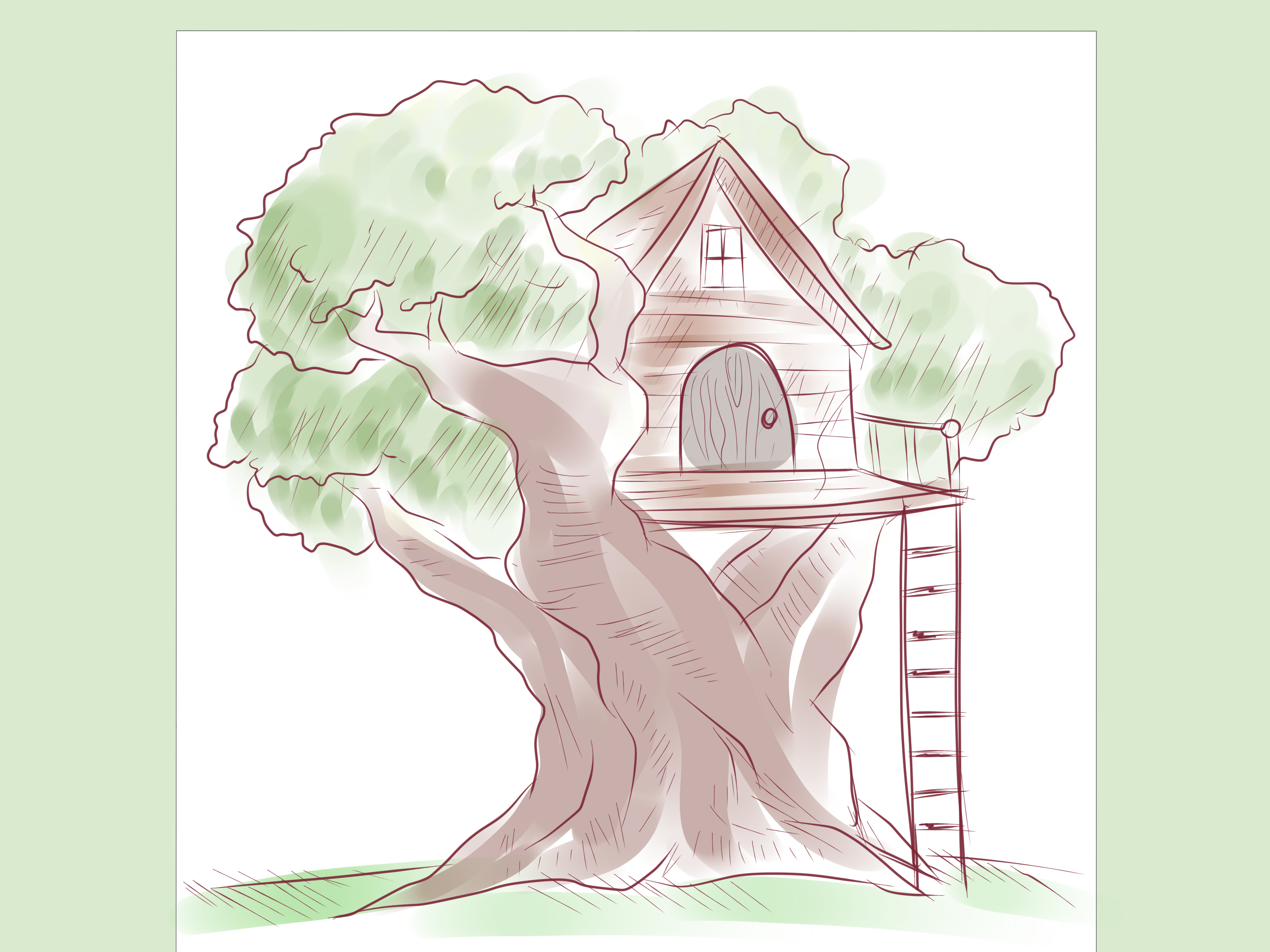
Imagine you walk into a psychologist’s office, expecting a clipboard, a stern “circle how strongly you agree,”
and maybe a question about your childhood goldfish. Instead, you get a pencil and one surprisingly disarming
instruction: “Please draw a house, a tree, and a person.”
That’s the vibe of the House-Tree-Person (HTP) personality testa drawing-based, “projective” assessment
that has been used for decades to explore how someone experiences themselves, relationships, and the world around them.
It can feel playful and low-pressure (art class flashbacks, minus the glue sticks), but the ideas behind it are
serious: what people choose to drawand how they describe itmay offer clues about emotions, coping style,
self-image, and stress.
Here’s the important part up front: HTP is not a magical mind-reading shortcut, and it shouldn’t be treated like
an online horoscope with better stationery. In real clinical practice, it’s typically used as a conversation starter
and a piece of a much larger assessment puzzle (interviews, history, standardized tests, observations, and more).
Used thoughtfully, it can help people talk about things that are hard to put into words. Used carelessly, it can turn
into a “gotcha” game of overinterpretationwhich is exactly what good psychologists try to avoid.
What Is the House-Tree-Person Test?
The House-Tree-Person test is a classic projective drawing testmeaning it uses an open-ended task (drawing)
rather than a fixed set of multiple-choice answers. The HTP method is commonly credited to psychologist
John N. Buck, who introduced it in the late 1940s as a way to gather information from drawings and follow-up questions.
Over time, variations appeared (including versions that ask for movement or interaction, sometimes called “kinetic”
forms, and versions that combine all drawings on one page).
The HTP task is simple on purpose. A house is familiar and loaded with meaning (safety, privacy, family, belonging).
A tree is a symbol most people can draw at any age (growth, strength, seasons, roots, resilience).
And a person invites self-perception and social themes (identity, confidence, connection, vulnerability).
Together, the set gives a clinician multiple anglesplus a chance to ask the test-taker what their drawing means to them.
Why Drawings? The Psychology Behind the Pencil
Projective methods are based on a simple premise: when a task is ambiguous and open-ended, people may reveal themes
that don’t show up as neatly in structured questionnaires. That doesn’t mean the drawing “contains the truth” like a
hidden file folder. It means the drawing can function like a spotlightilluminating what the person notices, emphasizes,
avoids, or explains.
Drawings also have a practical advantage: they can be useful when someone struggles with language, is anxious about
direct questions, is very young, or is simply tired of talking. Sometimes a sketch lowers the emotional temperature.
Sometimes it does the opposite (hello, perfectionism). Either way, it creates something concrete that two people can
look at together, which can make hard conversations feel less like an interrogation and more like collaboration.
How the HTP Is Typically Administered (Without Turning This Into a Secret Manual)
In professional settings, HTP administration can vary by clinician, setting, and the version being used. But the general
flow often looks like this:
- Materials: usually plain paper and a pencil (sometimes erasers, sometimes notdepends on the approach).
- Drawing prompts: draw a house, a tree, and a person (often in that order, sometimes on separate pages).
- Inquiry: the clinician asks the person to describe each drawing (e.g., “Tell me about this house” or “Who is this person?”).
- Integration: observations from the drawing and the conversation are considered alongside other assessment information.
That third stepinquiryis where responsible use lives. Ethical clinicians don’t treat the drawing like a fortune cookie.
They ask what the artist intended, how they felt while drawing, and what story the picture carries for them.
The same “detail” can mean different things depending on the person’s age, culture, art experience, and even whether they
had coffee that morning.
What Do Psychologists Look For in HTP Drawings?
There isn’t one universal “HTP decoder ring,” and that’s both the appeal and the controversy. In practice, many clinicians
consider broad features such as overall organization, level of detail, pressure and line quality,
use of space, omissions, andmost importantlythe person’s own explanation.
Below are common themes that have appeared in clinical traditions and teaching materials. Read them as
hypotheses to explore, not rules that diagnose:
The House: Boundaries, Safety, and “Where I Belong”
The house is often treated as a symbol of one’s sense of home life, security, and personal boundaries. Clinicians may
note features like doors, windows, fences, pathways, and how inviting or sealed-off the home appears.
- Doors and pathways: can be discussed in terms of approachability, access, and comfort with closeness.
- Windows: sometimes explored as openness, curiosity, or willingness to be “seen.”
- Fences, walls, locks: can invite conversation about privacy, protection, or feeling guarded.
- Size and placement: may prompt questions about importance, confidence, or feeling “small” in one’s environment.
Example (how a careful clinician might handle it):
Instead of “No windows means you’re emotionally closed,” a clinician might say:
“I notice there aren’t windowswas that a style choice, or did it feel right for this house?” A client might answer,
“I didn’t want anyone looking in,” which becomes a meaningful discussion. Or they might say, “I forgot windows exist,”
which becomes a meaningful discussion about… being human.
The Tree: Energy, Growth, and Resilience
Trees are often explored as symbols of vitality, stability, and how a person experiences their own strength or resources.
Details like roots, trunk thickness, branches, leaves, and damage (broken limbs, holes) can become talking points.
- Roots: sometimes discussed as grounding, history, support systems, or a sense of “where I come from.”
- Trunk: may invite conversation about sturdiness, flexibility, or feeling worn down.
- Branches reaching outward: can prompt themes of connection, ambition, curiosity, or reaching for goals.
- Storms, knots, scars: can open a conversation about stress, adversity, and coping.
Example (keeping it real):
A person draws a huge, leafy tree and then says, “It’s an oak. It takes forever to grow.”
That statement alone might say more than any “symbol list.” The drawing becomes a doorway into patience, long-term effort,
or wishing life had fewer deadlines.
The Person: Self-Image, Identity, and Social Comfort
The “person” drawing is often the most emotionally loaded. Some people draw a stick figure and apologize immediately.
Others create a character with fashion, posture, and accessories that deserve their own runway show.
Clinicians may consider how the figure is presented (posture, expression, proportions, details), while remembering that
drawing ability and comfort matter a lot.
- Facial expression: can be an opening to discuss mood, emotional range, or how someone wants to appear.
- Hands and arms: sometimes explored as themes of agency, capability, reaching out, or holding back.
- Feet and grounding: may lead to conversation about stability or feeling “on solid ground.”
- Clothing and accessories: can reflect roles, identity, protection, or what someone wants noticed first.
Example (a more responsible interpretation style):
If the person is drawn very tiny, the clinician might ask, “What made you choose that size?”
The client could say, “I ran out of space,” “I didn’t want to mess it up,” or “That’s how I feel around other people.”
Those answers are not interchangeableand that’s why inquiry matters.
The “Whole Page” View: Pattern Over Single Details
Good assessment thinking is pattern-based. A single feature rarely means much on its own. Clinicians may consider:
- Consistency: Do the drawings share a similar tone (careful, chaotic, energetic, sparse)?
- Engagement: Does the person elaborate, avoid, joke, shut down, or become perfectionistic?
- Narrative: What story does the person tell about each drawing?
- Context: Age, cultural background, stress level, and artistic comfort all shape the outcome.
Is the House-Tree-Person Test “Accurate”? What Research and Critics Say
Here’s where things get interesting (and where the pencil meets the peer review). Projective and drawing-based tests
have long been debated because interpretation can be subjective, and different clinicians may not agree on what a feature
means. Some educational materials explicitly note concerns about standardization, reliability, and
validity for many projective proceduresespecially when used as stand-alone diagnostic tools.
Research findings have often been mixed or skeptical depending on what the HTP is being used to predict. For example:
-
Some studies have found that quantitative “health” ratings derived from HTP/HFD drawings did not relate well
to formal measures of the trait being studied (like self-esteem). -
More recent approaches that try to test diagnostic claims more objectively have raised doubts about whether common HTP
indicators reliably predict mental health statusespecially if the goal is to diagnose. -
Reviews and meta-analyses have pointed out that indicator selection and interpretation methods vary widely, making it
hard to standardize conclusions across settings.
So why does HTP still show up? Because usefulness isn’t only about prediction. In many clinical contexts, HTP can be valuable
as a rapport-building tool, a communication bridge, and a way to surface themes that a person might not
volunteer in a direct interview. The responsible stance is:
Use it to generate questions, not verdicts. Think “hypothesis” and “explore,” not “diagnose” and “declare.”
When HTP Can Be Helpful (And When It Really Shouldn’t Be Used Alone)
Situations where HTP may be helpful
- Early sessions in therapy to reduce pressure and open conversation.
- Work with children who communicate better through play and art than direct questioning.
- Clients who feel stuck or have difficulty describing emotions.
- As part of a larger assessment battery where multiple sources of evidence are considered together.
Situations where HTP should not be treated as decisive evidence
- High-stakes forensic decisions (custody, legal responsibility, employment screening) without strong, validated support.
- Online “instant diagnosis” content that claims to identify trauma, disorders, or personality types from one drawing feature.
- Any setting where cultural meaning is ignored (symbols and “normal” drawing styles are not universal).
Ethical and Cultural Considerations: A Drawing Is Not a Confession
Ethical psychological assessment is careful, contextual, and humble. With HTP, that means:
- Development matters: kids draw differently at different ages; so do adults who haven’t drawn since middle school.
- Culture matters: what “home” looks like varies; so do meanings of privacy, family, and symbolism.
- Disability and access matter: motor skills, vision, and neurodiversity influence how drawings come out.
- Interpretation should be collaborative: inquiry helps prevent the clinician from projecting their own assumptions onto the client.
A good rule of thumb: the more confident someone is that they can “read” your mental health from the size of a doorknob,
the more you should slowly back away (politely, like you’re exiting a weird party).
If You’re Curious: A Safe, Non-Diagnostic Way to Try the Idea
You don’t need to treat HTP like a clinical test to get something meaningful out of drawing. If you’re curious, you can
use the same prompts as a journaling exercise:
- Draw a house, a tree, and a person.
- Write a few sentences about each: “What’s happening here?” “Who lives here?” “What does this person want today?”
- Notice how you felt while drawing: rushed, calm, annoyed, perfectionistic, playful?
The value is in reflection, not labeling. If the exercise brings up heavy emotions or persistent distress, consider talking
with a licensed mental health professionalsomeone trained to help you make sense of what you’re experiencing without turning it
into a cartoon diagnosis.
Common Questions About the House-Tree-Person Test
Is HTP scientifically proven?
The short, honest answer: it depends on what you mean by “proven.” As a diagnostic tool on its own, evidence and
standardization are often criticized. As a qualitative tool to open discussion and gather themes, many clinicians find it
practically useful when paired with other methods.
Can HTP detect trauma or mental illness?
Be wary of anyone claiming it can reliably “detect” a specific condition from a drawing. People’s drawings can reflect stress
or emotional themes, but there is no universally accepted visual checklist that diagnoses trauma or a disorder from HTP alone.
Do children take the HTP test?
Yes, HTP is often used with children because drawing can be more natural than verbal self-report. But interpretation must be
developmentally informed and cautious.
Can I score myself?
You can reflect on your own drawing, but “scoring” yourself is a recipe for overthinking. The most meaningful part is usually
the story you tell about what you drewnot a rigid symbol chart.
Conclusion: A Pencil Can Open a Door, But It Shouldn’t Slam One Shut
The House-Tree-Person personality test sits at a fascinating intersection of art, storytelling, and psychological assessment.
At its best, it’s a gentle prompt that helps people express what’s hard to say out loud. At its worst, it becomes a
Rorschach-by-YouTube situation where every branch “means” something dramatic.
If you remember one thing, make it this: HTP is most responsible when it’s used to create questions, not conclusions.
The drawing is the beginning of a conversationnot the final word.
Experiences With the House-Tree-Person Test (An Extra of Real-World Flavor)
Ask clinicians who use HTP what it’s like, and you’ll often hear a similar theme: the drawing itself mattersbut the
moment matters more. The minute someone picks up a pencil, you get a live preview of how they approach an open-ended task.
Some people dive in quickly, sketching with confidence like they’ve been secretly training for the Great American Doodle-Off.
Others freeze, hover, and whisper the universal phrase of anxious artists everywhere: “I can’t draw.”
That reaction alone can be clinically meaningfulnot because it “proves” anything, but because it reveals how someone copes
with uncertainty. A person who gets stuck may be struggling with perfectionism (“If it’s not perfect, it’s wrong”),
fear of evaluation (“You’re going to judge me”), or a history of being criticized for not getting things right.
Another person might laugh and say, “Stick figures onlytake it or leave it,” signaling comfort with imperfection,
humor as coping, or a preference for practicality over performance.
In therapy settings, one common experience is that the drawings become a safe third object in the room. Instead of staring
directly at a painful topic, the client and therapist can look at the paper together. That “side-by-side” focus can reduce
defensiveness. Clients often find it easier to say, “This house feels lonely,” than to say, “I feel lonely.”
The drawing offers a little emotional distanceenough to speak honestly without feeling exposed.
Another experience that shows up a lot: people surprise themselves. A client might draw a house with no pathway and then, during
inquiry, realize they’ve been feeling hard to reach. Or someone draws a tree with big roots and says, almost casually,
“It’s important that it’s grounded,” and suddenly the session is about stability, family, identity, or the fear of losing a
support system. The clinician didn’t “extract” that truth from the picture; the client discovered it while explaining their own
choices.
With children, experiences can be even more story-driven. Kids may create imaginative houses (treehouses, castles, underwater domes),
and those stories can reveal what they wish for: safety, freedom, protection, fun, belonging. Sometimes children draw what they know
(apartments, multi-family homes, rural houses) and adults learn quickly that “typical house” assumptions don’t travel well across
different lived realities. Many clinicians describe the inquiry portion with kids as the real gold: children may narrate emotions
through the characters in the drawing in a way that feels natural and unforced.
Outside clinical settings, people who try HTP as a personal reflection exercise often report two things: (1) they overthink it,
and (2) they learn something anyway. They might notice they kept erasing, ran out of room, or avoided drawing the person until the end.
Those patterns can spark useful self-questions: “What do I avoid when I’m unsure?” “Do I give myself enough space?” “Why did I want
the house to look ‘right’?” It’s not a diagnosis; it’s a mirror with a sense of humor.
The most grounded experience-based takeaway is simple: the HTP task can open a door. But the helpful part is what you do after the
door openstalk, reflect, clarify, and connect the moment to the broader picture of someone’s life.