

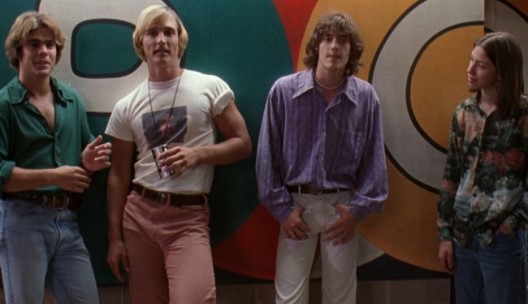
Before Dazed and Confused became a cult classic, a career launcher, a hangout-movie holy text, and the unofficial national anthem of people saying “man” with spiritual conviction, it began with something much less glamorous: personal finance. Not Hollywood magic. Not a studio executive descending from a cloud of cigar smoke. Not Matthew McConaughey’s future catchphrase echoing across destiny. The story starts with Richard Linklater saving money, living cheaply, buying tools, studying obsessively, and giving himself enough time to become a filmmaker before anyone else gave him permission.
That is the surprising money lesson behind one of the most beloved American coming-of-age movies of the 1990s. Dazed and Confused, released in 1993, was written and directed by Linklater after his microbudget breakthrough Slacker. The movie follows Texas teenagers on the last day of school in 1976, drifting from classrooms to hazing rituals, pool halls, parking lots, keg parties, and finally the open road. It looks loose, funny, smoky, and almost accidental. But behind its relaxed vibe was a long chain of practical financial choices.
Personal finance did not just help Linklater pay rent. It bought him time. It bought him equipment. It bought him creative independence. And eventually, it helped him build the credibility that led to Dazed and Confused. In other words, budgeting helped launch a movie about teenagers who appear to have never budgeted for anything except gas, beer, and possibly Foghat.
The Personal Finance Backstory Behind Richard Linklater
Richard Linklater did not follow the standard “move to Los Angeles, know someone’s cousin, become a director by Tuesday” path. After leaving college, he worked on an oil rig in the Gulf of Mexico. The job was demanding, isolated, and not exactly the kind of place where a young filmmaker expects to find his artistic voice. But it paid better than the service jobs he had known before, and that mattered.
Linklater saved a meaningful amount of money from that period. Instead of upgrading his lifestyle, he used the savings to buy a Super 8 camera, a projector, editing gear, film stock, and the basic tools he needed to teach himself how movies worked. This is where the personal finance lesson becomes loud enough to drown out a 1970s muscle car: savings are not only for emergencies. Sometimes savings are a bridge to reinvention.
For Linklater, money was not a status symbol. It was oxygen. Because he had savings and lived frugally, he could spend years watching films, experimenting, writing, and building a life around cinema in Austin, Texas. He did not need to earn a film degree to begin. He needed curiosity, discipline, and enough financial cushion to keep going when the outside world was not yet impressed.
Frugality as Creative Fuel
Frugality often gets marketed as a joyless activity, as if the whole point of saving money is to sit in a dark kitchen eating plain rice while judging your friends for owning lamps. Linklater’s story shows a better version. Frugality can be a creative fuel. It can protect your attention. It can make room for projects that are too weird, too early, or too personal to make sense to other people yet.
In the early years, Linklater was not living like a future studio filmmaker. He was building a self-directed film education. That meant spending time instead of spending money. He watched movies, programmed screenings, read, wrote, and practiced. He helped create a film culture around himself rather than waiting to be invited into one.
This is one of the most overlooked parts of personal finance: low expenses create optionality. If your monthly life costs less, you can take more creative risks. You can say yes to the unpaid experiment, the strange collaboration, the short film, the local screening series, or the script that does not sound like anything currently trending. Linklater’s low-cost lifestyle helped him compound skill long before he compounded income.
Austin Film Society: Community as an Investment
In 1985, Linklater founded the Austin Film Society, which began as a small group of cinephiles screening independent, foreign, experimental, and classic films that were not easy to find at the local multiplex. This was not a get-rich-quick scheme. If anything, it was a get-rich-in-cultural-capital-slowly scheme, which looks terrible on a spreadsheet but wonderful in hindsight.
The Austin Film Society helped build a creative ecosystem. It connected filmmakers, film lovers, programmers, writers, and future collaborators. It gave Linklater a place to study cinema publicly and seriously. It also helped Austin grow into a stronger film city, proving that personal finance is not only about individual saving. It is also about where you put your limited resources: money, time, attention, and trust.
For young creators, this is a major lesson. Networking does not always mean handing business cards to strangers in hotel lobbies while pretending to enjoy warm white wine. Sometimes it means creating the room you wish already existed. Linklater invested in community, and that community later became part of the foundation for his films.
From Microbudget Discipline to Slacker
Before Dazed and Confused, there was Slacker, the 1990 feature that put Linklater on the national independent-film map. Shot in Austin on a tiny budget, Slacker followed a chain of eccentric characters across a single day. It had no conventional hero, no tidy plot, and no obvious commercial formula. In other words, it was exactly the kind of movie that sounds financially insane until it works.
Slacker was possible because Linklater had learned to think economically. He understood how to build a film around available resources: real locations, local actors, friends, favors, conversation, movement, and structure. The limitation became the style. Instead of hiding the lack of money, the film turned low-budget looseness into an aesthetic.
This is where personal finance and filmmaking overlap beautifully. A budget is not only a restriction; it is a design tool. When you know what you cannot afford, you become more inventive about what you can do. Linklater could not buy spectacle, so he built rhythm. He could not hire stars, so he found faces. He could not lean on plot machinery, so he leaned on observation.
How Slacker Opened the Door to Dazed and Confused
Slacker attracted attention after its festival run and national release. It made Linklater one of the defining voices of American independent cinema at a moment when studios were becoming curious about low-budget filmmakers with distinctive points of view. That attention led to meetings, and those meetings helped create the opportunity for Dazed and Confused.
Universal-backed producers were interested in Linklater after Slacker. He received money to write his next script, and the project became a teenage rock-and-roll movie set on the last day of school in 1976. Linklater had been thinking about the idea for years, drawing from memories of East Texas adolescence, high school rituals, music, cars, boredom, authority, and that strange teenage feeling that nothing is happening and everything is happening at the same time.
Here is the key point: the studio opportunity did not appear from nowhere. It was built on the credibility of Slacker, which was built on years of self-funded learning, frugal living, and disciplined creative practice. Personal finance did not directly write Dazed and Confused. But it helped create the conditions that made Linklater ready when the door opened.
The Money Paradox of Dazed and Confused
Dazed and Confused had a much larger budget than Slacker, but compared with typical studio ambitions, it was still a risky oddball. It had an ensemble of mostly unknown young actors. It was a period movie filled with expensive music cues. It had no superhero, no murder mystery, no tournament, no wedding, and no obvious “save the community center” plot. It was about teenagers hanging out. Try pitching that today and watch the algorithm ask for a dragon.
The film’s production budget was around $6.9 million, and its box office was modest. It did not explode theatrically. In fact, its legend grew later through home video, cable, repertory screenings, critical appreciation, and word of mouth. The movie became one of those rare works that seemed to get bigger after its official commercial moment had passed.
That makes Dazed and Confused a useful case study in creative finance. Not every valuable project announces its value immediately. Some assets appreciate culturally before they appreciate financially. Some movies are not opening-weekend fireworks; they are slow-burning campfires where generations gather and quote the same lines until everyone nearby either joins in or moves away for peace.
Why the Casting Was a Financial Masterstroke
One reason Dazed and Confused aged so well is its cast. The film featured early performances from Matthew McConaughey, Ben Affleck, Parker Posey, Renée Zellweger, Milla Jovovich, Joey Lauren Adams, Rory Cochrane, Adam Goldberg, Anthony Rapp, Cole Hauser, and others. At the time, many were unknown or just beginning. In hindsight, the cast looks like someone accidentally bought Hollywood stock before a massive rally.
That is another personal finance parallel: early-stage value is not always obvious. Linklater and his casting team were not buying celebrity; they were spotting energy, personality, timing, and fit. McConaughey’s Wooderson became one of the most memorable characters in the film, and his improvised ease gave the movie a mythology of its own. Affleck’s O’Bannion, Posey’s Darla, and the rest of the ensemble added texture that made the world feel lived-in rather than manufactured.
In business terms, the movie invested in underpriced talent. In creative terms, it trusted people before the market had validated them. That can be risky, but it can also produce work that feels fresh. The film did not need stars because it helped make them.
The Soundtrack: Spending Where It Mattered
Personal finance is not about never spending. It is about spending on what matters most. For Dazed and Confused, music mattered. The soundtrack was not decorative wallpaper; it was emotional architecture. Aerosmith, Alice Cooper, Kiss, Foghat, War, Black Sabbath, and other 1970s sounds helped place viewers inside a specific cultural memory.
Linklater understood that music was central to the movie’s identity. The songs made the cars feel faster, the nights feel longer, and the teenage confidence feel both ridiculous and sacred. Spending on music rights was not random indulgence. It was strategic storytelling.
This is a useful lesson for anyone managing money. Cut ruthlessly where the expense does not serve the mission. Spend deliberately where the expense makes the whole project work. A cheap soundtrack would have weakened the film’s atmosphere. The right songs helped turn an ensemble comedy into a time machine with a wicked guitar solo.
What Personal Finance Really Bought: Time
The deepest lesson in Linklater’s path is that personal finance bought time. Time to become self-taught. Time to fail quietly. Time to screen films. Time to write notes for years. Time to build Slacker. Time to arrive at Dazed and Confused with a clear memory, a point of view, and enough confidence to make a teen movie that refused to behave like a teen movie.
Many people think money buys things. It does, of course. It buys cameras, rent, film stock, books, software, groceries, and the occasional emergency burrito. But money also buys mental space. It buys the freedom to say, “I am going to spend the next few years becoming good at this.” That is a powerful purchase.
For creators, entrepreneurs, freelancers, and students, this is the gold hidden inside the Dazed and Confused origin story. Savings can become a runway. Frugality can become a strategy. A modest lifestyle can create room for an ambitious life.
Personal Finance Lessons from the Launch of Dazed and Confused
1. Save Before the Opportunity Appears
Linklater did not save money because he already had a guaranteed studio deal. He saved before the path was clear. That is how opportunity often works. The chance arrives later, and the prepared person looks “lucky.” Behind the luck is usually a checking account that was not completely destroyed by impulse spending.
2. Use Money to Buy Skills
Buying film equipment was not a luxury purchase for Linklater; it was an investment in capability. The same principle applies today. A course, tool, camera, laptop, workshop, or book can be worth the money if it helps you produce, practice, and improve. The trick is to buy tools you will actually use, not tools that make you feel productive while they collect dust like expensive museum pieces.
3. Keep Expenses Low Enough to Take Risks
Low expenses gave Linklater flexibility. This does not mean everyone should live like a monk with a library card. It means your lifestyle should not trap you so tightly that every creative risk becomes impossible. The lower your fixed costs, the more room you have to experiment.
4. Build Community, Not Just a Portfolio
The Austin Film Society shows the long-term value of community investment. Linklater did not only make work; he helped create a scene. A strong creative network can lead to collaborators, encouragement, resources, and ideas. Personal finance is stronger when paired with social capital.
5. Spend on the Signature Element
Dazed and Confused needed its music. That was the signature element. In your own work, identify what truly makes the project sing. Spend there. Save elsewhere. Not every expense deserves equal treatment.
Why the Story Still Matters Today
The modern creative economy is noisy, crowded, and often brutally expensive. Cameras are cheaper, but rent is not. Distribution is easier, but attention is harder. Everyone can publish, which means everyone is competing with everyone else, including people who post twelve times a day and appear to have no biological need for sleep.
That makes the personal finance lesson behind Dazed and Confused more relevant, not less. If you want to make art, build a business, write a book, start a channel, launch a studio, or change careers, you need more than passion. Passion is great, but passion with no budget is just stress wearing a cool jacket.
Linklater’s story argues for a practical kind of creativity. Save money. Reduce unnecessary expenses. Buy tools. Learn deeply. Build community. Make small projects. Let the small projects become proof. Then, when the larger opportunity arrives, you are not starting from zero. You are ready.
Experiences Related to the Topic: Money, Creativity, and the Long Road to a Breakthrough
Anyone who has tried to build something creative while managing real-life bills can recognize the hidden tension in Linklater’s story. The outside world loves the romantic version of art: the inspired genius, the sudden breakthrough, the overnight success, the magical meeting at a bar, the perfect line improvised at the perfect moment. Those things happen. But they usually happen after years of boring, unphotogenic decisions.
The practical experience behind a creative life often looks like saying no to things you technically want so you can say yes to something you want more. It looks like driving an older car because the new payment would steal your freedom. It looks like renting a cheaper place so you can work part-time and finish a script. It looks like buying used gear, borrowing space, cooking at home, and spending Saturday night editing instead of pretending that “networking drinks” are a business necessity.
That does not sound glamorous, but neither does saving money on an oil rig before becoming one of America’s most admired filmmakers. The glamorous part arrives later, if it arrives at all. The foundation is usually built in private.
Many creative people make the mistake of thinking personal finance is separate from their work. They see budgeting as something for accountants, parents, or people who own label makers. But budgeting is creative infrastructure. It determines how long you can keep practicing before the market notices. It determines whether you can take a low-paying apprenticeship, self-fund a pilot, attend a festival, or spend three months revising a manuscript instead of grabbing the first available job that empties your brain by 6 p.m.
There is also an emotional benefit. When your finances are chaotic, every creative decision becomes louder and scarier. A rejected pitch feels like a disaster. A slow month feels like doom. A broken laptop becomes a Shakespearean tragedy with invoices. But when you have some savings, fewer fixed expenses, and a clearer plan, rejection becomes information instead of catastrophe. You can adjust. You can keep going.
The story of Dazed and Confused also proves that a project does not need to be instantly understood to be valuable. Many people build work that looks strange at first. A blog with a niche voice. A handmade product. A documentary about a local subculture. A film where teenagers drive around and talk. Personal finance gives those projects time to find their audience.
In real life, the smartest money move may not be chasing the highest salary forever. Sometimes it is building a life with enough margin to pursue the work that keeps bothering you in the best possible way. That might mean keeping a day job while saving aggressively. It might mean freelancing carefully. It might mean delaying lifestyle upgrades until your creative runway is longer. It might mean admitting that your dream needs a spreadsheet, which is not romantic but is extremely useful.
The best part is that personal finance does not require perfection. Linklater’s path was not a corporate seminar with better hair. It was messy, experimental, and uncertain. But the principles were strong: earn, save, live below your means, invest in tools, build skill, build community, and keep making work. That combination helped move him from oil-rig savings to Austin film culture, from Slacker to Dazed and Confused, and from outsider filmmaker to a lasting voice in American cinema.
So yes, personal finance helped launch Dazed and Confused. Not because budgeting is cinematic, but because budgeting can make cinema possible. It gave Linklater the one resource every creator needs and almost nobody has enough of: time. Time to learn. Time to wander. Time to notice. Time to make something that did not look like a hit at first, then slowly became a classic. Alright, alright, alrightthat is a pretty good return on investment.
Conclusion
Dazed and Confused may feel effortless on screen, but its origin story reveals the power of disciplined personal finance. Richard Linklater’s savings, frugal choices, self-education, community building, and microbudget experience helped create the conditions for one of the most enduring coming-of-age films in American cinema. The movie’s rise was not a simple tale of studio generosity. It was the result of years of preparation meeting a rare opportunity.
For anyone trying to build a creative career, the lesson is clear: money management is not the enemy of art. It can be the quiet partner that keeps the dream alive long enough to become real. Save with purpose, spend on what matters, keep your lifestyle flexible, and use your resources to buy time, skills, and independence. You may not end up directing a cult classic full of future stars, but you will give your best ideas a fighting chance. And honestly, your budget deserves at least one good soundtrack.
Note: This article is written as original SEO content based on verified public film-history information, with no copied source text and no unnecessary citation placeholders.