

Adding fractions with unlike denominators sounds like one of those math topics designed by someone who looked at a perfectly peaceful classroom and thought, “You know what this needs? More tiny numbers.” But here is the good news: once you understand the pattern, adding fractions with different denominators becomes much less scary. In fact, it is basically a recipe. Find a common denominator, rewrite the fractions, add the numerators, simplify the answer, and try not to dramatically sigh into your notebook.
This study guide explains how to add fractions with unlike denominators in clear American English, using simple examples, visual thinking, step-by-step strategies, and common mistakes to avoid. Whether you are studying for a quiz, helping with homework, reviewing for a test, or just trying to understand why 1/2 + 1/3 is not 2/5, this guide will help you build confidence without turning your brain into mashed potatoes.
What Are Unlike Denominators?
A denominator is the bottom number in a fraction. It tells you how many equal parts make up one whole. In the fraction 3/8, the denominator is 8, so the whole has been divided into eight equal parts. The numerator, 3, tells you how many of those parts you have.
Fractions have like denominators when the bottom numbers are the same, such as 2/7 and 4/7. They have unlike denominators when the bottom numbers are different, such as 1/2 and 1/3. You cannot simply add unlike denominators as they are because the pieces are not the same size. Adding halves and thirds directly is like adding slices from two different pizzas: one pizza is cut into 2 slices, the other into 3. The slices are not equal, so you need to convert them into matching pieces first.
Why You Need a Common Denominator
To add fractions, the denominators must match. A common denominator is a shared bottom number that both fractions can be rewritten with. Once the denominators are the same, the fractions are speaking the same mathematical language.
Think of money. If you want to add 1 quarter and 1 dime, you do not say, “1 + 1 = 2 coins, done.” You convert both to cents: 25 cents + 10 cents = 35 cents. Fractions work the same way. You convert different-sized parts into same-sized parts, then add.
The Main Rule for Adding Fractions with Unlike Denominators
Here is the golden rule:
To add fractions with unlike denominators, rewrite them as equivalent fractions with a common denominator, add the numerators, and keep the denominator the same.
In simpler words: make the bottoms match, add the tops, leave the bottom alone, then simplify if needed.
Step-by-Step Method: How to Add Fractions with Unlike Denominators
Step 1: Look at the denominators
Start by checking the bottom numbers. If they are already the same, you can add the numerators right away. If they are different, you need a common denominator.
Example: 1/4 + 1/6
The denominators are 4 and 6, so they are unlike denominators.
Step 2: Find a common denominator
A common denominator is any number that both denominators divide into evenly. For 4 and 6, some common denominators are 12, 24, 36, and 48. The smallest one is called the least common denominator, or LCD. The LCD is usually the best choice because it keeps the numbers smaller and easier to simplify.
For 4 and 6, the LCD is 12.
Step 3: Rewrite each fraction as an equivalent fraction
Now change each fraction so it has the denominator 12.
For 1/4, multiply the denominator by 3 to get 12. Whatever you do to the denominator, you must also do to the numerator:
1/4 = 3/12
For 1/6, multiply the denominator by 2 to get 12:
1/6 = 2/12
Step 4: Add the numerators
Now that the denominators match, add the top numbers:
3/12 + 2/12 = 5/12
The answer is 5/12.
Step 5: Simplify the answer if possible
Always check whether your answer can be reduced. In this example, 5/12 is already in simplest form because 5 and 12 do not share a common factor other than 1.
Example 1: Adding Simple Fractions
Let’s add 2/3 + 1/4.
The denominators are 3 and 4. The least common denominator is 12.
Rewrite both fractions:
2/3 = 8/12
1/4 = 3/12
Now add:
8/12 + 3/12 = 11/12
So, 2/3 + 1/4 = 11/12.
This is a clean example because the answer is a proper fraction and does not need simplifying. Math occasionally gives us a snack break.
Example 2: Adding Fractions That Need Simplifying
Now try 1/6 + 1/3.
The denominators are 6 and 3. The least common denominator is 6.
Rewrite 1/3 as 2/6:
1/6 + 2/6 = 3/6
Now simplify 3/6. Both 3 and 6 can be divided by 3:
3/6 = 1/2
So, 1/6 + 1/3 = 1/2.
Example 3: Adding Fractions with a Bigger Result
Sometimes your answer is greater than 1. That is completely normal. For example:
5/6 + 3/4
The denominators are 6 and 4. The least common denominator is 12.
Rewrite both fractions:
5/6 = 10/12
3/4 = 9/12
Add:
10/12 + 9/12 = 19/12
19/12 is an improper fraction because the numerator is bigger than the denominator. You can leave it as 19/12 if improper fractions are allowed, or convert it to a mixed number:
19/12 = 1 7/12
So, 5/6 + 3/4 = 1 7/12.
How to Find the Least Common Denominator
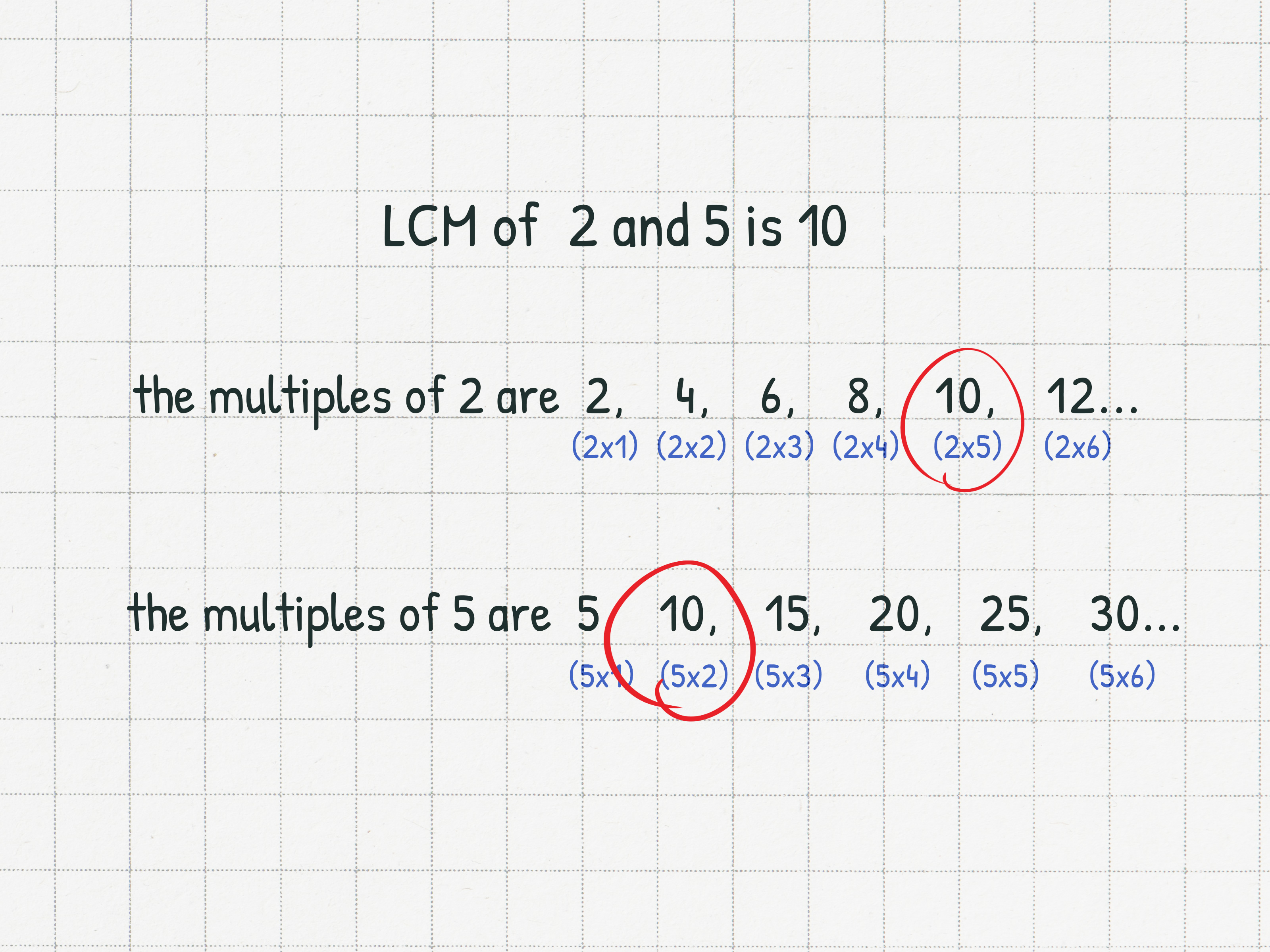
The least common denominator is the least common multiple of the denominators. That sounds fancy, but it is simply the smallest number both denominators can divide into evenly.
Method 1: List the multiples
For 5 and 8:
Multiples of 5: 5, 10, 15, 20, 25, 30, 35, 40
Multiples of 8: 8, 16, 24, 32, 40
The first matching number is 40, so the LCD is 40.
Method 2: Use the larger denominator
Sometimes one denominator is already a multiple of the other. For example, with 3 and 9, the LCD is 9 because 9 is divisible by both 3 and 9.
Example:
2/3 + 4/9
Rewrite 2/3 as 6/9:
6/9 + 4/9 = 10/9 = 1 1/9
Method 3: Multiply the denominators
If you are stuck, you can multiply the denominators to get a common denominator. For 7 and 10, 7 × 10 = 70. This always works, but it may not give the smallest denominator. You might have to simplify more at the end.
Example:
2/7 + 3/10
Use 70 as the common denominator:
2/7 = 20/70
3/10 = 21/70
Add:
20/70 + 21/70 = 41/70
Since 41/70 cannot be simplified, the answer is 41/70.
The Biggest Mistake: Adding the Denominators
The most common mistake is adding both the numerators and denominators. For example, a student might write:
1/2 + 1/3 = 2/5
That is incorrect. The denominator tells the size of the pieces, not how many pieces you have. When you add fractions, you do not add the denominators. You first create equal-sized pieces, then add only the numerators.
The correct solution is:
1/2 = 3/6
1/3 = 2/6
3/6 + 2/6 = 5/6
So, 1/2 + 1/3 = 5/6, not 2/5. The denominator is not invited to the addition party once it matches.
Adding Mixed Numbers with Unlike Denominators
A mixed number has a whole number and a fraction, such as 2 1/3. To add mixed numbers with unlike denominators, you can add the whole numbers and fractions separately, or convert everything to improper fractions first.
Example: 2 1/4 + 1 2/3
Add the whole numbers first:
2 + 1 = 3
Now add the fractions:
1/4 + 2/3
The LCD of 4 and 3 is 12.
1/4 = 3/12
2/3 = 8/12
Add:
3/12 + 8/12 = 11/12
Now combine the whole number and fraction:
3 + 11/12 = 3 11/12
So, 2 1/4 + 1 2/3 = 3 11/12.
Adding Three Fractions with Unlike Denominators
The same rule works when you add more than two fractions. Find one common denominator for all of them.
Example:
1/2 + 1/3 + 1/6
The denominators are 2, 3, and 6. The LCD is 6.
Rewrite:
1/2 = 3/6
1/3 = 2/6
1/6 = 1/6
Add:
3/6 + 2/6 + 1/6 = 6/6
6/6 = 1
So, 1/2 + 1/3 + 1/6 = 1.
Word Problem Practice
Fractions show up in real life more often than people expect. Measuring ingredients, dividing time, comparing distances, and splitting money can all involve unlike denominators.
Problem
Maya uses 1/3 cup of sugar for one recipe and 1/4 cup of sugar for another recipe. How much sugar does she use in total?
Solution
Add the fractions:
1/3 + 1/4
The LCD of 3 and 4 is 12.
1/3 = 4/12
1/4 = 3/12
Add:
4/12 + 3/12 = 7/12
Maya uses 7/12 cup of sugar in total. Also, Maya’s kitchen is probably doing better than mine, where measuring cups mysteriously disappear into another dimension.
Quick Study Checklist
Use this checklist whenever you solve an unlike denominator addition problem:
- Check the denominators.
- Find the least common denominator.
- Rewrite each fraction as an equivalent fraction.
- Add the numerators only.
- Keep the common denominator.
- Simplify the answer.
- Convert improper fractions to mixed numbers if needed.
Practice Problems with Answers
Try These
- 1/2 + 1/5
- 2/3 + 1/6
- 3/4 + 2/5
- 5/8 + 1/4
- 1 1/3 + 2 1/2
Answers
- 1/2 + 1/5 = 5/10 + 2/10 = 7/10
- 2/3 + 1/6 = 4/6 + 1/6 = 5/6
- 3/4 + 2/5 = 15/20 + 8/20 = 23/20 = 1 3/20
- 5/8 + 1/4 = 5/8 + 2/8 = 7/8
- 1 1/3 + 2 1/2 = 3 + 2/6 + 3/6 = 3 5/6
Study Tips for Mastering Unlike Denominators
First, practice finding least common denominators before solving full problems. Many students struggle not because adding fractions is impossible, but because they rush through the denominator step. Spend a few minutes listing multiples for common pairs like 2 and 3, 4 and 6, 5 and 10, 8 and 12, and 6 and 9.
Second, use visual models when the numbers feel abstract. Fraction bars, number lines, and circle diagrams help you see why common denominators matter. When you can picture 1/2 becoming 3/6 and 1/3 becoming 2/6, the math stops feeling like a random rule and starts making sense.
Third, say the process out loud. It may feel strange, but explaining each step helps your brain slow down: “The denominators are different. I need the LCD. I rewrite both fractions. I add the numerators. I simplify.” This turns the method into a habit.
Real Study Experience: What Actually Helps Students Learn This
One of the most useful experiences when learning how to add fractions with unlike denominators is realizing that confusion usually comes from moving too fast. Many students see 2/3 + 1/4 and immediately want to do somethinganythingbecause math problems look like they are quietly judging you. But the best first move is not calculation. It is observation. Look at the denominators. Ask yourself, “Are these pieces the same size?” If the answer is no, your mission is to make them match.
In real study sessions, the students who improve fastest are not always the ones who memorize the most rules. They are the ones who develop a reliable routine. They write the problem clearly, circle the denominators, find the LCD, rewrite both fractions, and only then add. This small routine prevents most mistakes. It also makes the work easier to check because every step is visible. A messy fraction problem is like a backpack full of loose papers: technically everything might be in there, but good luck finding it before the bell rings.
Another helpful experience is using everyday comparisons. Suppose one friend eats 1/2 of a sandwich and another eats 1/4 of a sandwich. You can picture that total as 3/4. But if the problem is 1/2 + 1/3, the answer is less obvious because halves and thirds divide the whole differently. Drawing a rectangle and splitting it into sixths can make the answer clear: 1/2 is 3/6, 1/3 is 2/6, and together they make 5/6. Once students see this visually, the algorithm feels less like a mysterious command from the Math Council.
Practice also works better when it is mixed. If you only solve problems where the LCD is the product of both denominators, you may forget that sometimes one denominator already works. For example, in 1/4 + 3/8, the LCD is 8, not 32. Using 32 still works, but it creates extra simplifying. A smart study plan includes easy, medium, and slightly annoying problems. The slightly annoying ones are important because they train your patience, and patience is basically a superpower in math class.
Finally, checking the reasonableness of your answer is a game changer. If you add 1/2 + 1/3 and get 2/5, pause. Since 1/2 is already bigger than 2/5, the answer cannot be right. The sum of two positive fractions must be larger than either fraction alone. Estimation catches errors before they become permanent residents on your homework page. With enough practice, adding fractions with unlike denominators becomes less about memorizing steps and more about understanding equal-sized parts. That is when the topic finally clicksand when your pencil can stop sweating.
Conclusion
Learning how to add fractions with unlike denominators is all about making different-sized pieces match before adding them. The process is simple when you slow it down: find a common denominator, create equivalent fractions, add the numerators, keep the denominator, and simplify. Once you understand why the denominators must be the same, the steps become much easier to remember.
Fractions may look tiny, but they build major math skills. They prepare you for ratios, proportions, algebra, measurements, geometry, and real-world problem solving. So the next time you see unlike denominators, do not panic. They are not math monsters. They are just fractions waiting for a common denominator and a little patience.