

If you have ever tried to sell a car after an accident, you already know the ugly truth: even a beautifully repaired vehicle can carry the marketplace charm of a soggy sandwich. Buyers see an accident on the vehicle history report, squint suspiciously, and suddenly your once-pristine ride is worth less than it was before the crunch, thud, or parking-lot catastrophe.
That drop in resale value is called diminished value. It matters because repair costs and diminished value are not the same thing. Your car can be fixed mechanically and cosmetically, yet still be worth less simply because it now has an accident history. If you want to estimate that loss like a pro, this guide walks you through the numbers, the logic, and the real-world strategy in 13 clear steps.
We will cover the popular 17c method, explain when it works, show where it falls short, and give you a practical example so you can estimate your claim without needing a law degree, an actuarial science degree, or a crystal ball.
What Is Diminished Value, Exactly?
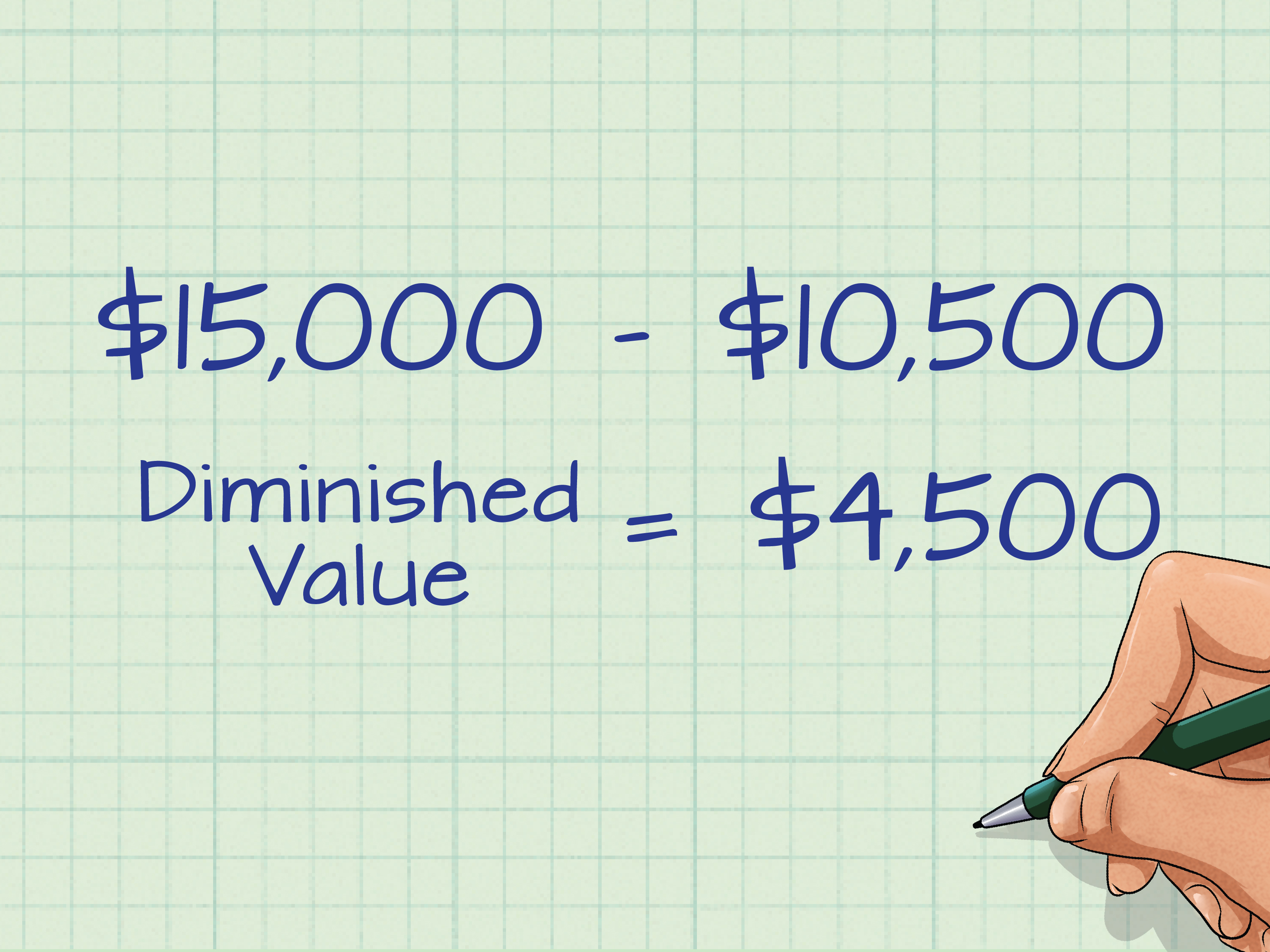
Diminished value is the difference between what your vehicle was worth before an accident and what it is worth after the accident and repairs. That difference can exist even when the body shop does excellent work.
There are three common types:
- Inherent diminished value: the most common type, caused by the mere fact that the vehicle now has an accident history.
- Repair-related diminished value: extra value loss caused by poor or incomplete repairs.
- Immediate diminished value: the drop in value right after the accident but before repairs are made.
For most drivers, the number they want to estimate is inherent diminished value. That is the “your car is fixed, but the market still side-eyes it” category.
Why the Calculation Is Not as Simple as Subtraction
In a perfect world, you would just compare your car’s pre-accident market value with its post-repair resale value and call it a day. In reality, insurers often use a formula called the 17c formula, which applies caps and multipliers to limit the payout. It is commonly used as a starting point, but it is not the only way to value diminished value, and it can understate the real-world loss for some vehicles.
That means you should treat your estimate as both a math exercise and a negotiation tool.
How to Calculate Diminished Value in 13 Steps
-
Step 1: Confirm that diminished value applies to your situation
Start with the basics. Diminished value claims are usually strongest when another driver was at fault, your vehicle is relatively new, the car had no serious prior damage, and the accident is now part of its history. If your car is older, high-mileage, or already had prior collisions, the claim may still exist, but the number often shrinks fast.
-
Step 2: Gather your vehicle’s pre-accident details
You need the car’s year, make, model, trim, mileage, condition, options, ZIP code, and VIN if possible. This is the raw material for your valuation. The more accurate your inputs, the less likely your final estimate turns into mathematical fan fiction.
-
Step 3: Estimate the pre-accident market value
Use a respected pricing source such as a retail or private-party valuation tool. Pick the value that best matches the real market for your vehicle right before the crash. Be honest about condition. Calling a well-used commuter car “excellent” because you vacuumed it twice is not a strategy; it is wishful thinking with cup holders.
-
Step 4: Save that number as your baseline
Write down the pre-accident value clearly. For this example, let us say your vehicle was worth $24,000 before the accident. This number becomes the foundation for every step that follows.
-
Step 5: Apply the 10% cap
Under the 17c method, the maximum theoretical diminished value begins at 10% of the pre-accident value.
Formula: Pre-accident value × 0.10
Example: $24,000 × 0.10 = $2,400
This does not mean your diminished value is $2,400. It only means the formula starts there and then starts trimming.
-
Step 6: Review the repair records and damage severity
Now determine how serious the accident damage was. Read the repair estimate and invoice carefully. Did the crash affect structural components? Were multiple panels replaced? Was there frame or unibody damage? Cosmetic bumper repair is one thing; significant structural damage is another.
-
Step 7: Choose the damage multiplier
The common 17c damage multipliers look like this:
Damage Multiplier Damage Level 1.00 Severe structural damage 0.75 Major damage to structure and panels 0.50 Moderate damage to structure and panels 0.25 Minor damage to structure and panels 0.00 No structural damage or replaced panels Suppose your vehicle had moderate damage. Your multiplier would be 0.50.
-
Step 8: Multiply the capped value by the damage multiplier
Formula: 10% cap value × damage multiplier
Example: $2,400 × 0.50 = $1,200
That is your adjusted loss after the formula accounts for damage severity.
-
Step 9: Determine your mileage multiplier
Mileage matters because the market usually punishes newer, lower-mileage vehicles more for accident history. The common mileage multipliers are:
Mileage Multiplier Mileage Range 1.00 0–19,999 miles 0.80 20,000–39,999 miles 0.60 40,000–59,999 miles 0.40 60,000–79,999 miles 0.20 80,000–99,999 miles 0.00 100,000 miles or more If your car had 35,000 miles at the time of the accident, the mileage multiplier would be 0.80.
-
Step 10: Multiply by the mileage multiplier
Formula: Adjusted damage value × mileage multiplier
Example: $1,200 × 0.80 = $960
Using the 17c method, your estimated diminished value would be $960.
-
Step 11: Compare the formula result with the real-world market
This step is where smart claims get stronger. Check actual resale indicators, trade-in feedback, dealer opinions, and independent appraisal data. If comparable clean vehicles sell for materially more than yours after repairs, your real-world loss may exceed the 17c estimate.
For example, if your repaired vehicle now appears to sell for about $22,600 instead of the pre-accident $24,000, the market-based loss is $1,400. That is higher than the 17c estimate of $960. The gap matters.
-
Step 12: Build your evidence file
Your calculation means more when you can prove it. Collect:
- Photos of the damage
- Police report or incident report
- Repair estimates and final invoices
- Before-and-after valuations
- Vehicle history report if relevant
- Independent appraiser’s opinion, especially for newer or luxury vehicles
Think of this as the difference between saying, “Trust me, bro,” and presenting an actual case.
-
Step 13: Use the number strategically in your claim
Once you have the formula estimate and your supporting evidence, you can submit a diminished value claim or negotiate a low offer. Start with your documented number, explain your math, and show why your evidence supports it. If the insurer relies only on a bare-bones formula, a professional appraisal can help you push back.
A Quick Formula Recap
Here is the standard 17c version in plain English:
Diminished Value = Pre-Accident Value × 10% Cap × Damage Multiplier × Mileage Multiplier
Using our example:
$24,000 × 0.10 × 0.50 × 0.80 = $960
What Can Affect the Final Number?
Vehicle age and mileage
Newer, lower-mileage vehicles often suffer more noticeable diminished value because buyers expect them to have clean histories.
Severity of damage
Structural and frame damage usually hurts value more than cosmetic repairs. A scratched bumper is annoying. Structural damage is the kind of phrase that makes shoppers suddenly remember another listing they “need to go look at.”
Brand and market segment
Luxury, performance, and late-model vehicles often feel diminished value more sharply because buyers in those segments tend to be picky, and frankly, picky buyers tend to have wallets.
Repair quality
If the repairs are visibly imperfect, the loss can be greater than an insurer’s formula suggests.
State law and policy language
Diminished value is not handled the same way everywhere. Some claims are easier as third-party claims against the at-fault driver’s insurer, while first-party claims under your own policy can be more limited depending on the state and the contract language.
Common Mistakes to Avoid
- Confusing depreciation with diminished value: depreciation happens over time; diminished value is accident-related loss.
- Using a random online guess as proof: insurers want documentation, not vibes.
- Ignoring mileage and prior condition: those details matter more than most people expect.
- Assuming 17c is the final word: it is common, but not universal or automatically fair.
- Waiting too long: the longer you wait, the harder it can be to document the difference in value cleanly.
Should You Get an Independent Appraisal?
For a modest claim on an older car, maybe not. For a newer vehicle, a luxury model, a leased car issue, or a claim where the insurer’s offer feels suspiciously tiny, an independent appraisal can be worth the money. A good appraiser can help connect the dots between accident history, repair severity, and the actual market reaction.
In plain English: if the insurer offers “coffee money” for a vehicle that lost serious resale value, getting outside support may be the smartest move you make.
Final Thoughts
Learning how to calculate diminished value is really about learning how the market thinks. A repaired car is not always a fully restored asset in the eyes of buyers, dealers, or insurers. The 17c formula gives you a widely recognized starting point, but the strongest estimate combines that formula with real-world evidence.
If you remember only one thing, make it this: repair cost and loss of value are not the same thing. Your body shop fixes metal, paint, and parts. Diminished value is about what the market does with the accident history after all of that work is done.
Do the math carefully, document everything, compare your result with the real resale market, and you will be in a far better position than the average driver who just accepts the first number tossed across the table.
Real-World Experiences With Diminished Value
Drivers often discover diminished value the hard way: not when the repairs are finished, but when they try to trade in the car later and the dealer’s smile gets noticeably more economical. One common experience is the “but it looks perfect” moment. The owner picks up the car from a reputable body shop, the paint matches, the panels line up, the warning lights are off, and everything seems fine. Then a trade-in offer comes back lower than expected because the accident is now part of the car’s permanent story. That is when diminished value stops being a legal phrase and starts feeling painfully real.
Another common experience is the low opening offer from an insurer. Many people run the 17c math, feel reasonably confident, and then receive an offer that seems to treat their car like it lost the value of two fancy lunches and a tank of gas. This is especially frustrating for owners of newer cars, luxury models, and vehicles that were in excellent condition before the collision. In those situations, drivers often realize that the formula can be only a starting point, not the finish line.
There are also drivers who learn that documentation changes everything. The people who keep repair invoices, photos, comparable listings, and appraisal reports usually feel less helpless during negotiation. Instead of saying, “My car is worth less now,” they can say, “Here is the pre-loss market value, here is the repair record, here is the accident history impact, and here is the post-repair appraisal.” That kind of file has gravity. It moves the conversation away from opinion and toward evidence.
Older vehicles create a different experience. Some drivers assume every accident automatically creates a strong diminished value claim, but that is not always true. If the car already has high mileage, previous damage, worn condition, or a modest resale market, the actual loss may be limited. In those cases, owners sometimes spend more time fighting than the claim is worth. It is not a fun answer, but it is an honest one.
Then there is the emotional side. A lot of people are not just annoyed about the money. They are irritated because they took care of the vehicle, drove responsibly, and still ended up with an asset that the market now treats differently. That frustration is understandable. Diminished value feels unfair because it is a loss that hides behind a successful repair.
The best real-world lesson is this: drivers who treat diminished value like a business calculation usually do better than drivers who treat it like a complaint. Calculate the number, support it with evidence, understand that formulas can understate the real impact, and stay practical. The goal is not to win a dramatic courtroom monologue in your driveway. The goal is to show, clearly and credibly, what your vehicle lost in the marketplace after the accident.