

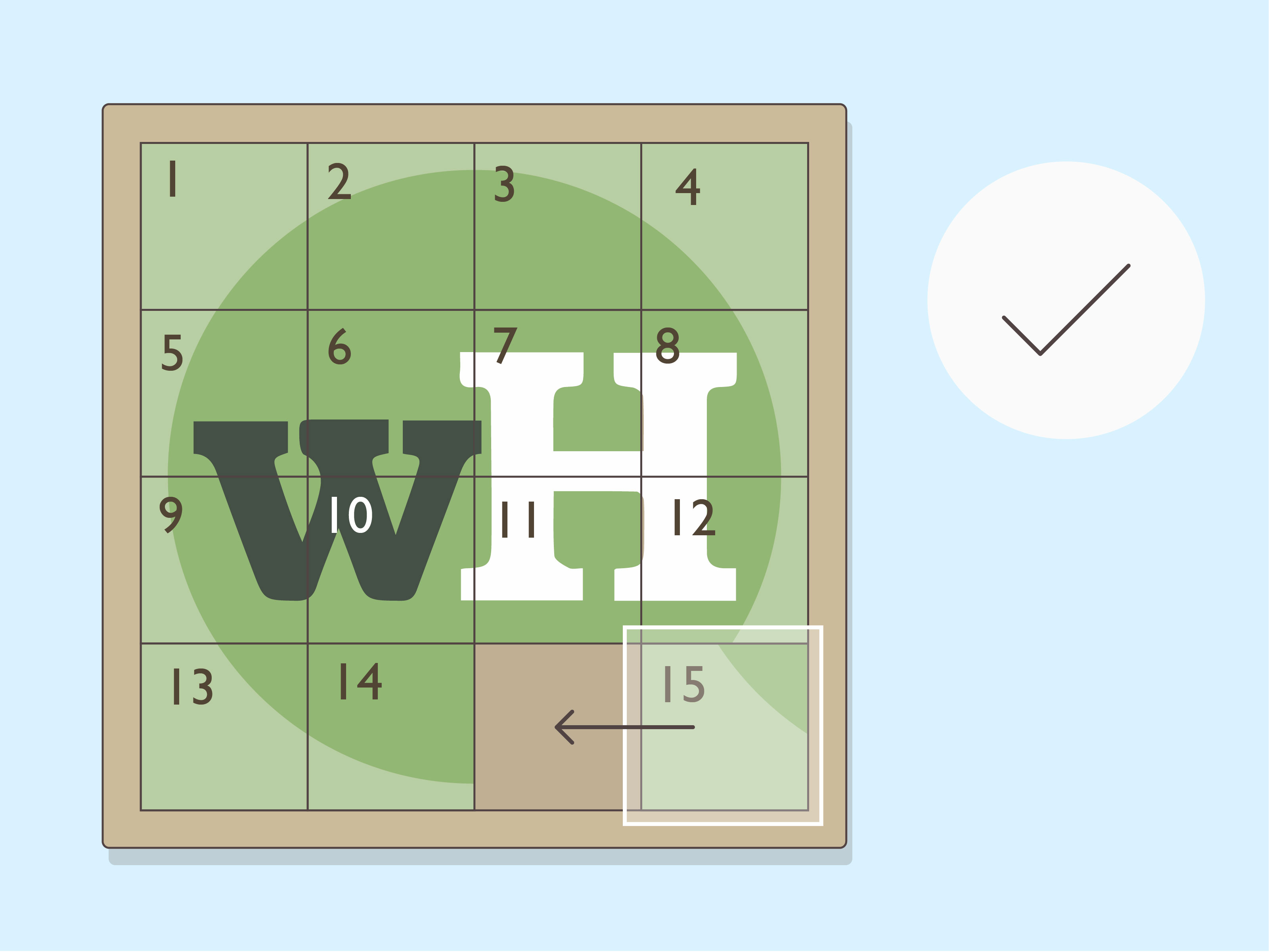
Slide puzzles look innocent. It is just a bunch of numbered squares and one empty space, right? Then ten minutes later you are bargaining with a tiny plastic tile like it owes you rent. That is the magic of the classic slide puzzle: it is simple to learn, weirdly hard to master, and deeply satisfying once the pattern finally clicks.
If you are new to slide puzzles, the good news is that you do not need lightning-fast hands or a math degree to get better. What you need is a calm method, a few reliable tricks, and the self-control to stop “just trying stuff” every five seconds. Once you understand how the puzzle behaves, solving it becomes much less random and much more strategic.
This guide breaks down beginner-friendly slide puzzle strategies in plain English. We will cover how to think about the board, why some positions are impossible, how to solve rows without wrecking your progress, and what to do when the last few tiles start acting like they are in a tiny rebellion.
What Is a Slide Puzzle?
A slide puzzle is a board of tiles with one empty space. You move tiles by sliding them into the blank. The most common versions are the 3×3 eight-puzzle and the 4×4 fifteen-puzzle. The goal is usually to arrange the tiles in order from left to right and top to bottom, with the empty space finishing in the bottom-right corner.
At first glance, slide puzzles seem like luck-based games. They are not. They are logic puzzles with structure. Every move changes the board in predictable ways, and strong solvers rely on repeatable patterns instead of guessing.
Beginner Mindset: Stop Chasing Individual Tiles
The biggest beginner mistake is treating each tile like a separate mission. You spot the number 1, force it home, then notice the number 2 is nearby, then suddenly the blank is stranded, the row is broken, and tile 1 is back on vacation.
A better mindset is to solve sections, not isolated tiles. Think in chunks:
1. Work from the top down
Start with the top row. Once it is correct, protect it. Then move to the next row. In larger puzzles, you are essentially shrinking the unsolved area as you go.
2. Use the blank as a tool, not a panic button
The empty space is your steering wheel. Good solving is really about controlling where the blank goes so it can escort tiles into place.
3. Expect temporary mess
To place one tile, you often have to disturb several others. That is normal. The goal is not to keep everything perfect at all times. The goal is to improve the board without damaging the part you already solved.
First Important Fact: Some Slide Puzzles Are Unsolvable
Yes, really. Sometimes the puzzle is not hard. Sometimes it is impossible. This usually surprises beginners and annoys them in exactly the correct amount.
In classic slide puzzles, solvability depends on parity, which is a fancy way of saying the arrangement must have the right kind of underlying order. On a 4×4 puzzle, a board that looks almost solved except for the 14 and 15 tiles swapped is the famous impossible case. No amount of determination, optimism, or dramatic sighing will fix it.
What does that mean for beginners?
- If you are using a decent app or website, it usually generates only solvable shuffles.
- If you are using a homemade puzzle, printed puzzle, or random setup, an impossible position can happen.
- If a near-solved puzzle feels cursed beyond reason, you may not be imagining it.
So before blaming your brain, remember that the board itself may be the problem.
The Easiest Beginner Strategy: Solve Row by Row
The most practical approach for new solvers is the row-by-row method. Instead of trying to solve the entire board at once, you solve the board in layers and preserve completed work.
Step 1: Solve the first row from left to right
In a 4×4 puzzle, your first goal is usually:
1 2 3 4
Get the first two or three tiles into place carefully, but be cautious with the final two spaces in a row. Beginners often jam one tile into its final spot too early and discover the last tile cannot enter cleanly without breaking the row.
A smarter move is to set up the final two row tiles together near their target area, then slide them into place as a pair using a small loop. Think of it like parking a car: the last angle matters more than the first approach.
Step 2: Solve the second row without disturbing the first
Once the top row is correct, treat it like wet cement. Do not step on it. Work beneath it. The same logic applies: place the easier tiles first, then handle the last pair with care.
Many educational methods describe the fifteen puzzle as overlapping two-row strips. That sounds fancier than it feels. In practice, it means you can focus on a limited band of the board and use small local loops to cycle tiles without wrecking the whole puzzle.
Step 3: Reduce the problem
After the top rows are solved, the remaining unsolved section behaves like a smaller puzzle. This is one of the most satisfying moments for beginners because the board starts looking less like chaos and more like a manageable project.
In short: solve, lock, shrink, repeat.
Learn the Power of Small Loops
If slide puzzles have a secret weapon, it is the small loop. A loop is a short sequence of moves that cycles a few tiles around a tiny area, usually a 2×2 block, while keeping the rest of the board stable.
Why this matters:
- It helps reposition a tile without destroying solved areas.
- It lets you move two tiles into a row or column together.
- It teaches you to think locally instead of scrambling globally.
Beginners do not need to memorize dozens of algorithms on day one. But they should understand the idea that tiny controlled cycles beat giant random detours. When you can rotate three tiles around a blank while preserving everything else, the puzzle becomes far more cooperative.
How to Handle the Last Two Tiles in a Row
This is where many first-time solvers get stuck. You have nearly completed the row, but the last two tiles are reversed or trapped.
Here is the beginner-friendly rule:
Do not try to place the last tile by itself. Set up the final pair together.
For example, if you need 3 and 4 at the end of a row, bring them near the target in the correct relative order. Then use the blank and a short cycling pattern to slide them into place together. This prevents the “great, now one is right and the other is impossible” problem.
The same principle appears later in columns and in the endgame. Slide puzzles reward pairing and setup, not brute force.
How to Avoid Ruining Solved Sections
New solvers often know what they want to do but destroy earlier progress while doing it. Try these habits:
Keep the blank near the active zone
If you are solving the second row, keep the blank in that neighborhood. Sending it wandering across the board usually causes trouble.
Respect boundaries
Imagine a line under your solved row. Do your work below that line. If a move crosses into the solved section, ask whether it is truly necessary.
Pause before every long detour
If your plan takes ten moves and seems to undo half the board, it is probably not a great plan. There is often a shorter local route.
What to Do in the Endgame
The final few tiles are where slide puzzles become dramatic. The board is mostly solved, so every mistake feels bigger. Relax. This is normal.
In the endgame, focus on these ideas:
- Keep the solved area untouched.
- Use loops to cycle a few remaining tiles.
- Watch the relative order of the last pieces, not just their location.
- If a near-finished 4×4 board seems impossible, consider parity before you lose your afternoon.
One reason experts look calm is that they know the last corner of the puzzle is not random. It follows rules. Once you start seeing those rules, the endgame gets much less scary.
Speed Comes After Structure
Everyone wants to solve slide puzzles faster. Fair enough. But speed should come after consistency. A clean, reliable method beats frantic swiping every single time.
If you want to improve your speed, do this:
- Solve the same size puzzle repeatedly.
- Practice forming the first row efficiently.
- Learn to recognize common last-pair setups.
- Reduce unnecessary blank movement.
- Look one or two moves ahead instead of one move at a time.
Fast solvers are usually not “faster thinkers” in a magical sense. They simply recognize patterns sooner and waste fewer moves.
Common Beginner Mistakes
Solving by impulse
If your strategy is “that tile looks close enough,” the puzzle will punish you with enthusiasm.
Ignoring solvability
Sometimes the issue is not your skill level. Sometimes the board is impossible.
Breaking completed rows
Once a row is solved, protect it. Reopening solved work should be a last resort, not a hobby.
Moving the blank without purpose
The blank is not there for decoration. Every time it moves, it should support a goal.
Obsessing over one tile
Tiles travel in groups more often than beginners expect. A stubborn tile often becomes easy once the surrounding pieces are arranged better.
A Simple Practice Routine for Beginners
If you want steady improvement, practice with intention:
- Start with a 3×3 slide puzzle until you can solve it consistently.
- Move to a 4×4 puzzle and focus only on solving the first row.
- Next, practice solving the first two rows.
- Then practice finishing from partially solved positions.
- Only after that should you chase speed records.
This staged approach works because it builds pattern recognition in layers. You are not just solving puzzles. You are teaching your brain what “good structure” looks like.
Why Slide Puzzles Feel So Addictive
Slide puzzles sit in a sweet spot between order and chaos. The rules are tiny. The challenge is real. Every move gives feedback. You can see progress, but you can also wreck it in four seconds flat. It is humbling, entertaining, and oddly therapeutic.
That is why beginners who say, “I will try one round,” often reappear forty minutes later with better technique, worse posture, and a very strong opinion about tile number 12.
Experience Section: What Beginners Usually Go Through While Learning Slide Puzzles
Most people have a very similar emotional journey with slide puzzles, and honestly, it is part of the fun. At the beginning, the puzzle feels simple enough that confidence shows up early. You slide a few tiles around, maybe even complete part of a row, and think, “Oh, I get this.” Then the board locks into a messy state where everything seems almost right and absolutely wrong at the same time. That is the moment the puzzle introduces itself properly.
One common beginner experience is realizing that being close is not the same thing as being structured. A board can look nearly solved and still require a lot of work. New solvers often spend too much energy chasing visual neatness instead of building reliable order. Over time, they learn that a truly good position is not just pretty; it is stable. That insight changes everything.
Another experience beginners report is the strange satisfaction of finally controlling the blank space. Early on, the blank feels annoying, like the missing puzzle piece that keeps getting in the way. Later, it starts to feel powerful. Once you realize the blank is your steering mechanism, not your enemy, the entire puzzle becomes easier to read. This is often the first moment when a player feels genuine progress instead of lucky progress.
There is also the classic “I solved it once and now I can never do it again” stage. That is normal. One successful solve does not always mean the method is understood. Often, the first win is partly instinct and partly accident. Real skill shows up when you can repeat the process calmly on a fresh shuffle. Beginners usually gain confidence only after several solves, when the opening row starts feeling familiar and the endgame stops feeling like a hostage negotiation.
Many people also discover that slide puzzles reward patience more than intensity. The harder they force the board, the worse it gets. The more they pause, observe, and use small cycles, the smoother things become. That lesson tends to spill into other kinds of problem-solving too. Suddenly the puzzle is not just a pastime. It is a quiet lesson in planning, restraint, and not panicking when a system gets messy.
And then there is the best experience of all: the moment patterns become visible. A player who once saw only random tiles begins to notice setups, loops, pair placements, and safe paths. The puzzle has not changed, but their eyes have. That shift is why slide puzzles keep people coming back. Improvement feels tangible. Every solved board proves that strategy beats chaos, and that is a deeply satisfying thing to experience, even if tile 14 still acts a little smug about it.
Final Thoughts
If you want to solve slide puzzles more consistently, start with structure. Work row by row. Use the blank intelligently. Learn small loops. Treat the last two tiles as a pair. Protect finished sections. And remember that if a puzzle seems impossible, sometimes it actually is.
Most of all, give yourself time. Slide puzzles are not won by force. They are won by pattern recognition, patience, and a growing sense of control. Once those pieces come together, the puzzle stops feeling like a trap and starts feeling like a conversation you finally understand.