

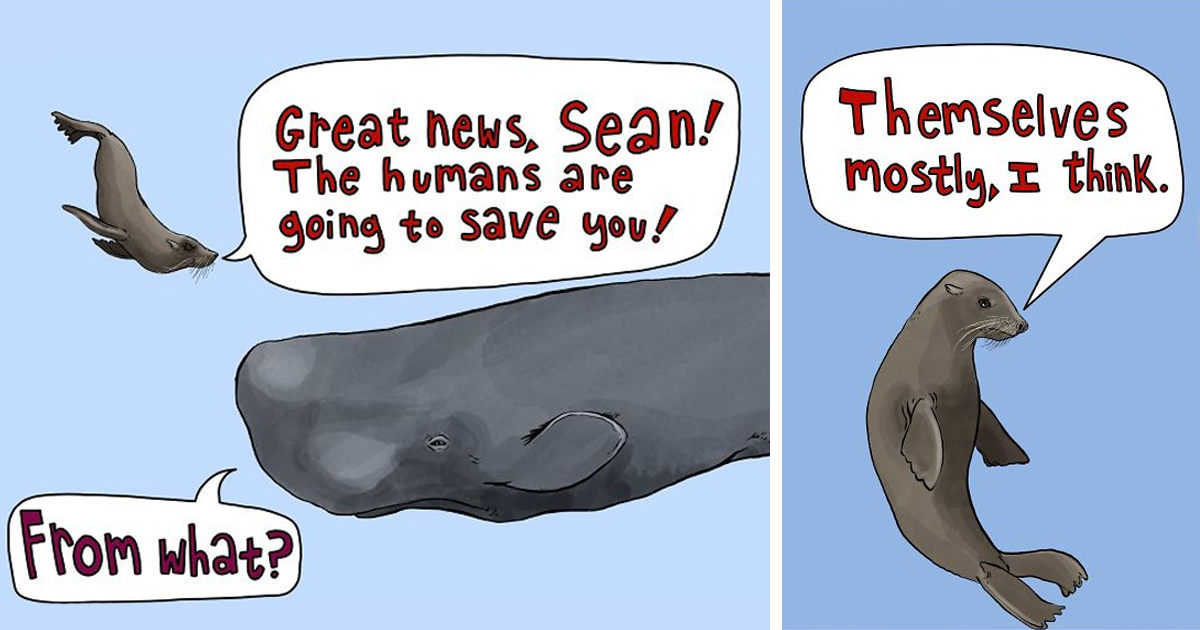
Anxiety has a funny way of turning everyday life into a suspense movie where nothing is technically happening, but the soundtrack is very dramatic. A normal email can feel like a courtroom summons. A friendly “Can we talk?” message can instantly become a psychological thriller. And a quiet Sunday evening? Somehow, that is when the brain decides to open a 74-tab browser session titled “Everything That Could Go Wrong.”
For some people, coping with anxiety means journaling, exercising, meditating, talking to a therapist, or taking long walks where they pretend they are the mysterious main character in an indie film. For me, it often starts with a nervous raccoon, a deeply overwhelmed frog, a cat who has made eye contact with one responsibility and immediately needs a nap, or a pigeon trying to understand why everyone expects it to have a five-year plan.
That is why I make animal comics to cope with anxiety. Not because animals magically solve mental health struggles, and not because a cartoon duck can replace real support. But because drawing anxious animals gives invisible feelings a visible shape. It turns a racing thought into a tiny possum holding a cup of tea. It turns emotional overload into a hedgehog wrapped in a blanket like a burrito with feelings. Suddenly, the anxiety is not a mysterious monster in the fog. It is a squirrel with a clipboard, and honestly, that squirrel looks stressed too.
Why Animal Comics Make Anxiety Easier To Talk About
One of the hardest parts of anxiety is explaining it without sounding like you are exaggerating. Anxiety can show up as worry, irritability, restlessness, trouble sleeping, tight muscles, stomach discomfort, or a sense that something bad is about to happen even when life is technically fine. The experience can interfere with school, work, relationships, routines, and basic tasks like answering a text without mentally drafting 19 versions first.
Animal comics soften that conversation. A drawing of a deer frozen in front of a ringing phone can express social anxiety faster than a paragraph of clinical language. A turtle hiding in its shell because someone said “quick meeting” can make readers laugh, nod, and whisper, “Unfortunately, that is me.” Humor does not erase the struggle, but it can make the struggle less lonely.
Animals also work because they are emotionally flexible characters. A raccoon can be chaotic, clever, exhausted, hungry, suspicious, and oddly relatable all before breakfast. A dog can represent loyalty and panic at the same time. A cat can embody confidence until a cucumber enters the room. By giving human worries to animals, comics create emotional distance. Readers can recognize themselves without feeling directly exposed.
The Gentle Power Of Humor In Mental Health
Laughter is not a cure for anxiety, but it can be a useful pressure valve. Humor can lighten emotional tension, help people connect, and make difficult topics easier to approach. A comic strip about a bear overthinking whether its “thumbs-up” reply sounded rude may not fix a nervous system, but it can offer a tiny moment of relief. Sometimes one tiny moment is enough to help the day feel more manageable.
Comics are especially good at this because they compress emotion into a small, readable scene. A few panels can capture the entire cycle of anxious thinking: the trigger, the spiral, the absurd conclusion, and the punchline. For example, a bird might receive one vague message from a friend and immediately conclude it has been exiled from society. The final panel reveals the message was simply, “Want tacos?” That is anxiety in miniature: intense, convincing, and occasionally ridiculous when viewed from a safer distance.
This is where animal comics become more than cute drawings. They become emotional translation devices. They say, “You are not broken. Your brain is just doing too much paperwork.”
Why Creativity Can Help Calm A Busy Brain
Creative activities such as drawing, writing, painting, crafting, music, and journaling can support emotional processing. They give the mind something structured to do with messy feelings. When anxiety feels vague and huge, making art can turn it into lines, colors, shapes, characters, and stories. That shift matters. A feeling that once filled the whole room may become a fox in a sweater saying, “I prepared for everything except being perceived.”
Drawing comics also creates a rhythm. Sketch the character. Add the expression. Write the dialogue. Adjust the timing. Decide whether the anxious hamster needs a tiny hat. These steps require focus, and focus can interrupt repetitive worry loops. Instead of replaying a stressful moment for the 47th time, the brain has a job: make the otter look concerned but still adorable.
Comics Turn Chaos Into A Sequence
Anxiety often feels chaotic because it jumps from one fear to another. Comics force that chaos into panels. First this happens. Then the character reacts. Then the thought gets exaggerated. Then comes a twist, a joke, or a tender landing. This sequence gives the anxious experience a beginning, middle, and end, which can feel comforting when real thoughts refuse to form an orderly line.
Art Makes Feelings Visible
Many people struggle to name what they feel. Is it fear? Embarrassment? Pressure? Burnout wearing a fake mustache? Drawing can bypass the need for perfect language. A rabbit vibrating beside a coffee cup may say more than “I am stressed.” A whale floating under a cloud labeled “minor inconvenience” may explain the weight of anxious rumination with surprising accuracy.
Why Animals Are Perfect Characters For Anxiety Comics
Animals make anxiety easier to explore because they carry built-in symbolism. Turtles hide. Cats judge. Dogs want reassurance. Owls look wise but probably have unread messages too. Each animal brings a familiar emotional shortcut, and comics can play with those expectations.
A snail can represent slow progress. A squirrel can represent scattered energy. A raccoon can represent survival mode with snacks. A penguin can represent social awkwardness in formalwear. A goldfish can represent the brave but doomed attempt to remember why you entered a room. These characters let readers see anxiety in a playful mirror rather than a harsh spotlight.
Animals also avoid making the comic feel too preachy. A human character saying, “I struggle with anticipatory anxiety before social events” may sound serious and direct. A nervous opossum whispering, “I have rehearsed saying hello so many times that hello no longer sounds legal” lands differently. It is funny, but it is also true.
Common Anxiety Experiences That Animal Comics Capture Well
Overthinking Small Interactions
One of my favorite comic setups is the tiny social moment that becomes a full mental opera. A duck says “you too” when the waiter says “enjoy your meal,” then spends the next three panels imagining moving to a new pond under a different name. Many anxious people know this feeling. The mistake is harmless, but the brain treats it like breaking a royal vase in a museum.
Avoiding Tasks That Feel Too Big
Another common theme is task avoidance. A bear looks at a laundry basket and says, “I will need three business days and emotional backup.” A frog opens a planner, sees one appointment, and closes the planner like it has witnessed forbidden knowledge. These jokes work because anxiety often makes ordinary tasks feel enormous before we even begin.
Needing Reassurance
Animal comics are great for showing reassurance loops. A dog asks, “Are we okay?” The other dog says, “Yes.” The first dog says, “Excellent. Follow-up question: are we still okay three seconds later?” It is silly, but it reflects a real pattern: anxiety often wants certainty, and certainty is a snack it can never fully digest.
The Exhaustion After Being Brave
People often talk about anxiety as fear, but not enough people talk about the tiredness that follows. A comic about a tiny mouse attending one social event and then needing to lie flat under a leaf for 48 hours can be funnier and more honest than a motivational poster. Coping takes energy. Being brave while anxious is still being brave.
Making Comics Without Turning Anxiety Into A Punchline
There is an important difference between laughing at anxiety and laughing with people who experience it. Good mental health comics do not mock suffering. They validate it, exaggerate it gently, and give it a shape readers can recognize. The joke should never be “anxious people are ridiculous.” The joke is usually “wow, brains can be dramatic little theater departments.”
That distinction matters. Anxiety disorders are real, and people may need professional support, therapy, medication, lifestyle changes, or a combination of tools. Comics can be part of coping, but they are not a substitute for care when anxiety becomes overwhelming or interferes with daily life. The healthiest humor leaves room for compassion.
How I Turn Anxiety Into An Animal Comic
My process usually starts with a feeling, not a joke. Maybe I feel overwhelmed by messages, nervous before a deadline, or embarrassed about something nobody else remembers. Instead of trying to force myself into a cheerful mood, I ask: “What animal is this feeling?”
If the feeling is frantic, it might become a squirrel. If it is heavy and slow, maybe a manatee. If it is socially awkward but trying very hard, definitely a penguin. Once I have the animal, the comic starts to write itself. The character wants something simple: rest, reassurance, quiet, snacks, a successful phone call, or the ability to leave a party without performing a 22-step goodbye ceremony.
Then I exaggerate the thought just enough to make it visible. If I am worried about sending an email, the comic raccoon may treat the send button like a medieval catapult. If I am anxious about being judged, the comic owl may announce, “I have prepared a list of imaginary criticisms from people who are not thinking about me.” The goal is not to make the fear look stupid. The goal is to make it small enough to hold.
Why Readers Connect With Anxious Animal Comics
Readers often connect with these comics because they recognize the emotional truth before they even process the joke. A tiny creature under a blanket can say, “I am overstimulated,” “I need a break,” and “please do not perceive me until Thursday” all at once. That kind of instant recognition can feel comforting.
Comics also create community. When someone shares an animal comic and says, “This is me,” they are doing more than posting a joke. They are reaching for connection. Other people comment, laugh, relate, and sometimes admit they have felt the same way. A simple cartoon can become a small social bridge.
That is one reason mental health comics have become popular online. They make private experiences public without making them too heavy to share. The format is short, visual, and emotionally direct. In a fast-scrolling world, a worried frog can stop someone for three seconds and make them feel understood.
Examples Of Animal Comic Ideas About Anxiety
The Inbox Raccoon
A raccoon opens its email and sees one unread message. Panel two: the raccoon puts on a helmet. Panel three: it whispers, “I was not emotionally trained for this.” The joke works because many people know that one message can feel like a full weather event.
The Social Battery Cat
A cat attends a party, successfully says hello to three people, then crawls into a laundry basket labeled “charging station.” This comic captures how social interaction can be enjoyable and draining at the same time.
The Panic Planning Squirrel
A squirrel has 12 acorns, three backup plans, and no actual problem yet. It says, “Preparation is my love language and my curse.” This one is for everyone who has worried about things so early that the things themselves have not been notified.
The Brave Little Snail
A snail moves one inch toward a difficult task. Another animal says, “That’s it?” The snail replies, “That was my entire emotional budget.” It is funny, but it also celebrates small steps, which are often how real coping begins.
Practical Ways To Use Comics As A Coping Tool
You do not have to be a professional artist to use comics for anxiety. Stick figures count. Blobby animals count. A potato with ears counts if it helps you express what is happening inside. The point is not artistic perfection; the point is emotional movement.
Start with a simple prompt: “Today my anxiety feels like…” Then choose an animal and draw one scene. Maybe your anxiety is a crab guarding a calendar. Maybe it is a moth flying into every possible worst-case scenario. Add one line of dialogue. Keep it honest. Keep it gentle. Let it be imperfect.
You can also create recurring characters. A worry rabbit, a burnout bear, a confidence-challenged owl, or a practical turtle who gives calm advice. Over time, these characters become familiar companions. They help you notice patterns: what triggers you, what comforts you, and what kind of humor helps you breathe again.
The 500-Word Experience: What Drawing Anxious Animals Has Taught Me
Making animal comics to cope with anxiety has taught me that feelings become less frightening when they are invited to sit at the table, especially if the table is occupied by a raccoon eating cereal at midnight. Before I started drawing these comics, I often treated anxiety like an enemy I had to defeat immediately. If I felt nervous, I wanted the feeling gone. If I worried too much, I criticized myself for worrying. That only added a second layer of stress, like putting a tiny panic hat on top of the original panic hat.
Comics changed the relationship. Instead of asking, “How do I get rid of this feeling?” I started asking, “What is this feeling trying to say, and what animal would say it funniest?” That question gave me distance. It helped me observe anxiety instead of becoming completely swallowed by it. A thought like “everyone is disappointed in me” feels heavy when it stays in my head. But when I draw it as a dramatic seal lying on a fainting couch, it becomes easier to question. Is everyone disappointed? Probably not. Is the seal having a moment? Absolutely.
I also learned that humor and tenderness can exist together. Some of my favorite comics are not laugh-out-loud funny in a loud way. They are small and soft. A tired fox making soup after a hard day. A hedgehog saying, “I did one difficult thing, and now I will be proud quietly.” A crow collecting shiny objects and coping skills. These comics remind me that healing is not always a grand transformation. Sometimes it is noticing the spiral, taking a breath, drinking water, replying to one message, or letting yourself rest without filing a formal guilt report.
Another unexpected lesson is that people relate to very specific honesty. The more personal a comic feels, the more universal it often becomes. When I draw a penguin rehearsing a phone call like it is auditioning for Broadway, people understand. When I draw a rabbit needing reassurance after sending a normal text, people understand. The details make the feeling real. The animal makes it safe enough to laugh at.
Creating these comics has also made me more patient with myself. I used to think coping had to look impressive. Now I think coping can look like a snail moving forward very slowly while wearing a determined expression. It can look like a bear learning to say no. It can look like a cat leaving the room before becoming overstimulated and calling that wisdom, not failure. Anxiety still shows up, of course. It still knocks on the door holding a clipboard and 300 concerns. But now I can sometimes greet it with a pencil and say, “Fine. Sit down. You are becoming a comic.”
Conclusion: Tiny Animals, Big Feelings, Real Relief
Animal comics work because they make anxiety visible, relatable, and a little less intimidating. They turn private worries into shared moments. They use humor without denying pain. They remind readers that anxious thoughts may be loud, but they are not always accurate, permanent, or in charge.
Making comics is not the only way to cope, and it is not a replacement for professional mental health care when support is needed. But as a creative habit, it can help people name emotions, interrupt spirals, find connection, and treat themselves with more kindness. Sometimes the first step toward feeling better is not a perfect solution. Sometimes it is a nervous frog in a sweater saying exactly what you could not say yet.
And honestly, if a frog can face the day with shaky hands, a tiny mug, and suspicious optimism, maybe the rest of us can too.