

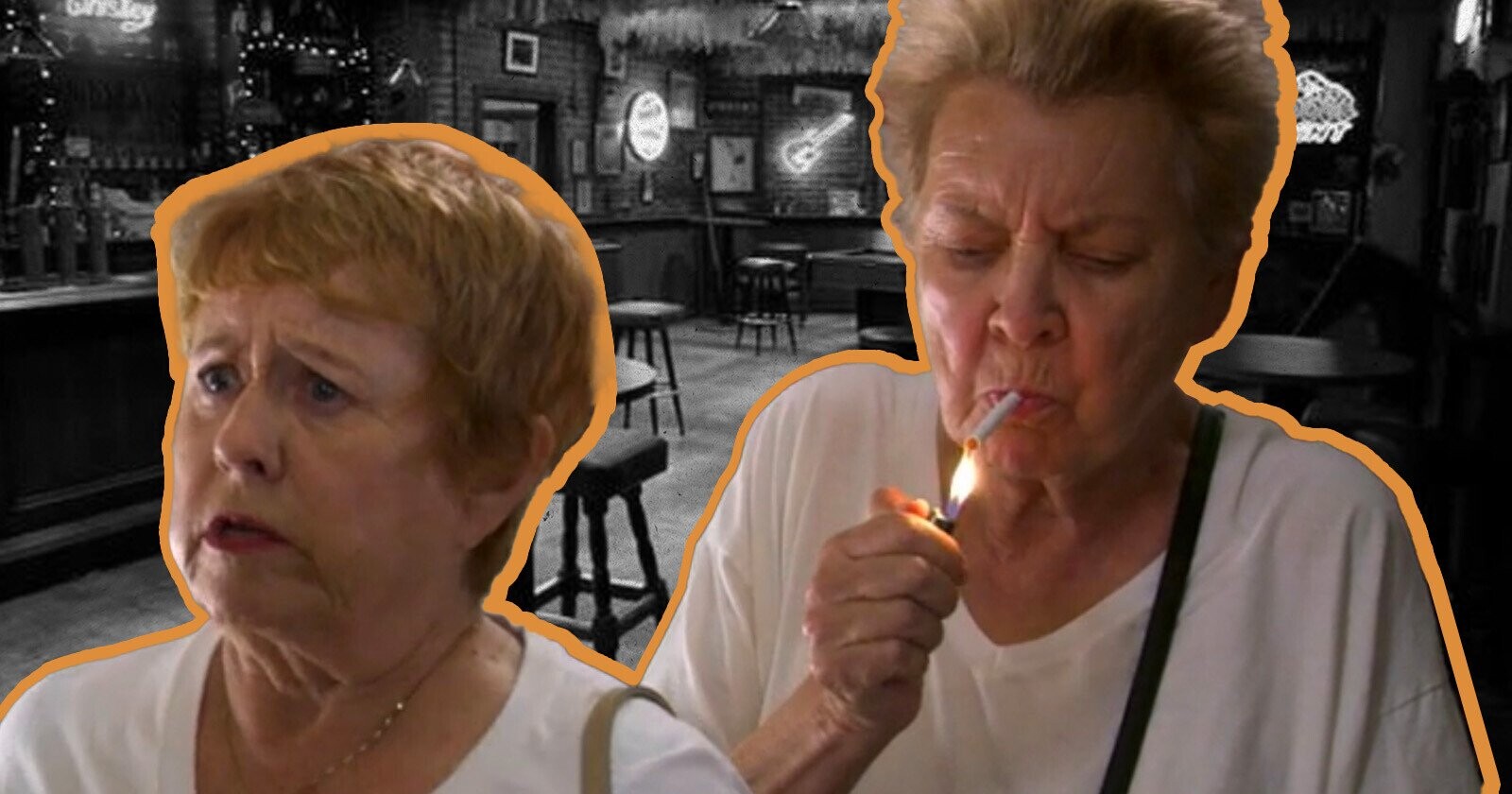
TV has given us a lot of iconic moms. The warm ones. The wise ones. The ones who somehow have a fresh casserole even though they’re raising three kids and a husband who thinks “emotional labor” is a brand of power tool.
And then there’s It’s Always Sunny in Philadelphia, a show that looked at the whole “nurturing maternal presence” concept and said, “What if we did the opposite… and then made it way worse… and then added cigarettes?”
Enter: the two mothers who arguably did the most to emotionally sandpaper the brains of their sonsMac and Charlieuntil those sons became the exact kind of adult men who would (a) run an Irish pub like it’s a lawless aquarium, (b) solve problems using glue, and (c) treat basic empathy like it’s an optional software update.
The women behind these maternal disastersSandy Martin (Mac’s mom) and Lynne Marie Stewart (Charlie’s mom)didn’t just play “bad moms.” They helped define a whole category of sitcom parenting: the kind that doesn’t “raise” kids so much as release them into the world like raccoons with unresolved issues.
Why “Sunny” Moms Hit Different (In the Worst Way)
“Worst TV mom” usually means someone selfish, controlling, dismissive, or downright cruel. On Sunny, it’s all of the aboveplus a uniquely Philly-flavored grime that makes it feel like the moms crawled out of a cigarette vending machine behind Paddy’s Pub and decided to parent by vibes alone.
Part of why Mac and Charlie’s mothers land so hard is that the show uses them as origin stories. Not superhero origin stories. More like: “Oh, this is why he thinks yelling counts as intimacy.”
Mac’s mom is emotionally unavailable to the point of being practically nonverbal. Charlie’s mom is emotionally available in a way that’s… loud. Messy. Frequently crying. Sometimes oversharing. Often chaotic. Together, these two styles of parenting form a perfect storm that explains why Mac and Charlie are both wildly loyal and profoundly broken in the most comedic ways possible.
Meet the Mothers: One Grunts, One Overshares, Both Scar You for Life
Mac’s Mom (Sandy Martin): The Human Cigarette and a Master of the Grunt
Mac’s mother (often just called “Mrs. Mac”) is the kind of parent who could make a therapist whisper, “Okay wow” under their breath. She’s a chain-smoker. A professional-level grouch. An expert in communicating entire paragraphs using noises that sound like a refrigerator dying.
Sandy Martin plays her with a commitment that feels less like acting and more like channeling an ancient spirit of disapproval. Her performance isn’t about big speechesit’s about body language, timing, and the kind of grunting that suggests she could successfully intimidate a parking meter.
The funniest part? That grunting became the character’s signature. It’s an absurd choice that shouldn’t workand yet it does, because Martin makes it feel like the only honest response to the Gang’s nonsense. Why waste words on people who can’t be helped?
On top of that, Mrs. Mac’s history is packed with the kind of details that feel like they were written on a dare: a job history that screams “regret,” a home life that can literally catch fire, and a general attitude that suggests she considers love a scam invented by greeting card companies.
Charlie’s Mom (Lynne Marie Stewart): “I Love My Son” and “Everything Else Is a Dumpster Fire”
Charlie’s mom, Bonnie Kelly, is a different flavor of disaster. She’s affectionate toward Charliesometimes genuinely sweet, even protectivebut she also lives in a tornado of bad boundaries, questionable decisions, and emotional extremes.
Bonnie doesn’t just bring chaos; she brings confessional chaos. She cries. She panics. She overexplains. She creates the kind of environment where a child learns that “normal family life” is something other people have, like dental insurance or a dad who knows where he is.
Lynne Marie Stewart plays Bonnie with a strange, compelling warmth. Even when Bonnie is being ridiculous (or painfully inappropriate), Stewart gives her a humanity that keeps her from turning into a cartoon villain. She’s not evilshe’s messy, vulnerable, and built entirely out of questionable survival instincts.
That blendreal affection + nonstop dysfunctionis why Bonnie hits so hard. You can feel that she loves Charlie… and also understand why Charlie grew up thinking a musical about a “Nightman” is a reasonable romantic gesture.
How These Moms “Parent” the Gang’s Most Emotionally Confused Duo
Mac: Raised on Silence, Judgment, and Whatever a Grunt Means
Mac’s adulthood is basically a never-ending attempt to prove he matters: to his friends, to strangers, to the concept of masculinity, to God, to anyone who will stand still long enough. When your mother communicates affection via “(growl),” you start chasing validation like it’s a full-time job with overtime.
Mrs. Mac’s refusal to engage emotionally becomes a running joke, surebut it also explains Mac’s obsession with identity, his rage when ignored, and his deep need to be seen as tough, loyal, and important.
Charlie: Raised on Love… Plus a Lot of Confusing Adult Information
Charlie is emotionally open and strangely tender compared to the rest of the Gang. That tracks with Bonnie’s affection. But Charlie is also confused about basic relationship norms, overly dependent, and prone to misreading situationsalso tracks with Bonnie’s life being a constant emotional improv set.
When a kid grows up around unpredictable adult relationships, secrets, and chaos, they often develop “creative” coping skills. Charlie’s coping skill is… Charlie.
The Episodes That Turn These Moms Into Legends (and Warning Labels)
If you want to understand why these mothers deserve a spot in TV’s Bad Parenting Hall of Fame, you don’t need a full series rewatch (though, honestly, it helps). A handful of episodes capture their “worst mom” energy perfectly:
1) “Charlie Gets Molested” Bonnie’s Entrance: Protective, Panicked, Unhinged
This is one of the earliest windows into Bonnie’s parenting style: emotionally intense, fiercely defensive of Charlie, and operating at a volume that could crack drywall. It’s a foundational “Sunny” movetaking something dark, then letting characters react in the most wildly inappropriate ways.
2) “Mac Bangs Dennis’ Mom” When the Gang Uses Moms as Weapons
One of the show’s favorite tricks is treating family as a tool for petty revenge, and this episode is a prime example. Mac’s mom and Charlie’s mom become part of the Gang’s social warfare, and the moms’ reactions underline what makes them so funny: they’re not scandalized in a normal wayjust offended, chaotic, and stubborn.
3) “Mac’s Mom Burns Her House Down” The Odd Couple Is Born
When Mrs. Mac’s life literally goes up in smoke, the show creates one of its best supporting-character pairings: Mrs. Mac and Bonnie under one roof. The result is a two-person sitcom inside the larger sitcomone woman who communicates via grunts and ash, and one woman who communicates via tears and oversharing.
4) “A Very Sunny Christmas” Holiday Parenting, Sunny-Style
The Christmas special is a brutal (and hilarious) reminder that the Gang didn’t become the Gang by accident. Mac’s family tradition leans toward petty criminal behavior. Charlie’s involves a parade of Santas and the kind of childhood confusion that can’t be undone.
5) “Old Lady House: A Situation Comedy” The Golden Girls Parody From Hell
This episode is basically “What if we did The Golden Girls, but everyone is emotionally unsafe?” It’s a love letter to sitcom structure while also being a demolition derby of character flawsespecially the moms, who turn domestic life into a battlefield of passive aggression and bizarre rituals.
Why Sandy Martin and Lynne Marie Stewart Make the “Worst Mom” Bit Feel Effortless
Here’s the secret sauce: these actresses don’t play their characters like they’re “trying to be funny.” They play them like they’re right. That’s why the comedy lands.
Sandy Martin’s performance works because she commits to Mrs. Mac’s internal logic: life is annoying, people are disappointing, and language is optional. Lynne Marie Stewart’s performance works because she treats Bonnie’s emotional chaos like a survival system: cry, confess, cling, repeat.
Put them together, and you get a dynamic that feels weirdly reallike two neighbors who would absolutely borrow sugar from each other while also hating each other’s breathing.
Are They Actually “The Worst” Moms? Or Just the Funniest Mirror of Family Damage?
Calling them “the worst moms” is part of the fun, but the deeper joke is that they’re also painfully plausible. Sunny exaggerates, sure, yet it’s poking at real parenting failures: emotional neglect, boundary issues, secrecy, manipulation, and the generational way dysfunction gets passed down like an ugly heirloom.
Mac and Charlie aren’t villains because their moms were bad. They’re funny because their moms were bad in ways that shaped them into adults who are deeply incompetent at being healthy humansand then the show traps them in situations where those flaws explode.
That’s why these mothers endure. They’re not just punchlines; they’re the blueprint for why the Gang behaves the way it does. In a show built on terrible decisions, these two women are the factory where the first bad ideas were manufactured.
of Viewer Experiences (Because These Moms Hit Weirdly Close to Home)
Watching Mac and Charlie’s moms can be a strangely layered experience, depending on where you are in life and who you’re watching with. The first time you see Mrs. Mac grunt her way through a scene, it plays like pure absurdismlike the show is daring you to laugh at a human being who has opted out of participation. And you do laugh, because the timing is perfect, the reactions are priceless, and the whole thing feels like a sketch that accidentally became canon.
Then you rewatch latermaybe after you’ve survived a few awkward family holidays, or after you’ve seen enough real-life adults communicate badly to recognize the patternand you notice something else: the moms don’t just exist to be “gross” or “mean.” They’re stress tests. They press on the characters’ weakest points and reveal exactly what’s under the hood. Mac gets more rigid, more defensive, more desperate to look strong. Charlie gets more tender, more confused, more willing to accept crumbs of affection as a full meal.
A lot of fans end up with a weird rewatch ritual: you start quoting the moms like they’re folk heroes of dysfunction. The grunts become a language in your friend group. Bonnie’s dramatic emotional swings become shorthand for “I’m spiraling, but make it comedic.” It’s not that anyone is rooting for bad parentingit’s that the show captures the uncomfortable truth that family can be the place where you learn your worst habits first.
If you’ve ever introduced Sunny to someone new, the moms are also a perfect “calibration tool.” Some people laugh immediately because they recognize the satire: the show is saying, “Look, we’re building monsters, and the monsters came from somewhere.” Other people recoil, because the maternal archetype is so aggressively inverted that it feels like a violation of sitcom law. (You can practically hear the invisible studio audience asking, “Where is the hug?”)
And if you’ve ever watched these episodes with your own parents in the roomaccidentally or as a bold experimentyou learn a valuable life lesson: there are moments when you can feel your soul leave your body. It’s not the show’s fault. It’s just that “Sunny” doesn’t do polite discomfort. It does the kind of discomfort that kicks your chair back, steals your fries, and then asks why you look upset.
Ultimately, the experience of these moms is the experience of Sunny itself: you laugh first, then you realize you’re laughing at something that’s also kind of true, and then you laugh again because the show refuses to let you sit in that feeling for too long. It’s comedy that sticksnot because it’s wholesome, but because it’s honest about how chaos can feel familiar.
Conclusion: Two Terrible Moms, One Perfect Sitcom Legacy
Sandy Martin and Lynne Marie Stewart didn’t just play Mac and Charlie’s mothersthey helped shape the emotional physics of It’s Always Sunny in Philadelphia. Mrs. Mac’s grunts and smoke-cloud indifference, paired with Bonnie Kelly’s messy affection and boundary-free chaos, create a comedic contrast that explains so much about why Mac and Charlie are the way they are.
They’re “the worst” in the way Sunny does best: exaggerated, ruthless, ridiculousyet weirdly grounded in the idea that adults don’t appear fully formed. They’re built. Sometimes by love. Sometimes by neglect. And sometimes by a mom who communicates with a growl and a mom who overshares like it’s cardio.
If you want to revisit what makes Sunny so sharp, don’t just watch the Gang’s schemes. Watch the moms. They’re the root system of the whole rotten treeand somehow, that’s exactly why they’re unforgettable.