

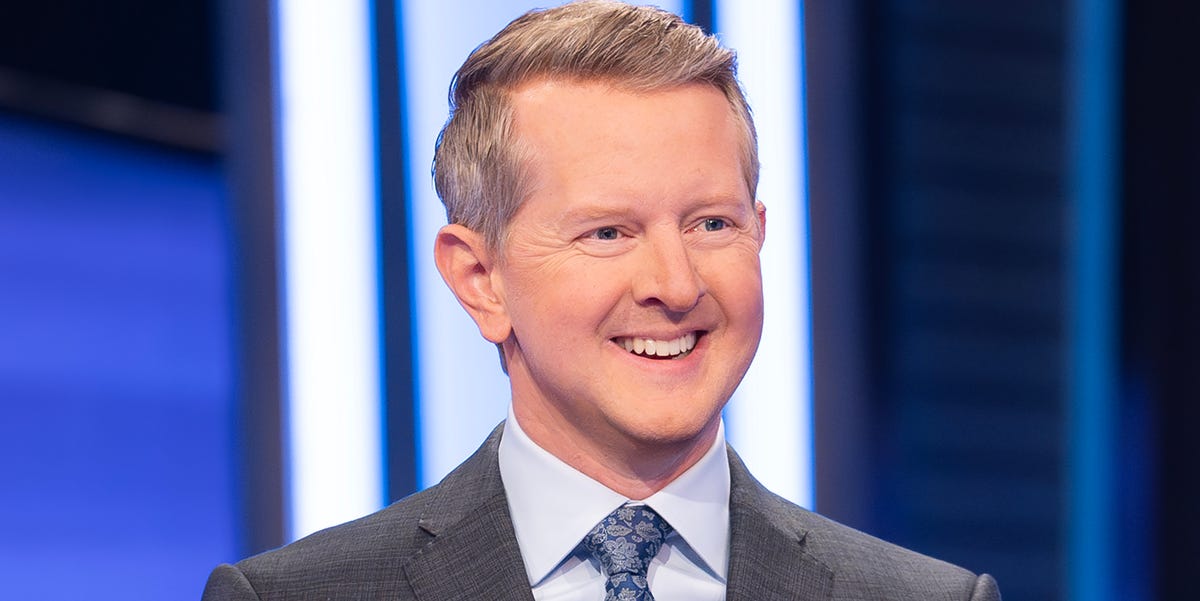
If there were ever a category called Unexpected Career Swerves, Ken Jennings would have just buzzed in with perfect timing. For years, fans have associated Jennings with a lectern, a calm smile, and the kind of trivia brain that makes the rest of us feel like we should at least pretend we know where Belarus is on a map. So when news broke that the Jeopardy! host was making a surprise jump into movie territory, viewers did what viewers do best: they stared at the screen, blinked twice, and then ran to the internet.
The career move in question was not a dramatic exit from Jeopardy!, a sudden run for public office, or a secret transformation into a stunt chef with a trivia-themed food truck. Instead, it was a cameo in Happy Gilmore 2, the long-awaited Adam Sandler sequel that instantly gave fans a new reason to talk about Jennings outside the quiz-show universe. On paper, it sounds like a quirky little pop-culture footnote. In practice, it reveals something bigger: Ken Jennings is no longer just a beloved game-show champion or even just the guy carrying the Jeopardy! torch. He is becoming a broader entertainment figure, one careful step at a time.
And honestly? That may be the most interesting part of this whole story.
Why Ken Jennings’ Career Move Caught Fans Off Guard
Part of the reason the reaction was so strong is that Ken Jennings has built a public image around intelligence, steadiness, and low-key charm. He does not have the vibe of someone who wakes up and says, “You know what would really spice up my week? A random movie cameo with a comedy legend.” His brand has always leaned more toward clever than flashy. He is the human version of a well-organized bookshelf: comforting, reliable, and slightly intimidating in the best possible way.
That is exactly why the Happy Gilmore 2 cameo landed so hard with fans. It felt delightfully out of left field. One moment, Jennings is hosting America’s most famous quiz show with the measured confidence of a man who has seen every possible wrong answer. The next, he is popping up in a movie attached to one of the most recognizable comedy franchises of the last few decades. Even for a media landscape built on mashups, it is a fun surprise.
But the shock was not about disbelief in his talent. It was about contrast. Jennings is so strongly linked to Jeopardy! and trivia culture that any move outside that lane feels bigger than it might for another television personality. When a flashy actor shows up in another flashy project, nobody spills their coffee. When Ken Jennings steps onto the putting green of a Sandler comedy universe, fans notice.
From 74-Game Legend to Franchise Anchor
The contestant who became the institution
To understand why this move matters, you have to understand just how unusual Jennings’ career path already is. He first became a household name because of his legendary Jeopardy! run, where he won 74 consecutive games and turned quiz-show excellence into appointment television. Most contestants have a hot streak. Jennings became a phenomenon. He was not simply good; he was the kind of good that changes a show’s history and makes millions of viewers suddenly care about daily trivia with the intensity of a playoff series.
That original run gave him the kind of public recognition most people only get from acting, music, or politics. But instead of burning bright and fading into nostalgia, Jennings managed to do something rarer: he evolved. He wrote books. He built a reputation as a trivia authority. He expanded into podcasts, cultural commentary, and side projects that kept him visible without making him feel overexposed. In other words, he did not treat fame like a lottery ticket. He treated it like a long game.
Then came the biggest pivot of all. After Alex Trebek’s death, Jennings gradually moved from iconic contestant to one of the faces entrusted with the future of Jeopardy!. That was never going to be a simple handoff. Replacing a legend is television’s version of trying to repaint the Mona Lisa with the audience watching. Yet Jennings slowly settled into the role and, over time, proved that he could honor the show’s legacy without turning into an imitation of Trebek.
Why viewers now see him differently
Today, Jennings is not just linked to Jeopardy!; he is central to its modern identity. He hosts the flagship show and has become a key figure across the broader franchise, including prime-time tournaments and celebrity editions. That matters because it changes the stakes of any outside move he makes. He is no longer “former contestant Ken Jennings tries something new.” He is “the current steward of a major TV institution does something nobody expected.” Those are very different headlines.
So when fans heard about the movie cameo, the reaction was not just amusement. It was curiosity. Was this a one-off joke? A hint at more screen work? A sign that Jennings is broadening his career beyond the podium? The surprise was real because the possibilities suddenly felt real too.
What His ‘Happy Gilmore 2’ Cameo Actually Means
It is tempting to overread celebrity career moves, especially in an entertainment world where every cameo gets analyzed like a Pentagon memo. But Jennings’ move works precisely because it does not feel like an identity crisis. He is not trying to become a full-time action star. He is not sprinting away from the brainy image that made him famous. He is expanding it.
The cameo works because it fits who he already is. Jennings has long occupied a sweet spot in pop culture: intelligent but approachable, witty without trying too hard, and famous enough to be recognizable without feeling untouchable. A movie cameo lets him play with that public image. It says, “Yes, I am still your trivia guy, but I can also step into the broader comedy and entertainment ecosystem when the moment is right.”
There is also a symbolic layer here. A brief screen appearance in a nostalgia-heavy comedy sequel is not the sort of move that screams ego. It screams confidence. Jennings does not need a giant reinvention campaign. He can dip into another corner of entertainment, have fun with it, and walk away with his brand intact. That is a much smarter move than launching a desperate career pivot with fireworks and a press release the size of a small novel.
In fact, the cameo almost feels like the perfect Ken Jennings move because it is playful without being reckless. It broadens his audience, keeps him culturally current, and reminds people that he can exist beyond one format. That is good celebrity strategy, but it is also just good career strategy.
Ken Jennings Has Been Building Toward This for Years
If the cameo felt sudden, the truth is that Jennings has been building a multi-lane career for a long time. The Jeopardy! audience knows him as a host and record-setting champion, but his résumé has quietly grown into something much broader. He is a bestselling author with a catalog that blends trivia, humor, and curiosity. He has worked in podcasts and recurring quiz content. He has cultivated a reputation that lives comfortably at the intersection of education and entertainment, which is one of the hardest balancing acts in media.
That matters because movie cameos do not usually appear out of nowhere. They tend to go to people with a recognizable persona, a strong audience relationship, and enough cultural cachet to make viewers say, “Wait, is that?” Jennings checks every one of those boxes. He is familiar, distinctive, and instantly legible on screen. The audience does not need an introduction. They already know the assignment.
Even better, Jennings has always had a little comic timing in his public voice. Whether he is delivering a dry remark on Jeopardy!, promoting a book, or leaning into the oddball joy of trivia culture, he understands how to be funny without turning into a clown. That tonal control is a big reason the move feels natural in retrospect. He may not be Hollywood’s loudest personality, but he knows how to sell a moment.
No, This Does Not Mean He Is Leaving ‘Jeopardy!’
Whenever a familiar TV host makes a move into another part of entertainment, fans immediately jump to the same question: “Wait… is he leaving?” In Jennings’ case, that panic is understandable because Jeopardy! viewers are deeply invested in stability. The show went through years of transition, debate, and intense public scrutiny after Trebek’s passing. Once Jennings became a trusted presence, many fans understandably wanted the turbulence to end for good.
That is why this career move stands out as clever rather than alarming. It does not look like an escape hatch. It looks like a side quest. Jennings remains closely tied to the franchise that made him famous and has continued to serve as one of its most recognizable figures. If anything, the cameo shows that he now has enough security in his role to branch out without making viewers feel abandoned.
There is an important distinction there. A risky career pivot suggests dissatisfaction with the main job. A smart cameo suggests confidence in it. Jennings is not stepping away from the lectern; he is stepping onto a larger stage while still keeping one hand on the buzzer.
Why the Public Loves This Kind of Career Reinvention
America has always loved a good second act, but it especially loves a second act that does not feel fake. That is why Jennings’ move resonates. He is not pretending to be someone else. He is not suddenly trying to become a hyper-polished movie celebrity with a rebranded wardrobe and a dramatic quote about “embracing new creative truths.” He is still Ken Jennings. The setting just changed.
That kind of reinvention feels accessible. It reminds people that careers are not always ladders; sometimes they are weirdly connected monkey bars. One skill can lead to another audience. One platform can open another door. One reliable identity can make experimentation feel safe instead of chaotic. In Jennings’ case, his credibility as a smart, likable, culturally fluent host makes the leap into a movie cameo feel fun rather than forced.
And for fans, it offers a small thrill: the joy of seeing a familiar figure in an unfamiliar place. That reaction is powerful because it combines novelty with comfort. People like being surprised, but they like being surprised by someone they already trust even more.
Could Ken Jennings Do More On-Screen Work?
Absolutely. The better question is what kind of on-screen work would suit him best. Jennings does not need to become a dramatic actor to keep this momentum going. In fact, that would probably be the least interesting version of the story. His strength is not in disappearing into roles. It is in bringing his recognizable intelligence and dry wit into formats that benefit from exactly that energy.
That could mean more cameos, voice work, comedy appearances, streaming specials, or even trivia-adjacent entertainment projects that blur the line between game show and pop culture. He is especially well-positioned for formats that reward quick thinking, a trustworthy screen presence, and the ability to sound smart without making the audience feel small. That is a narrower talent than people realize, and Jennings has it.
If anything, the biggest takeaway from this career move is not that he is chasing Hollywood. It is that Hollywood, streaming, and television all now recognize the utility of a personality like his. Jennings is credible, memorable, and easy to slot into a cultural joke or cameo because he already means something to viewers. In an era when audience attention is expensive, that kind of recognition is gold.
What This Career Move Says About the Modern Entertainment Landscape
Jennings’ surprise move also says something broader about fame in 2026. The old entertainment model kept people in neat boxes: host, actor, author, contestant, pundit. That model has been crumbling for years. Today, the public is comfortable with people moving between categories as long as the transitions feel authentic. A host can become a podcaster. A contestant can become a brand. A trivia legend can show up in a comedy sequel and somehow make perfect sense.
Jennings represents the polished version of that shift. His appeal is not built on chaos or controversy. It is built on consistency. That makes his cross-platform moves more effective because they feel like extensions, not detours. Fans do not have to re-learn who he is every time he tries something new. They just get a fresh angle on the same core personality.
There is a lesson in that for anyone watching from outside Hollywood too. The best career moves often come from adjacent growth. You do not always have to blow up your identity to evolve. Sometimes you simply take what people already trust you for and carry it into a new room.
Experiences Related to Ken Jennings’ Career Move: Why So Many People See Themselves in This Story
One reason this story has connected with people so quickly is that it taps into a very ordinary feeling hidden inside a very famous moment: the weirdness of becoming known for one thing and then trying something else. Most people are not stepping from Jeopardy! into an Adam Sandler movie, obviously. Most people are just trying to update a résumé, survive a career switch, or explain to their relatives why they no longer work in the same field they picked when flip phones were still a thing. But emotionally, the rhythm is similar.
There is a version of Ken Jennings’ move that many professionals recognize immediately. You spend years becoming “the person who does that one thing.” Maybe you are the teacher who turns into a consultant, the software engineer who starts writing, the accountant who launches a small business, or the office introvert who somehow ends up leading meetings because nobody else can build a coherent slide deck. The move makes total sense to you because you know all the steps that led there. To everyone else, it looks like a plot twist.
That is exactly what makes Jennings’ story feel relatable. Fans look at him and think, “Wait, the host of Jeopardy! is doing that now?” But if you zoom out, the move is not random at all. He has spent years building a career around knowledge, wit, media fluency, and audience trust. A cameo is simply another expression of those things. In everyday life, that is often how change works too. The outside world sees a leap. The person making it sees a bridge.
There is also something comforting about seeing a smart, established public figure try something that is not strictly necessary. Jennings did not need a movie cameo to remain successful. That is part of why the moment feels refreshing. It suggests curiosity instead of panic. Too many career changes happen under pressure, burnout, layoffs, or fear. This one looks more like exploration. That can be inspiring for people who have quietly wondered whether they are allowed to experiment even when their current path is working.
Fans also bring their own emotional baggage to stories like this. When a public figure becomes associated with comfort and routine, people get protective. Jennings is part of many viewers’ daily habits. He shows up in living rooms, speaks in a familiar cadence, and represents a format people trust. So when he makes a move outside that frame, it can trigger a surprisingly personal reaction. Not because the cameo is dramatic, but because change always feels bigger when it touches someone who has become part of your routine.
That is why the response to his career move has carried more warmth than skepticism. People are not just reacting to a celebrity headline. They are reacting to the human experience underneath it: the delight, awkwardness, and slight nervousness that come with stepping into a new version of yourself while everyone watches. That is universal. Whether you are a game-show icon or someone updating your LinkedIn at midnight, the feeling is the same. You hope the new thing works. You hope people come with you. And if you are lucky, they do more than accept it. They cheer.
In that sense, Ken Jennings’ surprise move is not just entertainment news. It is a reminder that reinvention does not always have to be loud, messy, or desperate. Sometimes it can be funny. Sometimes it can be strategic. Sometimes it can be as simple as taking the qualities people already love about you and testing them in a new arena. That is a pretty good clue for anyone trying to figure out what comes next in their own career. And unlike on Jeopardy!, you do not have to phrase it in the form of a question.
Final Thoughts
Ken Jennings shocking fans with a surprise career move is not really a story about a random cameo. It is a story about modern relevance, careful reinvention, and the strange fun of watching a familiar public figure expand his range without losing himself in the process. His appearance in Happy Gilmore 2 worked because it was unexpected, yes, but also because it was believable once you thought about it for more than five seconds.
Jennings has spent years proving that trivia talent was never the whole story. He is a host, writer, pop-culture presence, and increasingly a flexible entertainment personality with enough credibility to cross formats without looking like he is chasing attention. That is hard to do. It is even harder to do while keeping fans on your side. Yet that may be his real superpower: he keeps surprising people without making them feel like they have lost the version of him they already liked.
So yes, the career move shocked fans. But it also made perfect sense. And that is usually how the best reinventions work.