

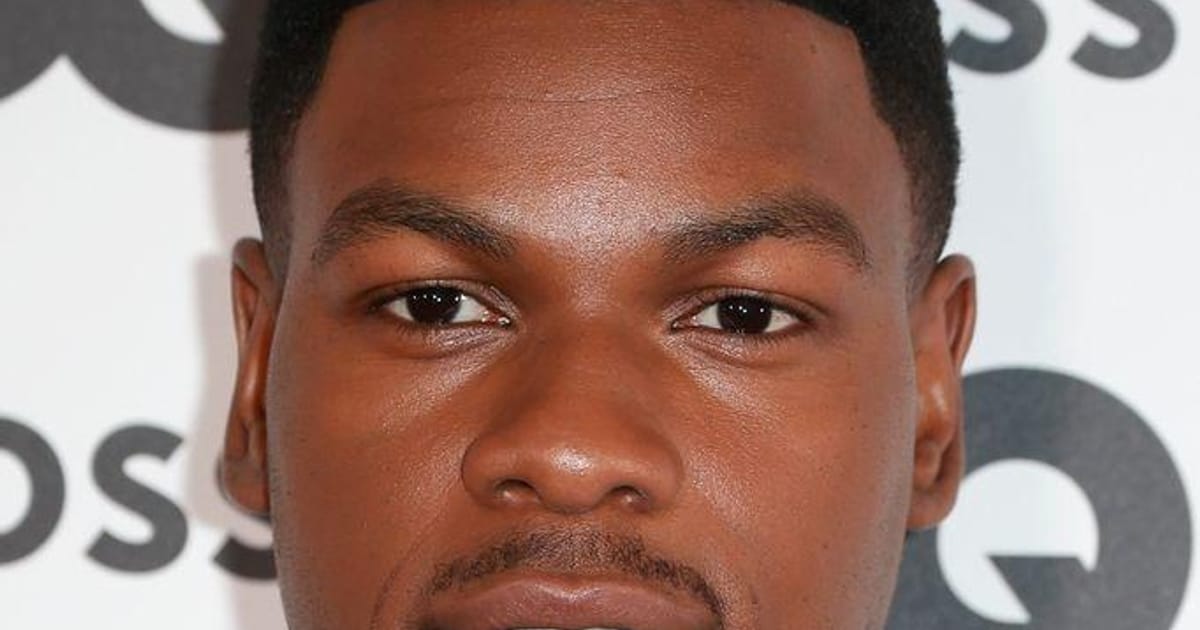
John Boyega is one of those actors who can walk into a scene with a blaster, a protest speech, a haunted stare, or a perfectly timed joke and somehow make all four feel like they belong to the same career. Best known worldwide as Finn in the Star Wars sequel trilogy, Boyega has also built a filmography full of scrappy sci-fi, urgent drama, social commentary, historical spectacle, and genre-bending surprises. That makes John Boyega rankings and opinions a lot more interesting than a simple “which movie made the most money?” list.
His career is not just a straight line from cult favorite to blockbuster fame. It is more like a well-edited trailer: sharp turns, big swings, serious themes, and a few moments where fans collectively yelled, “Wait, why didn’t Hollywood give him even more to do?” From Attack the Block to They Cloned Tyrone, Boyega has shown a rare ability to play toughness and vulnerability at the same time. That combination is the engine behind this ranking.
This article ranks John Boyega’s standout performances, weighs popular fan opinions, looks at critical reputation, and adds a few honest observations about where his career shines brightest. The result is part ranking, part appreciation, and part “please cast this man in more excellent scripts immediately.”
How These John Boyega Rankings Were Decided
Ranking an actor’s work is never perfectly scientific. If it were, movie fans would have nothing to argue about online, and frankly, the internet would lose half its cardio. For this list, the ranking considers four major factors: performance quality, cultural impact, critical response, and how strongly the role uses Boyega’s specific strengths.
Box-office success matters, but it is not everything. Star Wars: The Force Awakens was a massive global hit, yet Boyega’s smaller roles in projects like Small Axe and Imperial Dreams often give him more room to show emotional range. The best John Boyega performances are not always the loudest or most expensive. Sometimes the strongest work happens in a tense close-up, when he lets silence do the heavy lifting.
John Boyega’s Best Roles Ranked
1. Leroy Logan in Small Axe: Red, White and Blue
At the top of the list is Boyega’s performance as Leroy Logan in Steve McQueen’s Small Axe anthology, specifically the film Red, White and Blue. This is the role that best proves Boyega is not just a charismatic movie star; he is a deeply controlled dramatic actor.
Playing Logan, a real-life Black British police officer who joined the force in hopes of changing it from within, Boyega carries a difficult emotional balance. The character is idealistic but not naive, principled but not simple, angry but never one-note. It is the kind of performance where every pause matters. You can see the conflict building behind his eyes, which is usually a sign that an actor is doing the work and not just waiting for the next line.
This role earned Boyega major awards attention, including a Golden Globe win. More importantly, it shifted the conversation around him. Viewers who knew him mainly as Finn saw a performer capable of anchoring serious, historically grounded drama with maturity and force.
2. Moses in Attack the Block
Attack the Block remains one of the great modern cult sci-fi films, and Boyega’s breakout performance as Moses is the reason it still hits so hard. The movie mixes alien-invasion thrills, comedy, class commentary, and urban survival energy, but Boyega gives it a moral center.
Moses could have been written as a standard tough teen character. Instead, Boyega makes him complicated from the start. He is intimidating, guarded, and sometimes frustrating, but he is also young, scared, loyal, and shaped by his environment. By the end of the film, he feels mythic without losing his humanity.
What makes this performance special is how little Boyega overplays it. He does not beg the audience to like Moses. He lets the character’s choices gradually change the temperature of the movie. That confidence from a young actor is rare. It is also why many fans still rank Attack the Block as one of the best John Boyega movies, even after the giant franchise machine came calling.
3. Fontaine in They Cloned Tyrone
They Cloned Tyrone is weird in the best possible way: part conspiracy thriller, part sci-fi satire, part retro comedy, part social commentary. Boyega plays Fontaine, a man pulled into a bizarre mystery with Jamie Foxx and Teyonah Parris. The movie gives him a character who seems familiar at first, then slowly reveals layers of pain, confusion, and existential dread.
This is one of Boyega’s most stylish performances. He changes his walk, voice, rhythm, and emotional temperature until Fontaine feels lived-in rather than performed. In a movie packed with big personalities and wild tonal shifts, Boyega stays grounded. He becomes the anchor while everyone else gets to orbit around him with glorious chaos.
The best opinion about They Cloned Tyrone is that it feels like the kind of project Boyega should do more often. It lets him be funny, intense, cool, wounded, and strange. That is a very generous buffet for an actor, and he fills the plate without making a mess.
4. Brian Brown-Easley in Breaking
Breaking gives Boyega one of his most emotionally demanding roles. He plays Brian Brown-Easley, a former Marine facing desperation and institutional failure. The film is tense, restrained, and heavy, but Boyega never lets the character become a headline instead of a person.
His performance works because it feels painfully specific. The fear, pride, exhaustion, and panic are all present, but they do not arrive as big theatrical gestures. Instead, they build in small movements and shifts in voice. Boyega shows how a person can feel cornered long before anyone else realizes the room has become a trap.
For viewers who like John Boyega in serious dramatic roles, Breaking is essential. It may not have the pop-cultural reach of Star Wars, but as a performance showcase, it belongs near the top.
5. Finn in Star Wars: The Force Awakens
No ranking of John Boyega can ignore Finn. In Star Wars: The Force Awakens, Boyega burst into one of the biggest franchises in film history with humor, panic, bravery, and instant screen presence. Finn’s premise was terrific: a stormtrooper who rejects the First Order and chooses his own identity.
Boyega made Finn immediately likable. He brought nervous comedy, moral clarity, and a sense of discovery to a galaxy already packed with mythology. His chemistry with Daisy Ridley and Oscar Isaac helped give the sequel trilogy its early spark. For many fans, Finn was the character with the most exciting potential.
The ranking places The Force Awakens high because Boyega’s performance is electric. However, it does not take the top spot because the later trilogy did not fully develop Finn’s arc in the way many viewers hoped. That is not a criticism of Boyega. If anything, it is proof that he created a character fans wanted to follow much further.
6. Bambi in Imperial Dreams
Imperial Dreams is one of the quieter but most important films in Boyega’s career. He plays Bambi, a young father and aspiring writer trying to rebuild his life after incarceration. The film is intimate, socially aware, and focused on the daily obstacles that make change far harder than motivational posters suggest.
Boyega’s work here is gentle but firm. He does not turn Bambi into a saint or a symbol. He plays him as a tired, loving, imperfect person trying to do right in a world that keeps moving the finish line. It is a performance that rewards patience.
For fans who discovered Boyega through blockbuster roles, Imperial Dreams is a valuable reminder of his indie-film roots. It shows the emotional intelligence that later made his bigger roles more compelling.
7. Melvin Dismukes in Detroit
Kathryn Bigelow’s Detroit is a difficult, intense film about the 1967 Detroit uprising and the Algiers Motel incident. Boyega plays Melvin Dismukes, a security guard caught in a terrifying and morally complex situation. The role is less outwardly showy than some of his others, but it asks for internal pressure, and Boyega delivers.
His character spends much of the film observing, calculating, and reacting to escalating danger. Boyega communicates discomfort and helplessness without needing to announce either emotion. It is a performance built on tension.
Opinions on Detroit as a film vary, especially around perspective and representation, but Boyega’s acting is one of its most controlled elements. He understands that stillness can be louder than shouting.
8. King Ghezo in The Woman King
In The Woman King, Boyega plays King Ghezo opposite a powerhouse ensemble led by Viola Davis. His role is not the emotional center of the film, but he brings charm, authority, and occasional sly humor to a character who could have easily become flat.
What makes this performance interesting is the way Boyega allows King Ghezo to be regal without becoming untouchable. He has power, but the movie’s strongest force is the Agojie, and Boyega seems aware of that balance. He does not try to steal the film. He supports its rhythm.
This is a good example of Boyega’s versatility. He can command attention, but he also knows when to serve the larger story. Not every actor with blockbuster experience remembers how to do that.
9. Jake Pentecost in Pacific Rim Uprising
Pacific Rim Uprising is not usually ranked as Boyega’s finest movie, but it deserves a place on this list because he brings a lot of personality to a sequel that needed more of it. As Jake Pentecost, he steps into a giant-robot universe with swagger, humor, and action-hero confidence.
The movie itself is a mixed bag. It has big machines, big battles, and big “please do not think too hard about this” energy. Still, Boyega makes the material more watchable. He gives Jake a playful arrogance that works well in a popcorn blockbuster.
In terms of performance depth, this role sits below his dramatic work. In terms of pure movie-star charm, however, Boyega understood the assignment.
10. Finn in The Last Jedi and The Rise of Skywalker
Finn’s later Star Wars appearances remain some of the most debated parts of Boyega’s career. In The Last Jedi, he gets a separate mission and continues exploring what resistance means. In The Rise of Skywalker, he remains loyal, brave, and energetic, but many fans felt the character’s deeper potential was left underdeveloped.
Boyega himself has spoken candidly about his frustrations with how Finn was handled. That honesty has become part of the broader conversation around representation, franchise storytelling, and whether major studios know what to do with characters after successfully introducing them.
Even when the writing gives him less than he deserves, Boyega keeps Finn alive. He brings urgency and warmth to the role, which is why fans still discuss the possibility of a future Finn story. The unfinished feeling around the character is not a weakness in Boyega’s performance; it is the reason viewers keep asking for more.
Popular Opinions About John Boyega
Opinion 1: He Is Better Than Some Of His Scripts
This is probably the most common fan opinion, and it is hard to dismiss. Boyega often elevates material that does not fully match his ability. Whether he is adding emotional depth to a franchise role or bringing charisma to a blockbuster sequel, he frequently makes scenes better simply by being present.
Opinion 2: His Best Work Happens When The Role Has Moral Conflict
Boyega is especially strong when playing characters caught between survival and conscience. Moses, Leroy Logan, Brian Brown-Easley, Bambi, and Finn all wrestle with identity, pressure, and choice. These roles work because Boyega understands internal conflict. He can play a man trying to do the right thing while also looking like he has not slept properly in a week. Relatable? Sadly, yes.
Opinion 3: He Deserves More Lead Roles
This opinion is less a hot take and more a reasonable demand from anyone paying attention. Boyega has already proven he can lead indie dramas, cult sci-fi, streaming hits, and franchise films. Hollywood sometimes treats charismatic young actors as “promising” long after they have delivered the promise. Boyega is past the “potential” stage. He is ready for more major roles built around his range.
Why John Boyega’s Career Still Feels Exciting
John Boyega’s career remains exciting because it does not feel fully settled. Some actors become predictable after one signature role. Boyega has avoided that. He can be a sci-fi hero, a wounded father, a historical king, a conspiracy-thriller lead, or a man fighting institutions from the inside. His filmography already has variety, and yet it still feels like the beginning of a much larger body of work.
There is also a refreshing directness to his public image. Boyega often speaks plainly about the industry, representation, and his own career. That honesty can make entertainment headlines, but it also makes him feel connected to audiences who want actors to be more than carefully polished press-tour robots. He has opinions, and he is not afraid to bring them outside the group chat.
Viewing Experience: Watching John Boyega’s Work In Order
For viewers exploring John Boyega’s filmography, the best experience is not necessarily chronological, but emotional. Start with Attack the Block to see the raw arrival of a new screen presence. Then watch The Force Awakens to understand how that presence translated to global blockbuster scale. After that, move to Small Axe: Red, White and Blue to see his dramatic control at its highest level.
Next, watch They Cloned Tyrone for style, humor, and genre confidence. Follow it with Breaking if you want a heavier, more grounded performance. Then add Imperial Dreams to appreciate the softer, more intimate side of his acting. This order gives viewers a strong sense of Boyega’s range without making the experience feel like homework assigned by a film professor who owns too many scarves.
One of the most enjoyable things about watching Boyega is noticing how much he does with posture. In Attack the Block, Moses moves like someone trying to look older and harder than he is. In They Cloned Tyrone, Fontaine carries himself with weary repetition, like life has become a loop he cannot quite escape. In Small Axe, Leroy Logan stands with discipline, but the pressure around him slowly chips at that composure.
His voice work is also worth noticing. Boyega often adjusts rhythm and tone to match a character’s world. Finn speaks with nervous urgency, Moses with guarded restraint, and Fontaine with a low, heavy cadence that feels almost musical. These choices are not random. They show an actor thinking about how environment shapes behavior.
Another viewing experience that stands out is how well Boyega plays opposite ensembles. In The Woman King, he understands that the film belongs largely to Viola Davis and the Agojie warriors, so he adds texture without fighting for dominance. In They Cloned Tyrone, he lets Jamie Foxx and Teyonah Parris swing big while he keeps the emotional floor steady. In Star Wars, his chemistry with Daisy Ridley and Oscar Isaac gives the trilogy some of its warmest and most rewatchable moments.
From a fan perspective, watching Boyega can be both satisfying and slightly frustrating. The satisfying part is obvious: he is good, and often very good. The frustrating part is seeing how many roles hint at even bigger possibilities. Finn could have become one of modern Star Wars’ richest characters. Jake Pentecost could have carried a more inventive blockbuster. Even King Ghezo could have used more dramatic space. Boyega frequently leaves viewers thinking, “Great, now give him five more scenes.”
That is why the strongest opinion about John Boyega is simple: his best work may still be ahead. He has already delivered memorable performances, won major recognition, and built a loyal fan base. But he also has the kind of talent that suggests a future landmark role could redefine his career again. The right director, the right script, and the right character could turn an already strong filmography into something truly major.
Final Thoughts On John Boyega Rankings And Opinions
John Boyega’s rankings reveal an actor with range, nerve, humor, and dramatic weight. His best performances are not limited to one genre or one type of character. He can carry a cult alien-invasion movie, energize a billion-dollar franchise, lead a historical drama, and disappear into a stylish sci-fi satire without losing his identity as a performer.
The biggest takeaway is that Boyega is at his best when a role gives him tension to play: duty versus identity, survival versus morality, fear versus courage. That is where his acting becomes most alive. Whether fans rank Small Axe, Attack the Block, or They Cloned Tyrone as his finest work, the larger opinion is clear: John Boyega has already earned a place among the most compelling actors of his generation, and his next great role cannot arrive soon enough.