

Public restrooms are supposed to be the most boring places on earth. You go in, wash your hands, avoid eye contact, leave. That is the whole script. But in modern America, even a restroom can turn into a culture-war stage with the energy of a cable-news panel and the subtlety of a fireworks factory.
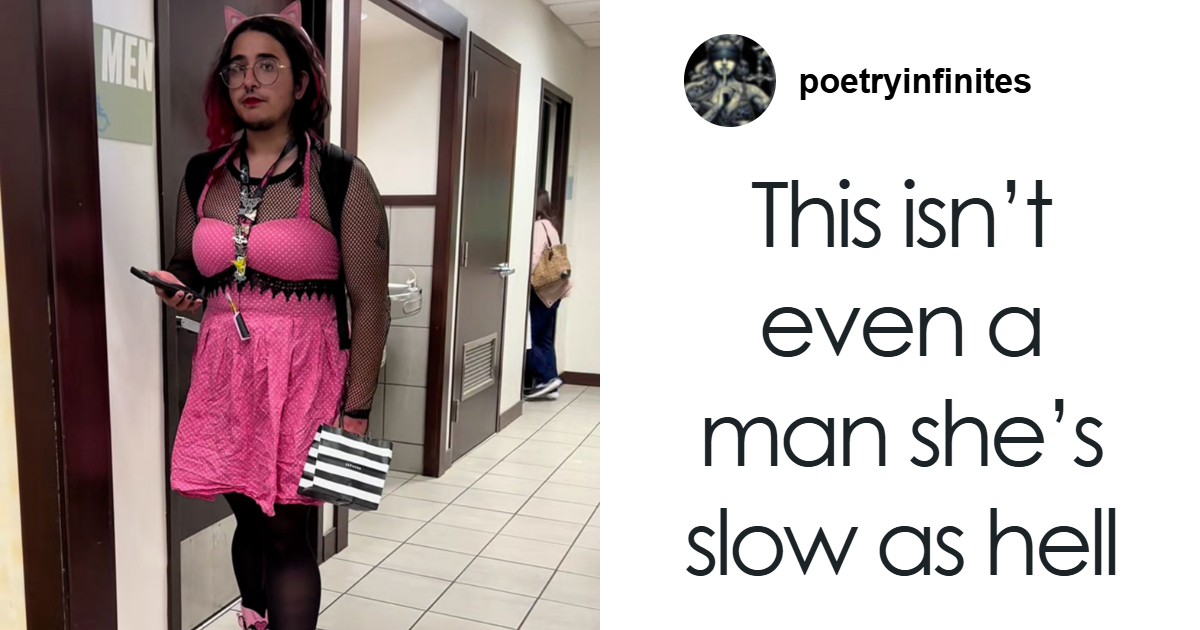
That is exactly why a viral confrontation involving a bearded trans man in a women's restroom exploded online. In the clip and its aftermath, what could have remained a deeply awkward private moment became a national debate about identity, privacy, safety, and the increasingly strange habit of strangers appointing themselves gender detectives in public.
The internet, being the internet, quickly slapped the label “Karen” onto the woman at the center of the rant. But the bigger story is not just about one upset shopper. It is about how bathroom politics have become so heated that ordinary people now walk into a restroom and somehow end up in a live-action referendum on American culture. That is exhausting, bizarre, and for many people, genuinely frightening.
What Happened In The Viral Restroom Incident?
The controversy centered on a reported confrontation inside a Barnes & Noble women's restroom, where a woman said she felt uncomfortable after seeing a bearded person in the space. The person she confronted reportedly explained that he was a trans man, meaning he was assigned female at birth and had transitioned socially or medically but was still in a women's restroom at that moment. The exchange then spilled onto social media, where outrage multiplied faster than anyone could say, “This is why people hate comment sections.”
What made the clip spread so quickly was the visual contradiction at its center. Many people assume restroom access is easy to police based on appearance. Beard equals man. Dress equals woman. Problem solved, Sherlock. But real life does not work like a stick-figure bathroom sign. Gender expression, transition status, legal documents, state laws, and personal safety all collide in ways that make simplistic rules fall apart almost immediately.
And that is why this story hit such a nerve. To some viewers, the woman was defending a boundary. To others, she was publicly harassing someone who was simply trying to use a restroom without becoming the main character of the day.
Why The Debate Caught Fire So Fast
1. The optics scrambled people's assumptions
A bearded trans man in a women's restroom short-circuits the oversimplified talking points that dominate bathroom debates. People who argue that restroom rules should be based on sex assigned at birth often do not think through what that can look like in practice. If a trans man has facial hair, a masculine voice, and a conventionally male appearance, sending him into a women's restroom can alarm the very people such policies claim to protect.
That is the irony at the heart of the whole mess. Rules designed to make public spaces feel “clear” can make them feel more confusing, not less. Once law or custom demands that people use a restroom based on birth assignment rather than lived identity or outward presentation, you get exactly the sort of scene that later goes viral for all the wrong reasons.
2. Privacy concerns are real, but so is public humiliation
Let's be fair: many women do care about privacy in intimate spaces, and dismissing that concern with a shrug is not persuasive. But privacy cuts both ways. Being filmed, challenged, or interrogated in a restroom is also a privacy violation. So is forcing someone to explain their body, identity, or paperwork to a stranger standing near a sink dispenser.
The online fight over this incident was so fierce because both sides claimed to be protecting safety and dignity. Yet the moment itself showed how quickly dignity disappears when a restroom becomes a checkpoint.
3. Social media rewards conflict, not nuance
The video economy loves a simple villain. It prefers “crazy woman loses it in restroom” or “bearded man invades women's space” over anything complicated, because complication is bad for clicks. But the truth here is not clean enough for a thumbnail. It involves public anxiety, legal confusion, personal vulnerability, and a lot of people projecting their politics onto one uncomfortable moment.
In other words, social media did what social media does best: took a messy human encounter and fed it espresso until it started screaming.
The Bigger Problem: America's Bathroom Rules Are A Patchwork
This viral argument did not appear out of nowhere. It landed in an environment where restroom access for transgender people has become increasingly politicized. In recent years, more states have passed restrictions on which bathrooms trans people can use in schools, government buildings, and in some places other public spaces. That means people are navigating not just social tension, but a legal map that changes from state to state.
Some laws and policies push transgender people toward using facilities tied to sex assigned at birth. Others protect access based on gender identity. Some businesses try to create inclusive policies. Others stay vague and hope nobody starts filming in the soap aisle. The result is confusion, fear, and an atmosphere where ordinary restroom use becomes a test of who feels entitled to challenge whom.
That legal patchwork also explains why stories like this keep recurring. When the rules change depending on zip code, school district, employer, or political climate, people do not experience a restroom as a neutral space. They experience it as a gamble.
What Research Actually Suggests About Safety
This is the part where the debate usually gets loud and the facts get shoved into a corner. Research from civil-rights and policy groups has repeatedly found no evidence that allowing transgender people to use restrooms aligned with their gender identity causes a rise in safety or privacy crimes in those spaces. That does not mean everyone stops feeling anxious. It does mean the most common fear-based claim has not been backed up by the evidence people often insist must exist somewhere.
At the same time, research and large-scale surveys consistently show that transgender people themselves report harassment, denial of access, and fear around public restrooms. Many avoid using them altogether. Some limit what they eat or drink. Others bring friends as backup, plan outings around bathroom access, or wait until they get home. That is not a sign of privilege. That is a sign of stress management in a public space most people take for granted.
The viral bookstore incident fits neatly into that larger reality. What looked to some viewers like a one-off confrontation actually reflects a broader climate in which transgender people often expect to be watched, questioned, or judged the second they reach for a restroom door.
Why Appearance-Based Policing Fails
One of the strangest features of the bathroom debate is that it relies so heavily on appearance while pretending it does not. People often say they only care about “biology,” but what triggers confrontations in real life is usually visual suspicion. A beard. A jawline. A deep voice. Broad shoulders. Short hair. Makeup in the “wrong” restroom. Clothes that do not fit a stranger's expectations.
That kind of policing does not stay neatly aimed at transgender people. It expands. It catches cisgender women who look too masculine, cisgender men who look too feminine, and anybody else who does not match a rigid stereotype. Once the public is encouraged to scrutinize who looks “out of place,” everyone becomes vulnerable to being challenged.
That is one reason the fiery debate around this trans man resonated far beyond transgender communities. People recognized, consciously or not, that public gender policing never remains neatly contained. It spreads like glitter at a craft store: suddenly it is everywhere and nobody knows how it got in the car.
How Businesses And Bystanders Could Handle These Moments Better
If businesses want fewer viral disasters in their restrooms, they need better policies and calmer responses. A few practical steps go a long way:
- Train staff to de-escalate rather than interrogate.
- Protect customer privacy instead of inviting public spectacle.
- Offer single-occupancy or all-gender restrooms when possible.
- Make policy clear enough that employees are not improvising under pressure.
- Discourage filming, confrontation, and amateur enforcement by strangers.
Bystanders matter too. Not every situation requires a speech worthy of an awards show, but basic human decency helps. If someone is simply using the restroom and bothering no one, escalating the scene rarely makes anybody safer. It usually just makes the situation louder, crueler, and more likely to end up online under a caption written by someone who thinks punctuation is a conspiracy.
The Cultural Contradiction At The Heart Of The Story
The bookstore incident became such a flashpoint because it exposed a contradiction many people would rather ignore. If you insist that everyone must use the restroom linked to sex assigned at birth, then at some point you will have visibly masculine trans men entering women's restrooms. And when that happens, the same people demanding those rules may be the first to panic when they see the rule in action.
That does not mean all concerns about privacy are fake. It means policy built on simplistic assumptions often creates the very confusion it promises to prevent. A bearded trans man in a women's restroom is not some outrageous glitch in the system. In many cases, he is the logical outcome of the system.
That is why the online debate turned so volcanic. The incident did not just raise a question about one person in one restroom. It exposed how flimsy the talking points can look when confronted with real bodies, real people, and real public spaces.
Experiences That Show Why This Debate Feels So Personal
To understand why this topic hits so hard, it helps to imagine the everyday experiences behind the headlines. For many transgender people, restroom use is not a mindless errand built into the day. It can be a mini risk assessment. Is this place crowded? Are people likely to stare? Will anyone question me? Is it safer to go now, later, or not at all?
A trans man who is read as male may feel nervous entering a women's restroom because he knows he could trigger alarm the second someone notices his beard or hears his voice. But he may also fear the men's restroom if he thinks disclosure, confrontation, or physical danger is more likely there. That is not a political slogan. That is a practical safety calculation.
Some people manage this by bringing a friend. Some wait until they are back home, at school, or at a trusted workplace. Some scan for family restrooms like they are spotting an oasis in the desert. Others develop a whole internal routine: hat down, in and out fast, no eye contact, please let today be uneventful. It is hard to call a group “threatening” when so many members of that group are just trying to avoid becoming a public incident before lunch.
And it is not only transgender people who get swept into this climate. When public suspicion rises, anyone who does not fit a narrow idea of femininity or masculinity can become a target. A tall woman, a butch lesbian, a feminine gay man, a woman with short hair, a man wearing makeup, even a person who simply looks “different” to the wrong stranger on the wrong day can suddenly find themselves questioned in a place where nobody should have to present evidence of their humanity.
That is part of what makes restroom confrontations so unsettling. They collapse the boundary between private bodily needs and public social judgment. The message becomes: before you wash your hands, prove you belong here.
There is also the emotional aftermath. Even if the confrontation lasts two minutes, the stress often lasts much longer. People replay the scene in their heads. They wonder whether they should have said more, less, nothing at all. They feel embarrassed, angry, or afraid to return. A supposedly ordinary stop inside a bookstore or a big-box store turns into a memory attached to humiliation.
Meanwhile, online viewers often talk about these clips as abstract political content. But for the person in the restroom, it is not abstract. It is your heartbeat speeding up. It is checking whether someone is recording. It is realizing your body has just become a public argument. And for workers, shoppers, parents, and young people watching from the sidelines, that atmosphere teaches a terrible lesson: that any stranger can challenge your right to exist in a basic public space if your appearance does not match their expectations.
That is why the fiery debate sparked by this incident matters beyond one viral video. It is about whether public life will be governed by suspicion or by a little humility. Restrooms do not need more amateur detectives. They need less panic, more privacy, and a collective agreement to let people pee in peace. A revolutionary concept, apparently.
Conclusion
The viral clash over a bearded trans man in a women's restroom became a lightning rod because it condensed America's entire bathroom debate into one uncomfortable scene. It featured fear, confusion, identity, social media outrage, and the impossible expectation that strangers should be able to sort human beings into tidy categories on sight.
But if the incident proved anything, it is this: bathroom policing is not the clean solution many imagine. It creates contradictions, invites humiliation, and widens suspicion until almost anyone can get caught in it. In the end, the fiercest lesson from this fiery debate may be the simplest one. Public restrooms work best when they are treated like restrooms, not battlegrounds.