

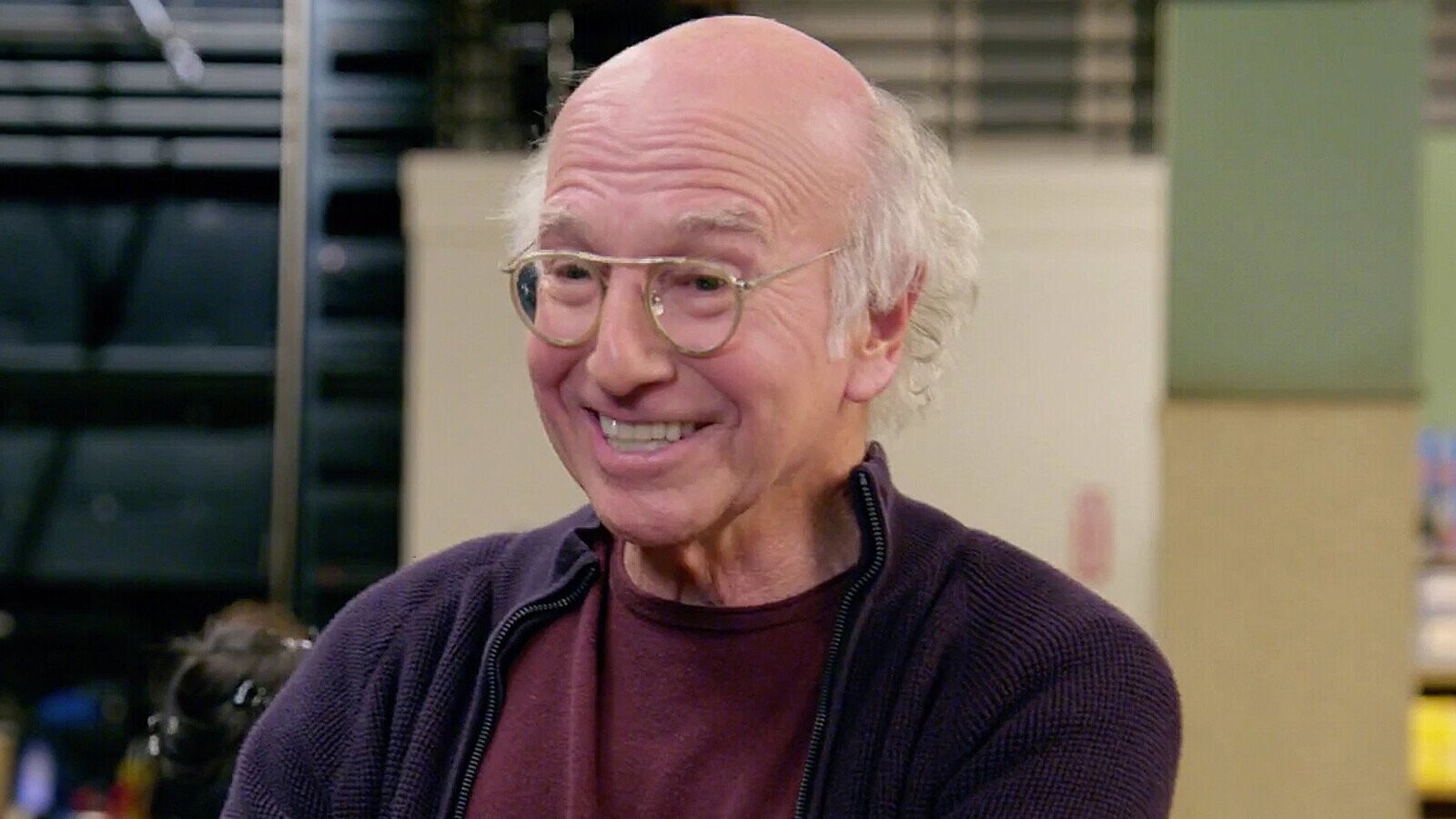
Some Hollywood mysteries involve missing diamonds, secret screen tests, or a producer fleeing town with a suitcase full of cash. This one involved a couch, natural lighting, a famous comedian, and a documentary that vanished so close to its premiere that viewers practically heard the HBO schedule squeal.
The Larry David Story, a two-part HBO documentary directed by Larry Charles, was meant to offer an unusually candid look at the creator of Seinfeld and Curb Your Enthusiasm. Then, just before its March 1, 2022 debut, it was pulled. HBO’s public explanation was that Larry David wanted to present the story “in front of an audience.” It sounded odd at the time, and it has only sounded odder with agelike a parking dispute that somehow becomes a federal investigation.
In 2025, Charles finally offered his most detailed explanation. His account turns the disappearance of the documentary from a quirky entertainment footnote into something more revealing: a story about friendship, creative control, celebrity self-image, and the uncomfortable difference between the Larry David audiences know and the private person who apparently did not enjoy seeing himself without a comedic escape hatch.
The Night HBO Pulled the Plug
The original plan was straightforward. HBO had scheduled The Larry David Story as a two-part documentary built around a long, intimate conversation between David and Charles. The documentary was expected to cover David’s early life, his difficult climb through stand-up comedy, the creation of Seinfeld, the strange second act of Curb Your Enthusiasm, and the personal anxieties behind the public crankiness.
Then the plan was not straightforward at all. Hours before the premiere, HBO announced that the documentary was being postponed. The network said David had decided he wanted to do it in front of an audience, but no replacement date, venue, or expanded explanation arrived. The trailer was also removed from public view, which is never a calming sign. It is the entertainment-business version of watching someone erase a group chat.
At the time, the move looked almost too perfectly Larry David-ish to be real. A comedian famous for turning minor irritation into opera had apparently delayed his own documentary at the last possible moment. Fans could reasonably imagine a rejected chair, an offensive microphone angle, or a disagreement over whether the audience had been given enough time to find parking.
What The Larry David Story Was Supposed to Be
The documentary was not designed as a glossy, trophy-case tour through David’s career. It was meant to be a close conversation between two longtime collaborators. HBO’s description promised reflections on his professional highs and lows, as well as subjects outside show business, including parenthood and metaphysics. In other words, this was supposed to be Larry David with fewer punchlines and more actual sentences that began with, “Honestly…”
That format mattered. Charles was not an outside journalist parachuting in with a list of questions and a producer waving a stopwatch. He had worked with David for years, first in the orbit of Seinfeld and later through Curb Your Enthusiasm. Their shared history gave the interview a level of comfort that could produce something fans rarely get from David: a man speaking plainly rather than performing irritation at a brunch reservation.
Early reporting suggested that David had initially participated because of that trust. The documentary’s premise was not simply “Larry David explains why everyone else is wrong.” It was more personal. That made it potentially fascinatingand, as Charles later explained, potentially unbearable for its subject.
Why Larry Charles Was the Perfectand Possibly DangerousDirector
Larry Charles has built a career around placing volatile comic personalities in situations where control is never guaranteed. His work includes writing for Seinfeld, directing episodes of Curb Your Enthusiasm, and helming projects such as Borat, Brüno, Religulous, and The Dictator. He understands that comedy often becomes most interesting when a performer steps just far enough outside the safe version of themselves.
That made Charles an excellent match for David artistically. It may also have made him too effective. A director who knows where the emotional wires are buried can create a revealing portrait. But revelation is only charming until the person being revealed sees it and realizes that audiences may finally notice the part of them that does not resemble their television persona.
Charles later described the documentary as less of a standard celebrity profile and more of a sincere conversation between old friends. That distinction is crucial. A conventional documentary can make a celebrity look impressive. A conversation with someone who truly knows you can make you look human. For some people, that is a gift. For Larry David, it may have felt like being caught wearing socks with sandals on a billboard.
Larry Charles’ Explanation: It Was About More Than Vanity
In his later interviews, Charles said David disliked how he appeared in the documentary. There was no familiar Curb polish: no controlled wardrobe, no heavy styling, and no carefully managed visual persona. The interview reportedly used natural lighting and showed David sitting casually on a couch, closer to how he might look during a private conversation than during a filmed comedy production. Charles thought he looked good. David apparently did not share that opinion.
But Charles’ larger point was not that David suddenly developed a catastrophic relationship with sunlight. The real problem, according to Charles, was that David was not consistently funny in the footage. He was thoughtful. He discussed family, mortality, spirituality, and parts of his life that do not naturally end with someone getting banned from a country club.
Charles said the documentary included emotional moments and a more vulnerable David than audiences were used to seeing. That version of David may have been compelling precisely because it was unfamiliar. Fans know the fictionalized Larry David as a man who treats social etiquette like a hostile legal code. The documentary reportedly showed a person who could pause, reflect, and feel exposed by the questions being asked.
For Charles, that intimacy was the project’s strength. For David, it may have become the problem. Comedy had given David a powerful public identity: sharp, irritated, fearless, and usually one complaint away from disaster. A documentary that revealed uncertainty or sadness could complicate that image. It could also make the audience feel closer to him. Those two outcomes are not always emotionally compatible for the person on camera.
The Last-Minute Collapse and the Alleged Pressure Campaign
Charles has said he tried to respond to David’s concerns while editing the documentary and hoped they could get the project to the finish line. By his account, they almost did. Then, on the eve of the premiere, the situation collapsed.
In a 2025 interview, Charles alleged that David’s agent, Ari Emanuel, pressured people involved in the release and that HBO was warned about possible consequences involving future Curb Your Enthusiasm business. Charles characterized the situation as one in which David had enough influence to stop the documentary from airing. David and HBO did not publicly confirm Charles’ later account of those alleged conversations.
Charles also placed some responsibility on himself. Rather than portraying the situation as a simple betrayal, he suggested that both men avoided a difficult conversation for too long. David was uncomfortable, Charles believed the discomfort might pass, and the project continued until there was no graceful exit left. That is a familiar creative tragedy: everyone acts polite while the emotional furniture is already on fire.
Why the Missing Documentary Still Fascinates Fans
The story has endured because it contains a contradiction audiences cannot resist. Larry David built a career on saying the rude thing, questioning the sacred thing, and refusing to pretend that social rituals are reasonable. Yet the documentary Charles describes suggests that David was uncomfortable with a more open portrait of himself.
That does not make David hypocritical. It makes him human. The person who creates an uncompromising comic character is not required to enjoy being psychologically unpacked in high definition. In fact, the better someone is at creating a persona, the more frightening it can be when the audience is invited behind it.
There is also something oddly appropriate about an unreleased Larry David documentary becoming part of Larry David mythology. The project was intended to explain the man. Instead, its disappearance created a new mystery about him. That is almost too neat. It is the kind of ending that would be rejected in a writers’ room for being “a little on the nose,” then kept because it is annoyingly perfect.
Could the Documentary Ever Be Released?
Charles has not ruled it out. In 2025, he said he still had a copy and entertained the possibility that the documentary could eventually find an audience, possibly outside a traditional commercial release. He even joked about the grim possibility that it might emerge after one of the two Larrys dies, because Hollywood apparently needed one more sentence that could make a publicist faint.
For now, though, The Larry David Story remains unreleased. Its status is not merely delayed or lost; it is caught in the awkward middle ground between completed art and private memory. The footage exists. The director has spoken about it. Fans know it was close enough to air that HBO had marketed it. Yet the documentary remains off-limits, which only makes it more valuable in the imagination.
Related Experiences: What Creative Teams Can Learn From a Documentary That Never Aired
The doomed Larry David documentary offers a surprisingly useful lesson for writers, directors, producers, founders, and anyone who has ever tried to make something personal with another human being. The biggest takeaway is not “never use natural lighting.” Natural lighting is innocent. It has suffered enough. The real lesson is that creative trust and creative consent are not exactly the same thing.
A collaborator may trust you enough to tell the truth in the moment, but that does not always mean they are ready to see that truth edited, packaged, promoted, reviewed, clipped for social media, and discussed by strangers while eating cereal. Private honesty can feel safe because it lives in a room. Public honesty becomes a different creature once it has a trailer, a release date, and a thumbnail designed to make people click.
That is why major personal projects need repeated conversations about boundaries. Not one conversation at the beginning, followed by a cheerful assumption that everyone will remain comfortable forever. The closer a project gets to release, the more real it becomes. A subject who loves the raw interview may panic when they see a finished cut. A creator who feels proud of the emotional honesty may see it as the heart of the work. Both reactions can be sincere, and both can collide spectacularly.
Charles’ experience also highlights the danger of mistaking silence for approval. In collaborative work, people often avoid saying, “I hate this,” because they do not want to look difficult, disloyal, vain, or ungrateful. Instead, they offer small notes, make jokes, ask for minor revisions, and hope the issue somehow evaporates. It rarely does. Unspoken discomfort does not disappear. It waits backstage, grows a mustache, and returns during the final week of production with a lawyer.
Another lesson is that public personas can become emotional armor. Larry David’s comic identity is built around bluntness and shamelessness, but even the most fearless-seeming performer may have boundaries around grief, family, aging, and self-image. The same is true beyond entertainment. A founder may love discussing professional wins but freeze when asked about failure. A musician may perform emotional songs while refusing to discuss the experience that inspired them. A manager may project confidence while privately fearing that one honest interview could undo years of carefully built authority.
The healthiest creative partnerships make room for that complexity early. They define what is negotiable, what is off-limits, who has final approval, and what happens if someone changes their mind. Those conversations may feel unromantic compared with the thrill of making art, but they can save relationships. A clear agreement is less glamorous than a dramatic last-minute cancellation, but it also tends to produce fewer emergency phone calls before breakfast.
Finally, the story reminds creators that a project can be artistically successful and still emotionally impossible for the person at its center. Charles appears to believe he made a revealing, meaningful documentary. David appears to have felt that releasing it was too exposing. Both ideas can exist at once. The tragedy is not that one person was obviously right and the other obviously wrong. The tragedy is that the two Larrys may have been looking at the same footage and seeing entirely different things.
Conclusion
Larry Charles’ explanation turns The Larry David Story from a bizarre HBO scheduling incident into a cautionary tale about intimacy, image, and creative power. The documentary may have been shelved because Larry David did not like how he looked. More importantly, it may have been shelved because he did not like what the camera showed when he stopped being funny for a moment.
Until the documentary resurfaces, fans are left with an oddly fitting final image: Larry David, one of comedy’s most recognizable personalities, still partially hidden behind a project that was supposed to explain him. Pretty, pretty, pretty mysterious.