

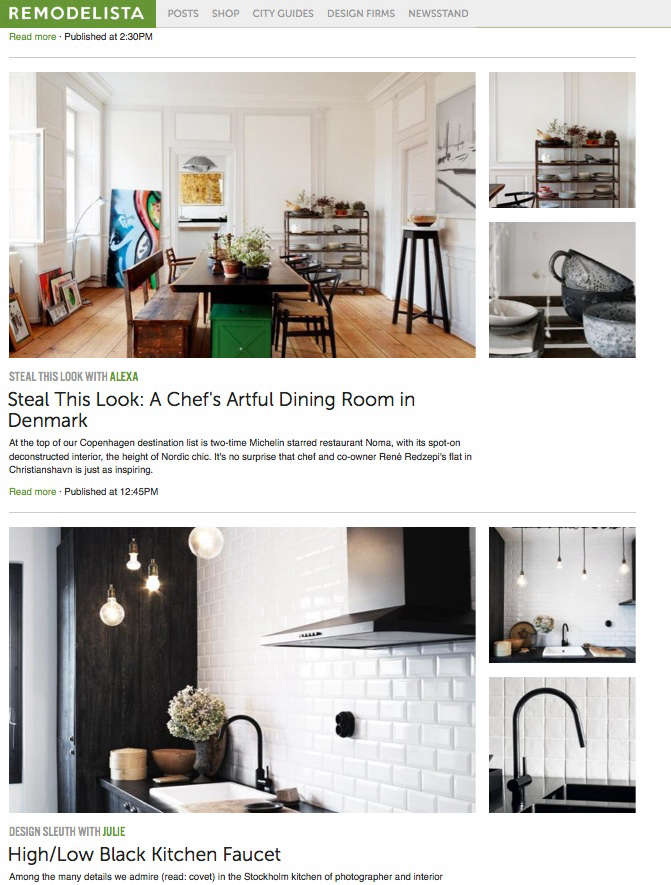
Website redesigns usually arrive with the same energy as someone announcing they have “lightly reorganized” the kitchen junk drawer. That can mean anything from a neat little tidy-up to a full-blown existential crisis involving expired soy sauce packets and three mystery keys. The good news with the Remodelista redesign update is that it feels less like chaos and more like clarification. Instead of trying to become a different kind of design site, Remodelista appears to have doubled down on what made it useful in the first place: elegant inspiration, practical renovation guidance, obsessive sourcing, and a point of view that prefers quiet confidence over look-at-me digital gymnastics.
That matters because Remodelista has never thrived on noise. It has always occupied a very specific corner of the internet: not the loudest room, not the cheapest room, not the trendiest room, but often the room with the best lighting, the nicest unlacquered brass, and someone who can explain why your sink choice deserves more thought than your throw pillows. A redesign for a site like that is not just about prettier buttons. It is about preserving editorial identity while making the experience more useful for readers who arrive with very real needs: inspiration, product sourcing, professional referrals, renovation advice, and the occasional rabbit hole about limewash paint that somehow becomes a three-hour commitment.
Why the Remodelista Redesign Matters
What makes the Remodelista redesign update interesting is that the brand has always been more than a blog and less than a marketplace. It sits in that sweet spot between editorial magazine, renovation handbook, and beautifully restrained shopping directory. That balancing act is tricky. Lean too far into glossy inspiration and you become digital wallpaper. Lean too far into commerce and suddenly the whole experience feels like a department store wearing a linen apron. Remodelista’s redesign works best when it remembers that readers come for images, stay for the intelligence, and bookmark the site because they genuinely plan to do something with what they find.
In practical terms, the update matters because today’s home-design audience is not browsing in one mood. People are browsing while texting contractors, pricing faucets, saving paint references, wondering whether a galley kitchen can still feel romantic, and pretending they are “just looking” when they are clearly six clicks away from changing every light fixture in the house. A redesign has to support that messy reality. It has to be aspirational without being impractical, shoppable without being pushy, and organized enough that readers can move from dream phase to decision phase without needing a map and a snack.
The Remodelista Redesign Story, in Plain English
First came refinement, not reinvention
One of the most revealing things about the Remodelista redesign history is that even earlier updates were framed as enhancements rather than personality transplants. That tone says a lot. Remodelista has long treated redesign as an editorial tool, not a marketing stunt. The point was to make the site more navigable, broaden the roster of contributors, and improve the way readers moved through content. In other words, the house style stayed the same; the floor plan got smarter.
Then the ecosystem got bigger
As the brand matured, the redesign story became less about a single homepage and more about a network. Remodelista increasingly functioned alongside related destinations for outdoor living and home organization, which meant the redesign had to support a broader family of content without turning into a digital yard sale. That shift is important. Once a design brand expands into adjacent categories, navigation becomes strategy. Readers should feel guided, not herded.
The current structure shows that lesson clearly. Remodelista is no longer simply a place to admire a Belgian kitchen and then spiral into self-judgment about your own laminate counters. It is part of a fuller editorial universe that connects interior remodeling, outdoor spaces, and organization. The redesign update makes that ecosystem more legible. You can see the logic: inspiration for the home, inspiration for the garden, and practical order for the stuff that somehow multiplies in every drawer.
Independence sharpened the identity
Another reason this update feels coherent is that Remodelista’s editorial identity appears more self-possessed than ever. After changes in ownership and strategy over the years, the current presentation feels like a brand that knows exactly what it is selling, and no, it is not chaos. It is curation. It is discernment. It is the belief that design coverage should help readers make better decisions rather than simply develop new insecurities about their grout lines.
What the Current Remodelista Experience Gets Right
It organizes content by reader intent
The smartest part of the current setup is that the site is not arranged like a vanity project. It is arranged like a tool. Sections centered on inspiration, remodeling guidance, travel, professional discovery, and shopping reflect the actual ways readers use home-design media. Sometimes you want a house tour. Sometimes you want advice. Sometimes you want a list of wall-mounted shelving systems because your life has become a pile. Good information architecture understands that these are different moods and deserves a small standing ovation when it responds accordingly.
It keeps the sourcebook idea at the center
Remodelista has long described itself as a sourcebook, and the redesign update makes that identity feel operational instead of merely poetic. A sourcebook is not just a gallery. It is a working reference. That means articles need to lead somewhere: to products, to categories, to related stories, to professionals, to archives, to next steps. The best moments in the redesign are the ones that quietly support action. A reader can move from admiration to planning without feeling as though the site has shoved them down a sales chute.
It treats archives like a feature, not a basement
For a long-running design site, the archive is the actual treasure chest. Remodelista has years of posts on kitchens, bathrooms, paint, storage, hardware, travel, and hard-to-name-but-easy-to-love rooms that make you want to sit very still and become a calmer person. The redesign update recognizes that old content still has value when it is well organized. In design media, a five-year-old post about a timeless sink or a sensible mudroom is often more useful than a one-day-old post about whatever trend social media is loudly over-loving this week.
It builds community without yelling about community
Membership tools, bookmarks, directories, newsletters, and community features all suggest a site that wants repeat use, not just passing clicks. That is a smart move. Readers planning renovations do not need a one-night stand with content. They need a long-term relationship with reference material. Remodelista’s redesign appears to understand that loyalty in this category is built through usefulness. Pretty helps. Useful wins.
How It Fits Into the Bigger Design-Media Landscape
Across U.S. design publishing, the pattern is clear: major outlets increasingly separate inspiration, renovation guidance, shopping, and expert advice into cleaner pathways. Architectural Digest has emphasized visually rich, responsive browsing and topic-based navigation. House Beautiful leans heavily into renovation explainers, contractor questions, permits, costs, and timeless design decisions. The Spruce focuses on planning, budgeting, and the real-world mechanics of renovation. Domino makes renovation feel approachable through before-and-afters and DIY-friendly storytelling. Dwell excels at structured exploration through tours, renovations, guides, and image-driven browsing. Better Homes & Gardens, Martha Stewart, ELLE Decor, and Veranda all reflect the same broader truth: readers want beauty, yes, but they also want help.
Where Remodelista stands apart is in tone. It rarely feels frantic. It does not chase every trend with a confetti cannon. It often presents design as something to be considered, not consumed like popcorn. That editorial restraint becomes a UX advantage in a redesign. Instead of overwhelming readers with maximalist navigation, the site can guide them with quiet authority. The result feels less like entering a mega-mall and more like being handed a very good map by a friend with excellent taste and suspiciously organized drawers.
That tone also aligns with larger renovation preferences right now. Many publishers and designers are steering readers toward timeless bones, better layout decisions, layered interiors, selective upgrades, and practical improvements over gimmicks. The current Remodelista structure supports exactly that mindset. It encourages readers to think in systems: kitchen guides, bathroom guides, sourcing categories, directories, archives, organization. It is not merely showing a finished room. It is teaching readers how to think their way toward one.
The Smartest Strategic Moves in the Update
1. It connects inspiration to decision-making
This is the biggest win. Great design sites often fail at the handoff between “I love this” and “How do I actually do this?” Remodelista narrows that gap. The redesign creates clearer routes from editorial inspiration to practical next steps. That is a huge deal in SEO terms, too. Readers who land on a gorgeous story can continue into guides, product categories, directories, and related topics instead of bouncing away to search for the same ideas in five separate tabs.
2. It extends the brand naturally into adjacent life categories
Gardenista and home organization are not random add-ons. They are logical extensions of the same editorial worldview. If you care about considered interiors, you probably also care about outdoor spaces and how to store the avalanche of things that come with modern life. The redesign update makes those extensions feel like siblings rather than distant cousins who only show up for the holiday buffet.
3. It supports reader loyalty instead of chasing drive-by traffic
The inclusion of member perks, archived access, bookmarking, newsletters, and community tools suggests a brand optimizing for return visits. That is wise. Search can bring readers in, but utility is what brings them back. In a crowded design content world, repeat usage is the gold standard. People return to sites that save them time, help them compare options, and make them feel a little more competent than they did twenty minutes earlier.
4. It preserves editorial taste while acknowledging commerce
Nearly every major home site now blends editorial and shopping. The challenge is to do it without losing credibility. Remodelista’s redesign is strongest when commerce feels like curation rather than hard selling. Readers expect product links in this category. They do not mind them. What they mind is feeling tricked. A well-edited sourcebook can include commerce without turning the entire room into a checkout page wearing loafers.
What Could Be Even Better
No redesign is perfect, and the best digital updates are really ongoing renovations. There is still room for even more user-friendly comparison tools, stronger budget-based filtering, and deeper project-planning pathways for readers who know what room they are tackling but not where to begin. A clearer visual distinction between inspiration content and deeply practical planning content could help some users move faster. Mobile readers, especially, benefit when every click answers the silent question: “Am I gathering ideas, making decisions, or buying something?”
But that is less a criticism than a sign of opportunity. Good redesigns are not monuments. They are living structures. The fact that Remodelista now feels set up for continued improvement is a compliment, not a caveat.
Experience Notes: What a Redesign Like This Feels Like in Real Life
Here is the part design editors do not always say out loud: people rarely use a site like Remodelista while sitting serenely in an Eames chair with a pencil and a dream. They use it while juggling ten tabs, one contractor estimate, a spouse or roommate with “questions,” and a growing fear that choosing a faucet has somehow become a personality test. That is why the Remodelista redesign update lands best not as a branding exercise, but as a usability improvement for people in the middle of actual decision-making.
Imagine the typical reader experience. You start with a casual search for kitchen ideas. Harmless. Innocent. Five minutes later, you are comparing cabinet hardware finishes, mentally repainting your walls, and wondering whether open shelving says “collected European restraint” or “future dust nightmare.” On a messy site, that journey feels exhausting. On a smartly redesigned site, it feels surprisingly coherent. You are not just clicking around; you are advancing. One article leads to a guide, which leads to a product category, which leads to a saved bookmark, which leads to the kind of confidence that makes you say things like, “Actually, I do have strong feelings about counter stools now.”
That is where Remodelista’s updated structure shines. It supports the emotional rhythm of renovation. First comes inspiration. Then comes ambition. Then comes panic. Then comes research. Then comes the deeply humbling realization that there are seventeen types of stone finish and at least six schools of thought on pendant spacing. A good redesign makes room for all of that. It does not rush you. It does not bury the helpful stuff beneath twelve layers of fluff. It gives you a trail.
The experience is also stronger because the site does not assume every visitor wants the same thing. Some readers are browsing for pleasure. Some are collecting details for a future remodel. Some are looking for a firm. Some are trying to figure out whether their entryway can stop looking like a shoe-based crime scene. The current Remodelista experience acknowledges that design content has seasons. Sometimes you are dreaming. Sometimes you are planning. Sometimes you are in pure household triage. A redesign that honors those changing needs feels less like media and more like infrastructure.
There is also something satisfying about how the update respects slower taste. In a digital world full of trend panic and algorithmic shouting, Remodelista still feels like a place that believes a room can age well. That is an experience in itself. You do not leave feeling pushed toward whatever color or shape the internet has declared mandatory this week. You leave with the sense that good design is cumulative, thoughtful, and occasionally improved by putting your phone down and staring at your floor plan for ten quiet minutes.
And yes, the redesign still lets you indulge the fantasy part of home media, because that is half the fun. You can absolutely wander into a story about a minimalist kitchen in Stockholm and emerge thirty minutes later with a new appreciation for plaster walls, wall-mounted lighting, and a life you do not currently lead. But the smarter structure means the dream does not evaporate the second you close the tab. You can save it, trace it, source it, and maybe even adapt it to your own home without requiring a monastery budget or a full personality transplant.
That is the real success of the Remodelista redesign update. It makes the site feel more livable. And for a brand built on considered living, that is exactly the point.
Conclusion
The Remodelista redesign update succeeds because it does not mistake redesign for reinvention. Instead, it sharpens the brand’s original strengths: intelligent curation, better pathways through archives, cleaner navigation by intent, and a more obvious connection between inspiration and action. In a design-media landscape crowded with trend churn and commerce clutter, that restraint feels refreshing. Remodelista still knows how to make a room look beautiful, but the update makes it better at helping readers figure out what to do next. That is not flashy. It is smarter. And honestly, smarter ages better than flashy anyway.