

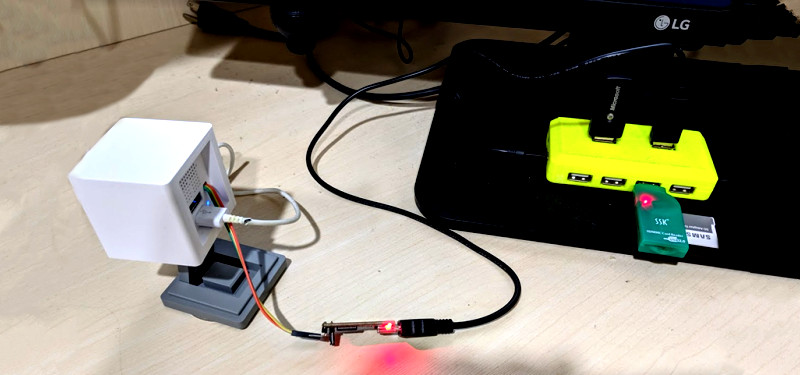
Reverse engineering WyzeSense hardware is the kind of project that makes makers grin like they just found a secret passage behind the coat closet. On the surface, WyzeSense looked simple: tiny contact and motion sensors, a tiny price tag, and a tiny USB bridge tucked into the back of a Wyze camera. But under that friendly, budget-smart shell was a fascinating lesson in how modern smart-home gear actually works. And more importantly, how fragile it can become when a product depends on a vendor ecosystem, a specific hub, or a very particular generation of hardware.
That is why WyzeSense became such a magnet for curiosity. It was cheap enough to buy “for science,” polished enough to feel like a real consumer product, and constrained enough to make hackers ask the classic question: what happens if we make it work somewhere else? Not in a movie-villain way. More in a “my drawer is full of perfectly good sensors and I would like to keep using them after the marketing team has moved on” way.
This article looks at the hardware story behind WyzeSense, why the original system attracted reverse engineers, what the community learned from public clues and careful observation, and what this little ecosystem teaches us about repair, ownership, local control, and the shelf life of smart-home gadgets.
Why WyzeSense Was So Interesting in the First Place
The original Wyze Sense setup earned attention because it delivered a lot for very little money. Reviewers loved the absurd value proposition: a starter kit bundled contact sensors, a motion sensor, and a bridge that plugged into the back of a Wyze camera. The sensors were tiny, easy to mount, and designed for low-power operation rather than chatty Wi-Fi behavior. In plain English, that meant they could sit quietly on doors, windows, or walls instead of draining their batteries like caffeinated squirrels.
For hobbyists, the magic ingredient was not just the sensors. It was the bridge. The original WyzeSense bridge used a USB form factor and relied on the Wyze camera as its host. That made the system feel less like a sealed black box and more like a device stack with seams. And reverse engineers adore seams. Seams are where you peek, test, measure, log, compare, and eventually say, “Aha, so that is what you are doing.”
Public filings and community analysis painted a picture of a proprietary sub-1 GHz radio system paired with a host-side USB interface. That combination mattered. Sub-1 GHz radio is popular in low-power sensors because it can offer better range and penetration than ordinary Wi-Fi, while a USB-connected bridge creates a practical boundary between radio hardware and the software that manages it. In other words, the radio talks to the sensors, and the host talks to the bridge. That host can be a camera, but with enough understanding, it can also become something else.
The Original Hardware Architecture: Small Parts, Big Questions
1. The USB bridge was the center of gravity
The first-generation WyzeSense system revolved around a little USB bridge that plugged into the camera. From a consumer perspective, that was neat and clean. From a reverse-engineering perspective, it was a flashing neon sign that said, “There is probably a protocol here.” Once a product exposes a bridge between radios and a host operating system, the job becomes less mystical. You are no longer staring at invisible airwaves alone. You are studying a conversation.
Community researchers quickly realized that the bridge was the real key to portability. If the sensors could already talk to the bridge, and the bridge could already talk to a host, then the long-term challenge was not “invent a sensor network from scratch.” It was “learn the language spoken across that host bridge.” That is a much more manageable problem, especially when public hardware records, firmware behavior, and Linux device information all leave breadcrumbs behind.
2. The radio layer lived below ordinary home networking
One of the smartest design choices in WyzeSense was avoiding direct Wi-Fi on each sensor. That choice helped battery life and kept the sensors simple. It also made the system more specialized. Instead of every sensor appearing as its own network client, the bridge acted as translator and coordinator. That is elegant when everything is supported, but it becomes awkward when the official ecosystem changes. The moment the vendor retires a bridge or shifts to a new hub design, users begin to feel the difference between “works with my house” and “works with the company’s current roadmap.”
3. Later Wyze Sense moved to a standalone hub
Wyze’s later Sense platform made that shift obvious. The v2 generation centered on a dedicated Sense Hub rather than the legacy USB bridge. The newer system added features that made sense for a broader security product, including longer-range hub-based connectivity and support for more accessories, but it also marked a clear architectural break. Legacy v1 gear and the v2 ecosystem were not simply interchangeable puzzle pieces. They belonged to different eras of Wyze design.
That split is one reason the original reverse-engineering work still matters. Once a product family changes shape, community knowledge becomes a form of preservation. It is no longer only about tinkering. It is about keeping older hardware useful.
How the Community Approached Reverse Engineering WyzeSense
The best reverse engineering rarely starts with a screwdriver. It starts with public information and careful observation. In the WyzeSense case, people looked at FCC materials, product behavior, Linux device exposure, firmware clues, and normal operating logs. That approach matters because it separates responsible technical research from reckless poking. Good researchers begin with documentation, then move to behavior, then form hypotheses, then test them.
Start with public filings, not guesswork
FCC records turned out to be especially useful. They offered frequency information, device classification, and internal photos that helped researchers understand the bridge hardware without pretending the plastic case had magical powers. Public filings can reveal how a product is authorized, what frequency range it uses, and sometimes what major silicon sits inside. That is not cheating. That is using the paper trail that electronics companies create when they sell wireless devices in the United States.
In WyzeSense’s case, those records helped confirm that the bridge was not just a passive adapter. It was an active low-power radio device, which fit the broader observation that the sensors relied on a dedicated sub-1 GHz link rather than direct Wi-Fi. Community researchers also drew conclusions about the bridge’s internal chip choices from public images and teardown logic, which gave them a strong starting point before deeper software analysis began.
Observe the host interface
One of the most important discoveries from community work was that the bridge behaved like a raw HID-style device on Linux hosts rather than a simple serial port. That detail sounds small, but it changes everything. Serial devices are one kind of puzzle. Raw HID devices are another. Once you know what kind of interface the operating system sees, you can model message framing, payload size, timing, and state much more realistically.
This is where WyzeSense became a great teaching example. Reverse engineering was not about smashing encryption with a coffee mug and a bad attitude. It was about identifying interfaces, watching traffic patterns, and building software that could speak to the bridge in a stable, repeatable way.
Build tools that prove understanding
The WyzeSense story got more interesting when researchers turned theory into working tools. Community libraries and integrations appeared for Home Assistant and MQTT-style workflows, effectively proving that the bridge could be used locally outside the original camera-centered setup. That was a major milestone. Once a protocol is understood well enough to support pairing, message handling, and device state updates in another environment, reverse engineering has moved beyond speculation and into practical interoperability.
That is the healthy version of reverse engineering: making hardware more portable, more understandable, and more durable. The goal is not to make the device “less secure” in some cartoonish sense. The goal is to reduce unnecessary dependency on a single official path.
What Reverse Engineering WyzeSense Revealed About Smart-Home Products
Smart homes are often less open than they look
WyzeSense looked accessible because it was affordable and easy to install. But affordability is not the same thing as openness. A low price can mask tight coupling between sensors, bridge, firmware, app logic, and vendor support. Reverse engineering showed that beneath the approachable retail packaging was a carefully managed chain of dependencies.
This is common in consumer IoT. Products are sold as simple gadgets, but they often behave like mini ecosystems. Remove one generation of hardware, retire one bridge, or shift one app workflow, and suddenly a perfectly functional sensor starts to feel like a museum artifact.
Battery life and failure modes matter as much as RF design
Another lesson came from the long-discussed low-battery problem affecting some v1 sensors. In the consumer world, a battery issue sounds like a minor annoyance. In the hardware world, it can become a preservation crisis. If a device loses a critical identity value or pairing capability after deep battery depletion, the problem is no longer “replace the coin cell and move on.” It becomes a reminder that embedded design decisions can determine whether hardware survives normal aging.
That defect changed the tone of WyzeSense hacking. What began as a fun interoperability project also became a rescue mission for users who wanted to keep existing sensors alive. Suddenly reverse engineering was not only about curiosity. It was about extending the useful life of devices that might otherwise be discarded.
Community tools can outlive product strategy
One of the most encouraging parts of the WyzeSense story is that community-made integrations gave owners options. Local bridges, Home Assistant components, and MQTT gateways all demonstrated the same principle: when people understand a device well enough, they can often preserve its usefulness long after the original product packaging has become yesterday’s news.
That is not a knock on Wyze specifically. It is simply the reality of consumer electronics. Companies evolve. Product lines change. Accessory compatibility gets trimmed. Community support fills the gap when users still love the hardware but no longer want to be locked to its first intended home.
A Responsible Framework for Studying Hardware Like WyzeSense
If you are fascinated by projects like this, the best lesson is not “copy random code from the internet and start soldering at midnight.” The better lesson is methodological.
Read everything public first
FCC filings, support articles, reviews, user manuals, and product pages can tell you more than many people expect. Before touching a board, learn the device’s product generations, radio band, official host requirements, and model boundaries. It is amazing how much trouble disappears when you understand the family tree before poking the branches.
Treat behavior as data
Watch how the product behaves during ordinary use. What changes when a sensor is paired? What does the host expose to the operating system? What device nodes appear? What kinds of events occur when motion happens, a door opens, or a battery drops? You do not need drama. You need repeatable observations.
Avoid crossing ethical lines
There is a bright line between studying your own hardware for compatibility, repair, or local control and using reverse engineering to bypass trust boundaries or interfere with systems you do not own. The first is a legitimate technical pursuit. The second is a fast route to bad decisions, broken warranties, and possibly worse. The WyzeSense community work became notable because it focused on interoperability and understanding, not on turning a home sensor into a party trick for the wrong audience.
So, Is Reverse Engineering WyzeSense Worth It?
Yes, if your interest is education, interoperability, preservation, and smart-home independence. WyzeSense is a terrific case study because it sits at the crossroads of affordable consumer hardware and community-driven longevity. It shows how much value can be unlocked when public documentation, careful observation, and open-source software meet a product that still has useful hardware left in the tank.
No, if your goal is to chase shortcuts, bypass product boundaries irresponsibly, or turn a home-security product into something sketchy. That is not clever. That is just how people end up with a broken sensor, a broken warranty, and a broken explanation for why the dining table is covered in screws.
The real appeal of WyzeSense reverse engineering is that it tells a bigger story. It is about the right to understand what you own. It is about keeping useful devices alive after official priorities move on. And it is about the fact that sometimes the most interesting thing in a smart-home product is not the app screenshot on the box. It is the quiet little bridge hiding in the back, waiting for somebody curious enough to ask better questions.
Field Notes: What Working Around WyzeSense Feels Like in Real Life
Talking about reverse engineering in theory is neat and tidy. Living with a product like WyzeSense is messier, funnier, and more human. The experience usually begins with optimism. You buy the sensors because they are small, cheap, and weirdly charming. You stick one on a door, one on a closet, maybe one near the garage, and for a while everything feels delightfully modern. The system just works. The bridge sits in the camera like a tiny intern doing all the radio paperwork without complaining.
Then the questions begin. Why does this sensor need that camera? Why does a simple open-close event need an entire ecosystem behind it? Why does the useful hardware seem married to a very specific product generation? These are the questions that nudge curious people from “owner” to “investigator.” Not because they want to cause trouble, but because the design itself invites inspection. WyzeSense never felt like an impenetrable monolith. It felt like a cleverly packaged stack of components that somebody could, with patience, understand.
There is also a particular kind of satisfaction in seeing community knowledge accumulate. One person identifies a hardware clue. Another notices how the host system exposes the bridge. Another writes a library. Another wraps it into Home Assistant. Another builds an MQTT gateway. Suddenly the project is no longer a lone-wolf stunt. It becomes a shared map. That is one of the most rewarding parts of the experience: watching individual curiosity turn into collective usability.
Of course, there is frustration too. Smart-home gear ages in awkward ways. A battery warning that comes a little too late can turn a cheap sensor into an expensive annoyance. A new product generation can make old accessories feel like relatives who were not invited to the wedding. And every time a company redesigns a platform, users are reminded that “supported” and “useful” are not always the same word.
But that is exactly why the WyzeSense story sticks with so many hardware tinkerers. It is not just about sensors. It is about ownership. It is about refusing to throw away perfectly capable devices just because the official narrative has moved on. It is about the small thrill of discovering that a product is understandable after all. Not magical. Not sacred. Just engineering.
And maybe that is the best part. Reverse engineering WyzeSense does not feel like cracking a vault. It feels like translating a conversation that was happening right in front of you the whole time. Once you see that, the hardware becomes less mysterious and more honest. It starts acting less like a sealed consumer appliance and more like what it really is: a collection of radios, chips, protocols, and design choices that can be studied, respected, and sometimes improved upon by the people who paid for it.
Conclusion
Reverse engineering WyzeSense hardware matters because it turns a discontinued or tightly scoped smart-home product into a case study in practical ownership. The original system was affordable and clever, but its dependence on a bridge, host device, and specific ecosystem made its limits impossible to ignore. Community researchers showed that with public filings, careful observation, and open-source software, it was possible to understand the bridge well enough to support local integrations and extend the life of the hardware. That is the real win: not drama, not exploits, but durability, clarity, and a smarter relationship with the devices we bring into our homes.