

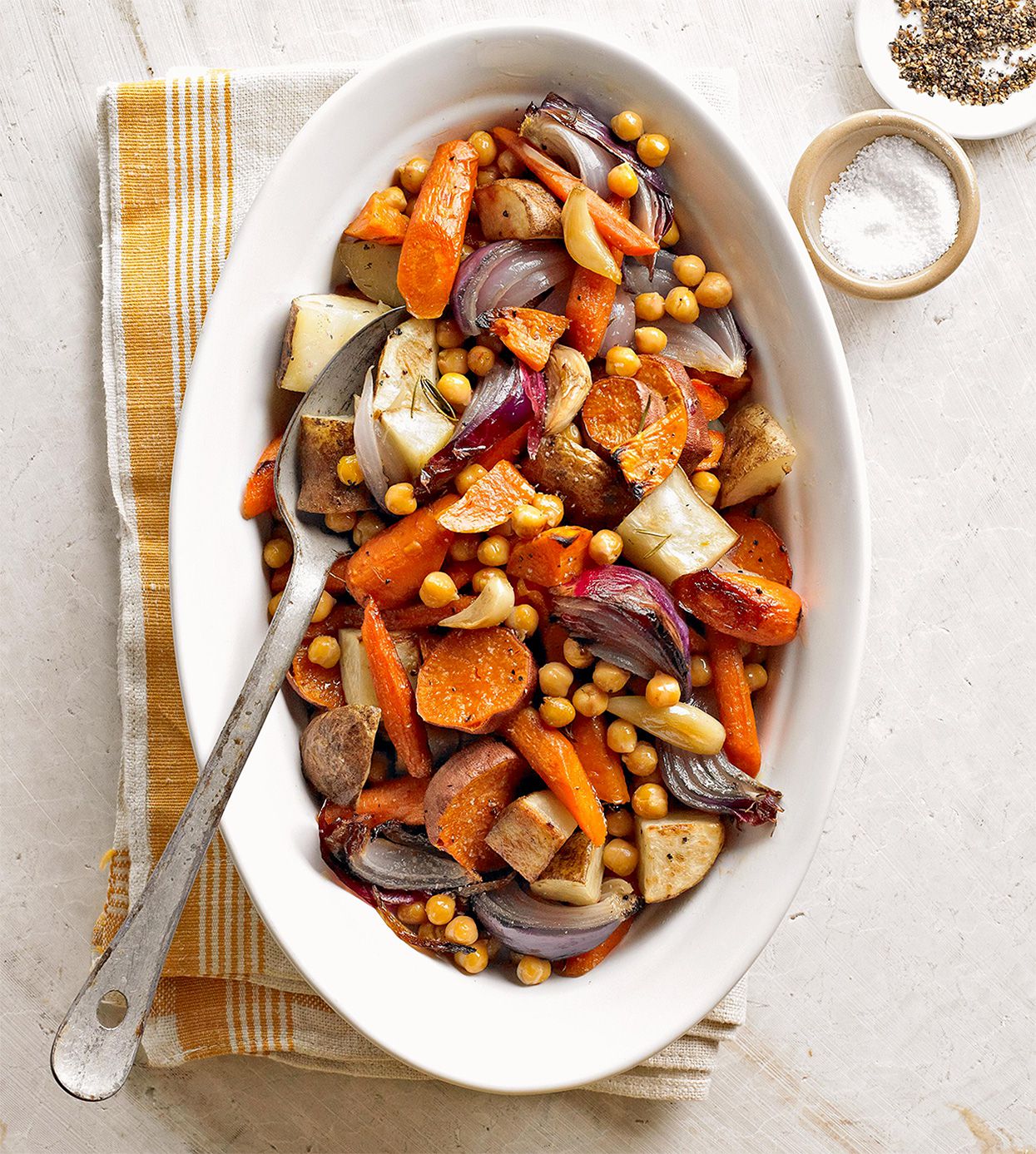
There are meals that whisper, and then there are meals that stride into your kitchen wearing crispy edges and smelling like they own the place. Roasted vegetables and chickpeas belong firmly in the second category. They are colorful, hearty, budget-friendly, and wildly flexible. They can be dinner, lunch, meal prep, a warm salad, a grain bowl, or the thing you make when your refrigerator looks like it is auditioning for a “before” photo.
At first glance, this dish seems almost too simple. Vegetables? Chickpeas? Heat? Great, thanks, chef. But that simplicity is exactly why it works. Roasting coaxes out sweetness, creates caramelized edges, concentrates flavor, and turns everyday produce into something that tastes far more exciting than its humble grocery bill suggests. Add chickpeas, and suddenly the pan has muscle: more texture, more staying power, and enough plant-based protein and fiber to make the meal actually satisfying rather than “pretty but suspiciously snack-like.”
This is also the kind of dish that fits modern eating habits without feeling like a punishment. It can lean Mediterranean, vegan, vegetarian, gluten-free, dairy-free, or just “I need dinner in under an hour and I refuse to wash five pans.” If you are trying to eat more vegetables, use more pantry staples, or simply make something that tastes good enough to repeat next week, roasted vegetables and chickpeas are ready for duty.
Why Roasted Vegetables and Chickpeas Work So Well
The magic starts with contrast. Vegetables become tender inside and browned outside. Chickpeas roast into little golden nuggets that can be creamy in the center and crisp at the edges. That balance keeps the dish from feeling flat. Soft sweet potatoes alone can get sleepy. Chickpeas alone can feel snackish. Together, they become a complete conversation.
There is also a practical reason this pairing has such staying power: it gives you bulk, flavor, and nutrition in one sheet pan. Chickpeas bring plant-based protein, fiber, folate, iron, and a pleasantly nutty flavor. Vegetables contribute color, texture, and a wide range of vitamins, minerals, and antioxidants. Put them together and you have a meal that feels abundant, not restrictive.
Another advantage is that roasting rewards common-sense cooking rather than perfectionism. You do not need a culinary degree or a ring light. You need a hot oven, a large pan, enough space between the ingredients, and the wisdom not to drown everything in oil like you are trying to moisturize a pumpkin. That is it.
The Best Vegetables to Roast with Chickpeas
The beauty of roasted vegetables and chickpeas is that almost any sturdy vegetable can join the party. The key is choosing vegetables that roast well and cutting them with a little strategy.
Excellent choices for the pan
Sweet potatoes are a classic because they become creamy and slightly sweet, which plays beautifully against savory spices. Cauliflower gets nutty and browned. Broccoli develops crisp tips that feel like nature’s potato chips. Carrots turn candy-sweet. Red onions soften and char at the edges. Bell peppers add moisture and color. Brussels sprouts get deeply savory when the outer leaves crisp up. Zucchini can work too, though it roasts faster and carries more water, so give it space and do not crowd it.
Root vegetables are especially good in cooler months because they roast into a cozy, hearty base. In warmer weather, a mix of zucchini, peppers, red onion, and cherry tomatoes keeps the dish lighter and brighter. There is no wrong season for this meal. There is only the wrong pan size, and that pan is always the one that is too crowded.
How to combine vegetables wisely
Pair vegetables with similar cooking times, or stagger them. Dense vegetables like sweet potatoes, carrots, and cauliflower usually need longer than peppers, zucchini, or onions. If you want everything on one pan, start the dense vegetables first, then add the quicker-cooking items halfway through. This is not being dramatic. This is avoiding a tray of burnt onions draped over undercooked potatoes.
Cut matters, too. Pieces should be roughly the same size so they roast evenly. Not identical in an obsessive ruler-and-caliper way, but close enough that one broccoli floret is not surrendering while the next is still raw and confused.
How to Make Roasted Vegetables and Chickpeas Taste Amazing
Good roasted vegetables and chickpeas are built on technique more than fancy ingredients. The ingredient list can be short. The method should be smart.
1. Dry ingredients roast better than wet ones
If you are using canned chickpeas, drain and rinse them, then dry them well. This step matters. Less surface moisture means better browning and a better chance at crisp edges. The same idea applies to vegetables. Wash them, yes. Roast them soaking wet, absolutely not.
2. Use enough oil, but do not overdo it
A light, even coating of oil helps vegetables caramelize and keeps chickpeas from turning dusty. Too little oil and the pan feels punitive. Too much and everything softens instead of browning. Aim for glossy, not greasy.
3. High heat is your friend
Roasting usually shines around 400 to 425 degrees Fahrenheit. That range encourages browning while still giving vegetables time to cook through. A lukewarm oven does not roast; it gently disappoints.
4. Give everything space
This is the golden rule. When vegetables and chickpeas are piled on top of each other, they steam. Steam has its place, but if you want caramelized edges, use a large sheet pan or two. One crowded tray can sabotage the entire operation.
5. Season boldly and intelligently
Salt, pepper, olive oil, garlic powder, and smoked paprika already make a great foundation. From there, the dish can travel almost anywhere: cumin and coriander for a Middle Eastern feel, oregano and lemon for a Mediterranean vibe, chili powder and lime for something zippier, or curry powder for warmth and depth. A final squeeze of lemon or a spoonful of yogurt sauce can wake up the entire pan.
A Simple Formula You Can Repeat Every Week
If you want a reliable version, use this basic structure:
Choose your base: 2 to 4 cups of sturdy vegetables, such as sweet potatoes, cauliflower, carrots, or broccoli.
Add your chickpeas: 1 to 2 cans, drained, rinsed, and dried well.
Add oil: enough to lightly coat everything.
Add seasoning: salt, black pepper, garlic powder, and one or two spices you actually like.
Roast: in a hot oven until the vegetables are tender and browned and the chickpeas are slightly crisp.
You can serve the finished tray over quinoa, brown rice, couscous, farro, or greens. Add a sauce if you want the meal to feel more restaurant-worthy. Tahini dressing, lemon-garlic yogurt, herby vinaigrette, or hummus loosened with warm water all work beautifully. Suddenly your humble sheet pan looks like it has excellent opinions about ceramics.
Nutrition Benefits Without the Lecture Tone
One reason roasted vegetables and chickpeas are such a smart staple is that they pack a lot of value into an approachable meal. Chickpeas are known for their blend of protein and fiber, which helps meals feel more filling. They also provide important nutrients like folate, iron, and zinc. Vegetables, meanwhile, bring volume and variety, which can support a balanced eating pattern without making a plate feel heavy.
This kind of meal also fits nicely with the general advice to fill more of your plate with vegetables and include plant-based protein more often. That does not mean every dinner needs to become a moral statement. It just means this dish pulls off the rare trick of being practical, satisfying, and nutrient-dense at the same time.
If sodium is a concern, canned chickpeas can still work well. Choosing low-sodium or no-salt-added options helps, and draining and rinsing canned beans can reduce some of the sodium. That means convenience and nutrition do not have to fight in the parking lot.
Common Mistakes That Ruin the Pan
Crowding the tray
Yes, I know I already mentioned it. That is because crowded pans are the leading cause of roasted vegetable heartbreak. If the vegetables are shoulder to shoulder like commuters on a delayed train, they will steam instead of brown.
Cutting random sizes
Huge carrot chunks next to tiny zucchini coins create a timing mess. Keep the pieces fairly uniform so the pan cooks evenly.
Skipping the dry-off step
Wet vegetables and wet chickpeas are the fast lane to sogginess. Dry them thoroughly before oil and seasoning.
Under-seasoning
Vegetables need help. Salt is not the villain here; blandness is. Season generously enough that the vegetables actually taste like dinner instead of obligation.
Expecting every chickpea to become a crouton
Some chickpeas get crisp all over, some stay a little chewy, and some develop that delightful creamy center with a roasted shell. All of those outcomes are good. This is dinner, not a texture courtroom.
How to Turn It Into a Full Meal
Roasted vegetables and chickpeas are incredibly adaptable, which is code for “you can keep eating them all week without getting bored.”
Build a grain bowl
Spoon the roasted mixture over quinoa, brown rice, or farro. Add a sauce and a handful of herbs. Dinner solved.
Make a warm salad
Toss the vegetables and chickpeas with arugula or spinach while they are still warm. The greens wilt slightly, and the whole thing feels both wholesome and suspiciously elegant.
Stuff it into wraps or pita
Add hummus, pickled onions, and a crunchy lettuce situation. Now your leftovers have a second career.
Top it with an egg or yogurt sauce
If you are not eating vegan, a fried egg or a dollop of Greek yogurt with lemon and herbs can make the dish even more satisfying.
Meal Prep, Storage, and Leftovers
This is a meal-prepper’s favorite for good reason. You can roast a big batch, cool it, and refrigerate it for easy lunches and dinners. Stored properly in the refrigerator, leftovers are best used within 3 to 4 days. Reheat in the oven or an air fryer if you want to bring back some texture. The microwave is convenient, but it will not restore crispness. It will, however, restore dinner, which counts for something.
If you know you will not eat the roasted vegetables and chickpeas within a few days, freezing is an option, though softer vegetables may lose a little texture after thawing. For best results, cool the food quickly, store it in shallow containers, and reheat thoroughly before serving.
Flavor Variations to Keep It Interesting
Mediterranean
Use zucchini, red onion, bell pepper, and chickpeas with oregano, garlic, olive oil, and lemon. Finish with parsley and a tahini drizzle.
Smoky Sheet Pan
Use cauliflower, carrots, and chickpeas with smoked paprika, cumin, black pepper, and a squeeze of lime.
Cozy Fall Version
Use sweet potatoes, Brussels sprouts, red onion, and chickpeas with sage, garlic, pepper, and a maple-mustard dressing after roasting.
Spiced Weeknight Bowl
Use broccoli, cauliflower, and chickpeas with curry powder, turmeric, garlic, and a yogurt or coconut-lime sauce.
Once you understand the structure, the dish becomes more of a method than a recipe. That is the sweet spot for home cooking. You stop following instructions with the nervous energy of a bomb technician and start cooking with confidence.
Experience: Why This Dish Keeps Earning a Spot on the Table
There is something quietly dependable about roasted vegetables and chickpeas. It is the kind of meal that shows up when life is busy, groceries are random, and motivation is hanging by a thread. I have seen versions of this dish rescue a Sunday meal prep session, save a Wednesday night dinner slump, and turn “I have nothing to eat” into “actually, I’m kind of thriving.”
What makes the experience memorable is not just the flavor. It is the way the kitchen smells while everything roasts. First comes the warm scent of olive oil and spices. Then the sweetness of onions and carrots starts drifting through the room. Then the chickpeas pick up color, the edges of the cauliflower go golden, and suddenly the kitchen smells like someone competent lives there. That is a powerful emotional benefit for one sheet pan.
This dish also has a way of making healthy eating feel normal instead of theatrical. No one has to announce that they are “being good.” No one needs a tiny sad portion or a bowl of lettuce that inspires existential questions. Roasted vegetables and chickpeas feel generous. They look like real food because they are real food. They are colorful, substantial, and deeply comforting without being heavy.
Another reason people come back to this meal is the texture. Home cooks often struggle with vegetable dishes that are technically fine but emotionally underwhelming. Steamed vegetables can be worthy and dull at the same time. Roasted vegetables, on the other hand, have drama. Crisp bits. browned edges. tender centers. Chickpeas add little pops of nuttiness and chew, which keeps every bite interesting. You do not need meat to make the plate feel complete, and you do not need elaborate sauces to make it exciting.
The dish is also friendly to different households. One person can pile it over quinoa. Another can tuck it into pita with hummus. Someone else can add feta, hot sauce, avocado, or a fried egg. It adapts without complaint. That flexibility makes it great for families, roommates, and anyone who does not want to cook three different dinners because preferences are colliding at 6:42 p.m.
There is also a small but mighty sense of satisfaction in using up what you already have. A lonely red onion, half a bag of carrots, one zucchini, a can of chickpeas, and a few spices can become something that looks intentional and tastes restaurant-adjacent. That experience matters. It helps people cook more often because it lowers the pressure. Dinner does not have to be new, expensive, or complicated to feel rewarding.
Even leftovers tend to overachieve. The next day, the roasted mixture can become a grain bowl, salad topper, wrap filling, or side dish. It is one of those rare meals that does not feel like punishment when repeated. In fact, the flavors often settle in and improve after a night in the fridge. The vegetables relax, the spices deepen, and lunch suddenly looks much more interesting than another emergency sandwich.
In the end, roasted vegetables and chickpeas earn their popularity because they make everyday cooking feel doable and delicious. They prove that simple food does not have to be boring, that healthy meals do not need a sales pitch, and that one hot oven can solve an impressive number of problems. Not every dinner can be a life-changing event, and frankly, that is fine. Some dinners just need to be reliable, nourishing, and very good at making you want seconds. This one delivers.
Conclusion
Roasted vegetables and chickpeas are more than a trend-friendly sheet pan dinner. They are a practical, flavorful answer to the eternal question of what to cook when you want something healthy, affordable, and genuinely satisfying. With the right vegetables, proper spacing, bold seasoning, and a hot oven, you can build a meal that is colorful, craveable, and easy to reinvent. In a world full of complicated recipes and expensive ingredients, this dish is refreshingly grounded. It asks for a little technique, a little curiosity, and one decent baking sheet. In return, it gives you dinner, lunch, leftovers, and possibly a mild superiority complex about how good your kitchen smells.