

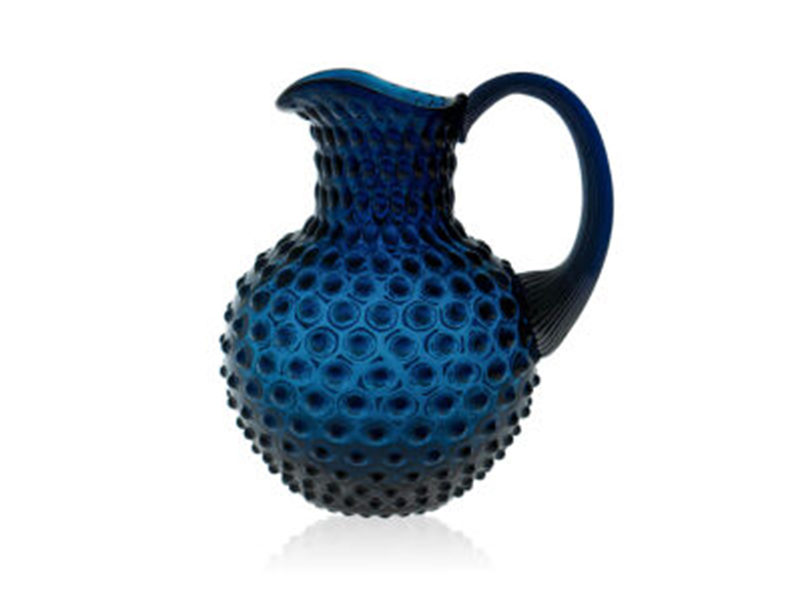
A Royal Blue Hobnail Crystal Jug is not the shy guest at the table. It does not sit quietly in the corner hoping someone notices it. No, this is the kind of jug that catches the sunlight, throws a little sparkle across the room, and makes plain water look as if it should be served with a tiny trumpet announcement.
Part serving piece, part decorative treasure, and part “Where did you get that?” conversation starter, the royal blue hobnail jug brings together three things collectors and decorators love: rich color, raised texture, and vintage charm. Whether used for iced tea on a summer table, displayed on an open kitchen shelf, or filled with fresh hydrangeas, this piece has a way of making ordinary moments feel slightly more polishedwithout becoming too fancy for real life.
In this guide, we will explore what makes a royal blue hobnail crystal jug special, how hobnail glass became collectible, what to look for when buying one, how to style it, and how to care for it so it does not become a tragic antique-store cautionary tale.
What Is a Royal Blue Hobnail Crystal Jug?
A royal blue hobnail crystal jug is typically a decorative or functional pitcher made from blue glass or crystal-style glass with a raised bump pattern across the body. The “hobnail” texture looks like rows of small rounded studs. The term comes from hobnail boots, which had nail heads on the soles for grip. In glassware, thankfully, the bumps are much more charming and far less likely to scuff your floor.
The phrase “royal blue” usually describes a deep, vivid blue similar to cobalt or sapphire glass. Depending on the maker, age, and production method, the color may appear transparent, opalescent, or slightly milky around the rim and raised areas. Some pieces are true crystal, while others are pressed glass, mold-blown glass, or art glass marketed under crystal-style descriptions. That detail matters for collectors, because not every sparkling jug is technically crystal. Sometimes it is glass with excellent stage presence.
Key Features of the Piece
Most royal blue hobnail jugs share several recognizable features:
- A deep blue or blue-opalescent color
- Raised hobnail texture across the body
- A curved handle, often applied or molded
- A pouring spout for serving liquids
- A decorative silhouette suitable for display
- Possible ruffled, crimped, or flared rim details
Some jugs are small creamers or cruets, while others are larger pitchers intended for lemonade, water, iced tea, or table service. A collectible Fenton Hobnail Blue Opalescent jug, for example, may appear in different sizes and forms, including small handled jugs and larger serving pitchers.
The History Behind Hobnail Glass
Hobnail glass has a long and surprisingly stylish history. The raised pattern became popular in the Victorian period, when glassmakers experimented with molded and blown textures. Early hobnail pieces often appeared in translucent colors and were used for pitchers, bottles, table sets, and decorative wares. At the turn of the 20th century, lemonade sets with matching pitchers and glasses were especially popular. Apparently, even great-grandma knew that lemonade tastes better when served from something dramatic.
In the United States, Fenton Art Glass became one of the most important names associated with hobnail glass. Founded in 1905, Fenton developed a reputation for colorful art glass, iridescent finishes, opalescent effects, and collectible patterns. The company introduced hobnail pieces in the late 1930s, and the hobnail pattern later became one of its most recognizable designs. Fenton’s milk glass hobnail line became especially famous in the 1950s, but blue opalescent hobnail pieces also remain highly desirable among collectors.
Why Royal Blue Makes the Jug So Eye-Catching
Color is one of the biggest reasons a royal blue hobnail crystal jug stands out. Clear glass is elegant, but deep blue glass has personality. It feels coastal, classic, bold, and slightly mysterious. Put it near a sunny window and it glows. Place it on a white tablecloth and it becomes the centerpiece before you even add flowers or drinks.
Blue glassware has been collected for generations, especially in cobalt, sapphire, and opalescent tones. The color works beautifully in both traditional and modern interiors. In farmhouse kitchens, it adds a vintage accent. In coastal homes, it echoes the ocean. In contemporary spaces, it becomes a sculptural pop of color. It is one of those rare pieces that can sit beside antique silver, woven placemats, or minimalist dinnerware without looking lost.
Royal Blue vs. Cobalt Blue vs. Blue Opalescent
These terms are often used loosely, but they are not always identical.
Royal blue is usually a descriptive color term. It suggests a rich, vivid blue. Cobalt blue often refers to glass colored with cobalt compounds or glass that resembles that intense shade. Blue opalescent describes glass that shifts from blue to milky or cloudy white, often around edges, rims, handles, and raised details. On hobnail pieces, opalescence can make the bumps look frosted, as if the jug woke up and decided to wear pearls.
Is It Crystal or Glass?
Many sellers use the word “crystal” broadly, especially in vintage marketplaces. A royal blue hobnail crystal jug may be true crystal, but it may also be pressed glass, art glass, or mold-blown non-lead glass. For everyday buyers, the difference affects value, weight, clarity, sound, and care.
True crystal often feels heavier and may produce a clearer ringing tone when gently tapped. Pressed glass may show mold seams. Mold-blown glass can have more handmade variation, including subtle asymmetry, pontil marks, or tool marks. None of these automatically make a piece better or worse. They simply tell part of its story.
For collectors, the safest approach is to describe what can be verified. Instead of assuming “lead crystal,” look for maker information, pattern records, measurements, marks, and known production history. A beautiful jug does not need a royal title to be worthy of display. Although, in this case, “royal blue” certainly helps.
How to Identify a Quality Royal Blue Hobnail Jug
When shopping for a royal blue hobnail crystal jug, it helps to slow down and inspect the details. Photos can be flattering. Antique booths can be dim. Online listings can be enthusiastic. Your job is to admire the jug, then politely interrogate it like a detective with excellent taste.
1. Look at the Hobnail Pattern
The hobnails should be consistent, well-formed, and evenly spaced. On older or handmade pieces, small variations may appear, but the pattern should still look intentional. If the bumps are weak, blurry, or uneven in a way that feels careless, the piece may be lower quality or heavily worn.
2. Check the Color
A strong royal blue color should be rich and attractive. Hold the jug to light if possible. Look for chips, cracks, cloudy patches, faded coating, or areas where the color appears applied rather than integrated into the glass. Some vintage colored glass is flashed or coated, meaning the color sits on the surface and can scratch more easily.
3. Inspect the Rim and Spout
The rim and spout are common damage zones. A tiny chip on a flat base may be acceptable for display, but a chipped pouring lip can affect both appearance and function. Run a fingertip gently around the edge, but do not apply pressure. The goal is inspection, not a dramatic reenactment of a glassware accident.
4. Examine the Handle
Handles can reveal quality. Applied handles may show tooling marks, while molded handles may have seams. Look for cracks where the handle joins the body. A repaired handle may still display well, but it should be priced accordingly.
5. Search for Maker Marks
Some Fenton pieces include molded marks, especially from later production periods. Earlier pieces may not be marked. Other makers may use labels, stamps, or no visible identification at all. Do not assume every hobnail jug is Fenton. Other American and European makers produced textured glass patterns too, including designs sometimes called dewdrop, moonstone, diamond point, or English hobnail.
Popular Uses for a Royal Blue Hobnail Crystal Jug
The practical beauty of this jug is that it can work as both serveware and decor. It can pour lemonade in July, hold branches in November, and sit proudly on a shelf in February pretending it has always been the star of the kitchen.
As a Beverage Pitcher
For modern use, a larger jug can serve water, iced tea, lemonade, or fruit-infused drinks. The blue glass looks especially beautiful with citrus slices, mint, berries, or sparkling water. Before using a vintage jug for serving, inspect it carefully for cracks, residue, or interior cloudiness. If you are unsure whether it is safe for food use, reserve it for display.
As a Flower Vase
Royal blue glass pairs wonderfully with white roses, yellow tulips, pink peonies, orange ranunculus, and blue hydrangeas. The hobnail texture adds visual interest even when the arrangement is simple. A few wildflowers can look intentional. A single grocery-store bouquet can look like it hired a stylist.
As Shelf Decor
Open shelving loves colored glass. A royal blue hobnail jug can break up rows of white plates, cookbooks, or neutral ceramics. It also works well in a china cabinet, especially when grouped with clear crystal, milk glass, silver, brass, or other blue pieces.
As a Collectible Display Piece
Collectors may display the jug with matching tumblers, cruets, creamers, sugar bowls, baskets, or compotes. Fenton Hobnail Blue Opalescent pieces, for example, appear across many forms, making them appealing for people who enjoy building a pattern collection over time.
How to Style Royal Blue Hobnail Glass at Home
The trick to styling royal blue hobnail glass is balance. The jug is already textured and colorful, so it does not need to compete with twenty other loud objects. Give it breathing room and let the color do its little blue-glass magic trick.
For a Classic Table Setting
Pair the jug with white plates, linen napkins, polished flatware, and simple clear glasses. The royal blue color becomes the main accent. Add lemon slices or white flowers, and suddenly your table looks like it belongs in a magazine spread titled “Effortless Entertaining,” even if you spent fifteen minutes hiding mail in a drawer.
For a Coastal Look
Combine the jug with woven placemats, sea-glass tones, pale wood, and casual ceramics. Blue hobnail glass fits naturally into coastal interiors because it reflects light like water. Avoid going overboard with anchors and seashells unless you want your dining room to start speaking pirate.
For Vintage Maximalism
If you love layered decor, mix the jug with brass candlesticks, patterned china, embroidered linens, and framed botanical prints. The hobnail texture plays well with other patterns because it is dimensional rather than printed. It adds rhythm without making the room feel chaotic.
For Modern Minimalism
In a clean modern room, one royal blue jug can act like sculpture. Place it on a console table, kitchen island, or floating shelf. Keep nearby objects simple: a stack of books, a small bowl, or a single branch. The color becomes intentional rather than cluttered.
Buying Tips: What Affects Value?
The value of a royal blue hobnail crystal jug depends on several factors: maker, age, rarity, size, condition, color, demand, and whether it belongs to a known pattern. A documented Fenton Hobnail Blue Opalescent jug may attract collectors because it connects to a recognized American glassmaker and a discontinued pattern. A beautiful unmarked jug may still be valuable decor, but it may not command the same collector premium.
Condition is critical. Chips, cracks, repairs, staining, cloudy interiors, and rough rims can reduce value. Original stoppers, matching tumblers, or complete sets can increase interest. Larger pitchers may appeal to decorators, while smaller jugs and cruets may appeal to collectors with limited display space.
When buying online, ask for clear photos of the rim, base, handle joints, interior, and any marks. Measurements are also important. A “jug” might be a full pitcher, a creamer, a cruet, or a decorative vase with a handle. In glassware listings, size surprises are common. Nobody wants to expect a grand lemonade pitcher and receive something that holds three tablespoons and a dream.
How to Care for a Royal Blue Hobnail Crystal Jug
Vintage and collectible glass deserves gentle care. Even sturdy-looking hobnail glass can be vulnerable to sudden temperature changes, harsh detergents, and accidental knocks against sink edges.
Hand Wash Only
The safest method is hand washing with warm water, mild dish soap, and a soft cloth or sponge. Avoid abrasive scrubbers. Do not place vintage or valuable glassware in the dishwasher unless you are completely sure it is dishwasher safeand even then, hand washing is usually kinder.
Protect the Sink
Place a folded towel or rubber mat at the bottom of the sink before washing. Glass and porcelain sinks are not soft landing zones. They are where careless washing decisions go to become regrets.
Dry Carefully
Use a lint-free cloth and hold the jug securely by the body, not only by the handle. Handles are strong until they are not. Dry the inside thoroughly before storing to prevent mineral spots or musty odors.
Avoid Extreme Temperatures
Do not pour boiling liquids into vintage glass. Do not move the jug directly from a cold refrigerator to a hot environment. Sudden thermal shock can crack glass, and no centerpiece is worth that sound.
Common Mistakes to Avoid
Even experienced buyers can make mistakes with collectible glassware. Here are a few to avoid:
- Assuming every hobnail piece is Fenton
- Calling every shiny glass jug “crystal” without verification
- Ignoring small rim chips in online photos
- Using vintage glass for hot liquids
- Putting delicate glassware in the dishwasher
- Overpaying without checking comparable pieces
- Storing the jug where it can be bumped easily
The goal is not to become suspicious of every pretty jug. The goal is to buy with your eyes open, your measurements checked, and your wallet not sprinting ahead of your brain.
Why Collectors Love Royal Blue Hobnail Jugs
Collectors are drawn to royal blue hobnail jugs because they combine history, craftsmanship, and beauty in a compact form. They are decorative but useful, bold but classic, and recognizable without being boring. The texture invites touch, the color invites light, and the shape invites stories.
For some, the appeal is nostalgia. Hobnail glass may remind them of a grandmother’s cabinet, a flea market trip, or a family table. For others, it is pure design. The raised pattern creates shadow and sparkle, while the blue color adds depth. In a world full of flat, mass-produced objects, hobnail glass has dimensionliterally and emotionally.
Experiences With a Royal Blue Hobnail Crystal Jug
Living with a royal blue hobnail crystal jug is different from simply owning one. At first, you may buy it because it looks beautiful. Then, slowly, it starts volunteering for jobs around the house. One day it holds iced tea. The next week it becomes a vase. Later, it sits on a bookshelf beside old novels and somehow makes the books look more intelligent. That is the quiet power of good glassware.
One of the best experiences with this type of jug is using it for a simple weekend lunch. Imagine a sunny table, a pitcher of lemon water, a few sandwiches, and that deep blue glass catching the light. The meal does not need to be expensive. The menu does not need to be impressive. The jug does half the decorating work. It turns “we are eating outside because the kitchen is hot” into “casual garden dining.” Very efficient. Very blue.
Another memorable use is as a seasonal vase. In spring, white tulips look crisp and fresh against royal blue glass. In summer, sunflowers create a cheerful contrast. In fall, dried wheat or golden branches feel warm and rustic. In winter, evergreen clippings and white berries make the jug look festive without requiring glitter, which is excellent because glitter behaves like a household curse.
The jug also works beautifully as a collecting milestone. Many people begin with one piece of colored glass and then discover the dangerous sentence: “Maybe I should find a matching one.” Suddenly, antique malls become treasure maps. Estate sales become weekend cardio. Online listings become bedtime reading. A royal blue hobnail jug can easily become the beginning of a blue glass collection, especially because it pairs well with bottles, tumblers, bowls, and small decorative dishes.
There is also satisfaction in rescuing a piece from neglect. Finding a dusty hobnail jug at a thrift store or flea market can feel like discovering a tiny royal artifact hiding between mismatched mugs and a ceramic rooster. After a careful wash, the blue returns, the hobnails sparkle, and the whole piece seems to stand a little taller. It is not just shopping; it is glassware rehabilitation.
Of course, using one also teaches patience. You learn not to rush at the sink. You learn to place a towel underneath it. You learn that handles deserve respect. You learn that “I’ll just put it in the dishwasher once” is the kind of sentence that haunts collectors. A royal blue hobnail crystal jug rewards gentle care, and in return, it offers years of beauty.
Perhaps the best experience is the conversation it creates. Guests notice it. Someone asks whether it is vintage. Someone else remembers a piece their grandmother had. Another person wants to touch the hobnail texture. Before long, the jug is not just serving water; it is serving memories, opinions, and possibly a debate about whether cobalt blue is the best blue. For the record, it makes a strong case.
Conclusion
A Royal Blue Hobnail Crystal Jug is more than a pitcher. It is a textured, light-catching, personality-packed piece of glassware that bridges function and decoration. Its raised hobnail surface connects it to a long tradition of molded and blown glass design, while its deep blue color gives it modern decorating power. Whether you collect Fenton Hobnail Blue Opalescent pieces, enjoy vintage glassware, or simply want one unforgettable accent for your table, this jug offers beauty with a little wink.
Choose carefully, inspect condition, verify details when possible, and care for it gently. Do that, and your royal blue hobnail jug may become one of those objects people remember long after the meal is over. Not bad for something that technically just pours lemonade.
Note: This article is written as original web content based on researched information about hobnail glass, blue opalescent glassware, vintage collecting, decor use, and proper care practices.