

Editorial note: Streaming availability can change by country, contract, and platform policy. This article is based on publicly reported streaming-rights developments, Paramount’s official deal announcements, and the long-running public record around South Park censorship controversies.
For a show built on offending everyone with equal-opportunity enthusiasm, South Park has always had a strange relationship with streaming. On one hand, it is one of the most valuable animated comedies in television history. On the other hand, it is also the kind of series that makes legal teams reach for antacids, standards departments refresh their email inboxes, and streaming executives ask, “Can we maybe just upload the episode where Cartman starts a boy band instead?”
The latest South Park streaming migration has brought that tension back into the spotlight. After years of being divided between Max, Paramount+, Comedy Central, and special-event releases, the franchise moved toward a more unified home on Paramount+. That sounds simple enough: one platform, one massive library, fewer confused fans typing “where to watch South Park season 10 episode 3” into search engines at 1:14 a.m. But with South Park, nothing stays simple for long.
The concern is not just that the show is moving. The concern is what might not move with it. Several classic South Park episodes have already been unavailable on major streaming platforms for years, and fan discussion exploded in 2025 over whether more episodes could quietly join the so-called ban list as Paramount+ becomes the central streaming destination for the series.
Why the South Park Streaming Move Matters
Paramount’s 2025 deal with Trey Parker, Matt Stone, Park County, and South Park Digital Studios confirmed a five-year extension involving 50 new episodes, the existing library, and Paramount+ as the U.S. streaming home for the series. For fans, that was a big deal. South Park has been on television since 1997, and its catalog is enormous, culturally messy, politically radioactive, and weirdly rewatchable. It is not just a show; it is a cartoon archive of American panic.
The move also followed years of corporate friction. Warner Bros. Discovery previously paid a huge sum for streaming rights to the existing and new South Park library through HBO Max, later Max. Paramount, which owns Comedy Central, then launched Paramount+ and began releasing exclusive South Park specials. That split created a streaming custody battle worthy of its own episode, probably featuring Randy Marsh in a courtroom wearing a VR headset and yelling about residuals.
When the HBO Max agreement neared its end, Paramount+ was positioned to become the main home for both old and new South Park. But the phrase “entire library” can become complicated when a series contains episodes that platforms, rights holders, or local markets may consider too risky, too sensitive, or too legally annoying to keep online.
The Five South Park Episodes Long Missing From Streaming
Before talking about the rumored expanded ban list, it is important to separate confirmed history from fan anxiety. Five episodes have long been treated differently from the rest of the catalog on major streaming platforms:
- “Super Best Friends” — Season 5, Episode 3
- “Cartoon Wars Part I” — Season 10, Episode 3
- “Cartoon Wars Part II” — Season 10, Episode 4
- “200” — Season 14, Episode 5
- “201” — Season 14, Episode 6
These episodes are connected by one major issue: depictions of, or references to depictions of, the Prophet Muhammad. The most infamous controversy erupted in 2010 around “200” and “201,” after threats were directed at Parker and Stone. Comedy Central heavily censored “201,” including dialogue that many viewers believed was central to the episode’s argument about intimidation, fear, and free expression.
Since then, those five episodes have become the core of the South Park streaming ban conversation. They are not merely “edgy episodes” in the usual South Park sense. The show has built entire seasons out of edgy episodes. These are episodes where real-world security concerns, religious sensitivity, corporate caution, and media controversy collided in a way that changed how the catalog was handled.
Why Fans Fear a Larger Ban List
The new concern is that Paramount+ might not stop with those five. In 2025, fan reports and entertainment commentary pointed to a possible 17-episode list based largely on episodes that appeared to be unavailable in certain international Paramount+ markets. Paramount did not officially confirm a new U.S. ban list, and that detail matters. Rumor is not policy. A missing episode in one country is not automatically a permanent global ban. Still, fans noticed patterns, and those patterns made people nervous.
The rumored list included the five long-missing episodes plus additional classics such as:
- “Big Gay Al’s Big Gay Boat Ride” — Season 1, Episode 4
- “Terrance and Phillip in Not Without My Anus” — Season 2, Episode 1
- “Pip” — Season 4, Episode 14
- “Jared Has Aides” — Season 6, Episode 2
- “Simpsons Did It” — Season 6, Episode 7
- “Cancelled” — Season 7, Episode 1
- “The Passion of the Jew” — Season 8, Episode 3
- “You Got F’d in the A” — Season 8, Episode 4
- “Two Days Before the Day After Tomorrow” — Season 9, Episode 8
- “Trapped in the Closet” — Season 9, Episode 12
- “Jewpacabra” — Season 16, Episode 4
- “Ginger Cow” — Season 17, Episode 6
That list startled viewers because several of those episodes are not obscure throwaways. “Big Gay Al’s Big Gay Boat Ride” is one of the earliest examples of South Park using outrageous comedy to make a surprisingly humane point. “Trapped in the Closet” is a landmark Scientology parody. “The Passion of the Jew” is one of the show’s most discussed religious satires. “Ginger Cow” takes on apocalyptic prophecy, interfaith conflict, and Cartman’s unmatched ability to turn a prank into a diplomatic crisis.
Streaming Is Not the Same as Owning the Show
One reason fans get anxious about streaming migrations is that streaming creates the illusion of permanence. You open an app, see 26 seasons, and assume the library is safely parked there forever. But streaming catalogs are more like hotel guests than homeowners. They arrive, they leave, they change rooms, and occasionally they vanish without leaving a note at the front desk.
There are many reasons an episode can disappear. Some are contractual. Some involve music or footage rights. Some involve local broadcast laws or regional content standards. Some involve brand protection. Some involve a platform deciding that the headache-to-clicks ratio is not worth it. With South Park, the reasons are often more explosive because the show’s core brand is provocation.
This is why fans often prefer physical media for controversial shows. DVDs and Blu-rays are not immune to edits, but they are less likely to be silently reshuffled because a platform changed policy, merged with another company, or decided that one 2005 Scientology joke is now too spicy for a corporate homepage next to children’s programming and a cooking competition.
Is Paramount+ Actually Banning More Episodes?
As of the reported rollout, Paramount had not publicly confirmed a new 17-episode U.S. ban list. That is the key sentence for anyone writing about this topic responsibly. The confirmed history is that five episodes have been broadly unavailable on major legal streaming platforms. The broader list was based on reports, fan tracking, international availability differences, and speculation about how Paramount might handle the catalog once it had more direct control.
Still, speculation did not come from nowhere. International Paramount+ libraries had already shown inconsistencies. Some fans outside the United States reported missing episodes beyond the famous five. In some markets, episodes vanished or appeared differently from how U.S. viewers expected. When a platform says it is bringing the “full” library to a new home, fans naturally ask what “full” means. Does it mean every episode ever produced? Every episode legally cleared? Every episode the company is comfortable surfacing? Or every episode except the ones that make the executive floor sweat through a quarterly earnings call?
Why These Episodes Are So Important to Fans
For casual viewers, a missing episode may not seem like a catastrophe. After all, South Park has hundreds of episodes. Skip one and Cartman will still be doing something terrible in the next. But fans see the issue differently because the missing episodes often represent turning points in the show’s creative identity.
“Big Gay Al’s Big Gay Boat Ride”
This early episode helped prove that South Park could be more than crude animation and shock-value jokes. Yes, it is loud, absurd, and unmistakably from the late 1990s. But it also carries a message about acceptance that was more sincere than many critics expected from a show famous for killing Kenny.
“Trapped in the Closet”
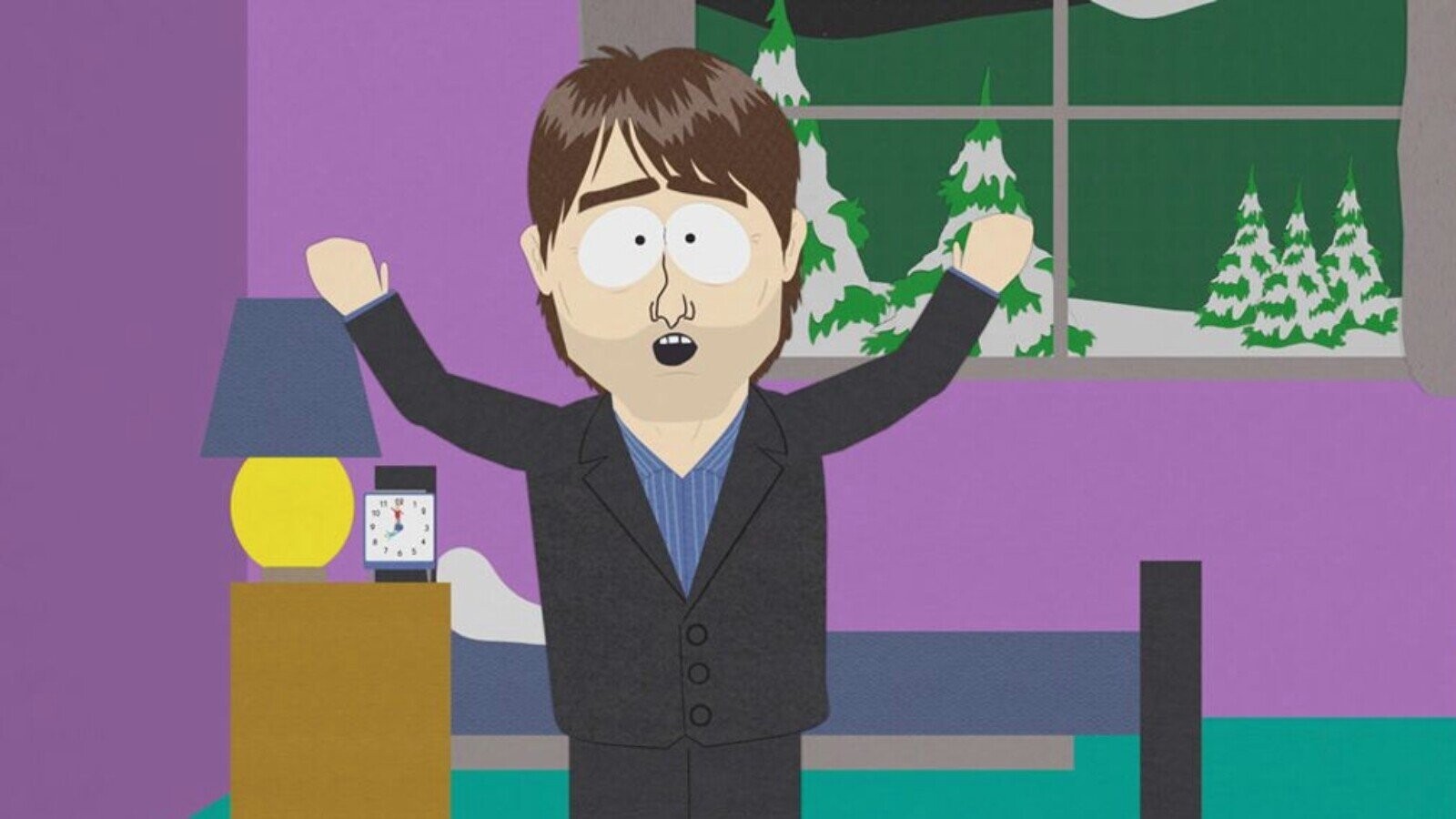
This Scientology-focused episode became one of the defining South Park controversies. It mocked celebrity culture, religious secrecy, and Hollywood power structures. It also became part of the larger public conversation after Isaac Hayes, the voice of Chef and a Scientologist, left the series.
“200” and “201”
These episodes are controversial not just because of religious imagery but because the controversy became part of the episode’s meaning. South Park was satirizing fear, censorship, and the uneven rules of public offense, then the real world responded by proving the topic was anything but theoretical.
The Bigger Question: Who Controls TV History?
The South Park streaming debate fits into a much larger issue in digital entertainment: who controls access to controversial cultural history? Streaming platforms are not libraries in the public-service sense. They are businesses. Their job is to attract subscribers, protect brands, manage risk, and keep shareholders from muttering darkly during investor calls.
That does not make every removal censorship in the strictest sense. A private platform choosing not to host an episode is not the same as a government banning it. But from the viewer’s perspective, the result can feel similar: a piece of pop culture becomes harder to legally watch, discuss, quote, teach, or critique.
This is especially important for satire. Satire is not always polite, balanced, or comfortable. Sometimes it is brilliant. Sometimes it ages like milk in a hot car. Often it does both in the same 22 minutes. But when controversial episodes disappear, audiences lose the ability to judge them in context. The conversation becomes secondhand. People argue over reputation instead of content.
What Paramount+ Should Do
The best solution is not complicated: transparency. If an episode is missing, say why. If it is unavailable in one country because of local standards, explain that. If it is excluded globally because of safety concerns, say that plainly. If an episode is edited, label it. Viewers may still disagree, but at least they are not left playing detective with a season guide and a Reddit thread.
Paramount+ also has options beyond silent removal. The platform could use content advisories, historical-context cards, age gates, or curated collections that explain why certain episodes are controversial. That approach treats viewers like adults, which is appropriate because South Park is very much not a bedtime cartoon unless your goal is to raise a child who quotes Cartman during parent-teacher conferences.
500-Word Experience Section: Watching South Park in the Streaming Era
Following South Park in the streaming era feels less like watching a TV show and more like tracking a fugitive with a complicated legal team. One month the library is on one platform. Then the specials are somewhere else. Then a season is available, but one episode is missing. Then another viewer in another country says they can see the episode just fine, which is helpful in the same way that being told there is pizza in another building is helpful when you are hungry.
The experience also changes how fans talk about the show. Years ago, if someone mentioned a controversial episode, you could find it in a DVD box set, catch a rerun, or borrow a disc from that one friend who alphabetized everything and owned too many novelty mugs. Now, the conversation often starts with availability. Before fans debate whether an episode was clever, offensive, misunderstood, or just aggressively 2003, they have to ask whether it can legally be watched at all.
That creates a strange kind of nostalgia. The older South Park episodes feel like artifacts from a wilder internet and television age, when Comedy Central could air something outrageous and the next day everyone argued about it at school, at work, or on message boards with usernames like “CartmanRules420.” Streaming was supposed to make those archives easier to access. Instead, it sometimes makes them feel more fragile.
As a viewer, the frustrating part is not that platforms have standards. Every distributor has standards. The frustrating part is inconsistency. South Park is a show that has mocked religion, politics, celebrities, climate denial, terrorism, war, sexuality, corporate greed, moral panic, and streaming itself. If the catalog is going to be filtered, fans want to know the logic. Why one episode and not another? Why is something available in the United States but missing elsewhere? Why does a platform promote the show’s fearless reputation while quietly hiding the episodes that made that reputation complicated?
That tension is exactly why the streaming migration matters. South Park is not just background content. It is a record of what American television was willing to say, what it later regretted, and what corporations now prefer to manage quietly. The show is often crude, sometimes brilliant, occasionally exhausting, and almost always useful as a cultural temperature check. Removing episodes without explanation does not erase controversy; it simply moves the controversy from the episode itself to the platform controlling it.
For longtime fans, the ideal future is not a reckless free-for-all or a sanitized archive. It is a complete, clearly labeled catalog that lets adults decide what to watch. Give viewers warnings. Give them context. Give them the option to skip. But do not pretend an episode never existed. South Park became famous because it ran directly toward uncomfortable subjects while everyone else checked the emergency exits. Its streaming home should have enough nerve to acknowledge that history, even when the history arrives wearing a parka and carrying a lawsuit-shaped snowball.
Conclusion
South Park’s latest streaming migration is more than a platform shuffle. It is a test of how modern media companies handle controversial archives. Paramount+ may be the most logical home for the series, especially with new episodes and the back catalog under one roof. But the real question is whether that roof covers the whole house or quietly locks a few rooms upstairs.
The confirmed ban-list history centers on five episodes tied to Muhammad-related controversies. The rumored expanded list remains unconfirmed, but fan concern is understandable because international availability has already shown inconsistencies. For a show that built its legacy on challenging taboos, missing episodes are not small footnotes. They are part of the argument over what streaming platforms owe viewers: convenience, context, transparency, or simply whatever version of the past causes the least corporate indigestion.
If Paramount+ wants to become the definitive home of South Park, it should do more than host the easiest episodes. It should be clear about what is available, what is missing, and why. In a streaming world where yesterday’s classic can become tomorrow’s invisible file, transparency might be the one joke everybody can appreciate.