

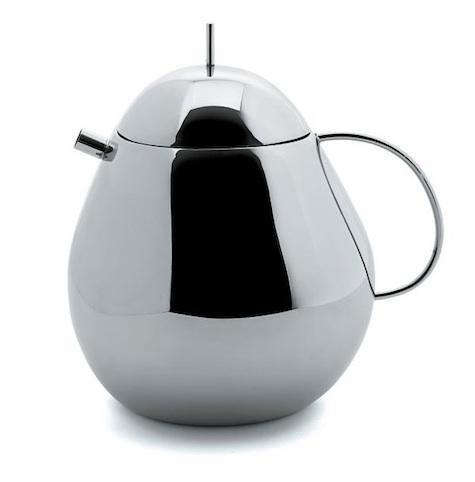
Some tableware shouts. Some tableware wears a tiny bow tie and waits politely for you to notice. Then there is Sanaa Architects for Alessi, a tabletop story so quiet, polished, and oddly poetic that it feels less like a tea service and more like a small architectural neighborhood where the buildings happen to pour coffee.
Designed by Kazuyo Sejima and Ryue Nishizawa, the Japanese architects behind SANAA, the Alessi pieces connected to the Fruit Basket and Tea & Coffee Towers projects turn everyday tabletop objects into miniature studies of form, reflection, and ritual. The result is not loud luxury. It is refined, slightly mysterious, and very good at making a tray look more intelligent than most conference rooms.
At first glance, the collection seems simple: stainless steel objects, smooth silhouettes, a tray, containers, a teapot, a sugar bowl, and related service pieces. But spend a little time with them and the design begins to open up. These are not just “things for tea.” They are tiny architectural gestures, inspired by fruit gathered in a basket, translated into polished metal, and made useful for the table.
Who Are SANAA?
SANAA is the Tokyo-based architecture practice founded by Kazuyo Sejima and Ryue Nishizawa. The duo is known for buildings that feel light, transparent, and calmly radical. Their work often avoids heavy visual drama, choosing instead to shape space through subtle curves, delicate surfaces, open plans, and a careful relationship between people and environment.
If many architects design buildings like monuments, SANAA often designs them like conversations. Their projects do not usually pound the table and announce, “Look at me, I am important.” Instead, they invite movement, reflection, and discovery. That same attitude appears beautifully in their tabletop work for Alessi.
The connection between SANAA and Alessi makes sense because both names are associated with experimentation. Alessi, the Italian design company founded in 1921, has long treated household objects as cultural objects. The brand is famous for asking architects, artists, and industrial designers to rethink ordinary things: kettles, trays, spoons, bowls, coffee makers, and all the small domestic characters that live in our kitchens.
Alessi and the Art of Making Everyday Objects Unforgettable
Alessi has never been satisfied with making housewares that simply behave. A spoon can be just a spoon, yes, but in the Alessi universe it may also be a joke, a sculpture, a memory, or a tiny metal opera. This is why the company has worked with major design figures and architects for decades, creating objects that sit somewhere between utility and collectible design.
The Tea & Coffee Towers project continued that tradition by asking internationally known architects to reinterpret the tea and coffee service. Instead of designing a building at city scale, the architects were asked to think at tabletop scale. The challenge was deliciously strange: compress architectural thinking into objects that hold cream, sugar, tea, coffee, and hospitality.
SANAA’s response was especially memorable because it resisted the obvious. Rather than producing a dramatic tower or a hard-edged miniature skyscraper, Sejima and Nishizawa looked toward the soft familiarity of fruit gathered together. Pear-like, apple-like, and rounded forms became the language of the service. It is architecture, but architecture with dimples, curves, and very good manners.
The Fruit Basket Concept: A Still Life You Can Pour From
The phrase Fruit Basket is more than a product name. It explains the emotional intelligence of the design. A fruit basket is domestic, casual, and quietly generous. It suggests abundance without fuss. There may be apples, pears, perhaps a lemon rolling around like it has somewhere important to be. SANAA translated that informal arrangement into a family of tabletop pieces whose rounded metal bodies gather together like fruit on a tray.
That is the charm of the collection. It does not treat tableware as separate, isolated objects. It treats the group as a composition. Each piece matters on its own, but the full effect appears when the objects sit together. The tray becomes a landscape. The teapot becomes a sculptural volume. The containers become little polished companions. The table becomes a stage, and breakfast suddenly has better architecture than your office lobby.
Why the Forms Feel So Calm
The forms are smooth, reflective, and restrained. They do not rely on handles shaped like birds or lids shaped like circus hats. Instead, the beauty comes from proportion, surface, and grouping. The pieces feel soft even though they are made from metal. That contrast is central to the design: hard material, gentle shape.
The polished stainless steel also plays a clever role. It reflects the room, the table, the fruit, the flowers, the person pouring tea, and possibly the face you make when you realize your mug collection suddenly seems emotionally underdeveloped. Reflection helps the pieces disappear and appear at the same time. They are visually present, but they borrow their atmosphere from everything around them.
From Limited Silver to Stainless Steel
The original Tea & Coffee Towers project included limited-edition pieces produced in precious materials, including silver. Over time, elements of SANAA’s Fruit Basket idea became available in more accessible versions made from 18/10 stainless steel. This move is important because it takes the concept out of the purely collectible category and closer to real domestic life.
That does not mean the pieces are ordinary. Stainless steel gives them durability, shine, and everyday practicality, but the design remains refined. In a world full of aggressively decorative tableware, SANAA’s pieces feel almost meditative. They are not trying to win the talent show. They are trying to make the tea service feel like a thoughtful event.
What Makes SANAA’s Alessi Tabletop Design Special?
1. It Turns Use Into Ritual
Pouring tea is already a ritual, but good design makes the ritual visible. With SANAA’s Alessi pieces, the act of serving becomes slower and more intentional. You notice the way the teapot sits on the tray. You notice the weight of the metal. You notice reflections sliding across the surface. Suddenly, adding milk is not just adding milk. It is a small ceremony, minus the need for a velvet rope.
2. It Brings Architecture Down to Human Scale
Architecture is often discussed in huge terms: museums, campuses, towers, cities. But architecture is also about how bodies move, how surfaces meet, and how objects shape behavior. SANAA’s tabletop work proves that architectural thinking can fit on a dining table. The same attention to circulation, grouping, light, and experience applies whether the project is a museum or a tray full of tea objects.
3. It Makes Minimalism Feel Warm
Minimalism sometimes gets accused of being cold, especially when it forgets that humans enjoy soup, clutter, and emotionally significant spoons. SANAA avoids that problem. The Fruit Basket forms are minimal but not sterile. Their inspiration comes from fruit, one of the most familiar sights in domestic life. That natural reference gives the collection warmth without adding decoration for decoration’s sake.
4. It Works as Both Tableware and Display
The collection is functional, but it also holds its own as a centerpiece. A Fruit Basket tray can serve food, hold objects, or simply sit on a console looking quietly expensive. The teapot and related containers are useful, but they also read as sculpture. This dual identity is one reason Alessi objects have such staying power: they do their job, then hang around looking cultured.
How to Style Sanaa Architects for Alessi on the Table
Because the design is polished and restrained, it works best when given a little breathing room. Pairing the pieces with simple linen napkins, white porcelain, clear glassware, or natural wood lets the metal forms shine without turning the table into a reflective spaceship. Unless, of course, “reflective spaceship breakfast” is your theme, in which case please send invitations.
For a modern breakfast table, place the stainless steel tray at the center with a small bowl of pears or green apples nearby. This echoes the original fruit basket inspiration without becoming too literal. Add matte ceramics to balance the shine. A linen table runner can soften the overall look and prevent the setting from feeling too showroom-perfect.
For an evening tea service, keep the palette calm: warm white cups, a small vase, neutral napkins, and perhaps one dark accent such as black stoneware or smoked glass. The polished steel will catch candlelight beautifully. The goal is not to overcrowd the setting. SANAA’s design thrives on space, so let the objects have room to breathe.
Design Lessons From the Collection
Small Objects Can Carry Big Ideas
The most obvious lesson is that scale does not limit meaning. A teapot can explore many of the same ideas as a building: volume, balance, material, relationship, and movement. When SANAA designs for Alessi, the tabletop becomes a miniature city of soft metallic forms.
Inspiration Does Not Have to Be Loud
The fruit basket reference is humble. It is not mythological, futuristic, or painfully overexplained. That humility is precisely why it works. Good design often begins with looking carefully at something ordinary. A pear on a table may not seem like an architectural breakthrough, but in the right hands, it becomes a complete design language.
Utility and Poetry Can Share a Room
One of the best things about Alessi’s design culture is that it refuses to separate usefulness from imagination. SANAA’s tabletop pieces are practical enough to serve, pour, hold, and present, yet poetic enough to make people pause. That pause is valuable. In modern homes, where everything is optimized, rushed, and occasionally yelling through a notification, a quiet object can feel surprisingly luxurious.
Buying and Collecting Considerations
Collectors are often drawn to SANAA’s Alessi work because it connects several desirable worlds: Japanese contemporary architecture, Italian industrial design, limited-edition design culture, and functional tabletop objects. Original limited editions can command attention in the design market, while stainless steel production pieces appeal to buyers who want the look and concept in a more usable format.
When evaluating pieces, look closely at condition, finish, authenticity, and completeness. Polished stainless steel can show scratches, fingerprints, and signs of use, which may or may not bother you depending on your personality and your tolerance for evidence that humans exist. For collectible examples, original packaging, documentation, and matching sets can add value.
For everyday use, the appeal is different. You are not just buying a famous name. You are buying a daily object with a point of view. The best reason to own SANAA for Alessi is that you enjoy the quiet drama of design that improves ordinary rituals.
Why It Still Feels Contemporary
Design trends come and go. One year everything is rustic farmhouse, the next year everyone wants mushroom lamps and chairs that look like friendly marshmallows. SANAA’s work for Alessi avoids feeling dated because it does not lean heavily on trend. Its language is based on proportion, restraint, reflection, and organic form.
That makes the collection adaptable. It can sit in a minimalist apartment, a design collector’s home, a modern kitchen, or a layered interior with vintage pieces. It does not demand a matching lifestyle. You do not need to live in a glass pavilion or casually say “spatial continuity” at brunch. You only need a table and an appreciation for objects that whisper instead of shout.
Experience Section: Living With the Idea of Sanaa Architects for Alessi
To understand the appeal of Tabletop: Sanaa Architects for Alessi, imagine setting a weekend table without rushing. The room is still waking up. The coffee is not ready yet, which means civilization is technically on pause. You place a polished stainless steel tray at the center of the table, and immediately the setting changes. The tray reflects the ceiling light, the cup handles, the edge of a folded napkin, and the small bowl of fruit nearby. Nothing dramatic has happened, yet the table feels composed.
This is where SANAA’s design becomes experiential rather than merely visual. The pieces encourage you to notice relationships. The curve of a teapot beside the curve of a pear. The way a sugar bowl seems less like a container and more like a small companion object. The way the tray gathers everything together without forcing symmetry. It feels natural, but it is not accidental. That is the quiet intelligence of the collection.
Using objects like these also changes the pace of serving. You may find yourself pouring tea more carefully, not because the object is fragile, but because it asks for attention. The hand slows down. The eye follows the reflection. The ordinary act becomes slightly ceremonial. Nobody needs to announce this at the table. In fact, please do not pause breakfast to deliver a lecture titled “Domestic Ritual and Reflective Form.” Just let the objects do the talking. They are better at being subtle.
The experience is especially strong when the surrounding table is simple. A plain white cup suddenly looks intentional. A linen napkin looks softer beside the metal. Fruit looks more sculptural. Even toast seems to behave better, although toast remains a crumb-based rebel at heart. The SANAA pieces do not decorate the table in the traditional sense. They organize attention.
There is also something pleasing about the mismatch between architectural fame and domestic intimacy. SANAA is known for major cultural buildings, but here the same design sensitivity appears in objects you can touch, move, clean, and use. That shift from museum scale to breakfast scale is delightful. It reminds us that design is not only about landmarks. It is also about the little moments that happen before the day gets noisy.
Living with this kind of tabletop design does not mean treating the dining area like a museum. The best version is practical. Use the tray. Serve tea. Put fruit on it. Let it collect reflections and tiny signs of life. Good design should not sit around looking nervous. It should participate. SANAA for Alessi succeeds because it can be admired and used, studied and enjoyed, placed in a design conversation or simply placed beside a plate of cookies. That flexibility is the real luxury.
Conclusion: A Quiet Icon for the Modern Table
Sanaa Architects for Alessi is a beautiful example of what happens when architectural thinking enters the domestic world without becoming stiff or self-important. The Fruit Basket and Tea & Coffee Towers connection reveals SANAA’s gift for transforming simple inspiration into refined form. These pieces are polished, calm, functional, and poetic. They prove that tabletop design can be more than a supporting actor in the dining room. Sometimes, the tray has the best lines.
For design lovers, collectors, and anyone who believes breakfast deserves better scenery, SANAA’s Alessi work remains a thoughtful choice. It brings together Japanese minimalism, Italian manufacturing culture, architectural imagination, and the universal pleasure of gathering around a table. Not bad for objects that also know how to hold sugar.