

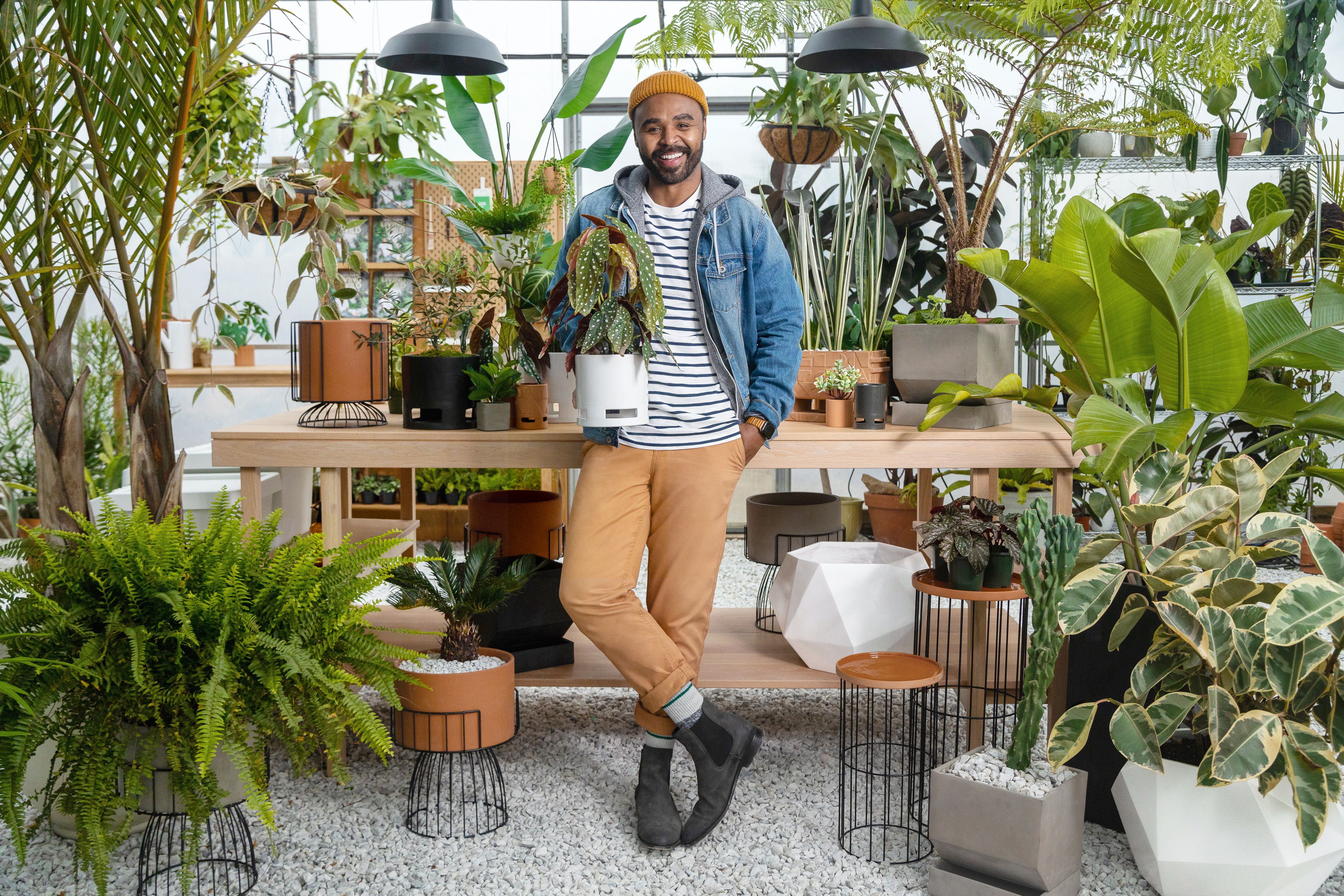
Spring has a way of convincing us we’re new people. Suddenly you’re alphabetizing spices, buying linen napkins, and telling your friends you’re “getting into gardening” like it’s a hobby and not a personality reboot. And if you needed a sign to lean all the way in, Target just dropped one with a bullseye.
Enter: Hilton Carterplant stylist, author, and the guy who can make a pothos look like it has a publicist. His latest Target collection is a tightly edited lineup of 30 spring planting essentials that hits the sweet spot: equal parts function and “yes, I meant to style that corner”.
This isn’t just about buying another pot (although… yes, that too). It’s about setting up your plantsand your space to look intentional, thrive longer, and require fewer emergency “why is it crispy?” Google searches.
Why This Target x Hilton Carter Drop Is a Big Deal (Even If You’ve Killed a Cactus)
Target didn’t team up with Hilton Carter once and call it a day. The partnership started with a larger, limited-edition collaboration and evolved into an ongoing relationship that keeps bringing fresh “plant parent” gear to store shelves. The vibe has stayed consistent: modern shapes, approachable price points, and pieces that make plants feel like living artwithout the “gallery lighting and a security guard” energy.
The newest spring drop focuses on the stuff you actually use (and stare at daily): planters, plant stands, and faux greenery. Many pieces are designed to work indoors or outside, so your patio and your bookshelf can finally stop competing for who gets the nice accessories.
Also worth noting: this particular assortment is about accessories and faux plants, not live plants. Translation: you’re not adopting a living thing at checkout. You’re adopting the tools that make living things easier. That’s a responsible commitment level. We love growthemotionally and botanically.
What’s Inside the 30-Piece Spring Planting Essentials Line
Think of this collection like a capsule wardrobe, but for your plants. The pieces are meant to mix well together: warm terracotta, clean ceramic, grounded concrete, and modern resin shapes that don’t scream “I panic-bought this while waiting for pickup.”
The smartest detail? Several planters are designed to play nicely with standard nursery pots. That means you can upgrade the look instantly without repotting drama, root shock, or spilling potting mix in a way that makes you question your life choices.
The 30 Spring Planting Essentials Checklist
Below is a practical, shop-smart breakdown of the kinds of essentials this line highlightsplus a few “don’t forget these” add-ons that help you get the most out of your new Target plant accessories.
A. Statement Planters (Your Plant’s New Apartment)
- Footed terracotta planter – Terracotta dries faster, making it a natural match for cacti and succulents (aka plants that appreciate your busy schedule).
- Geometric terracotta planter – Same breathy benefits, with a shape that looks like it belongs in a design magazine.
- Self-watering concrete planter – A sleek “waterless” style that can feed moisture over time (great when you want consistency without hovering).
- Minimalist concrete planter – Concrete can insulate the root zone better than thin plastic pots, which is handy for warmer-season plants.
- White ceramic planter with airflow-friendly base – Designs that elevate the soil area can improve air circulation, helping roots stay healthier.
- Black ceramic planter (glazed) – Glaze holds moisture longer, which can reduce watering frequency for thirstier houseplants.
- Stoneware planter (small) – Perfect for windowsills, desks, and “I want green but not a jungle” spaces.
- Stoneware planter (medium) – The reliable workhorse size for pothos, philodendrons, or that plant you impulse-bought because it was “cute.”
- Faceted composite/resin planter – Lightweight, durable, moderngreat for rearranging your space without needing a chiropractor.
- Long rectangular planter box – Ideal for herbs, porch setups, or lining a railing with something prettier than regrets.
B. Plant Stands & Elevators (Because Height = Drama)
- Metal wire plant stand – Gives you vertical variety so your plants stop looking like they’re waiting in line at the DMV.
- Terracotta-accent stand – Earthy base + modern frame is a reliable “goes with everything” combo.
- Terrazzo-style stand – A bold texture moment that still reads clean and modern.
- Pedestal planter stand – Makes even a basic nursery pot look curated.
- Stackable planters – Build your own tiers and create a mini plant “stadium” without buying a whole shelving unit.
- Rolling plant caddy (optional add-on) – Not glamorous, but moving a heavy pot without dragging it across your floor is peak adulting.
C. Faux Greenery That Doesn’t Scream “Plastic”
- Faux hanging fern – Great for bathrooms, corners, and anywhere sunlight is basically a rumor.
- Faux polka dot begonia – Patterned leaves add visual energy without any watering schedule whatsoever.
- Faux string of pearls – All the trailing charm, none of the “why did it suddenly melt?” mystery.
- Faux staghorn-style hanging plant – Adds shape and height; works especially well in boho or rustic rooms.
- Faux bird of paradise (tall) – The dramatic corner filler that makes your place look like it has a lobby.
- Faux monstera – A classic “I love the look, but I travel” solution.
D. Watering & Care Essentials (The “Keep It Alive” Section)
- Watering can – A controlled pour is kinder to soil structure than dumping water from a giant cup.
- Plant mister (optional add-on) – Useful for humidity-loving plants and for feeling like a gentle woodland caretaker.
- Drainage-friendly saucers/trays – Protects surfaces and helps you avoid the dreaded “mystery ring” on furniture.
- Soil moisture check method – Even without a fancy meter, lifting pots or checking soil by hand helps prevent overwatering.
E. Spring Planting & Seed-Starting Basics (Make the Accessories Count)
- Sterile seed-starting mix – A lightweight, clean mix reduces disease risk compared with garden soil in trays.
- Seed trays or small starter pots – Keeps seedlings organized and makes transplanting less chaotic.
- Grow light or strong supplemental light plan – Seedlings often need long, bright days indoors to avoid getting leggy.
- Hardening-off routine – Gradually acclimate seedlings to outdoor conditions before planting, so they don’t go into shock.
Pro tip: If you’re trying to keep spending reasonable, prioritize the “infrastructure” pieces firstplanters that fit your style, one or two stands, and at least one watering solution you’ll actually use. The faux greenery can come later when you’re ready to “finish the room.”
How to Pick the Right Planter Material (So Your Plant Isn’t Fighting the Pot)
Terracotta: for drier-soil plants and forgetful waterers
Terracotta naturally lets moisture escape faster, which is why it’s a strong match for succulents and cacti. If you tend to water “just to be safe,” terracotta is the friend who gently takes the watering can away from you.
Ceramic (glazed): for plants that like steadier moisture
Glazed ceramic holds moisture longer than terracotta, which can reduce how often you need to water. If you’re growing ferns, spider plants, or other leafy houseplants that don’t love drying out, this is an easy upgrade.
Concrete and resin: for modern looks and durability
Concrete leans minimalist and substantial, while resin/composite planters tend to be lighter and easier to move. If you’re constantly rearranging your plant display (no judgmentspring energy is real), lightweight durability matters.
Airflow details: the underrated game-changer
Some planters use raised bases or built-in trays that allow air to move through the soil zone. Better airflow can help prevent soggy, unhappy rootsespecially if you’re growing indoors where evaporation is slower.
Hilton Carter–Style Plant Styling Rules You Can Steal
You don’t need 200 plants or a design degree to make your plant setup look intentional. You need a few styling principles (and maybe one stand that gives your favorite plant a little main-character elevation).
1) Let the planter be part of the “art,” not the afterthought
A sculptural planter deserves a plant that doesn’t hide it. Upright plantslike palmsshow off the pot’s shape and texture better than a giant leafy blob that swallows the rim.
2) Build height in layers
Mixing floor planters, stands, and tabletop pots creates depth. The goal is a relaxed, lived-in looknot a flat row of identical pots that says “I bought everything at once and I regret nothing.”
3) Use faux greenery strategically
Faux plants are not “cheating.” They’re interior design with a stable schedule. Put them where real plants struggle: dim corners, windowless bathrooms, or high shelves you can’t reach without negotiating with a step ladder.
4) Keep color tones consistent, then add one “surprise”
A tight palette (terracotta, black, white, concrete) looks elevated fast. Then add one momentlike a patterned faux plant or a bold geometric potto keep it from feeling too sterile.
Spring Planting Tips That Pair Perfectly With This Collection
Accessories are great, but the real glow-up happens when the plant care matches the aesthetic. Here are the high-impact habits that make your new spring planting essentials actually earn their shelf space.
Start seeds with the right “soil” (it’s usually not soil)
If you’re starting seeds indoors, use a sterile seed-starting mix rather than scooping soil from outside. Seed-starting mixes are designed to be lighter and cleaner, which helps young roots establish without battling pathogens.
Light matters more than pep talks
Most seedlings need long, bright days indoors to grow sturdy instead of stretchy. A sunny window can work, but supplemental lighting often produces stronger, stockier growth if your indoor light is limited.
Hardening off: the step people skip, then blame “bad luck”
Before moving seedlings outside full time, gradually acclimate them to sun, wind, and temperature swings. Think of it like letting your plants “train” for the outdoors instead of throwing them into the botanical Hunger Games.
Container watering: check more often than you think
Pots can dry out quicklyespecially in sun, wind, or porous containers. Get in the habit of checking moisture regularly and watering thoroughly until water drains out. That’s how you hydrate roots instead of just wetting the top inch of soil.
Self-watering planters are helpful, not magical
Self-watering systems typically use a reservoir plus wicking action to supply moisture to the root zone. They’re excellent for consistency, but you still need to monitor how quickly your plant drinksespecially as temperatures change in spring.
How to Shop the Collection Like a Calm Person
Plant drops can feel like sneaker releases, except instead of rare Jordans it’s a terracotta planter that makes your fiddle leaf fig look emotionally stable. Here’s how to shop without spiraling:
- Start with your plant “problem.” Need better drainage? Choose terracotta. Forget to water? Try glazed ceramic or self-watering.
- Measure first. Know your nursery pot sizes and the space where the planter will liveespecially if you’re eyeing stands.
- Buy in a mini set. One statement planter + one stand + one small faux hanging plant can transform a room more than ten random items.
- Expect seasonal availability to shift. Pieces may sell out or rotate, so build your setup around a cohesive palette, not a single SKU.
of Real-World Experience: What Plant Parents Usually Learn the Fun Way
Here’s the part nobody tells you when you start building a spring planting setup: the accessories don’t just “organize” your plants they change how you behave around them. A good planter is basically a habit-forming device with better aesthetics.
For example, the moment you switch from mismatched plastic nursery pots to a coordinated planter lineup, you start noticing patterns: the terracotta pots dry out faster (great for succulents), the glazed ceramic stays damp longer (great for leafy plants), and suddenly you realize your “watering schedule” has been more like a freestyle jazz performance.
Plant stands create another surprise: they don’t just elevate plants; they elevate you. The second your favorite plant is lifted to eye level, you actually look at it more often. And when you look at a plant more often, you catch issues earlierdroopy leaves, dry soil, or the first sign of pests. It’s the botanical version of putting healthy snacks at the front of the fridge: visibility changes outcomes.
Faux greenery has its own emotional arc. Many people start skeptical (“I want real plants!”), then discover the joy of placing a faux hanging fern in a windowless bathroom and experiencing peace for the first time. No yellowing. No fungus gnat circus. Just vibes. And once you accept faux plants as design tools, you can reserve your real-plant energy for the places that actually support growth.
Self-watering planters, meanwhile, tend to teach a humbling lesson: consistency is powerful, but observation still wins. Plants don’t drink the same amount every week. Spring warms up, light shifts, and what worked in early April might be too wet by late May. People who thrive with self-watering setups usually treat them like cruise controlnot autopilot. You still glance at the “dashboard” (soil moisture and plant health), you just stop doing constant pedal work.
And then there’s seed startingoften the most optimistic activity a human can do indoors. You plant tiny seeds, whisper encouragement, and set up a grow light like a tiny nightclub for seedlings. The experience usually goes one of two ways: either your seedlings grow leggy because the light wasn’t strong enough, or they grow beautifully and then collapse outdoors because you skipped hardening off. The win comes from the in-between approach: use a clean seed-starting mix, give seedlings enough light, keep moisture steady, and ease them outside gradually. The plants don’t need motivational speeches; they need a better transition plan.
The biggest takeaway people report after upgrading their “plant gear” is this: when your tools and planters are attractive, you’re more likely to use them. You water more thoughtfully. You check soil instead of guessing. You repot with less dread because your setup feels intentional. In that sense, a well-designed Target x Hilton Carter planter isn’t just decorit’s a gentle nudge toward better plant care. And honestly? We could all use a gentle nudge in spring. Preferably one that looks great on a shelf.