

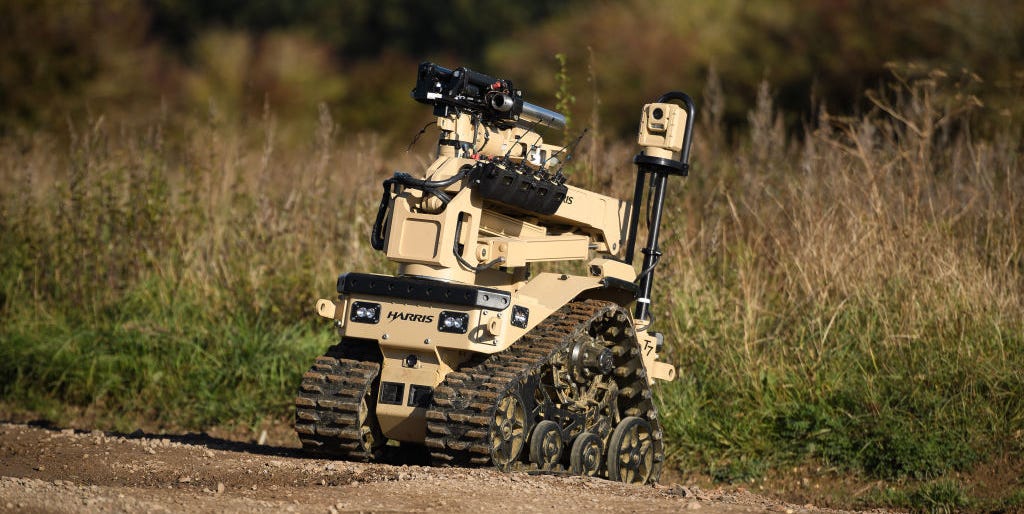
Robots with living muscle tissue sound like something a screenwriter would pitch after drinking three coffees and watching every “Terminator” movie in one weekend. But the U.S. Army’s interest in biohybrid robotics is not just science fiction wearing combat boots. It is a serious research direction aimed at solving one of robotics’ most stubborn problems: machines are strong, programmable, and tireless, but they still move through the real world with all the natural grace of a shopping cart with one bad wheel.
The Army’s research community has explored whether living muscle tissue could help future robots move with more agility, adaptability, and efficiency. The idea is not to grow an army of fleshy androids that say “beep” in a gym locker room. The goal is to understand how biological muscle, engineered tissues, soft materials, sensors, and robotic structures can work together. This field is called biohybrid robotics, and it combines living cells or tissues with mechanical systems to create machines that behave more like organisms.
At first glance, the phrase “living muscle robots” feels wonderfully strange. Look closer, though, and it becomes easier to understand why researchers are interested. Animals run, jump, crawl, grip, flap, swim, and recover from unpredictable terrain in ways that even expensive robots struggle to match. A mountain goat does not need a software update before stepping across rocks. A bird does not need a wheeled chassis to dodge branches. A human hand can pick up a strawberry without turning it into jam. Muscle is one of nature’s best actuators, and the Army wants to know whether robotics can borrow some of that biological genius.
What Does “Living Muscle Tissue” in a Robot Actually Mean?
In robotics, an actuator is the part that creates movement. Traditional robots use motors, hydraulics, pneumatics, gears, cables, and artificial muscles made from synthetic materials. These systems can be powerful, but they often have trade-offs. Motors can be rigid. Hydraulics can be heavy. Pneumatic systems may need compressors. Gears can be noisy and mechanically complex. Synthetic actuators can imitate muscle-like behavior, but they rarely match the full package biology offers.
Living muscle tissue, by contrast, contracts when stimulated. It can generate force, respond to electrical signals, adapt under repeated use, and operate with remarkable efficiency at small scales. In a biohybrid robot, muscle cells may be grown in a lab, aligned on a scaffold, attached to a flexible structure, and stimulated so that their contractions move a robotic limb, fin, gripper, or joint.
Think of it as building a robot that uses biology as part of its engine. The metal, polymer, hydrogel, electrode, and circuit components provide structure and control. The living muscle tissue provides motion. It is not a creature in the ordinary sense. It is not conscious, not plotting, and not asking for a protein shake. It is engineered tissue doing what muscle does best: contracting.
Why the U.S. Army Cares About Biohybrid Robotics
The Army’s interest is easy to understand once we look at military environments. Soldiers may operate in forests, mountains, rubble, tunnels, deserts, cities, and disaster zones. Those places are rude to robots. Wheels get stuck. Tracks struggle over complex obstacles. Legged robots can be impressive, but they still face challenges with balance, energy consumption, terrain adaptation, and durability.
Army researchers have described the value of future robots that can go where soldiers go, adapt to changing terrain, and support missions without requiring constant babysitting. That vision is not limited to battlefield combat. Agile robotic systems could help with reconnaissance, supply movement, search and rescue, hazardous material inspection, casualty evacuation support, infrastructure assessment, and other tasks where sending a person first may be dangerous.
Biohybrid robotics is attractive because animals already solve many of these problems. Legs adjust to uneven ground. Wings deform in flight. Muscles work with tendons, ligaments, and nervous systems to produce motion that is both strong and compliant. A robot using muscle-like actuation might better absorb shocks, adjust force, and move through messy environments without snapping a rigid component every time the world refuses to be flat.
From Legged Robots to Flapping-Wing Drones
Early Army-linked discussions of biohybrid robotics have focused on legged platforms and potentially flapping-wing drones. That makes sense. Legs and wings are two places where biology makes engineering look a little embarrassed.
Legged platforms
Legged robots are useful because they can step over obstacles instead of needing a smooth road. However, building a leg is not the same as building a good leg. A useful robotic leg needs strength, shock absorption, balance, fast response, and fine control. Living muscle tissue could theoretically assist with some of those needs, especially if paired with artificial tendons, soft joints, embedded sensors, and intelligent control software.
Imagine a small scout robot stepping over broken concrete after a natural disaster. A rigid actuator might push too hard, slip, or waste energy. A muscle-based system could potentially provide a more compliant response, adjusting to the surface instead of fighting it like a stubborn folding chair.
Flapping-wing drones
Small aerial robots also face limits. Quadcopters are useful, but they are not birds. They can be noisy, power-hungry, and less effective in tight environments with branches, wires, or clutter. Nature’s flying systems use flexible wings that change shape during motion. Biohybrid actuation might one day help create tiny flying machines with more natural wing movement, better maneuverability, and lower energy use.
This does not mean tomorrow’s drone will have chicken wings and a security clearance. It means researchers are asking whether living tissue can help robotic wings flap, flex, and respond in ways that rigid motors cannot easily reproduce.
How Biohybrid Robots Are Built
A biohybrid robot usually requires several key ingredients. First, scientists need living cells, often skeletal muscle cells or cardiac muscle cells. Skeletal muscle is useful when researchers want controlled movement, such as walking or gripping. Cardiac muscle is useful for rhythmic motion, such as pumping or swimming, because it naturally contracts in repeated patterns.
Second, the cells need a scaffold. Muscle cells do not magically arrange themselves into a useful robot part just because someone in a lab coat whispers, “Please become a bicep.” They must be grown on materials that help them align, mature, attach, and contract in the desired direction. Hydrogels, soft polymers, 3D-printed structures, and engineered biomaterials can all play a role.
Third, the system needs stimulation. Muscle tissue can be activated with electrical signals, chemical cues, optical stimulation, or other methods depending on the design. Electrodes and soft electronic interfaces are especially important because they can deliver signals while reducing damage to delicate tissue.
Fourth, the robot needs control. Moving one muscle is hard enough. Coordinating many muscles is a whole new circus. Real animals rely on nervous systems, feedback, reflexes, and learning. Biohybrid robots need sensors, algorithms, and closed-loop control systems so they can respond to changing conditions instead of simply twitching like a science fair project with ambition.
Why Muscle Is So Appealing as an Actuator
Muscle has several qualities engineers envy. It is soft, which helps with safe interaction and shock absorption. It can be energy efficient, especially compared with some small-scale synthetic actuation systems. It can be grown into different shapes. It can respond to stimulation. It can adapt with use, and in some experimental contexts, engineered muscle can show fatigue and recovery patterns similar to natural tissue.
That last point is fascinating. A normal robot part wears down with use. Muscle can sometimes strengthen with use, provided it receives the right conditions. This raises a strange but important possibility: future muscle-powered robots may need something like exercise routines. Somewhere, a researcher may one day say, “The robot skipped leg day,” and for once, it will be technically meaningful.
The Big Challenges: Keeping the Tissue Alive
Here is where the excitement meets the giant practical wall. Living muscle tissue is not a steel spring. It needs the right environment. Cells may require nutrients, oxygen, moisture, proper temperature, pH balance, waste removal, and protection from contamination. In a laboratory dish, those needs can be managed. In the field, they become much harder.
A military robot operating outside a controlled lab would face heat, cold, dust, vibration, impacts, bacteria, drying, and long periods without maintenance. Living tissue does not enjoy those conditions. It is not a fan of deserts, mud, or being strapped to a robot and sent into a collapsed building. Researchers must therefore solve problems of tissue durability, vascularization, encapsulation, nutrient delivery, immune-like protection, and long-term viability.
Microfluidic systems may help by moving nutrients and removing waste through tiny channels, somewhat like artificial blood vessels. Protective materials may reduce dehydration and contamination. Better cell culture techniques may produce stronger, more reliable tissue. But these are major engineering hurdles, not small footnotes.
The Control Problem: Muscles Are Not Simple Motors
A motor can be commanded to rotate at a certain speed. Muscle is more complicated. It may respond differently based on temperature, fatigue, stimulation history, tissue maturity, alignment, and mechanical load. That makes control difficult.
For biohybrid robots to become useful outside the lab, they will need reliable feedback systems. Sensors must measure force, strain, position, and tissue condition. Controllers must adjust stimulation in real time. Machine learning may help coordinate multiple biological actuators, especially when the robot’s performance changes as the muscle adapts or fatigues.
This is one reason soft electronics are so important. Rigid electronics can irritate, damage, or mechanically mismatch soft tissue. Stretchable sensors and soft electrodes may provide better interfaces, allowing the robot to stimulate muscle gently while monitoring how it responds. In plain English: if you are going to wire a living muscle to a machine, the wiring had better not behave like a paper clip jammed into pudding.
Biohybrid Robotics Is Bigger Than the Army
The Army’s interest is only one part of a much larger scientific movement. Universities and research labs have demonstrated biohybrid swimmers, walkers, grippers, pumps, jellyfish-inspired systems, and even tissue-powered hand-like devices. Some systems use cardiac cells for rhythmic movement. Others use skeletal muscle for more controlled contraction. Researchers are also studying how biohybrid platforms could help medicine, prosthetics, drug testing, environmental monitoring, and soft robotics.
One of the most exciting demonstrations in recent research involved biohybrid hand concepts using lab-grown muscle tissues attached to flexible mechanical joints. These systems are still far from replacing ordinary robotic hands, but they show that living muscle can produce recognizable mechanical action, including grasping or gesture-like motion. That matters because hands are notoriously difficult to engineer. They need strength, subtlety, coordination, and softness. Basically, a hand is a robotics final exam with fingernails.
Potential Military Uses Without the Sci-Fi Panic
The phrase “Army robots with living muscle tissue” naturally invites dramatic headlines. But the practical applications would likely begin small, specialized, and experimental. The first useful systems may not look like humanoid soldiers. They may look like soft grippers, tiny crawlers, adaptive joints, micro-robots, or flexible drone components.
Possible military-related uses include robots that inspect dangerous spaces, move through rubble, collect environmental data, carry small sensors, assist in logistics, or explore terrain before humans enter. A biohybrid robot could be especially valuable where delicate interaction matters. For example, a soft gripper might handle fragile materials better than a rigid claw. A small crawling robot might move through irregular cracks. A flapping system might navigate cluttered spaces where conventional propellers struggle.
Even then, the technology would need to prove that it is more reliable, affordable, maintainable, and effective than conventional alternatives. Military systems do not get adopted because they sound cool. They must survive real conditions, be repairable, and justify their complexity. “It has living tissue” is not automatically an advantage if the robot needs more snacks, climate control, and emotional support than the soldiers it is supposed to help.
Ethical Questions and Public Concerns
Biohybrid robotics raises ethical questions. What kinds of cells are used? Are they animal-derived, human-derived, or stem-cell-derived? How are they sourced? What safety standards apply? Could living robotic systems contaminate environments? How should researchers handle disposal? What regulations govern machines that blur the boundary between device and tissue?
There are also public perception issues. People may be comfortable with robotic arms and prosthetics, but “robots with living muscle” sounds unsettling. Clear communication matters. Researchers and defense agencies need to explain what the technology is, what it is not, what safeguards exist, and why the work is being pursued. Without transparency, the public imagination will happily fill the gaps with movie villains, glowing laboratories, and a robot whispering, “I was grown, not manufactured.”
Why This Technology Is Still Early
Biohybrid robotics has made impressive progress, but it is still young. Many prototypes remain small, fragile, and dependent on controlled conditions. Scaling up from a lab demonstration to a rugged field robot is a massive leap. The larger the system, the harder it becomes to keep tissue alive, deliver nutrients, remove waste, coordinate movement, and maintain performance.
There is also the manufacturing challenge. Traditional robots can be assembled from standardized parts. Living tissue introduces biological variability. Two batches of engineered muscle may not behave identically. Quality control becomes more complicated. Storage and transportation become more demanding. Long-term reliability becomes a scientific puzzle wrapped inside an engineering puzzle, sprinkled with regulatory confetti.
Still, early-stage does not mean unimportant. Many technologies begin as awkward laboratory curiosities before becoming useful. The first computers were not exactly pocket-friendly. Early drones were limited. Early soft robots looked like inflatable pool toys with a PhD. Biohybrid robotics may follow a similar path: strange at first, then gradually practical in narrow applications.
Experience Section: What This Topic Teaches About Robots, Nature, and Reality
Anyone who has watched a robot attempt real-world movement quickly understands why researchers keep looking back to biology. On a polished demo floor, a robot can look magnificent. It steps, turns, waves, and makes everyone in the room briefly believe the future has arrived wearing carbon fiber shoes. Then place that same robot on gravel, wet grass, stairs, loose soil, or broken concrete, and the future suddenly needs a technician with a laptop.
That is the practical experience behind the Army’s interest in living muscle tissue. Real terrain is not polite. It shifts, crumbles, sticks, slides, and surprises. Humans and animals handle this constantly. When a person steps on a loose rock, the ankle, calf, knee, hip, muscles, tendons, nerves, and brain all respond in fractions of a second. Most of us do not think about that miracle because we are too busy complaining about the parking lot. But for roboticists, that ordinary step is a masterpiece.
Biohybrid robotics encourages a different way of thinking. Instead of forcing machines to solve movement with only rigid parts, researchers ask whether living systems already contain useful answers. Muscle is not just a motor. It is a responsive material. It stretches, contracts, absorbs, tires, recovers, and changes over time. That makes it messy, but also powerful. Engineering usually likes predictability. Biology brings adaptation. The challenge is getting both to cooperate without turning the robot into a high-maintenance houseplant with legs.
In practical terms, the most relatable comparison is physical training. A person who exercises regularly may become stronger, more coordinated, and more efficient. A robot with ordinary metal parts does not grow stronger because it practiced walking uphill. It usually just drains the battery and wears down components. But muscle-based actuators introduce the possibility that use history matters. The robot’s movement system may change as it is stimulated, loaded, rested, and conditioned. That creates both opportunity and headache. A future technician might not only calibrate a robot but also “train” its tissues.
This topic also teaches humility. Engineers have built astonishing machines, but nature remains annoyingly good at movement. A cockroach can run over clutter. A bird can land on a branch. A fish can turn with elegant efficiency. A human hand can hold a paper cup without crushing it. These actions look simple because biology hides the complexity. Biohybrid robotics tries to bring some of that hidden complexity into machines.
The most realistic expectation is not that living muscle robots will replace conventional robots. Instead, they may add new tools to the robotics toolbox. Some jobs need metal strength. Some need soft compliance. Some need tiny biological actuators. Some need standard motors because nobody wants to feed their warehouse robot glucose solution before lunch. The future of robotics may be hybrid in many senses: hard and soft, synthetic and biological, programmed and adaptive.
That is what makes the Army’s research so intriguing. It is not just about building stronger robots. It is about asking a deeper question: what if the next leap in machine movement comes from living systems that have been solving motion for hundreds of millions of years? The answer may take decades, but the question is already reshaping how scientists imagine robots that walk, grip, flap, crawl, and survive outside perfect laboratory conditions.
Conclusion
The U.S. Army’s interest in giving robots living muscle tissue is unusual, ambitious, and grounded in a real engineering problem. Today’s robots are capable, but they still struggle with the adaptability, efficiency, softness, and terrain intelligence found in biological movement. Biohybrid robotics offers a possible path forward by combining living muscle cells with synthetic scaffolds, soft electronics, sensors, and control systems.
The technology is not ready to march into the field. Researchers still need to solve major challenges involving tissue survival, control, scaling, reliability, manufacturing, ethics, and public trust. But the idea is not random weird science. It is part of a broader effort to build machines that move less like stiff tools and more like adaptive systems. Whether the first practical applications appear in military scouting, disaster response, medicine, prosthetics, or environmental monitoring, one thing is clear: the future of robotics may be a little more alive than expected.
Note: This article is based on publicly available information from U.S. Army research communications, defense technology reporting, and peer-reviewed biohybrid robotics research. It is written for informational publishing purposes and does not include source links in the body text.