

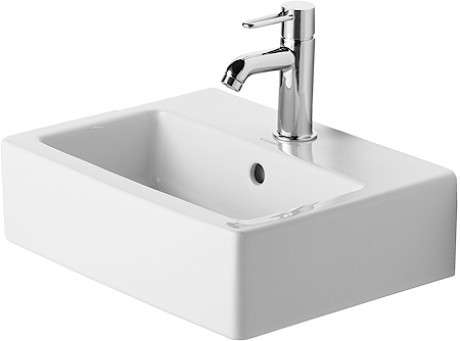
The Vero Handrinse Basin Ground is the kind of bathroom fixture that proves a smalla crisp rectangle, this compact Duravit basin brings architectural lines, practical handwashing space, and a surprisingly confident presence to powder rooms, guest bathrooms, and other tight layouts.
The product name can sound more mysterious than the basin itself. “Ground” does not mean that the sink sits on the floor, comes in an earthy color, or has developed a sudden interest in gardening. In sanitary-ceramic terminology, it refers to the specially prepared underside of the basin. This construction detail helps distinguish it from versions whose undersides are fully glazed. er>
What Is the Vero Handrinse Basin Ground?
The Vero Handrinse Basin Ground is a compact rectangular ceramic bathroom sink from Duravit’s Vero collection. The commonly referenced U.S. model is 0704450027, measuring approximately 17 3/4 inches wide, 13 3/4 inches deep, and 6 1/4 inches high. It includes an overflow, an integrated faucet deck, one punched faucet hole, and mounting hardware. Manufacturer and distributor specifications primarily identify it as a wall-mounted basin, although some listings also describe an above-counter application when the installation is planned correctly. Its visual identity is simple: straight edges, a broad horizontal rim, and a deep rectangular bowl. That restraint is the point. The basin does not try to imitate a seashell, a flower, or an abstract sculpture that requires an instruction manual just to wash your hands.
The geometric design works especially well in contemporary interiors, but its clean white ceramic form also pairs comfortably with transitional, industrial, Scandinavian, and minimalist bathroom styles. Duravit describes the Vero collection as a design centered on clear lines and the purity of the rectangle. >Key Product Details
- Common U.S. model number: Duravit 0704450027
- Approximate dimensions: 17 3/4 by 13 3/4 by 6 1/4 inches
- Material: sanitary ceramic
- Shape: rectangular
- Color: white
- Installation: wall mounted, with certain specifications also noting above-counter use
- Faucet configuration: one punched faucet hole on the integrated deck
- Overflow: included
- Mounting hardware: included according to product specifications
- Approximate fixture weight: 25.4 pounds
- Compliance listing: cUPC
- Referenced standards: ASME A112.19.2 and CSA B45.1
Exact dimensions should always be checked against the current technical drawing and the physical ceramic fixture. Sanitary ceramics are manufactured within accepted tolerances, so a countertop, tile opening, or custom wall panel should not be fabricated from a retailer photograph alone. ion>
What Does “Ground” Mean on a Bathroom Basin?
On this sink, “ground” describes the underside finish. A ground ceramic base has been mechanically prepared to create the surface required for its specified mounting arrangement. It differs from a fully glazed underside, which is coated and finished like the visible surfaces of the basin.
This distinction matters because two sinks that look nearly identical from above may meet a wall, countertop, or supporting surface differently. Technical specifications for ground versions commonly associate the prepared underside with supported or countertop-compatible installations, but the exact mounting method still depends on the individual model. Do not treat the word “ground” as a universal promise that the basin can simply be dropped onto any counter. The mounting detail, drain position, wall reinforcement, faucet supply, sealant joint, and manufacturer’s template still determine whether a proposed installation will work.
An experienced installer will measure the actual fixture, inspect the bottom surface, and compare it with the current installation instructions. Designing the entire bathroom around a thumbnail image and optimism is generally how renovation stories acquire surprise chapters.
Why This Compact Basin Works in Small Bathrooms
Small powder rooms often fail because every fixture is selected as though the room secretly contains another three feet of space. A compact handrinse basin preserves circulation without reducing the room to a glorified closet with plumbing.
The Vero basin projects less than many conventional vanity sinks, yet its 17 3/4-inch width provides a useful washing area and a modest faucet deck. A wall-mounted installation also exposes more of the floor, creating a lighter visual composition and making the room feel less crowded.
Keeping the floor visible is a well-established small-space design strategy. Kitchen and bath professionals also emphasize careful fixture placement, clearances, wall reinforcement, storage planning, and water conservation when designing compact bathrooms. >Best-Fit Spaces
- First-floor powder rooms
- Compact guest bathrooms
- Urban apartments and condominiums
- Under-stair half baths
- Small office washrooms
- Hospitality restrooms with a residential appearance
- Minimalist renovations where open floor area matters
The absence of a vanity cabinet also simplifies floor cleaning. There are no cabinet feet to navigate, no narrow toe-kick corner collecting dust, and fewer hiding places for the single cotton swab that somehow escapes every cleaning session.
Design Strengths of the Vero Collection
Duravit’s Vero design language is built around the rectangle. That sounds almost too simple, but disciplined geometry is harder to execute than decorative camouflage. Straight edges make alignment with tile joints, mirrors, wall panels, and adjacent cabinetry visually satisfying.
When the sink, mirror, and tile grid cooperate, even a modest powder room can look custom designed. The glossy white ceramic reflects light and provides a neutral anchor for stronger materials, patterned walls, and dramatic metal finishes.
Modern Monochrome
Use white or pale-gray tile, a polished-chrome single-hole faucet, a frameless rectangular mirror, and minimal wall accessories. The result is clean without feeling clinical. A contrasting dark grout can reinforce the basin’s geometric character.
Warm Contemporary
Combine the basin with walnut shelving, a brushed-brass faucet, warm-white lighting, and handmade-look ceramic tile. The sink’s precise rectangular form keeps the natural textures from becoming overly rustic.
Graphic Powder Room
Install bold wallpaper above a dark tile wainscot, add a black faucet and bottle trap, and use a thin metal-framed mirror. The white basin becomes a bright visual pause in a room with plenty to say.
Quiet Scandinavian Style
Pair the Vero basin with pale oak, soft beige walls, a simple chrome faucet, and woven accessories. Keep the visible plumbing neat and intentional. The result feels calm, efficient, and suspiciously capable of organizing its own towels.
Faucet, Drain, and Trap Selection
The integrated deck is punched for a single-hole faucet, so faucet compatibility should be checked before purchase. The spout must reach far enough into the bowl to place the water stream near the drain area without sending it forcefully against the front or rear wall.
A faucet that is too short encourages users to bump their hands against the ceramic. One that is too tall, too powerful, or poorly aimed can turn the compact basin into a miniature splash park. Compare the faucet’s spout reach and outlet height with the basin drawing before ordering.
For water efficiency, a WaterSense-labeled bathroom faucet with a maximum flow rate of 1.5 gallons per minute is a sensible match. According to the U.S. Environmental Protection Agency, qualifying faucets use at least 30 percent less water than conventional 2.2-gallon-per-minute models without sacrificing expected performance. A lower-flow aerated stream may also reduce splashing in a compact bowl. Actual performance depends on the aerator, household water pressure, spout angle, and where the stream lands inside the basin.
Choosing the Visible Trap
Because the underside and plumbing remain visible in a wall-mounted installation, the bottle trap or P-trap becomes part of the design. A polished-chrome trap is the safest visual match for chrome fittings. Matte black and brass options can also look excellent when the faucet, valves, drain, and trap are coordinated.
Finish matching deserves attention. “Brushed brass” is not one universal color; it is more like a family reunion where everyone claims to be related, but nobody is wearing the same shirt. Purchasing visible plumbing components from the same finish collection usually produces the most consistent result.
Installation Planning: What Matters Most
A wall-hung ceramic basin needs dependable structural support. The finished drywall, tile, or wall panel is not the support system. Blocking, a suitable carrier, or another manufacturer-approved reinforcement method should be coordinated before the wall is closed.
Professional plumbing guidance notes that wall-hung lavatories can be easier to clean because there are fewer joints and surfaces where contaminants collect. However, the faucet-hole arrangement, wall support, drain location, and supply configuration all need to be considered during product selection. The installer should confirm the drain centerline, supply locations, finished basin height, faucet clearances, fixing points, and relationship to surrounding fixtures. A drain that is slightly misplaced may remain visible, interfere with the trap, or require an awkward offset.
Dry-fitting the basin and visible plumbing before completing the wall finish is one of those unglamorous steps that prevents highly glamorous repair bills.
Installation Checklist
- Confirm the exact model number and current technical sheet.
- Inspect the basin immediately for shipping damage or ceramic defects.
- Measure the actual fixture before fabricating adjacent surfaces.
- Verify wall blocking or carrier requirements before closing the wall.
- Coordinate hot and cold supply positions with the selected faucet.
- Align the waste outlet with the bottle trap or P-trap.
- Check the door swing, toilet clearance, and standing space.
- Use manufacturer-approved fixings and suitable bathroom sealant.
- Level the basin without placing excessive stress on the ceramic.
- Test the faucet, drain, overflow, and every connection before completion.
Accessibility and Code Considerations
A compact wall-mounted sink can contribute to an accessible layout, but the fixture alone does not make a bathroom compliant. U.S. accessibility requirements may address rim height, clear floor space, forward approach, knee and toe clearance, exposed-pipe protection, faucet operation, and the relationship between the lavatory and other fixtures. Retail information for this specific ground model does not consistently identify it as ADA compliant. It should therefore not be specified for a regulated accessible restroom without professional review of the complete installation. For a private residential powder room, local building and plumbing codes still apply. For commercial, multifamily, hospitality, or public-use projects, the architect, plumbing designer, contractor, and code official should evaluate the complete room rather than relying on a product-page badge. Accessibility is a system, not a sticker.
Cleaning and Long-Term Care
Sanitary ceramic is durable, nonporous, and relatively easy to maintain. Routine cleaning usually requires warm water, a soft cloth or nonabrasive sponge, and a cleaner approved for glazed ceramic. Rinse away the cleaning product and dry the visible surfaces to reduce mineral spots, especially in hard-water areas.
Avoid aggressive scouring pads and abrasive powders that may dull or scratch the glaze. Never mix bathroom cleaning chemicals. Acidic descalers should be used only when their instructions and the fixture manufacturer’s care guidance permit them.
Protect the faucet finish as carefully as the basin. A chemical that is harmless to ceramic may discolor brass, black, bronze, or plated finishes.
Duravit has offered selected ceramic products with its optional WonderGliss surface treatment, which is designed to help residue rinse away more readily. Availability depends on the exact model suffix and regional catalog, so buyers should verify the order number rather than assuming every white Vero basin includes the treatment. ion>
Advantages and Possible Drawbacks
Advantages
- Compact footprint suited to small bathrooms
- Strong architectural appearance
- Integrated faucet deck and overflow
- Open floor area beneath a wall-mounted installation
- Easy-to-coordinate white ceramic finish
- Visible plumbing can become a deliberate design feature
- Compatible with many modern and transitional decorating styles
Possible Drawbacks
- Minimal surface area for toiletries
- No concealed vanity storage
- Exposed plumbing requires careful finish selection
- Precise wall reinforcement and rough-in work are essential
- A compact bowl may splash when paired with the wrong faucet
- The ground model should not automatically be assumed ADA compliant
- Rectangular corners require slightly more deliberate wiping than a round bowl
Who Should Choose the Vero Handrinse Basin Ground?
This basin is a strong choice for homeowners, designers, and builders who want a compact fixture with a clear design identity. It is particularly effective when visible floor space matters more than hidden storage and when the faucet, mirror, trap, and wall finish are treated as one coordinated composition.
It is less suitable for a busy primary family bathroom where users need generous counter space, deep storage, and room for several daily routines. A handrinse basin is intended for handwashing and light grooming, not for hosting an entire skincare collection, three hair tools, and a toothbrush convention.
Practical Experiences With the Vero Handrinse Basin Ground
Real-world success with this sink usually begins before the basin arrives. In a compact bathroom renovation, one of the most useful steps is creating a full-size wall mockup. Mark the basin’s width, projection, rim height, faucet location, and trap position with painter’s tape. Then open the door, stand near the toilet, approach the sink, and pretend to wash your hands.
This simple rehearsal catches conflicts that a floor plan can hide, especially in a room where one inch is not merely one inch but a tiny piece of diplomatic territory. It may reveal that the door crowds the user, the faucet sits too close to a side wall, or the basin projects farther into the walkway than expected.
Installers also learn quickly that visible plumbing deserves early attention. A beautifully proportioned basin can lose much of its effect when the trap is crooked, the shutoff valves are mismatched, or flexible supply hoses hang below the bowl like untied shoelaces.
Specifying a coordinated bottle trap, compact angle stops, tidy supply lines, and matching escutcheons before rough-in produces a more intentional result. It also reduces the temptation to solve every plumbing problem with a decorative basket placed under the sink.
Another common experience involves faucet selection. Product photographs frequently show a perfectly scaled faucet, but shoppers may choose a different model based only on finish. Spout reach is the dimension that changes daily use. When the stream lands too close to the rear wall, users bump their hands against the ceramic. When it lands too far forward, water escapes toward the user.
A moderate-flow single-hole faucet with an aerated stream generally behaves better than an extra-tall, high-volume model. Comparing the spout reach with the basin drawing is a small task with an outsized payoff. It is also worth checking handle movement so the lever does not collide with the wall or mirror.
Homeowners often appreciate how much larger the floor appears after replacing a cabinet vanity with a wall-mounted handrinse basin. The improvement is most noticeable when the floor tile continues uninterrupted beneath the fixture. Cleaning becomes simpler because a mop or vacuum can pass underneath without navigating cabinet feet.
The tradeoff is storage. Successful powder rooms compensate with a recessed medicine cabinet, a narrow shelf above the toilet, a shallow wall cabinet, or a small ledge near the mirror. Guest towels can hang from a wall hook or ring rather than occupying the faucet deck. The best solutions add storage vertically without rebuilding the visual bulk that the compact basin was chosen to remove.
Rectangular geometry rewards regular cleaning. Soap residue and mineral marks tend to announce themselves along the rim, corners, and faucet base. Keeping a soft microfiber cloth nearby makes a thirty-second wipe more likely, which is considerably easier than staging a weekend mineral-deposit excavation.
In hard-water homes, drying the faucet and rim after cleaning helps preserve the crisp, bright appearance that makes the Vero basin attractive. A mild cleaning routine performed frequently is safer and more effective than attacking months of buildup with the strongest chemical available.
The final practical lesson is to respect the word “ground.” Buyers sometimes assume it is merely a catalog oddity and order the basin without checking how the underside is intended to meet the wall, counter, or supporting surface.
The safer approach is to match the full product number to the current technical drawing, confirm the mounting detail with the supplier and installer, and inspect the physical fixture before final countertop fabrication or tile work. That extra verification is not overthinking. It is what keeps precision design from becoming precision regret.
Conclusion
The Vero Handrinse Basin Ground is a compact bathroom sink with a serious design vocabulary. Its rectangular ceramic form, integrated faucet deck, overflow, and wall-mounted character make it especially useful in powder rooms and other space-conscious layouts. The “ground” underside is an installation detail that should be understood and coordinated, not a decorative finish.
Choose it when you want visual lightness, clean geometry, and enough basin space for comfortable handwashing without sacrificing precious floor area. Pair it with a correctly scaled single-hole faucet, attractive exposed plumbing, reliable wall support, and carefully planned storage.
Do that, and this small sink can become the most composed object in the roomquietly proving that good bathroom design is often less about adding more and more about choosing one thing that fits properly.