

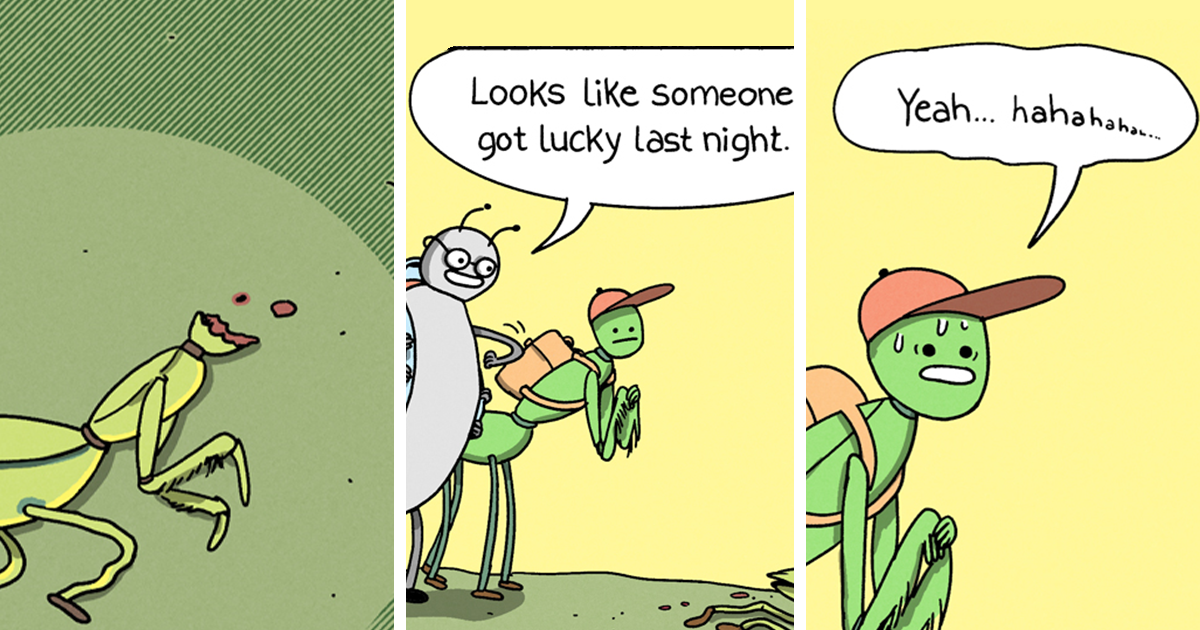
If you’ve ever finished a four-panel comic and immediately thought, “Wait… what just happened?” then you already understand the magic behind twist-ending comics. Few creators do it better than War and Peas, the delightfully dark webcomic by German duo Elizabeth Pich and Jonathan Kunz, whose work has been featured multiple times on Bored Panda for its grim reapers, slutty witches, robots in love, and punchlines that flip everything upside down at the last second.
The Bored Panda feature “We Make Comics With Unexpected Plot Twists And Endings, And Here Are The Best Ones From This Year (30 New Pics)” celebrates exactly what fans love about these strips: each mini-story looks simple and cute on the surface, but something sharp, strange, or oddly wholesome is waiting in the final panel.
Who’s Behind These Unexpected Plot Twist Comics?
War and Peas started back in 2011 and has since grown into a global favorite, with millions of followers across social media and a print collection, War and Peas: Funny Comics for Dirty Lovers. The creators describe their series as being about “everything tragic and everything funny,” and that contrast is exactly what gives their twist endings so much bite.
The cast of recurring characters makes these comics feel like a weird, dysfunctional family reunion you never want to leave. You’ll often see:
- Death, the Grim Reaper, who is somehow both terrifying and weirdly relatable.
- Slutty Witch, a confident, party-loving witch who uses magic and sarcasm to swat away creeps.
- A robot who falls hopelessly in love with their creator.
- Dogs, ghosts, flowers, and even God (sometimes as a cat), all reimagined with surprising, darkly comic twists.
In interviews and book descriptions, the duo’s work is called “hilarious, morbid, and sometimes oddly touching,” and that’s exactly the mood you’ll find in this year’s Bored Panda selection of 30 new comics with unexpected endings.
What Makes These 30 Comics Stand Out This Year?
This year’s batch of twist-ending comics highlights how much War and Peas have refined their storytelling. Each four-panel strip is like a tiny short story: clean setup, rising tension, then a twist that either makes you laugh, feel slightly attacked, or question your entire life for a second.
1. A Whole Story in Just Four Panels
War and Peas specialize in short, strip-style comicsusually four panelsthat still manage to feel complete. In talks about their creative process, they’ve explained how they work to pack a full narrative arc into that tiny space. You get just enough information to understand what’s going on, but not enough to predict the punchline.
Often, the first two or three panels look like a familiar scenario: a motivational talk, a romantic moment, a confession, or a classic fantasy setup. Then the final panel reveals a surprise detaila selfish motive, a dark joke, an absurd cosmic punchlinethat rearranges everything in your head.
2. Dark Humor That Still Feels Oddly Human
These comics live right on the border between morbid and meaningful. Reviews of their book point out that despite the twisted jokes, there’s a soft undercurrent of empathy. Death becomes a tired office worker. The robot’s heartbreak is surprisingly sweet. A ghost worries about hotline etiquette.
That emotional layer keeps the twist endings from feeling cheap. Even when the punchline is brutal, it still says something about loneliness, modern life, or the absurdity of how we treat one another.
3. Comedy That Reflects the Internet’s Weird Little Soul
War and Peas’ humor fits perfectly into the online comics ecosystem. Their strips sit comfortably alongside other twist-heavy series highlighted by U.S. outlets, like Max Garcia’s Sunny Street, with its single-panel gags that go from wholesome to dark in one line, or collections of unexpectedly wholesome and twisty comics compiled by humor sites like Pleated-Jeans.
Fans who love one brand of weird will usually love them all: the Bored Panda lists featuring Whoops Comics, Colm Lavery’s dark humor strips, and other artists show that people can’t get enough of comics where the final beat zigs instead of zags.
Inside the Best Comics From This Year’s Bored Panda Feature
Because Bored Panda curates the “best ones from this year,” the 30 comics in the article read like a greatest-hits playlist for longtime fans and an instant crash course for new readers. While we can’t show the full strips here, we can look at the patterns that make them so effective.
Recurring Themes That Keep Plot Twists Fresh
Across this year’s selection and other recent War and Peas compilations, a few themes constantly pop up:
- Everyday absurdity: Worms hold political rallies against the “oligarchy of spiders.” Ghosts call crisis hotlines. Spiders unionize over lost coins in couch cushions.
- Dark theology: Heaven is run by a giant cat God who is indifferent, needy, and strangely on brand for the internet.
- Awkward romance: Robots pine after creators, clueless partners say the exact wrong thing, and love stories turn sharply weird at the end.
- Millennial dread: Burnout, climate anxiety, and late-stage capitalism sneak into punchlines about witches, dogs, and skeletons.
Each of these themes works because it starts somewhere familiarpolitics, dating, work, faithand bends into something surreal in the last panel.
Visual Style That Supports the Surprise
Their drawing style is clean and approachable: rounded characters, bright colors, and simple backgrounds. That softness is deceptive. Critics have noted that the cartoony look makes the dark humor hit even harder, because you don’t see it comingjust like Sunny Street’s gently drawn but sometimes brutal punchlines or the cute, twist-ending comics by artists like Anežka Židková.
In many of the 30 comics, the faces barely change until the last panel, where one character suddenly reveals a hidden agenda or reacts in a completely unexpected way. That single visual shift reinforces the twist without needing lots of extra dialogue.
Why Readers Love Comics With Surprise Endings
Twist-ending comics scratch the same itch as a good plot twist in a movie or a thrillerbut in a fraction of the time. Articles on writing effective plot twists talk a lot about two key ingredients: foreshadowing and subverting expectations without cheating. War and Peas, along with other twist-heavy webcomics, have adapted those storytelling principles to ultra-short formats.
They Reward Careful Readers
In many strips, the clues are hiding in plain sight: a tiny background detail, an odd phrasing in the first panel, or a character who seems slightly “off.” When the ending reshapes everything, you realize the comic actually played fair with you the whole time. That “ohhh, now I get it” moment is incredibly satisfying.
They Reflect How We Consume Content Now
Modern readers are scrolling constantly, and four-panel comics fit perfectly into that rhythm. You get a mini-story, a twist, and a laugh (or a grim nod) in seconds. Yet the best strips linger in your mind, just like a strong short story or a shocking episode of a series. That’s why compilations of these comicson Bored Panda, independent humor blogs, and dedicated comic sitesperform so well and are frequently shared across social media.
How War And Peas Fit Into the Bigger Twist-Comic Universe
Though War and Peas have their own distinct voice, they’re part of a broader wave of creators using humor plus surprise to talk about big topics. Sites that highlight “dark humor comics with unexpected endings” or “wholesome comics with twist endings” repeatedly showcase artists like Max Garcia (Sunny Street), Colm Lavery, Whoops Comics, and Anežka Židková alongside War and Peas.
What sets War and Peas apart is how consistently they balance bleak jokes with a kind of stubborn, quiet optimism. In public conversations, the creators have been clear that they don’t want their work to feel cynical or nihilistic, even when death and doom are front and center. There’s always a spark of humanity hiding inside the punchline.
Tips for Enjoying (And Even Creating) Your Own Twist Comics
If this year’s 30-comic collection has you itching to try your own twisty stories, you’re in good company. Countless resources on how to write comics and plot twists stress the same core ideas: start with genre expectations, then play with them; plant clues early; and keep your characters’ reactions honest, even if the situation is absurd.
1. Start With a Familiar Setup
Pick a scenario everyone knows: a doctor’s visit, a first date, a confession at the pearly gates. Humor writing guides suggest using existing tropes as a springboard instead of trying to invent something completely new from scratch. Once readers recognize the setup, they unconsciously start predicting the endingwhich makes it easier for you to surprise them.
2. Decide What You’re Twisting
Are you twisting the character’s true motive? The meaning of a word? The nature of the world they live in? War and Peas often twist:
- Perspective: a powerful figure turns out to be petty or clueless.
- Motive: a seemingly noble character is secretly selfish… or vice versa.
- Reality rules: death, heaven, or magic works in a hilariously bureaucratic way.
3. Keep the Dialogue Tight
With only a few panels, you don’t have room for monologues. Short, punchy dialogue keeps the pace moving and helps the twist land cleanly. You can see this clearly if you compare War and Peas with other single-panel or short-strip comics that use minimal text to deliver their hardest hits.
4. Let the Art Do Some of the Work
A tiny changethe way a character raises an eyebrow, a background sign revealed in the last panelcan be the twist. Many of the most memorable comics in this year’s Bored Panda selection rely on one small visual in the final frame that suddenly changes the meaning of everything before it.
of Lived-In Experiences With Twist-Ending Comics
Scrolling through “We Make Comics With Unexpected Plot Twists And Endings, And Here Are The Best Ones From This Year (30 New Pics)” feels less like reading a gallery and more like hanging out with a group chat that collectively shares one brain celland that brain cell is just slightly unhinged.
You know the routine: you open the article “just to see one or two comics,” and suddenly you’re ten minutes deep, snorting at your screen while promising yourself, “Okay, seriously, this is the last one.” Then another robot shows up, another witch appears with a drink in her hand, and another skeleton makes a painfully accurate joke about rent, and you keep going.
One of the most relatable experiences with these comics is the delayed laugh. At first, you hit the last panel and think, “Huh?” Then your brain backtracks through the earlier panels and catches the detail you misseda word choice, a visual gag, a background characterand the joke detonates two seconds late. That tiny pause between confusion and understanding is strangely addictive.
There’s also the “I feel seen and attacked” reaction that people regularly mention in comments on twist-heavy comics. When a comic about procrastination, burnout, or social anxiety ends with a darkly funny punchline, it often feels like the creators are reading the group mind of the internet. That’s a big part of why features like this Bored Panda list spread so fast: people tag friends with “you” or “this is us” and share the pain-but-make-it-funny moment.
Another common experience is the whiplash between wholesome and horrifying. One strip can end with a sweet, earnest twistlike a character unexpectedly choosing kindnesswhile the next one goes straight for an apocalyptic or morbid joke. That emotional roller coaster makes binge-reading the 30-comic compilation feel almost like watching a sketch show: every few minutes, the tone flips, but the style stays coherent enough that you never feel lost.
For creators, studying these comics can be a masterclass in efficiency. If you draw or write, it’s almost impossible to read through the feature without mentally reverse-engineering a few strips: Where is the setup? What expectation is being built? What exactly makes the ending surprising instead of random? This kind of close reading helps you notice crafthow some comics lean on visual irony while others depend on verbal misdirection.
On the audience side, these twisty strips become tiny social rituals. People screenshot their favorites, crop out the title, and drop them into chats; they show them to partners on the couch; they scroll through them while half-watching TV. The comics become a sort of emotional palate cleansersomething quick and sharp between tasks, meetings, or doom-scrolling sessions.
And when a particular twist hits close to homea comic about climate dread, student loans, or the awkwardness of digital datingit does more than make you laugh. It reassures you that someone else, somewhere, is staring at the same absurd world and processing it the same way you are. That sense of shared, slightly twisted perspective might be the real secret behind why collections like this year’s “We Make Comics With Unexpected Plot Twists And Endings” stick with readers long after they’ve closed the tab.
Conclusion
The 30 comics collected in Bored Panda’s “We Make Comics With Unexpected Plot Twists And Endings, And Here Are The Best Ones From This Year (30 New Pics)” highlight everything that makes War and Peas so beloved: sharp writing, deceptively cute art, and endings that leave you laughing, wincing, or quietly nodding in recognition. Set against a wider landscape of twist-heavy webcomics and humor sites, they prove that you don’t need a full graphic novel to tell a smart, surprising storyyou just need four panels and a delightfully warped idea.
Whether you’re here as a casual reader, a comics nerd, or an artist looking for inspiration, these unexpected plot twists and endings are a reminder that the shortest stories can have the biggest impactand the darkest jokes can still leave room for hope.