

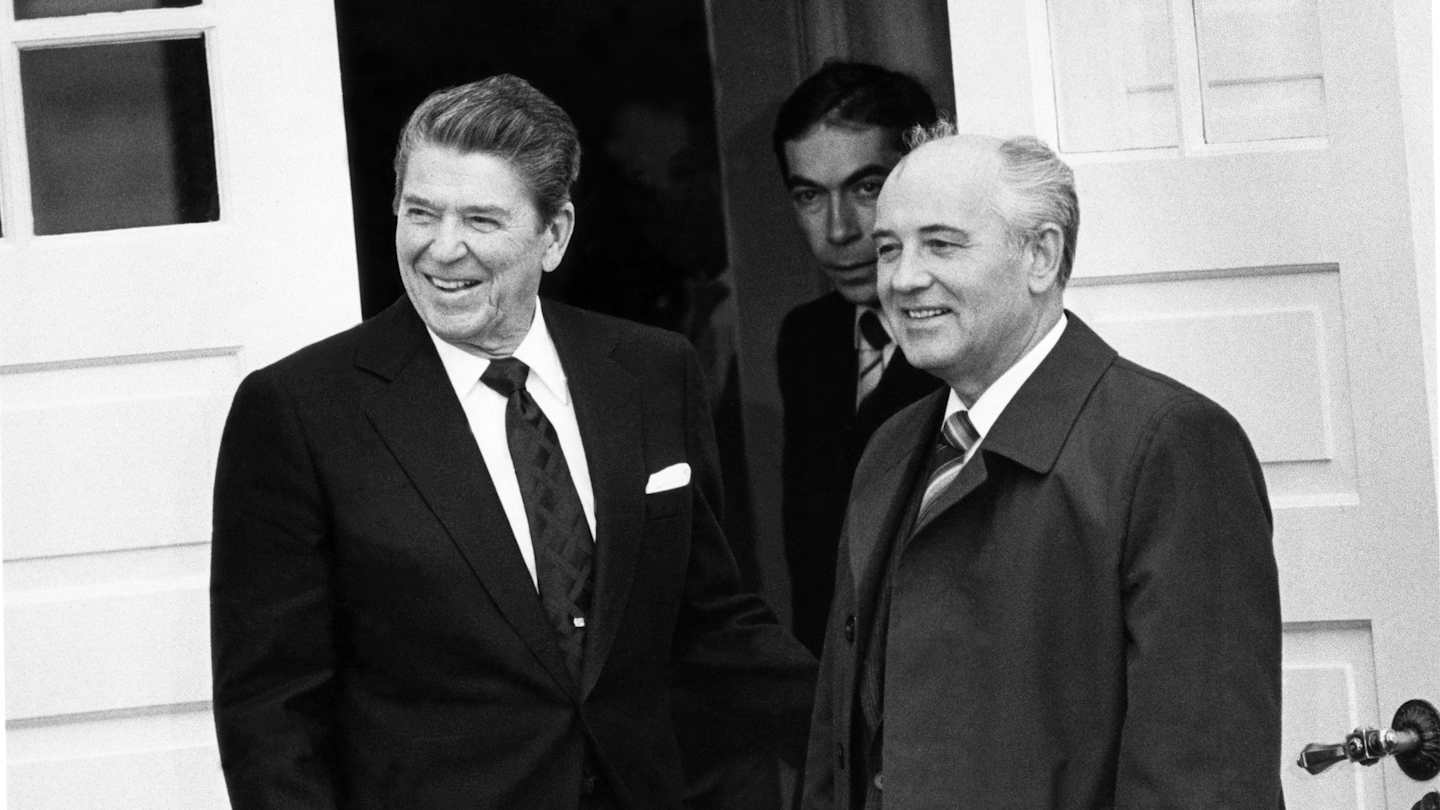
In October 1986, the Cold War rolled into Reykjavik like an uninvited tour bus full of generals, translators, reporters, handlers, security personnel, and enough geopolitical anxiety to fog up every window in town. What was supposed to be a quick, practical meeting between President Ronald Reagan and Soviet leader Mikhail Gorbachev became one of the strangest and most important diplomatic showdowns of the 20th century. It nearly delivered a revolutionary nuclear arms deal. It absolutely delivered stress to Iceland.
The meeting, now known as the Reykjavik Summit, lasted only two days. Yet it managed to cram in global suspense, last-minute near-breakthroughs, and a dramatic collapse over missile defense. For the United States and the Soviet Union, the summit was about nuclear weapons, strategic trust, and the future of the Cold War. For Iceland, it was also about hotel shortages, packed restaurants, commandeered spaces, security headaches, and the surreal experience of watching a quiet capital city become the stage for world history.
If that sounds like a lot for one small island nation to carry on its shoulders, that is because it was. Reykjavik did not just host the summit. It absorbed it. And for a few days in 1986, Iceland became the place where the nuclear age almost changed direction.
What Was the Reykjavik Summit?
The Reykjavik Summit took place on October 11 and 12, 1986, at Hofdi House, a modest waterfront building in Reykjavik. Reagan and Gorbachev had already met once in Geneva in 1985, where they established a more constructive personal relationship than many observers expected. Reykjavik was supposed to be a shorter, more informal follow-up meeting, a kind of diplomatic tune-up before a later full summit in Washington.
That was the plan, anyway. Then reality showed up with a flamethrower.
Instead of staying modest, the talks became breathtakingly ambitious. Reagan and Gorbachev moved well beyond small adjustments and began discussing huge cuts to nuclear arsenals. At moments, they even approached the possibility of eliminating all ballistic missiles and, eventually, all nuclear weapons. In Cold War terms, this was not dipping a toe in the water. This was cannonballing into the deep end while fully dressed.
Yet the summit ended without a signed agreement. The major sticking point was Reagan’s Strategic Defense Initiative, or SDI, the missile defense program critics often called “Star Wars.” Gorbachev wanted strict limits that would keep SDI research confined to the laboratory for a period of years. Reagan refused. The talks collapsed. No treaty was signed. The headlines looked grim.
But history, as usual, was more complicated than the first draft.
Why Iceland? Because Sometimes the Middle of Nowhere Becomes the Center of Everything
Iceland was chosen partly because it offered neutral, manageable territory between Washington and Moscow. Reykjavik was not Geneva, London, or New York. It was smaller, quieter, and symbolically less theatrical. That made it useful. It also made the summit wildly inconvenient for the host city.
In 1986, Reykjavik was not built to absorb a giant superpower media circus on short notice. The city and its suburbs had a population of roughly 130,000 people, and the capital had limited infrastructure for a diplomatic event of this scale. This was a place with fewer than 1,000 hotel beds, a small number of full-service international restaurants, and a civic rhythm much calmer than the one created by a global summit involving two nuclear superpowers.
That mismatch is the heart of the Iceland story. The summit did not “wreak havoc” in the disaster-movie sense. There were no toppled buildings or panicked evacuations. The havoc was logistical, social, and psychological. A small city had to sprint like a major capital with almost no warning, and everyone felt it.
How the Summit Wreaked Havoc on Iceland
A Tiny Capital Got a Superpower-Sized Guest List
One of the most striking details about the Reykjavik Summit is just how many people arrived for a meeting involving only two principal leaders. Roughly 3,000 journalists, officials, technicians, aides, and support staff descended on the city. For Reykjavik, that was enormous. Hotel space vanished fast. Officials scrambled for rooms. Residents were urged to rent out private rooms and apartments. Even schools were repurposed as press centers.
That detail alone tells you everything you need to know. When your kids might get time off so their school can become a media operations hub, world diplomacy has officially invaded daily life.
Restaurants, Phones, and Everyday Routines Took a Hit
The Icelandic government reportedly appealed to residents to stay away from popular restaurants so that summit visitors could be fed. It also urged people to avoid unnecessary long-distance calls in order to keep telecommunications lines available. Imagine living in a peaceful North Atlantic capital and being told, in effect, to please stop calling people and maybe skip dinner out because the White House and the Kremlin are in town.
And because Icelanders were cooperative, some restaurants actually ended up oddly quiet. That is perhaps the most Icelandic twist in the whole episode: the city bent over backward to help, and the result was a combination of crowding, inconvenience, and eerie politeness.
Security Became Everybody’s Problem
Security in Iceland also had to scale up quickly. Reports from the time described an unusually broad security mobilization, including police, rescue teams, and even Boy Scouts assisting in the effort. The Icelandic government also tried to limit demonstrations and keep outside pressure groups from turning the summit into a street-side political carnival.
For a country unused to this level of international security theater, the contrast was startling. Reykjavik was known for quiet order, not heavily choreographed motorcades and global threat assessments. Yet for one weekend, that is exactly what it got.
The Mood Swung From Excitement to Cold Fog
There was also an emotional kind of havoc. At first, the summit brought excitement, pride, and curiosity. Iceland had been handed a rare starring role in global politics. Shops stocked summit souvenirs. The city buzzed. But when the talks broke down, the mood changed fast. What had felt historic in an upbeat sense suddenly felt historic in a tense and frustrating one.
That shift mattered because Reykjavik was not just watching events on television. It was the set, the soundstage, and the waiting room. Icelanders experienced the summit not as a distant headline but as a local condition.
What Reagan and Gorbachev Almost Agreed To
This is the part that still makes historians lean forward in their chairs.
At Reykjavik, the two leaders discussed dramatic arms reductions. The outlines included cutting strategic nuclear forces by 50 percent, eliminating intermediate-range nuclear missiles in Europe, and potentially abolishing all ballistic missiles within a decade. At moments, the conversation edged even further, toward the elimination of all nuclear weapons.
That does not mean a final, fully verified, perfectly detailed treaty was sitting neatly wrapped on the table. It does mean the summit went far beyond anyone’s modest expectations. Even seasoned officials were stunned by how much was suddenly in play.
In other words, Reykjavik was not memorable because nothing happened. It was memorable because too much almost happened at once.
Why It Fell Apart Over SDI and the Famous “Laboratory” Dispute
The summit’s collapse is often reduced to one word: laboratory.
Gorbachev wanted SDI research confined to laboratories for ten years, consistent with his reading of the Anti-Ballistic Missile Treaty framework. Reagan would not accept that limit. He believed missile defense could someday protect civilians from nuclear attack, and he did not want to trade away the future of SDI in exchange for an arms deal, no matter how sweeping.
So the summit ended the way great diplomatic dramas often do: not with a bang, but with exhausted men, strained handshakes, and a public trying to figure out whether it had just witnessed a fiasco or a breakthrough wearing a fake mustache.
The answer, strangely enough, was both.
Why the “Failure” Still Changed the Cold War
Although Reykjavik ended without an agreement, it helped pave the way for the 1987 Intermediate-Range Nuclear Forces Treaty. That was a landmark achievement, eliminating an entire class of nuclear missiles. Reykjavik also advanced the logic and momentum behind later strategic arms reductions.
So yes, the summit “failed” in the immediate sense. But it succeeded in exposing how far both sides were willing to go. It stripped away old assumptions. It made once-unthinkable nuclear reductions thinkable. And it proved that Reagan and Gorbachev, despite deep differences, could imagine a radically less dangerous world.
That is part of why historians still return to Reykjavik. It was a dead end that opened a road.
Why Iceland’s Role Still Matters
Iceland’s role in the summit is not just a charming side note about a small country hosting big personalities. It reveals how global politics lands on local ground. Diplomatic history is often told through leaders, doctrines, and treaties. But summits also require hotel clerks, cooks, translators, drivers, school administrators, police officers, and ordinary residents told to please adjust their weekend plans because civilization is negotiating in the neighborhood.
Reykjavik was not merely the backdrop to the summit. Its scale sharpened the drama. The city’s smallness made the pressure feel more intense, the symbolism more vivid, and the disruption more visible. When two superpowers nearly rewrote the nuclear age in a compact waterfront house in a compact city on a North Atlantic island, the location became part of the meaning.
Iceland also gained something lasting from the episode. The summit put Reykjavik on the mental map of international diplomacy. It became associated not only with volcanic beauty and Nordic calm, but also with one of the boldest near-misses in arms-control history.
Experiences From Iceland’s Side of the Story
To understand why the summit felt so disruptive, it helps to imagine the experience from the Icelandic side rather than the Washington or Moscow side. For residents of Reykjavik, this was not just an arms-control meeting. It was an abrupt reordering of the city’s normal life. One week your capital is going about its business in its usual measured way. The next, it is filled with camera crews, diplomatic convoys, interpreters, security workers, and foreign reporters treating your sidewalks like the center of the universe.
For hotel workers, the summit must have felt like a full-speed collision between hospitality and geopolitics. Rooms were scarce, demands were high, and every visiting delegation had its own expectations. Staff were no longer simply checking in travelers; they were serving a global event with almost no margin for error. A wrong room assignment or a delayed meal was no longer a small annoyance. It was a tiny cog wobbling inside a machine built out of superpower suspicion.
For families who rented out rooms or saw public buildings repurposed, the summit likely felt both exciting and intrusive. There was pride in seeing Iceland host something this important. There was also the practical inconvenience of having daily routines bent around visitors and officials. School schedules shifted. Streets felt different. Restaurants were no longer just restaurants; they were part of an international support system. Even the phone lines became politically adjacent, which is not something most countries put on tourism brochures.
For Icelandic officials and volunteers, the experience was probably equal parts improvisation and national test. A city with limited infrastructure suddenly had to perform under the scrutiny of the global press. Security had to feel serious without becoming absurd. Logistics had to work even though the event had been arranged quickly. The summit demanded not only resources but calm competence, and Iceland had to provide both in front of the world.
Then there was the emotional whiplash. At first, the summit carried the electricity of possibility. Residents were hosting history. There was suspense, but also genuine excitement that something momentous might happen in Reykjavik. By the end, the mood had cooled. The photos of Reagan and Gorbachev leaving Hofdi House captured that change, but so did the atmosphere in the city itself. The event that had briefly made Reykjavik feel like the diplomatic capital of the world ended in visible disappointment.
And yet, that is also what makes the Icelandic experience so memorable. Reykjavik did not get a clean, triumphant summit story. It got the messy real thing: inconvenience, symbolism, absurdity, tension, hope, and anticlimax all bundled together in one chilly weekend. In some ways, that made Iceland the perfect setting. The city was intimate enough that the disruption could be felt everywhere, and dignified enough that the summit never turned into farce. Iceland carried the burden of the moment with a mix of restraint and resilience. The leaders left without a deal, but the place remained permanently attached to one of the great what-ifs of the Cold War.
Conclusion
The 1986 Reykjavik Summit is remembered as the meeting where Ronald Reagan and Mikhail Gorbachev came astonishingly close to remaking the nuclear order and then fell apart over missile defense. But it is also the story of how a small capital city absorbed the weight of world history. Reykjavik was stretched by logistics, crowded by media, reshaped by security, and pulled into a drama far larger than itself. That is why the summit did not just happen in Iceland. It happened to Iceland, too.
And that is what makes the phrase “wreaked havoc on Iceland” more than a catchy headline. The havoc was not destruction. It was disruption, compression, and the pressure of hosting a moment when the future of the Cold War seemed to hinge on a few rooms, a few words, and one very overworked city.