

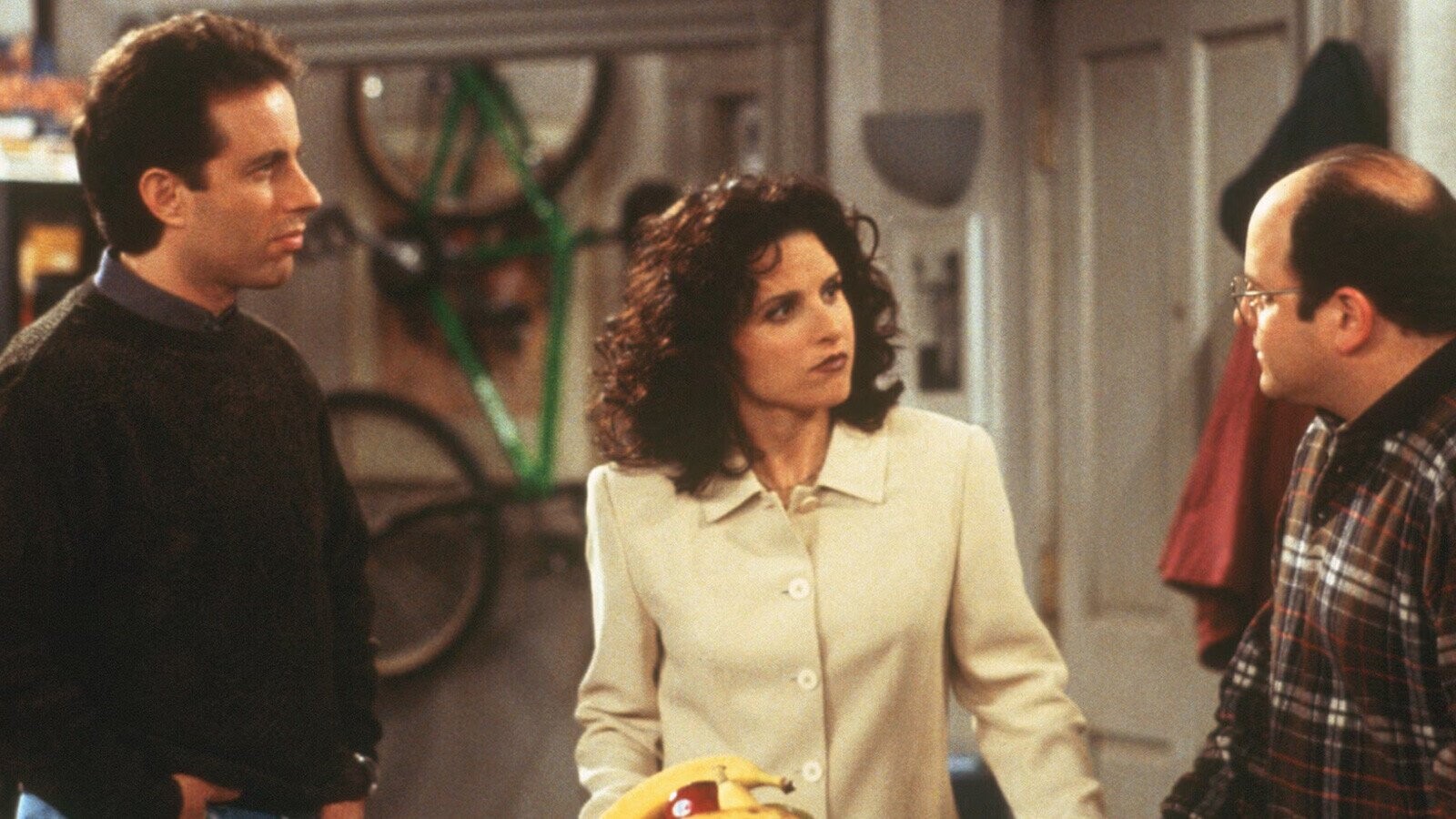
For a show famously described as being about “nothing,” Seinfeld sure produced a lot of something: catchphrases, arguments about soup, awkward dates, parking-lot purgatory, and enough petty social disasters to power a small city. But one of its most beloved episodes, “The Pen,” came with a behind-the-scenes twist that was almost as tense as Jerry trying to return an astronaut pen to Jack Klompus.
The episode is now remembered as a classic piece of Seinfeld comedy. Jerry and Elaine visit Jerry’s parents in Florida, where a polite compliment about a fancy pen turns into a full-blown retirement-community scandal. Elaine destroys her back on an unforgiving sofa bed, takes muscle relaxants, and delivers her unforgettable “Stella!” moment. Morty Seinfeld gets tangled in condominium drama. Jack Klompus treats a pen like it contains launch codes. It is hot, cramped, cranky, and hilariously uncomfortablein other words, peak Seinfeld.
So why did Jason Alexander hate it? Simple: George Costanza was not in it.
That absence may sound small now, especially because “The Pen” works beautifully as a Jerry-and-Elaine road-trip episode. But for Alexander, being left out raised a serious question: was George essential to the show, or was he optional? The answer would shape how the series handled its core cast for the rest of its run.
The Episode Jason Alexander Could Not Stand: “The Pen”
“The Pen” is Season 3, Episode 3 of Seinfeld, and its setup is refreshingly simple. Jerry and Elaine travel to Florida to visit Jerry’s parents, Morty and Helen Seinfeld. The trip is supposed to involve family time, scuba diving, and a ceremony honoring Morty at his condominium association. Naturally, because this is Seinfeld, nothing goes smoothly.
The chaos begins when Jerry admires a special pen owned by Jack Klompus. Jack insists Jerry take it. Jerry resists just enough to remain socially polite but not enough to actually escape the gift. Once he accepts, the condo grapevine explodes. Suddenly, the pen is not just a pen. It is a symbol of manners, obligation, pride, resentment, and old people gossip moving at Olympic speed.
Meanwhile, Elaine spends a miserable night on a bad sofa bed, injures her back, takes medication, and becomes the life of a retirement-community dinner in a way no one requested. Her woozy Marlon Brando impressionshouting “Stella!” at Aunt Stellabecame one of Julia Louis-Dreyfus’s standout early Seinfeld moments.
On screen, the episode is tight and funny. It proves the show could leave New York and still find comedy in tiny social rules. But off screen, it created a very different kind of discomfort. George Costanza, one of the show’s central characters, simply had no reason to be in Florida. Neither did Kramer. So Larry David wrote an episode without them.
Why George Costanza’s Absence Felt Like a Big Deal
From a story perspective, leaving George out made sense. George was not Jerry’s relative, he was not Elaine’s travel companion, and he did not belong in that Florida condo plot. Forcing him into the episode might have felt artificial. Imagine George randomly appearing behind a palm tree in Boca Raton complaining about the humidity. Funny? Maybe. Necessary? Not really.
But television is not just story logic. It is contracts, careers, egos, chemistry, and the quiet terror actors feel when they wonder whether the machine can run without them. Jason Alexander had built George into one of the show’s funniest weapons: neurotic, petty, insecure, theatrical, and somehow both overconfident and spiritually defeated at the same time. Being told, even indirectly, “We do not need George this week” hit a nerve.
Alexander reportedly confronted Larry David after realizing he had been written out. His message, in essence, was that if the writers did not need him in every episode, they should write him out permanently. It was a dramatic reaction, but also a very George Costanza reaction. Somewhere, George would have respected the panic, then immediately made it worse by calling everyone to explain himself.
What bothered Alexander was not that “The Pen” was bad. The episode was not bad. In fact, it was excellent. That may have made the sting sharper. The show had created a memorable installment without George. For an actor trying to understand his place in a young ensemble, that was not just a scheduling issue. It was an existential crisis with a laugh track.
The Real Reason Jason Alexander Reacted So Strongly
Alexander later reflected on the incident with more perspective. At the time, he had a theater background and tended to think of the cast as an ensemble. In theater, if you are part of the company, your presence matters to the structure of the piece. You do not usually disappear because the scene moved to Florida and the sofa bed had enough emotional range without you.
But there was also insecurity involved. Seinfeld began as a vehicle centered on Jerry Seinfeld’s observational comedy, and early on, the balance among the four main characters was still developing. Elaine’s role expanded, Kramer’s physical comedy became more defined, and George evolved into one of television’s great comic disasters. During that evolution, Alexander worried about where he fit.
That is what makes the story so interesting. It is not just a tale of an actor being angry about missing screen time. It is about the awkward moment when a hit show is still discovering what it is. Was Seinfeld a Jerry-centered sitcom with rotating friends? Was it a buddy comedy about Jerry and George? Or was it the four-person machine fans eventually came to love?
History answered the question. Seinfeld became iconic because of the main quartet: Jerry, George, Elaine, and Kramer. Jerry supplied the observational center. George supplied panic and resentment. Elaine supplied social aggression, intelligence, and glorious chaos. Kramer supplied physical absurdity and oddball confidence. Remove one piece too often, and the rhythm changes.
Why “The Pen” Still Works Without George
Here is the funny part: Jason Alexander’s frustration was understandable, but “The Pen” is still a terrific episode. It works because it narrows the world of Seinfeld without abandoning the show’s core philosophy. Instead of New York etiquette, it studies Florida condo etiquette. Instead of diner debates, it gives us dinner-table tension. Instead of George spiraling, it lets Jerry squirm under parental pressure and Elaine unravel physically and socially.
The episode also gives Morty and Helen Seinfeld room to shine. Jerry’s parents are not just background figures; they are engines of comedy. Morty’s pride, Helen’s worry, and Jack Klompus’s aggressive generosity create a perfect storm of older-generation social rules. Everyone is trying to be polite, and every attempt at politeness makes the situation worse.
That is classic Seinfeld. The show often turned tiny breaches of etiquette into moral emergencies. Who pays for dinner? How long do you wait for a table? Can you refuse a gift? What does a compliment legally require? “The Pen” asks one of the most Seinfeldian questions imaginable: if someone insists you take something you do not really want, are you rude for accepting or rude for refusing?
George would have had a field day with that question. He might have argued that accepting the pen was morally correct, financially wise, and socially defensibleuntil someone accused him of being greedy, at which point he would deny ever liking pens. Still, the episode proves that the show’s comedic DNA could survive a temporary cast shake-up.
The Irony: Alexander’s Complaint May Have Helped the Show
Although the confrontation could have gone badly, it may have clarified something important. After “The Pen,” George was never again completely absent from an episode. Whether by design, instinct, or a desire to avoid another backstage thundercloud, the show leaned into the idea that its four leads were essential.
That decision helped Seinfeld become more structurally adventurous. Later episodes often gave each character a separate storyline that eventually collided with the others. George might be lying about being a marine biologist. Elaine might be battling office politics. Kramer might be launching a bizarre business scheme. Jerry might be dating someone for a reason so specific it barely qualifies as a reason. By the end, all the threads would snap together like a mousetrap built by neurotic architects.
That ensemble structure became one of the show’s trademarks. “The Pen” stands out partly because it breaks that formula before the formula was fully set. It is both a classic episode and a reminder of a path the show chose not to take very often.
Why This Behind-the-Scenes Story Still Fascinates Fans
Fans love stories like this because they reveal the human machinery behind beloved television. On screen, Seinfeld looks effortless. The characters enter, complain, misinterpret, overreact, and exit. But behind every half hour was a group of writers and actors making difficult choices about tone, balance, and character importance.
Jason Alexander’s reaction also feels oddly appropriate because George Costanza was built out of insecurity. George wants to be valued, respected, included, admired, and occasionally mistaken for an architect. Alexander was not George, of course, but the emotional overlap is hard to ignore. A performer worried that his character might not be indispensable is almost too perfect for the actor playing television’s most famously insecure best friend.
There is also a workplace lesson buried under the comedy. Being excluded from one meeting, one project, or one major decision can make even talented people question their value. Alexander’s reaction may have been intense, but the feeling behind it is familiar. Nobody wants to discover that the team can function perfectly well while they are standing outside the room holding a metaphorical astronaut pen.
How “The Pen” Became Bigger Than the Backstage Drama
Over time, the tension surrounding “The Pen” became part of the episode’s legend rather than a stain on it. The episode remains popular because it is funny, specific, and wonderfully uncomfortable. The Florida setting gives the show a different texture, and Elaine’s storyline gives Julia Louis-Dreyfus a chance to turn physical discomfort into comedy gold.
The astronaut pen itself became a perfect Seinfeld object. It is small, ordinary, and somehow capable of destroying everyone’s peace. The real Fisher Space Pen already had a fascinating history as a pressurized pen associated with space travel, but Seinfeld transformed the idea into a comedy artifact. After the episode, “Take the pen!” became more than a line. It became shorthand for social pressure disguised as generosity.
That is why the episode still plays well decades later. You do not need to understand 1990s television, NBC scheduling, or sitcom ensemble politics to enjoy it. You only need to understand the horror of accepting a gift and immediately realizing it came with invisible terms and conditions.
Experience Section: What This Story Teaches Viewers, Workers, and Fans
The story behind “The Pen” is especially relatable because almost everyone has experienced a version of Jason Alexander’s panic. Maybe you were left off an email chain. Maybe your team had a meeting without you. Maybe a project moved forward while you were out, and everyone said, “Don’t worry, we handled it,” which is both comforting and deeply insulting. On the surface, nothing terrible happened. Underneath, your brain starts writing a courtroom drama about your own professional relevance.
That is what makes Alexander’s reaction feel human rather than simply Hollywood dramatic. Yes, he was on a growing network sitcom. Yes, his character would become one of the most beloved in television history. But in that moment, he did not have decades of hindsight. He had a script without George Costanza in it. For a performer, that can feel like a warning light blinking on the dashboard.
For viewers, the episode offers a different kind of experience. Watching “The Pen” after knowing the backstage story changes the flavor. Suddenly, George’s absence becomes a presence of its own. You notice the empty space where his complaints might have gone. You imagine him reacting to Jack Klompus. You picture him trying to calculate the resale value of an astronaut pen while insisting he is above material things. The episode becomes funny not only for what it includes, but for the George-shaped hole it leaves behind.
It also reminds fans why the four-character balance mattered so much. Some sitcoms are built around one star. Seinfeld became stronger when it embraced the friction among all four leads. Jerry could be detached, George explosive, Elaine combative, and Kramer surreal. Together, they created a rhythm that made even tiny problems feel like epic disasters. When one instrument dropped out, the music still played, but the arrangement changed.
There is a creative lesson here too. Sometimes a great episode can be painful for someone involved in making it. “The Pen” was creatively successful, but it forced the cast and creators to confront what kind of show they were building. That tension is common in collaborative work. A choice that improves one story may unsettle the people who help make the larger project work. Good teams learn from that discomfort instead of pretending it never happened.
In the end, Jason Alexander’s dislike of “The Pen” did not damage Seinfeld. If anything, it helped underline George’s importance. The episode proved the show could survive without him for one week, but the series proved it was better when it did not have to.
Conclusion: The Episode He Hated Became Part of the Legend
Jason Alexander hated “The Pen” because it made him feel unnecessary. George Costanza, the anxious engine of so many Seinfeld plots, was missing from one of the show’s most memorable early episodes. That absence stung enough for Alexander to confront Larry David and make it clear that he did not want to be treated as optional.
Decades later, the irony is delicious. “The Pen” remains iconic, Alexander remains indispensable to the legacy of Seinfeld, and George’s absence only proves how important he was. The episode is funny because of Jerry, Elaine, Morty, Helen, and Jack Klompus. But the story behind it is fascinating because of Georgeor rather, because of the one time George was not there to make everything worse.
Maybe that is the most Seinfeld ending possible. A beloved episode about a pen became a backstage story about insecurity, ensemble chemistry, and the terrifying possibility of being left out. No hugging, no learningexcept maybe one lesson: never underestimate George Costanza, even when he is not in the room.