

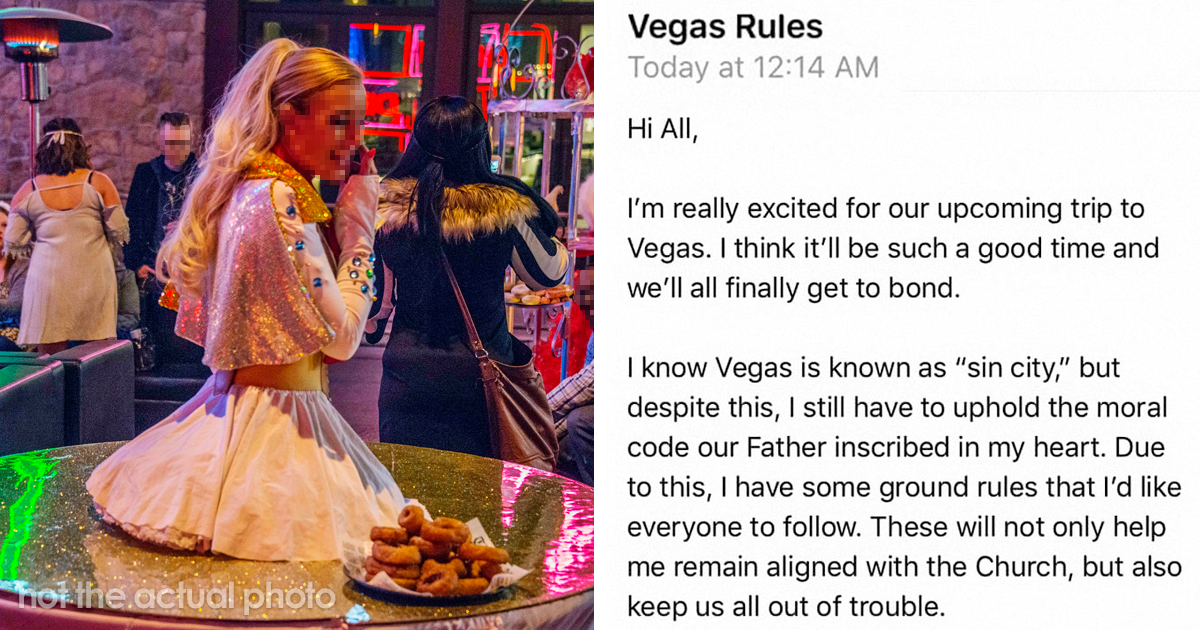
Every friend group has one person who treats a group trip like a military exercise with matching tote bags. But this viral bachelorette party story took that energy, put it in a blazer, and sent it through email with the confidence of a woman who absolutely believes she has been appointed deputy mayor of Las Vegas.
The headline-worthy drama centered on a woman who was reportedly invited to a bachelorette party out of pity, then responded by sending the group a list of strict rules that felt less like party planning and more like a surprise internship in moral supervision. Instead of being the fun extra guest who brings snacks, good stories, and emergency hair ties, she allegedly became the self-appointed sheriff of the celebration. And the internet, naturally, grabbed popcorn.
Why did the story blow up? Because it touched a nerve that goes far beyond one chaotic email. Modern bachelorette parties are no longer just a dinner, a toast, and one blurry group photo where someone is holding a plastic tiara at a questionable angle. They are often mini-vacations with budgets, schedules, emotional politics, and enough group-chat tension to power a midsize city. Throw in a pity invite, a moral manifesto, and a set of rules nobody asked for, and you have the perfect recipe for viral social disaster.
Why This Bachelorette Party Story Hit a Nerve
At first glance, the story is hilarious in the way all deeply awkward social situations are hilarious when they are happening to somebody else. But underneath the comedy is a very familiar problem: people do not actually get upset only because someone made a weird rule list. They get upset because the rules reveal something bigger.
In this case, the list reportedly included demands about what guests could drink, whether men could be brought back to the room, and even what medication one guest should or should not take. That is the exact moment the story stopped being “annoying but funny” and became “absolutely not, ma’am.” A party guest trying to control the basic behavior, privacy, spending, and even medical choices of other adults is not being organized. She is staging a tiny coup.
And that is what made the tale so deliciously uncomfortable. Most people have met a version of this person. Maybe not the exact “Vegas Rules” author, but definitely her spiritual cousin: the overreacher, the self-appointed enforcer, the friend-of-a-friend who arrives late to the social circle but immediately starts acting like a regional manager.
The Real Problem Was Never Just the Rules
It was the power play
When someone gets invited out of obligation rather than genuine closeness, the social balance is already fragile. Everybody can feel it, even if nobody says it out loud. A pity invite may look polite on paper, but in practice it often creates tension because the guest senses she is peripheral, the group senses she is peripheral, and the whole thing starts wobbling like a folding table at a backyard barbecue.
In healthy groups, that awkwardness fades because everyone chooses kindness and basic self-awareness. In unhealthy groups, someone tries to overcompensate. That is what appears to have happened here. Instead of showing up, reading the room, and keeping a low profile, the guest allegedly responded to social insecurity by grabbing control. The email was not just a list of rules. It was an attempt to rewrite the group hierarchy.
It was also a giant misunderstanding of what a bachelorette party is
A bachelorette party is not a courtroom. It is not a church retreat unless the bride specifically wants one. It is not a hostage situation in matching satin pajamas. The central rule is pretty simple: the event should reflect the bride’s comfort level, the group’s realistic budget, and common courtesy. That is it. No one gets to parachute in and redesign the vibe because they personally prefer order, modesty, green juice, or a 7:15 a.m. spiritual cleanse in the middle of a Vegas weekend.
Wedding experts have spent years saying the same thing in more polite language: planners should talk to the bride, communicate expectations clearly, and respect what guests can actually afford. Normally, everyone pays their own way, costs should be discussed in advance, and no one should be pushed into financial stress or social discomfort just to prove loyalty. That is the etiquette version. The real-world version is even simpler: don’t make people miserable in the name of celebration.
Modern Bachelorette Parties Are Basically Friendship Stress Tests
Part of the reason stories like this travel so fast is that bachelorette culture has become a lot more intense. What used to be one night out has, for many groups, turned into a destination event with flights, coordinated outfits, themed dinners, custom gifts, shared rentals, spreadsheets, and a suspicious amount of emotional labor for people who just wanted to clap, eat fries, and say “so happy for you” three or four times.
That added pressure changes everything. Once real money and travel time enter the chat, group dynamics stop being theoretical. Suddenly people are negotiating vacation days, childcare, hotel splits, dietary restrictions, outfit budgets, and whether they can mentally survive another “mandatory bonding activity” before noon. This is how ordinary adults end up whispering, “I love her, but I cannot spend $1,300 to wear a cowboy hat in Scottsdale.”
So when a peripheral guest swoops in and starts issuing commands, the reaction is swift because the emotional margin is already thin. The rules are not landing on a calm group. They are landing on a group that has probably already spent too much, texted too much, and tolerated too much.
What the “Insane Rules” Really Reveal About Group Dynamics
Control often wears the costume of concern
Controlling people rarely introduce themselves as controlling. They usually enter through the side door labeled just trying to help. They say they want everyone to stay safe, avoid drama, save money, or keep things classy. Those sound reasonable until you realize “classy” means “doing everything my way,” “safe” means “I get to monitor you,” and “organized” means “I have mistaken my preferences for law.”
That is why the email in this story struck such a nerve. On the surface, it sounded like concern. Underneath, it read like judgment. There is a difference between sending a practical note saying, “Please text the group before heading out,” and sending what feels like a lifestyle correction to sixteen adults who did not hire you as their camp counselor.
Pity invites are often emotional landmines
Let us be honest: inviting someone out of pity is rarely the generous move people think it is. It can come from guilt, pressure, old social ties, or fear of seeming rude. But if the inclusion is not sincere, it often backfires. The invited person may feel patronized. The core group may feel tense. The bride may feel obligated. The result is not kindness. It is emotional outsourcing.
That does not excuse the guest’s alleged behavior, of course. Sending a bossy manifesto to a bridal group is still wildly over the line. But the larger lesson remains important. Fake inclusion solves nothing. It just turns quiet discomfort into a full-blown event.
How a Normal Group Would Have Handled This
A reasonable bachelorette planner would have done three things.
First, they would have centered the bride. What kind of weekend does she actually want? Loud? Relaxed? Luxe? Low-key? Spa robes and face masks? Dinner, karaoke, and home by midnight because everyone has back pain now? All valid.
Second, they would have checked the group’s budget before building the itinerary. This is the unglamorous but essential step. No amount of “girls’ trip” energy can erase the fact that not everyone has the same financial reality.
Third, they would have communicated logistics without turning the email into a manifesto. A good planning message includes times, addresses, payment deadlines, room assignments, and maybe a polite reminder not to vanish into the Vegas night with a magician named Chad. It does not include moral lectures, medical opinions, or demands that people rehearse adulthood under supervision.
The Internet Mocked the Email, but It Also Recognized the Pattern
That is the sneaky genius of viral wedding stories. People share them because they are outrageous, but they remember them because they feel familiar. Maybe you were not sent a list of insane bachelorette rules, but maybe you were asked to spend too much money for someone else’s “special season.” Maybe you were invited to the pre-party but not the wedding. Maybe someone in the group started acting like attendance was a loyalty exam. Maybe the celebration stopped feeling joyful and started feeling like customer service with sequins.
And that is why this story still works years later. It is not just a tale about one pushy guest. It is about the collision between friendship, status, money, obligation, and the strange modern pressure to turn every milestone into a branded experience. Sometimes all it takes is one email to expose the whole shaky structure.
The Best Lesson From This Mess
If you are invited to a bachelorette party and you are not especially close to the bride, there is a graceful strategy available to you. It is called: show up, be pleasant, contribute fairly, and do not behave like you were elected by the group. Revolutionary concept, I know.
If you are the bride or planner, the lesson is different but just as important. Do not invite people out of guilt. Do not create budgets by fantasy. Do not assume everyone wants a four-day destination experience. And for the love of all things sparkly, do not let one overbearing guest become the assistant principal of your wedding weekend.
The funniest part of this viral bachelorette story is also the saddest: the woman who most wanted to prove she belonged ended up proving exactly why the original hesitation existed in the first place. That is the problem with trying to force intimacy through control. It never creates closeness. It only creates screenshots.
Experiences Women Often Relate To in Stories Like This
One reason this topic keeps resurfacing is that so many women have lived some version of it. Maybe not in Las Vegas, maybe not with a dramatic rule list, but in the emotional shape of it. They know what it feels like to be included late, included oddly, or included with strings attached.
Some women describe being invited to the bachelorette party but not the wedding, which feels less like a celebration and more like a surprise invoice with confetti. Others talk about being in group chats where the tone slowly changes from excited to authoritarian. At first it is, “Let’s celebrate her!” Then it becomes, “Everyone must order this exact outfit, arrive by this hour, split this huge rental, cover these extras, and please react with heart emojis so we know you are committed.” Nothing says friendship quite like a mandatory spreadsheet.
Another common experience is the budget squeeze. A woman may genuinely adore the bride and still not be able to afford flights, matching clothes, themed dinners, shared décor, gifts, and hotel costs. She is then forced into an awful position: speak up and risk being called difficult, or stay quiet and resent the whole weekend while pretending the fourth payment request is totally fine. Many people are not selfish when they hesitate. They are just doing math.
There is also the social discomfort of feeling peripheral. Sometimes a guest realizes she was invited because someone dropped out, because the group wanted to avoid hurt feelings, or because the numbers looked better with one more person in the house rental. That feeling can make people overcompensate. Some become extra agreeable. Others become withdrawn. And occasionally, as this viral story suggests, someone responds by trying to take control of the room before the room can reject her. It is not charming, but it is recognizable.
Then there are the women who have been on the receiving end of judgment disguised as “help.” They have had another guest comment on what they wear, what they drink, how late they stay out, whether they are “bringing enough energy,” or whether they are “really showing up” for the bride. That kind of policing can make an adult woman feel like she accidentally wandered into a middle-school cafeteria with better makeup.
And yet, plenty of women also describe the opposite: the relief of being in a genuinely considerate group. A maid of honor asks for everyone’s budget first. The bride makes it clear that nobody should go into debt. Guests can skip activities without drama. No one weaponizes loyalty. No one confuses planning with domination. Those are the weekends people actually remember fondly. Not because they were the most expensive or most photogenic, but because they felt easy, warm, and real.
That contrast is what makes stories like this so sticky. They are not just about one rude email. They remind people of the delicate line between inclusion and obligation, between organization and control, between celebration and performance. When a bachelorette party goes wrong, it usually does not go wrong because of one tequila policy or one weird grocery request. It goes wrong because people forget the point. The point is to honor a person, not test the emotional endurance of everyone who knows her.
So yes, the insane rules were ridiculous. But what readers really reacted to was the familiar feeling underneath them: being managed instead of welcomed, judged instead of included, and asked to perform friendship instead of simply enjoy it. That part is not just viral content. That part is painfully real.
Conclusion
The viral tale of the pity-invited bachelorette guest who sent out an outrageous rule list is funny because it is extreme, but memorable because it is believable. It captures everything people find exhausting about modern wedding culture: the money pressure, the strange hierarchy games, the etiquette confusion, and the occasional guest who mistakes herself for the event’s supreme court.
In the end, the best bachelorette party rules are boring in the best possible way: be respectful, be honest about the budget, make room for different comfort levels, and remember that the bride is supposed to leave with good memories, not an evidence folder. If that sounds simple, good. Parties should be. The moment someone starts policing cocktails, sleep schedules, and prescriptions, it is no longer a celebration. It is a hostage note with better fonts.