

Winter has a reputation problem. It’s the season of dry hands, dark mornings, and the mysterious disappearance of every chapstick you’ve ever owned. But winter also has one major redeeming quality: it makes flowers look extra heroic. A single bouquet on a gloomy day feels like someone turned on a lamp inside your house and your brain.
The best part? You don’t need a florist’s cooler, a design degree, or a secret handshake to make winter flower arrangements that look expensive. You just need store-bought blooms (hello, grocery store floral aisle), a few evergreen accents, and a couple of simple “florist cheat codes” that keep stems where you put them and blooms alive long enough to enjoy.
This guide walks you through six winter flower arrangements you can make with store-bought flowersplus the prep and design tricks that make the finished result look intentional, not accidental.
Before You Start: The 10-Minute Prep That Makes Flowers Last Longer
If you’ve ever put a bouquet in a vase and watched it flop by Day 2 like it paid rent and then immediately gave up, it’s usually not the flower’s fault. It’s bacteria, dirty water, crushed stem ends, and heat vents plotting together.
Quick prep checklist
- Wash your vase with hot soapy water. (Yes, even if it “looks clean.” Flowers are picky roommates.)
- Strip the stems: remove leaves that would sit below the waterline to reduce bacteria.
- Re-cut stems with sharp scissors or pruners at an angle. Aim for 1–2 inches off the bottom.
- Use flower food if you have it. If not, fresh water changed often still helps a lot.
- Keep arrangements cool: away from direct sun, fireplaces, and heating vents.
- Refresh water every 2–3 days (or sooner if it looks cloudy). Re-cut stems each time if you can.
Two florist cheat codes for store-bought bouquets
- The tape grid: Add strips of floral tape (or sturdy clear tape) across the mouth of your vase to form a grid. This creates “parking spots” so stems don’t drift into chaos.
- The 3-part mix: Think in layersfocal flowers (the stars), textural flowers (the supporting cast), and filler/greenery (the cozy sweater that makes it all work). A balanced ratio keeps arrangements from looking like a random bouquet got mugged on the way home.
Smart Winter Shopping: What to Grab from the Floral Aisle
Winter arrangements shine when they mix soft petals with crisp, structured texturesevergreens, berries, and branches. Many grocery stores and big-box florals carry surprisingly sturdy blooms in winter, especially “workhorse” flowers bred for vase life.
Reliable store-bought blooms for winter
- Roses (classic focal flower; easy to find year-round)
- Carnations (budget-friendly, long-lasting, and unfairly underrated)
- Chrysanthemums (including spider mums for drama)
- Alstroemeria (pretty, sturdy, great for filling space)
- Tulips (winter-friendly and modern, with a “clean” look)
- Hydrangea (lush, but needs good hydration to stay perky)
Winter “extras” that make arrangements feel seasonal
- Evergreen clippings (pine, cedar, firoften sold as bunches around the holidays)
- Eucalyptus (fresh scent, soft movement, and good texture)
- Berries (hypericum, faux berry picks, or even cranberry accents)
- Branches (pussy willow, curly willow, or any woody stem that adds height)
- Ornaments or pinecones (instant winter vibe; choose 1–2 metallics max)
Pro tip: If you can’t find a specific flower, swap within the same “job.” Ranunculus can stand in for roses; mums can stand in for carnations; eucalyptus can stand in for cedar. Your arrangement doesn’t need perfect ingredientsjust a good balance.
1) The Vintage Mix-and-Match Bud Vase Cluster
Look: Cozy, old-school, “I casually own antiques” charmwithout actually needing antiques.
What to buy
- 1 bouquet of red or deep pink carnations
- 1 bouquet of white or cream roses (or alstroemeria)
- 1 bunch of greenery (eucalyptus, cedar, or mixed greens)
- Optional: berries or baby’s breath for filler
How to make it
- Gather 5–9 small vessels: bud vases, jars, short glasses, candle holderswhatever looks varied but still “friends.”
- Fill each with clean water and a tiny pinch of flower food if you have it.
- Start with greenery in each vessel (1–3 stems), keeping the overall height low and varied.
- Add 1–2 focal blooms per vase (rose or a big carnation) and then tuck in smaller stems.
- Arrange the vessels as a cluster down the center of a table. Keep taller pieces toward the back if it’s on a sideboard.
Why this works in winter
Bud vase clusters feel abundant, even with fewer stems. They also extend vase life because you can remove and refresh individual vases instead of rebuilding one big arrangement. It’s basically meal-prep, but for flowers.
2) The “Snow & Silver” Pitcher Arrangement
Look: Soft whites plus silvery texturelike winter sunlight, but indoors and emotionally supportive.
What to buy
- 1–2 stems of white hydrangea (or a fluffy white mum bunch if hydrangea isn’t available)
- 6–10 stems of white roses or cream carnations
- 3–5 stems of silver brunia (if available) or any cool-toned textural stem
- 1 bunch of eucalyptus
How to make it
- Choose a pitcher (ceramic looks great). Add a tape grid across the top.
- Place the hydrangea first as your anchorslightly off-center so it feels natural.
- Build a collar of eucalyptus around the hydrangea to soften edges and hide mechanics.
- Add roses/carnations in a loose triangle: one a bit taller, two slightly lower.
- Finish with brunia/textural stems tucked between blooms for sparkle and depth.
Winter styling tip
Keep the color palette tightwhite, green, and silver. Winter arrangements look more modern when you limit the rainbow and let texture do the talking.
3) The Poinsettia-and-Pine Bowl Centerpiece (Not Just for Christmas)
Look: Festive, lush, and low enough to talk overbecause centerpieces should not block your aunt’s gossip updates.
What to buy
- 1 small potted poinsettia (or cut poinsettia stems if sold that way)
- 1 bunch of fir/pine/cedar
- 5–7 stems of white blooms (roses, carnations, or mums)
- Optional: hypericum berries or faux berry picks
How to make it
- Use a wide, shallow bowl. If using a potted poinsettia, keep it in its pot and place it in the bowl like a living centerpiece.
- Hide the pot by packing evergreens around it (think “wreath energy”).
- Add white blooms in small clusters around the greens, keeping heights low and rounded.
- Tuck berries in last for pops of color and a wintery feel.
Why this is a great store-bought win
A potted poinsettia acts like a built-in focal point that lasts longer than many cut flowers. The evergreens do the heavy lifting for volume, so you can use fewer flower stems and still get a full look.
Pet note: If you have pets that chew plants, keep arrangements out of reach and consider pet-safe choicessome common holiday plants can cause stomach upset if eaten.
4) The Ornament-Studded “Party Mums” Arrangement
Look: Playful, graphic, and surprisingly designerlike you planned it, not like you panic-bought ornaments at checkout.
What to buy
- 1 bunch of spider mums (white or green looks very winter)
- 1 bunch of carnations (choose one color: red, blush, or cream)
- 1 bunch of greenery
- 4–8 small shatterproof ornaments (one finish: matte, shiny, or metallic)
- Optional mechanic: chicken wire or a floral frog (or use a tape grid)
How to make it
- Place chicken wire loosely in the vase (or use a tape grid). This prevents stems from collapsing into a sad clump.
- Add greenery first to set the shapeaim for a rounded silhouette.
- Insert spider mums at slightly different heights for structure and movement.
- Add carnations in clusters of 2–3 stems so the color reads “intentional.”
- Wire ornaments onto floral picks (or tie gently with thin string) and tuck them in like berries.
Design analysis
Ornaments work because they behave like perfectly round “flowers” that never wilt. They also repeat shape and shine, which makes the whole arrangement feel styledespecially in winter when light is scarce and reflective elements feel extra cozy.
5) The Green-Forward Winter Runner Centerpiece
Look: Elegant and calmmore “winter cabin” than “Santa’s workshop.” Perfect for January and February, when you still want seasonal but not screaming HOLIDAY.
What to buy
- 2–3 bunches of mixed evergreens (pine, cedar, fir) and/or eucalyptus
- 5–9 stems of white flowers (tulips, roses, or carnations)
- Optional accents: pinecones, dried orange slices, or a few gold picks
How to make it
- Choose a long, low tray, narrow bowl, or a line of three small vases. (Three vessels in a row reads as a “runner” without a giant commitment.)
- Lay evergreens along the length as your base. Let them drape naturallydon’t fight gravity; winter already does that.
- Add white blooms in small groupings along the runner, keeping heights consistent and low.
- Finish with pinecones or citrus for texture and warmth.
Why it’s budget-friendly
Greenery creates volume fast. You can use fewer focal blooms because the arrangement looks full from the start, and the scent of pine/eucalyptus adds a “fresh air” effect even if it’s 38°F outside and you refuse to open a window.
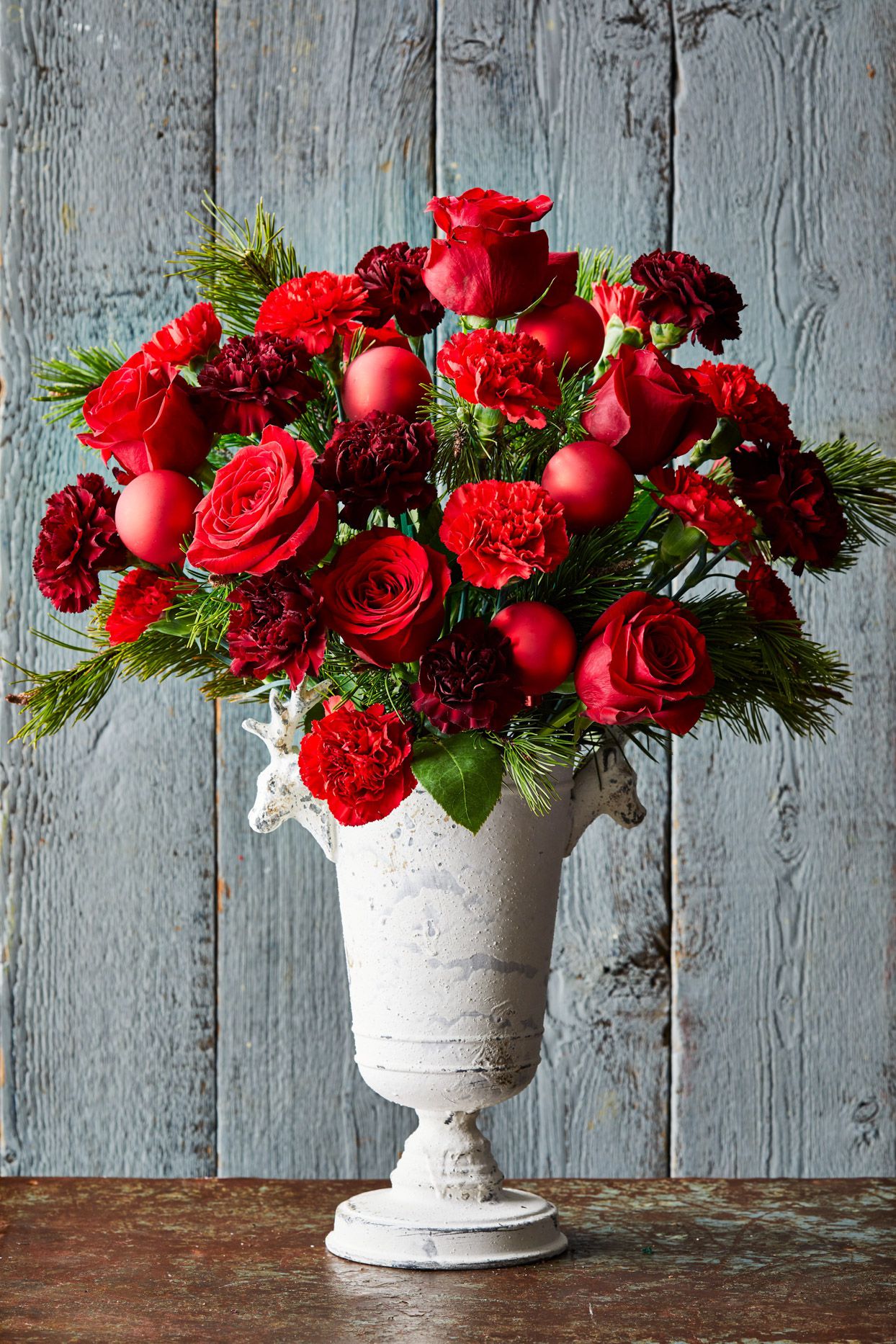
6) The Monochrome “Hot Cocoa Red” Statement Vase
Look: Bold, dramatic, and warmlike a cozy blanket, but make it flowers.
What to buy
- 1 bouquet of red roses (or deep burgundy if you can find it)
- 1 bouquet of red carnations (for fullness and longevity)
- Optional: red berries or a few red ornaments
- 1 bunch of greenery (keep it simple: eucalyptus or cedar)
How to make it
- Pick a vase with some weightglass cylinder, ceramic, or anything sturdy enough to handle a dense arrangement.
- Create a tape grid on top.
- Start with greenery to form a soft collar and to cover the mechanics.
- Place roses as focal flowers first, spaced evenly (think triangle again: one high, two lower).
- Add carnations to fill gaps and build that lush “wow” volume.
- Tuck in berries/ornaments sparinglyjust enough sparkle to look wintery, not cluttered.
Color strategy
Monochrome arrangements feel expensive because the eye isn’t trying to process ten competing colors. The variation comes from flower shapes and textures, not extra hues. It’s the floral version of an all-black outfit: simple, confident, undefeated.
Keeping Winter Arrangements Fresh: Realistic Expectations (and Easy Wins)
Even store-bought blooms can last surprisingly long if you treat them like living things instead of table confetti.
- Change water regularly and re-cut stems to improve water uptake.
- Keep arrangements cool, especially overnight, to slow aging.
- Remove fading stems early so they don’t drag the whole arrangement down.
- Top off water daily for thirsty blooms like hydrangea and tulips.
If one bloom starts to look tired, don’t take it personally. It’s winter. We’re all doing our best.
Final Thoughts
Winter flower arrangements don’t have to be complicated to feel special. With store-bought blooms, a little evergreen texture, and a few simple structure tricks (hello, tape grid), you can build centerpieces that look styled, seasonal, and genuinely joyfulwhether you’re decorating for a holiday dinner or just trying to make Tuesday feel less like a spreadsheet.
Experience Notes: What You’ll Learn After Making a Few of These
Most people expect flower arranging to be “put flowers in vase, done.” Then they try it once and discover the secret truth: flowers are beautiful, but they are also tiny divas with strong opinions about water, temperature, and whether your scissors are sharp enough. The good news is you don’t need perfect techniqueyou just need a few repeatable habits that make the process smoother every time.
One common early experience is buying a bouquet that looks huge in the store and then realizing it shrinks the second it hits your kitchen counter. That’s not your imaginationstore bouquets are fluffed, wrapped, and held upright by sleeves. Once you remove the wrapper, you’re basically meeting the flowers’ “natural posture.” The fix is simple: plan for structure. A tape grid, a smaller vase opening, or even two vases instead of one can make the exact same stems look fuller and more intentional.
Another thing people notice quickly: greenery does more than fill space. Evergreens and eucalyptus act like scaffolding. They create a shape that flowers can sit inside, which is why arrangements with winter greens often look “designed” even when the blooms are basic grocery-store carnations. In practice, this means starting with greens first feels backwards to beginners, but it’s the move that makes everything easier. Once that collar is in place, you’ll find you’re not wrestling stems into positionyou’re just tucking them into a supportive frame.
Many first-timers also learn that water maintenance is the difference between “lasts a week” and “dies by Thursday.” The water turning cloudy is a big clue that bacteria are building up, which blocks stems from drinking. Changing the water every couple of days sounds fussy until you experience how much longer the arrangement stays crisp. A practical rhythm that works for most households: top off water daily, and do a full refresh every 2–3 days. If you re-cut stems during that refresh, even by a small amount, you’ll usually see perkier blooms within hours.
Design-wise, a real “aha” moment tends to happen when someone tries grouping flowers in small clusters instead of spacing every stem evenly. Clustering makes colors read as deliberate and modernespecially with winter palettes like white-and-green or red-and-burgundy. It also makes store-bought mixes look less random, because you’re controlling the visual rhythm: a little group here, a little group there, and suddenly the arrangement has a point of view.
Finally, most people discover that winter arrangements are easier when they embrace the season’s personality. Winter is all about texturepine needles, glossy leaves, berries, metallic ornaments, branches, and soft petals together. When you lean into texture (instead of trying to recreate spring), your arrangements feel more natural for the season, and you stop feeling like you’re “missing” peonies. Winter doesn’t need to be loud to be beautiful. It just needs a little life on the table.