

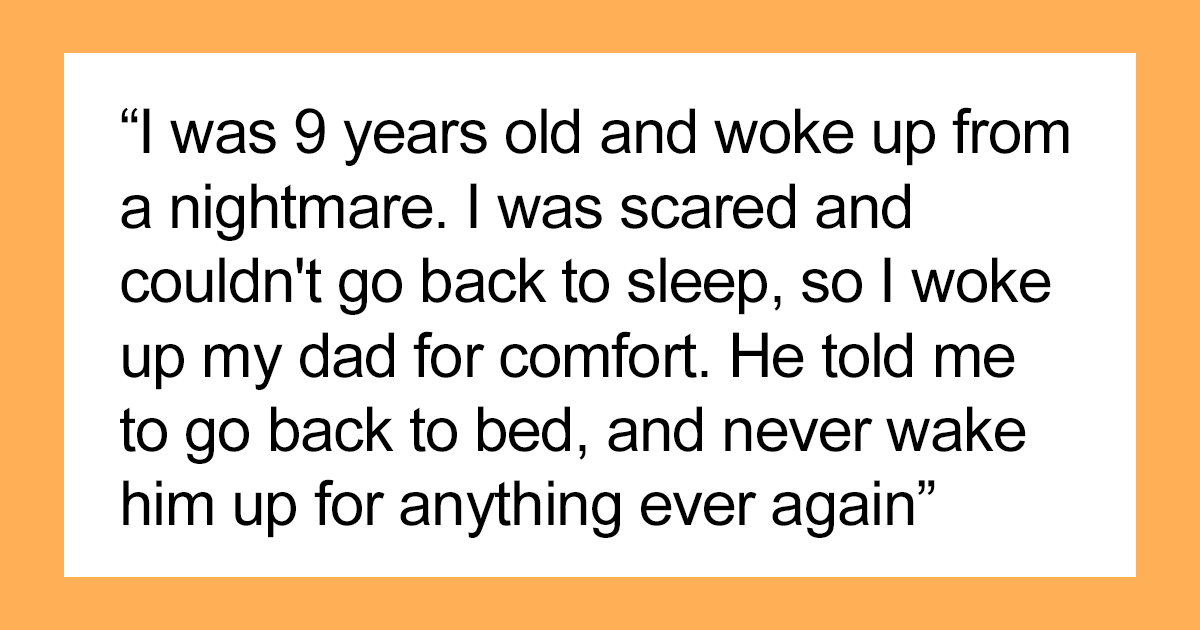
A tired parent, a frightened 9-year-old, and one badly worded command created the kind of family story that sounds funny only after everyone survives it.
According to a first-person story shared online, a girl woke her father after having a nightmare. Instead of comforting her, he reportedly told her to return to bed and never wake him up in the middle of the night againfor anything. She listened. Not approximately, creatively, or with an invisible emergency clause. She followed the instruction exactly.
About a week later, the child was awake at night when she heard someone trying to enter the house. She watched the person test the front door, move toward the back of the property, and even reach through a dog door in an apparent attempt to grab the handle. Terrified, she remained quiet until the person left. Then she returned to sleep without waking her parents.
The next morning, her father and stepmother were horrified. Why had she not awakened them? Her answer was painfully simple: Dad had said not to wake him for anything.
The story is a dramatic example of malicious compliance without much actual malice. More importantly, it reveals how easily adults can assume that children understand exceptions, priorities, and context that were never explained. Parenting at 2 a.m., it turns out, is not where the human brain produces its finest contract language.
What Happened in the Viral Nighttime Story?
A Nightmare Led to a Harsh Rule
The storyteller recalled being 9 years old when she woke from a nightmare and went to her father for comfort. Nightmares can feel completely real to children, especially during the first confused moments after waking. The girl was scared, unable to return to sleep, and seeking reassurance from the adult she trusted to make the world feel safe again.
Her father was apparently more interested in returning to sleep. He sent her back to bed and used an absolute instruction: never wake him again for anything.
Adults often use exaggerated language when frustrated. “You always lose your shoes.” “You never listen.” “Do not bother me for anything.” Grown-ups usually recognize these phrases as emotional overstatements. Children, however, may hear them as rules.
An Apparent Intruder Tested the Rule
Several nights later, the girl was sleeping on the couch after being allowed to stay up and watch television. During a nighttime bathroom trip, she heard tapping at the front door. The person outside reportedly tried the entrance for several minutes, moved into the yard, and attempted to reach through a dog door near the back entrance.
The child froze. That response is not unusual during a frightening event. Popular culture loves to imagine people immediately transforming into fearless action heroes, but the nervous system may choose fight, flight, freeze, or another automatic survival response. A frightened child cannot be expected to assess a possible break-in like a trained emergency professional.
The intruder eventually gave up. The girl did not wake her father because she was following the most recent and most forceful instruction she had received.
The Parents Finally Added the Missing Exception
When the girl described the incident the next morning, her parents reportedly told her that waking them would have been acceptable because the situation was an emergency.
There was just one problem: no one had defined an emergency for her.
From the child’s perspective, her earlier nightmare had also felt urgent. She had been frightened, sought help, and was told that her reason was not important enough. When the possible intruder appeared, she had no reliable way to know whether this fear would be judged differently.
That is the heart of the story. The child did not fail to use common sense. The adults failed to give her a usable rule.
Why Children May Take Adult Instructions Literally
Children Do Not Share an Adult’s Mental Footnotes
Adults constantly add silent qualifications to their own words. A parent who says, “Do not interrupt me,” may internally mean, “Do not interrupt unless someone is injured, the house is unsafe, you are sick, or something truly unusual is happening.”
The child hears four words.
At age 9, children can understand cause and effect, follow increasingly complex instructions, and recognize many kinds of danger. However, they are still developing judgment through experience. They may not reliably infer exceptions that adults consider obvious, particularly after being scolded.
Fear of punishment can also override problem-solving. A child who believes that waking Dad will lead to anger may focus more on obeying the rule than evaluating the danger. The brain is effectively asking, “Which known consequence should I avoid?” Dad’s anger is known. The stranger outside is confusing and uncertain.
Strong Emotions Make Flexible Thinking Harder
Even adults struggle to think clearly when frightened. Children have fewer experiences to draw upon and less confidence in their decisions. A shadow near a window could be a tree branch, a family member, or an intruder. A child who has been discouraged from seeking help may decide that silence is the safest available option.
This is why emergency instructions should be short, specific, and practiced. “Wake me immediately if you hear someone trying a door or window” is clearer than “Use your judgment.” The first gives the child an observable trigger. The second hands a major safety decision to someone who still needs permission to stay up past bedtime.
Nightmares Are Not Meaningless to a Frightened Child
Occasional nightmares are common during childhood. A nightmare usually wakes the child, who may remember the frightening dream and seek comfort. This differs from a night terror, during which a child may scream or appear terrified without fully waking or remembering the event the next day.
After a nightmare, calm reassurance can help a child recognize that the dream has ended and the present environment is safe. A brief hug, a quiet check of the room, a drink of water, or several minutes of calm conversation may be enough. Parents can provide comfort while still guiding the child back toward independent sleep.
Comfort does not require launching a three-hour family summit beneath the glow of a dinosaur night-light. It means responding without ridicule, anger, or rejection.
For children between ages 6 and 12, sleep experts generally recommend 9 to 12 hours of sleep within a 24-hour period. Consistent bedtimes, relaxing routines, age-appropriate media, and a comfortable sleeping environment can support better rest. When nightmares happen frequently, disrupt daytime functioning, create intense fear of bedtime, or follow a traumatic experience, parents should discuss them with a pediatrician or qualified mental health professional.
Healthy Bedtime Boundaries Are Still Possible
The lesson is not that parents must cheerfully host a pajama-clad visitor beside their bed every 17 minutes. Exhaustion is real, and repeated nighttime disruptions can affect the entire household. Parents can establish limits without making children believe help is unavailable.
Use a Two-Part Nighttime Rule
A safer instruction contains both a boundary and an exception:
“Try to return to sleep on your own after an ordinary wake-up, but always wake me if you feel unsafe, are sick or hurt, see smoke, hear someone entering, or believe something serious is wrong.”
This tells the child what independence looks like while keeping the emergency channel open.
Define What Counts as an Emergency
Families should discuss examples appropriate to the child’s age. A child should wake an adult immediately when:
- Someone appears to be entering the home.
- A smoke alarm, carbon monoxide alarm, or security alarm activates.
- There is smoke, fire, a strong gas odor, or an unusual burning smell.
- The child or another person is seriously hurt, very sick, bleeding heavily, or struggling to breathe.
- A younger sibling is missing, wandering, choking, or in danger.
- The child hears breaking glass, repeated pounding, or unexplained voices inside the home.
- The child feels unsafe and cannot determine what is happening.
The final example matters. Children should not be required to prove that a situation is dangerous before asking for help.
Create a Separate Plan for Non-Emergency Wake-Ups
Parents can give children a simple routine for ordinary nighttime problems. They might use the bathroom, take a sip of water, adjust a blanket, turn on a dim night-light, hug a comfort item, practice slow breathing, and return to bed.
A family could also agree that a scared child may briefly wake a parent for reassurance but will then be escorted back to bed. This approach protects sleep without turning the parents’ bedroom into a customer service desk that closes precisely when the customer is most frightened.
Every Family Needs a Nighttime Safety Plan
Teach Children How and When to Call 911
Children who are developmentally ready should know how to call 911, state their name, describe the emergency, and provide their home address. They should understand that 911 is for immediate danger, serious injury, fire, or another urgent threatnot for locating a missing television remote.
Practice can reduce hesitation. Parents can role-play without using a real emergency line: “You smell smoke and cannot wake me. What do you do?” or “Someone is trying the back door. Where do you go, and who do you call?”
Do Not Ask a Child to Investigate
A child who hears a suspicious sound should not walk through the home carrying a kitchen knife, baseball bat, or heroic confidence borrowed from an action movie. The safer response is usually to move away from the possible threat, wake a responsible adult, lock or barricade a room if necessary, leave through a safe exit when appropriate, and contact emergency services.
Families should tailor plans to their home’s layout. Children need to know which exits are usable, where to meet outside during a fire, and which trusted neighbor may help if parents are unavailable.
Secure Doors, Windows, and Pet Entrances
The dog door in the viral story became a potential access point. Pet doors should be positioned and secured so that an intruder cannot reach nearby locks. Families can also check exterior lighting, window latches, door hardware, alarm functions, and sightlines around entrances.
Security measures are most effective when paired with communication. A strong lock helps prevent entry; a clear family rule helps ensure that someone speaks up when the lock is being tested.
The Bigger Parenting Lesson: Repair Matters
Parents lose patience. They say things they do not mean. They occasionally create rules with the legal precision of a note written on a napkin during an earthquake. One mistake does not permanently define a relationship, but refusing to repair it can deepen the damage.
A meaningful parental apology might sound like this:
“I was tired and spoke too harshly. I should not have told you never to wake me. You did nothing wrong by asking for comfort. You may always wake me when you feel unsafe, sick, hurt, or seriously scared. We are going to make a clearer plan together.”
This apology does four useful things. It accepts responsibility, removes blame from the child, replaces the unsafe rule, and restores permission to seek help.
Responsive relationships help children regulate emotions and develop trust. That does not mean eliminating every frustration or rescuing children from every uncomfortable feeling. It means remaining available enough that the child knows distress can be discussed rather than hidden.
Related Experiences That Show Why Clear Rules Matter
The following composite experiences reflect common nighttime parenting situations. They demonstrate how small differences in adult language can produce dramatically different outcomes.
Experience 1: The Smoke Alarm With a Low Battery
An 8-year-old hears a smoke alarm chirping after midnight. Earlier that week, her mother had complained that the alarm was “always making noise for no reason.” The child assumes the new sound is another annoyance and covers her head with a pillow.
The chirp is only a low-battery warning, but the incident reveals a dangerous ambiguity. The family later creates a simple rule: children wake an adult whenever any smoke or carbon monoxide alarm makes noise, even if they think it is a mistake. Adults can diagnose the device. Children should not be expected to decide whether an alarm deserves attention.
Experience 2: The Child Who Was Afraid of Getting in Trouble
A 10-year-old becomes sick during the night but remembers being scolded for waking his parents several nights earlier. He stays in bed, hoping the nausea will pass, until he vomits and becomes dehydrated.
His parents realize that their frustration about repeated bedtime stalling accidentally communicated a broader message: nighttime needs are irritating. They clarify that requests for another story or a missing toy can wait, while vomiting, breathing difficulty, severe pain, bleeding, or feeling dangerously unwell always justify waking an adult.
Experience 3: The “Monster” That Was a Real Problem
A child repeatedly says there is a monster scratching inside the wall. Her father confidently explains that monsters are imaginary and tells her to stop mentioning it. Days later, the family discovers an animal in the attic.
The child’s interpretation was wrong, but her observation was useful. Parents do not need to confirm that monsters exist. They can say, “I believe you heard something. Let’s check what could be causing the sound.” This validates the experience without endorsing an impossible explanation.
Experience 4: The Successful Nighttime Check-In System
A family dealing with frequent wake-ups creates two categories. For a routine wake-up, the child uses the bathroom, gets water from a safe bedside bottle, hugs a stuffed animal, and tries slow breathing. For an urgent wake-up, the child immediately calls for a parent.
The parents practice examples during daylight hours. Nightmare? A brief check-in is allowed. Smoke smell? Wake everyone immediately. Strange person outside? Move away from the window and get an adult. Minor boredom? Return to bed. The child becomes more independent because the rules are clearer, not because help has been withdrawn.
Experience 5: The Parent Who Repaired the Mistake
After snapping at his daughter during a difficult night, a father apologizes the next morning. He explains that adults can be tired and grumpy but are still responsible for speaking safely. Together, they write a nighttime plan and place it near her bed.
The apology does not erase the unpleasant moment, but it changes what the child learns from it. Instead of concluding, “My feelings are a burden,” she learns, “People can make mistakes, take responsibility, and restore trust.” That may be the most valuable experience of all.
Conclusion
The story of the dad who told his 9-year-old never to wake him again is memorable because the child’s logic was flawless. She obeyed exactly, and the adults discovered that the rule they intended was not the rule they communicated.
Children need bedtime boundaries, opportunities to self-soothe, and age-appropriate independence. They also need permanent permission to seek adult help when they are sick, hurt, frightened, or uncertain about safety. Those goals are not opposites.
A good family rule is not “Never wake me.” It is: “Try the ordinary solution first, but when something feels dangerous or seriously wrong, come get me immediately.” That sentence may cost a parent a few minutes of sleep. It could also prevent a frightened child from facing a genuine emergency alone.
Note: This article discusses an unverified personal story shared online and provides general parenting and safety information. It is not a substitute for individualized medical, mental health, security, or emergency advice.