

Note: This original article is research-informed, rewritten in fresh language, and prepared without citation placeholders or unnecessary publishing elements.
Modern design has a funny way of making us stop scrolling. One second we are looking for a quick distraction, and the next we are emotionally attached to a staircase, a door hinge, or a reading nook that looks like it was designed by someone who understands both architecture and the sacred human need to hide from emails.
The online design world is full of beautiful things, but the best modern design examples do more than look attractive. They solve problems. They save space. They make ordinary routines feel smoother. They turn a hallway, a pool, a library, or a tiny apartment corner into something memorable. That is why collections like the “Call It Design” page have become so addictive for design lovers. They gather the kind of ideas that make people say, “Why does my house not have this?” followed quickly by, “Can I build this with no budget and one screwdriver?”
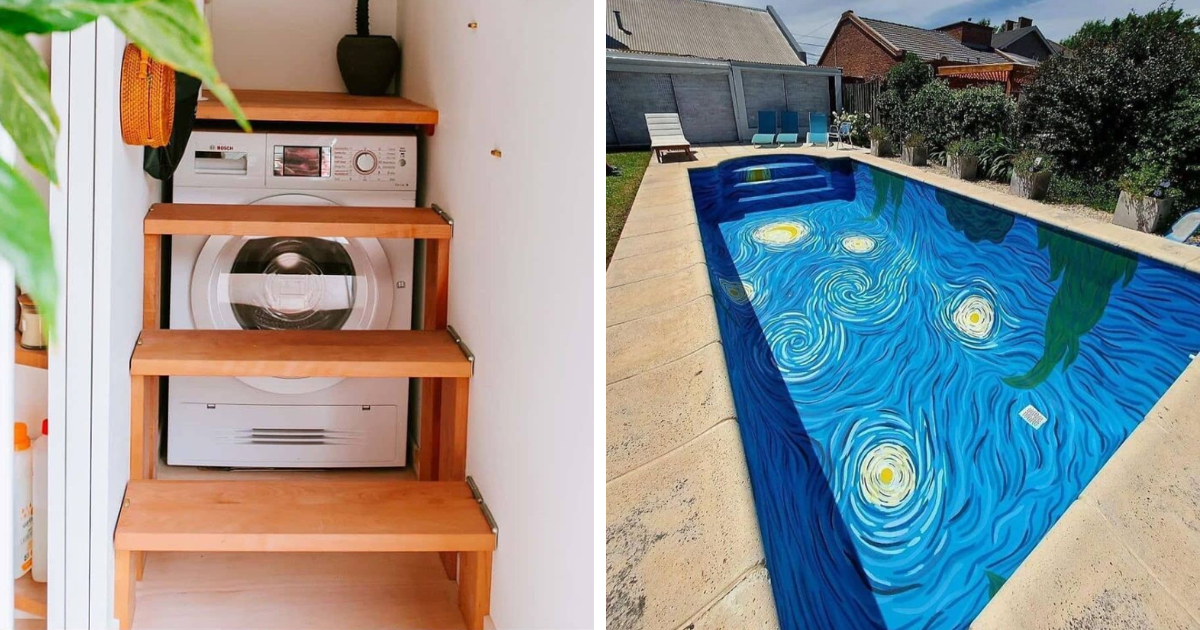
This article explores what makes these 50 examples of modern design feel so perfectly executed. Instead of simply admiring pretty pictures, we will look at the principles behind them: function, emotion, minimalism, material choice, sustainability, comfort, visual surprise, and clever use of space. Because great design is not just about looking expensive. Sometimes it is about making a washing machine hide under a staircase like it is in witness protection.
What Makes Modern Design “Perfectly Executed”?
Modern design is often misunderstood as a synonym for cold, empty, white rooms where nobody is allowed to own a blanket. In reality, the best modern design is warm, useful, intentional, and surprisingly human. It balances clean lines with comfort, technology with simplicity, and beauty with everyday practicality.
A perfectly executed design usually does three things at once. First, it solves a real problem. Second, it creates a strong visual impression. Third, it feels natural to use. When a door opens smoothly, a built-in shelf fits exactly where it should, or a compact staircase doubles as storage, the design quietly improves life without demanding applause. Of course, the internet still applauds. The internet applauds a good hidden drawer like it just won an Oscar.
The Rise of Dedicated Modern Design Pages
Dedicated design pages have become digital museums for everyday innovation. They collect ideas from architecture, interiors, furniture, public art, product design, and urban spaces. Unlike traditional galleries, these pages are fast, visual, and community-driven. A single image of a clever door, floating staircase, or tree-integrated mural can travel around the world in hours.
The popularity of these pages shows that people are hungry for smart design. Viewers are not only looking for luxury homes or impossible mansions. They also love small, realistic improvements: foldable furniture, hidden storage, creative lighting, flexible rooms, and space-saving solutions that make a home more livable. Modern design has become less about showing off and more about making life feel better.
50 Modern Design Ideas That Capture the Best of All Time
The most memorable examples from modern design collections usually fall into a few powerful categories. Together, they show how creativity can transform both ordinary homes and public spaces.
1. Statement Doors That Act Like Art
A door is usually treated as a background object, but modern design refuses to let it be boring. Sculptural doors, pivot doors, carved wooden entrances, geometric panels, and optical-illusion surfaces turn a basic transition point into a design moment. A great modern door does not simply say “come in.” It says, “Welcome, and yes, someone here has taste.”
2. Creative Hinges and Invisible Mechanisms
One of the best signs of excellent design is when the small details are as thoughtful as the big ones. A clever hinge, hidden track, or seamless pivot system can make furniture and doors feel almost magical. These details remind us that modern design is not always loud. Sometimes perfection is a hinge doing its job so beautifully that hardware suddenly becomes interesting at dinner parties.
3. Libraries That Feel Like Sanctuaries
Modern libraries and reading rooms often combine warmth, vertical storage, soft lighting, and architectural drama. Floor-to-ceiling bookshelves, curved ladders, cozy mezzanines, and built-in seating create the feeling of a private retreat. In a world of notifications and tabs, a well-designed library is practically rebellion with cushions.
4. Staircases That Do More Than Connect Floors
Staircases are some of the most popular modern design examples because they offer so much creative potential. Floating stairs, spiral stairs, storage stairs, folding loft stairs, and stairs with integrated appliances prove that circulation space can be multifunctional. A staircase can hold books, shoes, laundry equipment, cabinets, drawers, or even a tiny office. That is not just design; that is square footage doing yoga.
5. Space-Saving Furniture for Small Homes
Modern living often means working with less space, especially in apartments and urban homes. Perfectly executed space-saving design includes Murphy beds, fold-down desks, nesting tables, modular sofas, sliding partitions, and built-in benches with hidden compartments. These ideas succeed because they respect reality. Not everyone has a ballroom-sized living room, and frankly, who wants to vacuum that?
6. Bunk Beds With Privacy and Personality
Modern bunk bed designs have moved far beyond basic stacked mattresses. Today’s best versions include reading lights, curtains, shelves, stairs, storage drawers, and private sleeping zones. They are especially useful for children’s rooms, vacation homes, guest rooms, and compact apartments. Good bunk bed design makes shared space feel generous instead of crowded.
7. Pools With Artistic Identity
A pool can be more than a blue rectangle in the backyard. Some modern pool designs use mosaic patterns, reflective surfaces, lighting, glass edges, or painted floors to create an immersive visual effect. A starry pool, for example, can turn a swim into something cinematic. It is still exercise, technically, but with better branding.
8. Murals That Interact With Nature
Some of the most beloved modern design examples combine public art with the surrounding environment. A mural that uses real tree branches as part of a painted figure’s hair is a perfect example of this idea. It works because it is simple, poetic, and instantly understandable. The design does not fight nature; it shakes hands with it.
9. Cozy Corners That Maximize Comfort
Modern interiors are not just about open space. They also celebrate the power of a well-designed corner. Window seats, built-in reading nooks, recessed lounges, fireplace benches, and small alcoves create emotional comfort. These spaces are popular because they feel personal. A cozy nook is basically architecture saying, “You have permission to ignore everyone for 45 minutes.”
10. Kitchens That Hide the Chaos
The best modern kitchens are not sterile showrooms. They are efficient, durable, and easy to maintain. Integrated appliances, concealed storage, handleless cabinets, induction cooking surfaces, deep drawers, and smart lighting help reduce visual clutter. The result is a kitchen that feels calm even when dinner is absolutely not calm.
11. Bathrooms That Feel Like Mini Spas
Modern bathroom design focuses on materials, light, and flow. Walk-in showers, floating vanities, wall-mounted fixtures, stone textures, backlit mirrors, and warm lighting can turn a small bathroom into a surprisingly relaxing space. Perfect execution comes from making the room easy to clean, easy to use, and pleasant to enter before coffee has done its work.
12. Lighting That Shapes the Mood
Lighting is one of the most powerful tools in modern design. Hidden LEDs, sculptural pendants, wall washers, skylights, under-cabinet strips, and adjustable task lights can completely change how a room feels. Great lighting does not merely brighten a space. It creates rhythm, contrast, atmosphere, and focus.
13. Natural Materials With Modern Forms
Wood, stone, clay, linen, glass, steel, and concrete all appear frequently in modern design. The trick is using them with restraint. A clean-lined wooden wall, a concrete sink, a stone island, or a steel-framed glass partition can feel timeless when the proportions are right. Natural materials keep modern spaces from feeling too digital or too showroom-perfect.
14. Indoor-Outdoor Connections
Modern architecture often blurs the line between inside and outside. Courtyards, glass walls, sliding doors, terraces, indoor gardens, and tree-centered layouts bring daylight and nature into daily life. This is not only beautiful; it supports comfort, ventilation, and a calmer atmosphere. Also, plants make every design look like it has its life together.
15. Minimalism With a Human Pulse
Minimalism works best when it is not empty for the sake of emptiness. Strong modern minimalism uses fewer elements, but each one has purpose. A single sculptural chair, a carefully placed lamp, or a quiet material palette can feel rich without being crowded. The goal is not to remove personality. The goal is to remove noise so personality can actually be heard.
Why These Examples Go Viral
Modern design examples spread quickly online because they provide instant satisfaction. Viewers can understand the idea at a glance: a hidden cabinet, a brilliant staircase, a door that looks like sculpture, a pool that resembles the night sky. These designs are visual, practical, and emotionally clear.
They also trigger a pleasant kind of envy. People imagine how the idea might improve their own homes or workplaces. A clever design does not feel distant like a celebrity mansion. It feels possible. Even when the budget is unrealistic, the idea itself can inspire smaller changes: better lighting, smarter storage, warmer materials, or a less cluttered layout.
The Design Principles Behind the Best Examples
Function Comes First
Modern design earns long-term value when it works. A beautiful chair that hurts your back is not a triumph; it is a sculpture with bad manners. The best designs improve movement, storage, comfort, access, cleaning, privacy, or safety. Beauty gets attention, but usefulness keeps the relationship alive.
Details Create Trust
Good design often lives in small decisions: the height of a shelf, the weight of a handle, the softness of a light source, the curve of an edge, or the way a drawer closes. When these details are right, the whole space feels more expensive, even if it is not. People may not identify every detail, but they feel the difference.
Emotion Matters
Modern design is not only rational. It can be playful, calming, dramatic, nostalgic, futuristic, or humorous. A tree mural that uses branches as hair works because it makes people smile. A hidden reading nook works because it feels safe. A dramatic library works because it makes knowledge feel grand. Design succeeds when it creates a memory.
Sustainability Is No Longer Optional
Modern design increasingly considers durability, repairability, efficient materials, low waste, and healthier interiors. A timeless piece that lasts for decades is often more sustainable than a trendy object replaced every season. The best modern design does not simply ask, “Does it look good?” It asks, “Will this still make sense later?”
How to Apply These Ideas at Home
You do not need a celebrity architect or a bank account shaped like a yacht to borrow lessons from high-performing modern design. Start with the problems in your own space. Is your entryway messy? Add closed storage, hooks, and a bench. Is your living room visually noisy? Reduce competing colors and improve lighting. Is your bedroom too small? Consider wall-mounted shelves, under-bed storage, or a foldable desk.
Next, choose one area where design can provide both beauty and function. A new light fixture, a built-in shelf, a better door, a compact dining table, or a warm material accent can change the feeling of a room. Modern design works best when it is intentional, not when every trend is thrown into the same space like a design smoothie.
Experience-Based Reflections on Modern Design
One of the most interesting things about modern design is how quickly it changes the way people behave. A well-designed room does not just sit there looking photogenic. It quietly teaches you how to use it. A bench near the entrance encourages people to remove their shoes. A shelf at the right height invites organization. A reading corner makes it easier to read. A bright kitchen island turns into the place where everyone gathers, whether or not they were invited to supervise the cooking.
From personal experience observing homes, offices, cafes, and public spaces, the best modern designs are rarely the most complicated ones. They are the ones that feel obvious after you see them. A hidden laundry area under the stairs feels brilliant because the space was already there, waiting to be useful. A built-in desk beside a window feels natural because it uses light and view instead of fighting them. A wall niche for books or decor feels satisfying because it adds depth without taking up extra floor space.
Modern design also teaches patience. Many people think a great room comes from buying more items, but often the opposite is true. A room improves when it has fewer weak decisions. Removing oversized furniture, tangled cords, unnecessary decor, harsh lighting, and awkward storage can make a space feel instantly more designed. Sometimes the most luxurious design move is simply giving everything enough breathing room.
Another lesson is that comfort should never be sacrificed for style. The internet loves dramatic interiors, but real life requires places to sit, surfaces to use, storage that opens easily, and lighting that does not make people feel like they are being interrogated. A perfectly executed modern design respects the body. Chairs should support. Tables should be reachable. Handles should feel good. Floors should survive actual humans. A beautiful home should not require guests to move like museum thieves.
Modern design is also deeply personal. Two people may admire the same minimalist kitchen, but one wants warm oak cabinets and the other wants black stone and steel. Both can be modern. The difference is not whether the design follows a strict formula; it is whether the choices support the person living there. The best design examples from dedicated pages become popular because they balance universal appeal with a specific point of view.
Finally, the biggest experience-based takeaway is that modern design works when it makes daily life feel lighter. It reduces friction. It answers small problems before they become daily annoyances. It gives beauty a job. That is why a clever staircase, a sculptural door, or a cozy reading nook can capture so much attention. People are not only reacting to the image. They are reacting to the possibility of a better routine, a calmer home, and a space that finally seems to understand them.
Conclusion
The best examples of modern design are not perfect because they are expensive, rare, or impossible to recreate. They are perfect because they combine imagination with purpose. They turn ordinary elements into memorable experiences: a door becomes art, a staircase becomes storage, a library becomes a sanctuary, and a small corner becomes the best seat in the house.
Dedicated modern design pages continue to inspire because they remind us that design is everywhere. It is in the hinge, the handle, the light, the wall, the shelf, the mural, the pool, and the place where we finally put our keys so they stop disappearing into another dimension. When executed well, modern design does more than decorate life. It improves it, quietly and beautifully, one smart idea at a time.