

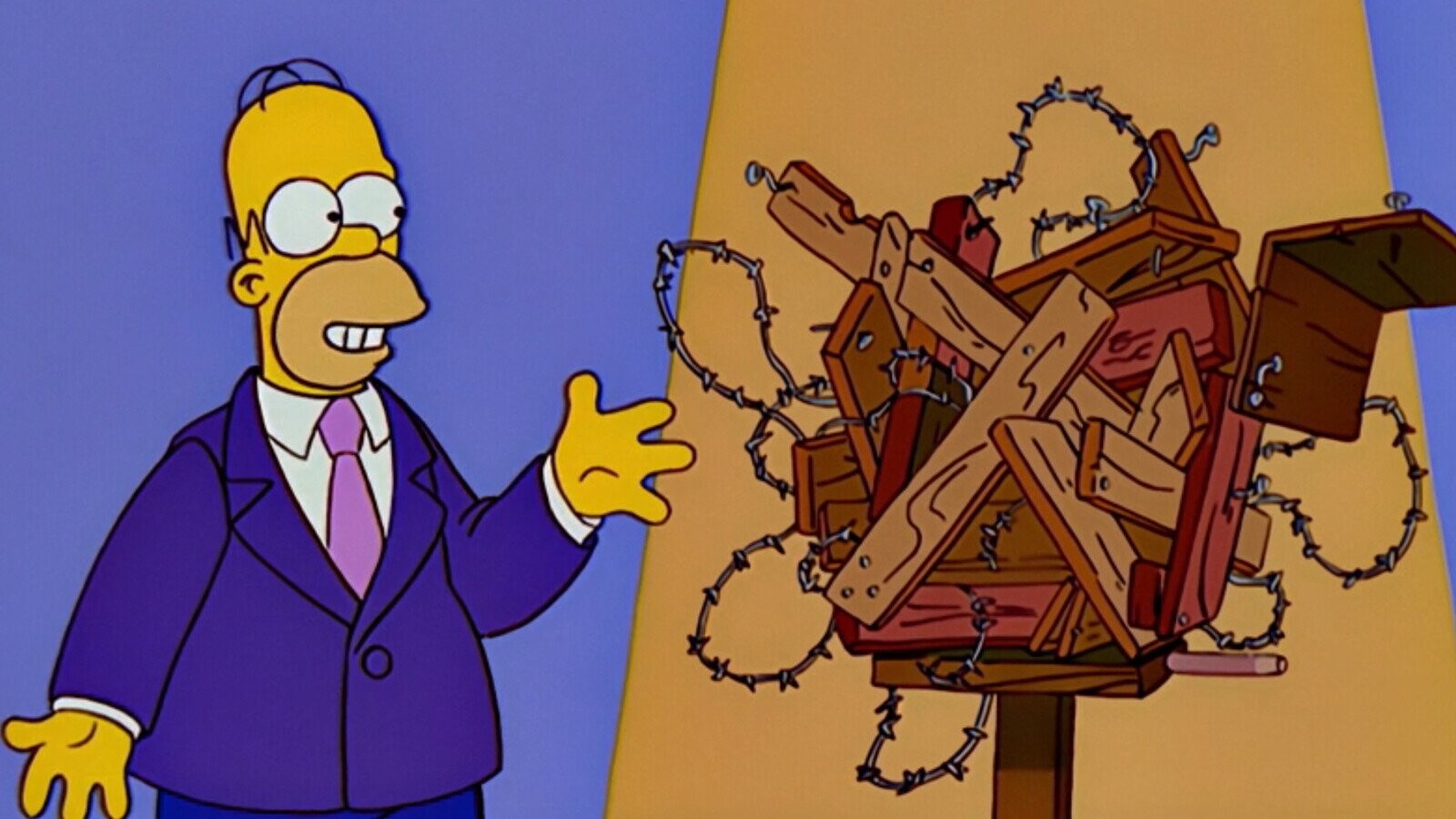
There are few signs of cultural legitimacy more dramatic than this: one day you are a cartoon boy blamed for bad manners, skateboard recklessness, and the collapse of civilization as adults know it; the next day you are hanging in a museum in Austria like a yellow-tinted Renaissance miracle. That, in essence, is the story behind a remarkable exhibition devoted entirely to The Simpsons, the animated juggernaut that has gone from once-controversial television troublemaker to globally recognized cultural heritage.
The exhibit, staged at Karikaturmuseum Krems in Austria, treats The Simpsons not as disposable pop culture but as something worthy of careful viewing, historical context, and, yes, the sort of slow nod museum visitors give while pretending they always understood cartoon art on a spiritual level. It is a smart idea, and honestly, it was probably inevitable. For decades, The Simpsons has functioned as a satire machine, an art object, a record of American anxieties, and a master class in visual storytelling. If a museum wasn’t going to claim it eventually, that would have been the weirder twist.
Why This Simpsons Exhibit Matters
The headline sounds delightfully absurd at first. A full exhibition about Homer, Bart, Lisa, Marge, Maggie, Mr. Burns, and the rest of Springfield? In Austria? It has the same energy as discovering your old doodles are now in climate-controlled storage. But the more you think about it, the more it makes perfect sense.
The Simpsons is not just a successful TV show. It is one of the defining works of modern American satire. Since its roots in The Tracey Ullman Show and its expansion into a weekly series at the end of the 1980s, it has influenced comedy, television writing, political parody, animation, and how popular culture talks about itself. It has also been astonishingly durable. At a time when hit shows vanish after a few seasons and entire streaming libraries disappear overnight like socks in a dryer, The Simpsons has remained a vivid, evolving institution.
That longevity matters because museums often step in when something moves beyond entertainment and becomes a document of its era. Great exhibitions are not only about beauty. They are about influence, craft, and memory. The Simpsons checks all three boxes in thick black marker.
The Austrian Exhibit: What Visitors Actually See
The Austria exhibition is built around original production materials from the show’s hand-painted years. That detail is crucial. Before the series became fully digital, episodes were produced using physical animation materials such as cels, storyboards, and other visual planning elements. Those objects are more than behind-the-scenes scraps. They are the labor-intensive building blocks of animation history.
Visitors are not simply walking into a room full of nostalgic screenshots. They are seeing the real artifacts that helped create the look, rhythm, and comic timing of The Simpsons during its early and especially influential run. This includes artwork from the first 13 seasons, an era many fans treat as the show’s creative Olympus. If television has a Mount Rushmore, Springfield has already claimed a suspiciously large patch of rock.
That focus on original production art elevates the exhibit beyond fandom. It reminds viewers that animation is not magic generated by a button. It is built image by image, expression by expression, joke by joke. A single cel may look simple at first glance, but it carries the fingerprints of an entire production method: line work, color decisions, staging, composition, and movement imagined before it ever flickered on a screen.
From Broadcast Ephemera to Cultural Heritage
One of the most interesting aspects of the exhibit is the change in status it represents. Television animation was once treated as disposable. It aired, entertained, and vanished into reruns. But when museums collect and display original production materials, they effectively say: this work deserves preservation, study, and public attention. That shift is huge.
It also fits the broader museum trend of taking animation seriously. In recent years, museums and cultural institutions have increasingly displayed cels, concept art, and storyboards from animation history to highlight craftsmanship that audiences often overlook. In that sense, the Austria show is not a gimmick. It is part of a larger cultural correction. Cartoons have always been art. The museum world is simply catching up.
Why The Simpsons Belongs in a Museum
There are at least four strong reasons why The Simpsons is museum-worthy.
1. It Changed Television Comedy
When The Simpsons arrived, it helped redefine what animated television could do in prime time. It was fast, layered, referential, and fearless about mocking politics, media, religion, consumer culture, education, and family life. It was silly enough for slapstick and smart enough for literary references, art jokes, and philosophical one-liners. That range is rare.
The show also created a new model for mainstream satire. Earlier traditions certainly existed, from MAD magazine to classic sitcoms that poked at social norms, but The Simpsons blended family comedy with relentless cultural commentary in a form that felt both accessible and sharp. It made sophisticated satire look effortless, which is annoyingly difficult and therefore worthy of respect.
2. Its Visual Language Is Instantly Recognizable
Many famous shows are remembered for dialogue. The Simpsons is remembered for images too: the couch gag, the power plant glow, the suburban skyline, Lisa’s saxophone silhouette, Homer backing into a hedge like a man trying to retreat from consequences. The design is simple enough to be iconic and flexible enough to support wild parody.
This visual identity matters in a gallery context because it allows viewers to appreciate composition and character design separately from plot. A museum can frame a cel the way a cinema study class frames a shot: as evidence of choices. Why is Homer posed that way? Why does Burns look like a withered vulture in a suit? Why does Springfield always feel both generic and hyper-specific? In a gallery, those questions become part of the fun.
3. It Is a Record of American Life
At its best, The Simpsons works like a comic archive of American habits and hypocrisies. The show has spent decades satirizing consumerism, politics, media panic, class anxiety, bureaucracy, celebrity culture, art markets, education systems, and suburban dreams. It is not documentary, obviously. Nobody is arguing that yellow skin is a census category. But it captures social truths through exaggeration.
That is one reason international audiences still connect with it. The details are American, but the themes are global: family chaos, civic absurdity, vanity, nostalgia, greed, aspiration, and the daily struggle of trying to be decent while also being kind of ridiculous.
4. The Show Understands Art Better Than People Expect
One of the sneakiest things about The Simpsons is how often it comments on art, museums, taste, collecting, and cultural status. It has spoofed high art, mocked pretension, explored the commercialization of creativity, and tossed fine-art references into episodes with the casual confidence of a show that knows exactly what it is doing. That makes a museum exhibition feel less like a random promotion and more like a clever closing of the circle.
In other words, the show didn’t just earn a place in an art space. It has been joking about that art space for years.
The Magic of the Hand-Painted Era
For animation lovers, the exhibit’s greatest appeal may be its emphasis on materials from the first 13 seasons. That era occupies a special place in the show’s history, not only because many fans regard it as a creative high point, but because it belongs to a transitional period in animation production. The physicality of cels, drawings, and painted layers gives the work a tactile charm that digital production does not replicate in the same way.
That does not mean digital animation is lesser. It means the object changes. A hand-painted cel can be framed, studied, conserved, and admired as a singular production artifact. It reveals labor in a very direct way. Tiny paint choices, registration alignment, line quality, and texture become visible. What looked like a quick gag on TV can suddenly feel like a miniature painting with a punchline.
This is why museum display changes the viewer’s relationship to the work. In a living room, a joke lasts two seconds. In a gallery, you can stand in front of Bart’s smirk for five minutes and consider the anatomy of mischief. That may sound ridiculous, but that is exactly how art appreciation often works: attention transforms what seemed ordinary.
Animation as Fine Craft
There is also a democratizing pleasure in seeing animation materials treated with the same seriousness usually reserved for more traditional forms. Oil paintings get hushed admiration. Animation cels deserve some too. They require design discipline, timing, color sense, and collaborative precision. The Austria exhibit helps make that case visually, without needing a lecture from a curator wearing dramatic glasses.
From Scandal to Prestige: The Simpsons Grows Up
Part of what makes this exhibition so satisfying is the historical irony. The Simpsons was once accused of encouraging disrespect, underachievement, and all-purpose brat energy. Bart Simpson became a cultural flashpoint. Parents worried. Politicians commented. T-shirts caused controversy. America briefly behaved as though a chalkboard gag might undo civilization.
Now the same franchise is celebrated in a European museum context as cultural heritage. That is not hypocrisy so much as time doing what time does best: revealing which supposedly unserious things were actually important all along.
Prestige, of course, can be dangerous. Once a work enters the museum, some people start speaking about it as if it requires solemn reverence and a catalog essay written in five layers of metaphor. The Simpsons should resist that trap. Its greatness lies in the combination of craft and accessibility. It is art, yes, but it is art that still wants to make you snort-laugh at a badly timed scream or a sign in the background that says something wonderfully stupid.
What This Exhibit Says About Pop Culture Now
The Austria exhibition also tells us something broader about the present moment. The wall between “high art” and “mass culture” has been crumbling for years. Museums now engage more openly with comics, design, animation, gaming, street art, film props, and other forms once dismissed as too commercial or too common. That is not a lowering of standards. It is often a smarter understanding of cultural influence.
The Simpsons is a perfect test case because it occupies multiple categories at once. It is mainstream entertainment, visual art, satire, social commentary, and nostalgia object all at once. It belongs to the era of broadcast television, but it also thrives in internet meme culture. It is deeply American and unmistakably international. Few works travel that well across media, generations, and cultural hierarchies.
So when an Austrian institution devotes an entire exhibition to it, the message is bigger than “people like Homer.” The message is that pop culture can generate objects, images, and ideas worth preserving. The museum is not lowering itself to the cartoon. It is recognizing the cartoon as one of the major visual languages of modern life.
The Experience of Visiting a Simpsons Exhibit
Imagine stepping into the exhibition as a longtime fan. You probably expect a rush of nostalgia first, and you get it. There is the color palette you know by heart. There are faces you could identify in silhouette from across a parking lot. There are visual jokes that once flashed by in seconds now sitting still, waiting for inspection. But then something interesting happens: nostalgia gives way to attention.
You start noticing line quality. You look at a background and realize how carefully a “simple” suburban scene was composed. You spot how expression carries the joke before dialogue ever arrives. You begin remembering that comedy is architectural. It has framing, balance, contrast, and rhythm. The exhibit lets viewers feel that architecture in slow motion.
For casual visitors, the show can work like a guided introduction to animation craft. For devoted fans, it feels more personal. It is a chance to see a beloved series not as streaming comfort food, but as an accumulation of human decisions made by artists, designers, animators, and writers over many years. It can be oddly moving to realize how much labor went into something that once felt as effortless as Sunday night television.
There is also a playful tension in seeing museum etiquette collide with Simpsons energy. You stand there, respectfully considering a production cel, while your brain is busy replaying Homer noises. Serious posture, unserious inner soundtrack. That contrast is part of the exhibition’s charm. It never asks you to stop enjoying the show’s silliness. It simply reveals that silliness to be expertly made.
Families likely experience the exhibit differently across generations. Older visitors may remember the show’s original rise and its early controversies. Younger visitors may know it through clips, memes, Disney+ marathons, or the simple fact that Homer Simpson is somehow still culturally unavoidable. In the gallery, those generations meet on common ground. One person remembers the first time Bart shocked adults on network TV. Another person laughs because the visual language still feels current. Good satire keeps renewing its passport.
And then there is the emotional effect of seeing cultural memory treated with care. People often underestimate how powerful that can be. We do not only visit museums to encounter unfamiliar objects. We also go to see familiar things reframed in a way that reveals their importance. A Simpsons exhibit does exactly that. It says your laughter was not trivial. These images mattered. They shaped how millions of people saw family life, politics, media, and the weird theater of everyday society.
By the time visitors leave, they may still be smiling at the absurdity of the premise. But they are likely to leave with a sharper sense of what animation can do, how satire travels, and why a cartoon family from Springfield has earned a place in the cultural conversation far beyond television. Not bad for a show once accused of corrupting the youth. Museums, it turns out, love a redemption arc almost as much as audiences do.
Conclusion
An Austrian art gallery devoting an entire exhibit to The Simpsons might sound like a punchline, but it is really a milestone. It recognizes the show as a major visual and cultural achievement: a body of work that shaped television, elevated satire, and produced imagery worthy of preservation. The exhibition honors not just famous characters, but the artistry behind them.
It also captures a truth many fans have known for years. The Simpsons was never “just” a cartoon. It is a record of social absurdity, a feat of collaborative design, and one of the most influential comic works of the modern era. Put it in a museum, hang it on a wall, light it carefully, and let people stare. Homer would probably still ask where the gift shop is, but that only makes the whole thing more perfect.