

Note: This guide is written for players who want a clear, practical route to Rivet City without getting chewed into decorative confetti by super mutants, raiders, mirelurks, radiation, or their own confidence.
Introduction: Why Rivet City Matters
Rivet City is one of the most important locations in Fallout 3, and reaching it can feel like a major milestone. The Capital Wasteland is not exactly famous for helpful street signs, clean sidewalks, or citizens who say, “Welcome, traveler, please enjoy this safe path.” Instead, it offers broken highways, mutant patrols, irradiated water, and the occasional enemy who sprints at you like you owe them bottle caps.
Still, learning how to get to Rivet City in Fallout 3 is worth the effort. This massive settlement is built inside a rusting aircraft carrier on the southeastern side of the map, near the Potomac River. It is home to useful merchants, doctors, quest characters, beds, lore, and the famous Science Lab where you can find Dr. Madison Li during the main quest Scientific Pursuits. Rivet City also connects to side content such as The Wasteland Survival Guide and The Replicated Man, making it more than just a fancy boat with trust issues.
This guide breaks the journey into nine simple steps. It covers how to prepare, which route to take, how to survive the trip, how to find the entrance, and what to do once you finally reach the city. Whether you are leaving Megaton for the first time or wandering into the southeastern wasteland because your Pip-Boy marker told you to “trust the process,” this walkthrough will help you arrive alive.
How to Get to Rivet City in Fallout 3: 9 Steps
1. Prepare Before Leaving Megaton or Your Current Safe Spot
Before you start marching toward Rivet City, treat preparation like a real part of the quest. The route is long for early-game players, and the Capital Wasteland does not reward people who pack like they are going on a picnic. Bring Stimpaks, RadAway, Rad-X, ammunition, and at least one reliable weapon that works at medium range. A hunting rifle, assault rifle, 10mm pistol, or laser pistol can all help, depending on your build and what you have looted so far.
If you are low level, repair your gear before leaving. A half-broken weapon is funny until it jams spiritually in the middle of a fight. Also, reduce unnecessary inventory weight. Carrying six coffee mugs, three bent tin cans, and a firehose nozzle might feel entrepreneurial, but it slows down your ability to loot better items later. Keep room for ammo, chems, and weapons you may find along the way.
It is also smart to save your game manually before the trip. Fallout 3 autosaves are useful, but relying on them alone is like trusting a raider with your lunchbox. Make a clean save before heading out so you can retry the journey if you run into a deathclaw, a bad fight, or the ancient enemy known as “I walked off a highway ramp.”
2. Set Rivet City or the Main Quest Marker on Your Pip-Boy
If your main quest has sent you to Rivet City, activate Scientific Pursuits in your Pip-Boy. This will point you toward the settlement and eventually toward Dr. Li. If you are not following the main quest yet, you can still travel there manually by heading southeast across the map toward the Potomac River and the large aircraft carrier near the Jefferson Memorial area.
Using the Pip-Boy marker is helpful, but do not follow it blindly. The marker may point in a straight line, while the actual world is full of collapsed bridges, blocked streets, metro tunnels, and hostile neighborhoods. The game is not broken; Washington, D.C. simply had a very bad century. Use the marker as a general direction, then choose your route based on terrain and danger.
Open both your world map and local map often. The world map helps you keep moving southeast. The local map is better when you are inside metro tunnels or urban ruins. If the compass marker seems to lead into a wall, tunnel, or pile of concrete, check the local map before blaming your Pip-Boy for having the navigational skills of a drunk radroach.
3. Choose the Safer River Route if You Are Low Level
For many players, the easiest route to Rivet City is to follow the Potomac River south. This path avoids some of the nastier inner-city fighting around the D.C. ruins. It is not perfectly safe, because this is Fallout 3, not a guided museum tour, but it is often more manageable than trying to push through super mutant-heavy streets too early.
From Megaton, head generally east or southeast toward the river. Many players pass near the Super-Duper Mart area, then work their way toward the riverbank. Once you reach the Potomac, follow it south. Keep your eyes open for enemies, mines, and ruined structures. Stay near the shore when possible, but be ready to swim short distances if the land route becomes awkward or blocked.
The river route has one obvious downside: radiation. Swimming or wading in contaminated water will increase your radiation level. This is why Rad-X and RadAway are useful. If you keep the swimming brief and use items wisely, the radiation is usually manageable. Think of it as the wasteland’s version of public transportation: unpleasant, slightly toxic, but effective.
4. Avoid Unnecessary Fights on the Way South
You do not need to defeat every enemy between Megaton and Rivet City. In fact, trying to do so can turn a simple travel objective into a dramatic reenactment of your own poor decisions. If you are under-equipped, avoid large groups of raiders, super mutants, and mirelurks whenever possible. Sneak around them, take wider paths, or retreat and reposition.
Use V.A.T.S. to identify threats before they get too close. If you see an enemy with a stronger weapon, take cover behind rocks, wrecked vehicles, or concrete barriers. Be careful around cars, because many can explode after taking damage. Nothing says “rookie mistake” like surviving three gunfights and then being launched into low orbit by a rusty sedan.
Companions can make the trip easier, but many players reach Rivet City before recruiting strong allies. If you are alone, travel patiently. Heal before your health gets dangerously low, and do not waste rare ammo on distant enemies you can simply avoid. The goal is to reach Rivet City, not to personally solve every social problem in post-apocalyptic America.
5. Watch for Landmarks Near the Jefferson Memorial Area
As you move farther south and east, start looking for major landmarks. Rivet City is hard to miss once you are close: it is a huge, rusting aircraft carrier sitting near the water. Nearby areas include the Jefferson Memorial and other D.C. ruins. If you see a large ship structure dominating the skyline, congratulationsyou have found civilization, or at least the wasteland’s best attempt at it.
The outside of Rivet City can be confusing for first-time players because the city is not entered through a normal front door at ground level. You are looking for the access platform on the northern side of the ship. Do not waste time trying every sealed door, underwater hatch, or random chunk of metal unless you are intentionally exploring. The main entrance uses a bridge controlled by security.
If enemies are nearby, clear them or move carefully before approaching. Rivet City security will not magically escort you from halfway across the wasteland. Once you get close to the ship and find the correct platform, the hard part is mostly over. Mostly. This is still the Capital Wasteland, so keep your weapon handy and your optimism modest.
6. Find the Metal Platform and Use the Intercom
To enter Rivet City, climb onto the metal platform outside the ship. Look for the intercom near the entrance area. Use it to contact Rivet City security. After you activate the intercom, the bridge should extend, allowing you to cross into the city. This drawbridge-style entrance is the normal way in, and it does not require lockpicking, hacking, or sacrificing your dignity to a broken door prompt.
If the bridge is not extended when you arrive, do not panic. Many new players stand outside the ship wondering why the giant settlement refuses to behave like a normal building. The answer is simple: use the intercom. Rivet City is protective because it is one of the safest and most organized settlements in the game. Also, when your city is an aircraft carrier in a mutant-filled wasteland, a retractable bridge is not paranoia. It is common sense.
Once the bridge extends, walk across and enter. Avoid falling into the water below unless you enjoy adding unnecessary swimming to a trip that already had enough cardio. After crossing, you will reach the interior access area and can begin exploring the city proper.
7. Discover the Rivet City Map Marker for Fast Travel
After you successfully reach Rivet City, make sure the location is discovered on your map. Once discovered, you can fast travel back later, assuming you are not over-encumbered, indoors, or near enemies. This is extremely useful because Rivet City becomes a major hub for quests, trading, healing, and story progression.
Fast travel turns the long, dangerous hike into a quick return trip. That means you can sell loot, restock supplies, visit doctors, and continue quests without repeating the entire river journey every time. It also makes Rivet City a good base of operations for exploring the southeastern part of the Capital Wasteland.
If the marker does not appear immediately, walk fully into the settlement and check your map again. Sometimes players think they have discovered a place when they have only stood near it, stared at it, and formed an emotional attachment. The game wants you close enough to officially register the location.
8. Visit Key Areas Inside Rivet City
Once inside, take time to learn the layout. Rivet City contains several important areas, including the marketplace, clinic, church, science lab, hotel, and residential sections. The marketplace is especially useful because you can buy and sell gear, restock ammunition, and unload the mountain of junk you collected while pretending every desk fan was part of a long-term investment strategy.
If you are following the main quest, head to the Science Lab to speak with Dr. Madison Li. She plays an important role in the story and can help move the main quest forward. If you are working on The Wasteland Survival Guide, Rivet City also provides historical information and characters connected to the city’s past.
Talk to residents, explore carefully, and listen for rumors. Rivet City is packed with quests and useful conversations. Like many settlements in Fallout 3, it rewards curiosity. Just avoid stealing unless you are ready to deal with angry guards. Rivet City security is not there for decoration, and they do not appreciate “accidental” theft of medical supplies.
9. Use Rivet City as a Launch Point for Future Exploration
After reaching Rivet City, you have opened up a powerful travel hub. From here, you can explore nearby D.C. ruins, continue the main quest, investigate side quests, and use the city as a safe place to recover. Its merchants, beds, doctors, and quest givers make it one of the most useful settlements in the game.
Because Rivet City sits in the southeastern part of the map, it also gives you a convenient fast travel point for future adventures. Instead of constantly starting from Megaton or another northern location, you can jump back to Rivet City and work outward. This saves time and reduces the number of dangerous road trips you have to make.
The first trip to Rivet City feels intimidating, but once you know the route, it becomes much easier. Prepare well, follow the river if you want a safer path, use the intercom at the platform, and remember to discover the map marker. That is the wasteland travel formula: plan, survive, arrive, sell junk, repeat.
Best Route Summary for Beginners
The beginner-friendly method is simple: leave Megaton, move toward the Potomac River, follow the river south, avoid unnecessary fights, look for the aircraft carrier, reach the northern platform, use the intercom, cross the bridge, and enter Rivet City. This route may expose you to some radiation, but it helps you avoid many of the more dangerous urban combat zones.
If you are more experienced or better equipped, you can cut through parts of the D.C. ruins or metro systems. However, new players often find those routes confusing because metro tunnels twist through multiple stations and exits. They can also contain raiders, ghouls, and other enemies. The river route is not glamorous, but it is direct. In the wasteland, “direct” is a luxury product.
Common Mistakes to Avoid
Trying to Enter Through the Wrong Part of the Ship
Rivet City looks huge, so it is natural to assume there are several obvious entrances. The main entrance, however, is the platform with the intercom. If you are swimming around the ship, poking at random doors, or wondering why the aircraft carrier is being rude, return to the northern access platform.
Ignoring Radiation
A little radiation will not instantly ruin your character, but ignoring it for too long can become a problem. Carry RadAway and use Rad-X before long swims. If you are already heavily irradiated, consider returning to a doctor after you unlock Rivet City.
Fighting Everything
The fastest way to make the trip harder is to treat every enemy as mandatory. You can avoid many fights. Save your ammo and health for threats that block your path directly.
Forgetting to Save
Manual saves are your best friend. Save before leaving, save after major progress, and save when you reach the outside of Rivet City. Future you will be grateful. Future you has suffered enough.
Player Experience: What the Journey to Rivet City Feels Like
The first trip to Rivet City is one of those classic Fallout 3 experiences that feels bigger than the objective itself. On paper, you are just going from one location to another. In practice, you are crossing a broken world where every hill, bridge, and half-collapsed building might hide something trying to kill you, sell you something, or ask you to solve a problem that began 200 years ago.
Leaving Megaton toward Rivet City can feel especially dramatic for new players. Megaton is rough, sure, but it has walls, shops, familiar faces, and a giant unexploded bomb that somehow starts to feel cozy after a while. Once you walk away from it, the wasteland opens up in every direction. The music fades in, the horizon looks enormous, and your brain begins asking practical questions like, “Did I bring enough ammo?” and “Why am I carrying three plungers?”
The river route creates a strong sense of adventure because it forces you to use the landscape. You are not simply following a glowing road. You are reading the world: keeping the river nearby, checking ruined bridges, watching for enemy movement, and deciding whether to risk a swim or stay on land. Even when nothing is attacking, there is tension. The water clicks with radiation. The shore may hide mirelurks. A distant gunshot might mean raiders, super mutants, or just the wasteland clearing its throat.
Then, after enough walking, fighting, healing, and muttering at your compass, Rivet City appears. That first view of the aircraft carrier is memorable because it looks impossible and practical at the same time. Of course people would turn a ship into a city. It has walls, height, metal, and limited access. In a world where most buildings have become enemy storage units, a floating fortress makes perfect sense.
The entrance adds to the feeling. You do not just stroll into Rivet City like it is a grocery store. You have to find the platform, press the intercom, and wait for the bridge. That small moment communicates a lot about the settlement. Rivet City is organized. It has security. It has rules. Compared with the lawless wasteland outside, that bridge feels like crossing from chaos into something almost civilized.
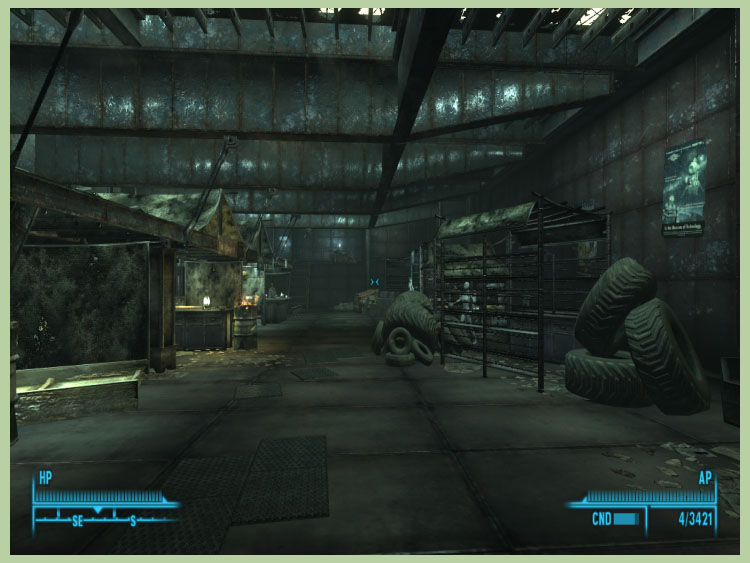
Inside, the mood changes again. Suddenly there are merchants, scientists, guards, children, arguments, rumors, and people trying to live normal lives inside a dead aircraft carrier. The marketplace feels busy. The Science Lab feels important. The narrow halls make the ship feel like a real community built out of limited space and stubborn survival. It is one of the reasons Rivet City stands out: it is not just a location marker. It feels like a place with history, politics, secrets, and plumbing that probably makes alarming noises at night.
For many players, reaching Rivet City also changes how they understand the map. The Capital Wasteland stops feeling like a random spread of danger and starts feeling connected. Megaton, the river, the D.C. ruins, the Jefferson Memorial, and Rivet City become part of a mental travel network. Once the fast travel marker is unlocked, the world feels a little less overwhelming. You have another safe point. Another place to sell loot. Another destination that says, “You survived the trip once; now you can survive worse.”
That is the real charm of getting to Rivet City in Fallout 3. The journey teaches you how the game wants to be played. Prepare carefully. Follow landmarks. Avoid fights you do not need. Use your map but do not worship it. Save often. Take the weird route if it works. And when you finally reach safety, enjoy the victory. In the Capital Wasteland, arriving alive is not a small achievement. It is basically a diploma.
Conclusion
Getting to Rivet City in Fallout 3 is a major early-game adventure, especially for players leaving the safer central areas for the first time. The safest beginner route is usually to follow the Potomac River south, manage radiation, avoid unnecessary battles, and look for the giant aircraft carrier near the southeastern side of the map. Once you reach the northern platform, use the intercom, wait for the bridge, and enter the city.
Rivet City is worth the trip because it offers merchants, medical help, story progression, side quests, and one of the most memorable settlement designs in the game. It also becomes a valuable fast travel point for future exploration. Prepare well, move carefully, and do not let the wasteland bully you into wasting all your Stimpaks before you reach the door. Rivet City may be rusty, crowded, and floating in questionable water, but compared with the road there, it feels like luxury.