

Building the world’s best channel sales program sounds glamorous until you realize it is basically like hosting a dinner party where every guest has a different diet, a different calendar, and a strong opinion about the seating chart. Partners want leads. Sales wants control. Customers want results. Finance wants margins. Leadership wants scale yesterday. And somewhere in the middle, the channel leader is trying to turn all of that into predictable revenue without needing a daily meditation retreat.
That is why the lessons associated with HubSpot’s former channel-sales leadership, especially the work often linked to Peter Caputa and HubSpot’s agency partner growth story, remain so useful. HubSpot did not simply recruit resellers and hope for magic. It helped agencies build better businesses, taught them how to sell inbound marketing, aligned incentives with customer success, and treated partners as an extension of the go-to-market engine rather than a loose collection of logo collectors.
The biggest lesson is also the most uncomfortable: do not blindly copy HubSpot. Copying a mature partner program before your company is ready is like buying a professional espresso machine before you know how to make coffee. It looks impressive, but soon everyone is jittery and confused. The better approach is to understand the principles behind a great channel sales program, then adapt them to your market, product, customers, and stage of growth.
What Is a Channel Sales Program?
A channel sales program is a structured system that enables third-party partners to help sell, implement, support, or expand a company’s products. In SaaS, these partners can include agencies, consultants, resellers, system integrators, referral partners, implementation specialists, technology partners, and marketplace partners.
A weak channel program says, “Here is our product. Please sell it. Good luck out there, brave little spreadsheet.” A strong channel program says, “Here is a market opportunity, a clear customer problem, a profitable partner business model, training, support, deal rules, co-selling motions, enablement, and a shared definition of success.”
The difference is enormous. A real partner program is not a side quest for the sales department. It is a business model. It needs strategy, operations, education, incentives, technology, partner marketing, customer-success alignment, and constant tuning.
The HubSpot Lesson: Think Marketing Before Sales
One of the most powerful ideas from HubSpot’s channel playbook is that partner recruitment should look more like marketing than traditional sales. Instead of chasing every possible reseller, the company attracted agencies by speaking directly to their problems: inconsistent lead generation, weak differentiation, project-based revenue, and the need to offer higher-value services.
This is where many companies make their first mistake. They pitch partners as if the partner’s only dream in life is to resell another software subscription. Spoiler alert: it is not. Partners care about profit, customer retention, service revenue, reputation, and operational sanity. If your product makes them look smart and helps them grow, they will pay attention. If it merely adds another portal login to their already chaotic lives, they will politely nod and then disappear into the fog.
To build a world-class channel sales program, start by defining your ideal partner profile with the same care you use to define your ideal customer profile. Ask practical questions: Which partners already serve our target customers? Which ones influence buying decisions? Which partners can deliver implementation or strategic services? Which ones have a business model that improves when our product succeeds?
Do Not Sell a Product; Sell a Better Business Model
HubSpot’s partner program gained momentum because it helped marketing agencies move from one-off projects to recurring services. That was not just a software pitch. It was a business transformation pitch.
This is the heart of great channel sales. Your partner should be able to answer, “How does this make my business more valuable?” If the answer is only “You get commission,” the program is thin. Commission is nice, but commission alone rarely creates loyalty. Partners need a bigger economic reason to invest time, train employees, change sales conversations, and build service packages around your platform.
For example, a cybersecurity SaaS company might help managed service providers create monthly security packages. A CRM platform might help consultants build implementation and RevOps retainers. An ecommerce software company might help agencies sell conversion optimization, store migration, and analytics services. The product matters, but the partner’s profit model matters more.
Build the Program in Stages
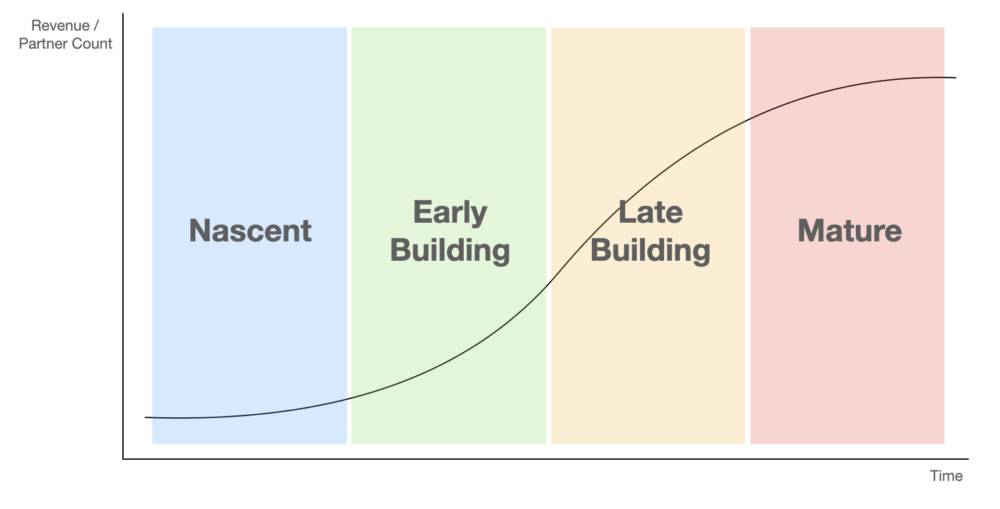
A channel sales program changes as it matures. In the beginning, the priority is learning. Later, the priority becomes scale. Eventually, the focus shifts toward quality, retention, expansion, and ecosystem orchestration.
Stage 1: Nascent
At the nascent stage, your main job is to prove that partners can create value at all. Keep the program simple. Recruit a small number of partners. Learn what they need. Watch where they struggle. Avoid building a giant tier structure before you have evidence. That is like designing airport traffic control for a driveway.
Stage 2: Early Building
At this stage, you start creating repeatable onboarding, sales training, partner marketing materials, and deal registration rules. You are still learning, but patterns are emerging. You should know which partner types perform best, what enablement they need, and which customer segments are most partner-friendly.
Stage 3: Late Building
Now the program needs stronger operations. Tiers, certifications, co-selling rules, partner managers, customer-success processes, and performance dashboards become more important. This is where companies begin separating casual partners from committed partners.
Stage 4: Mature
A mature channel program is no longer just about partner-sourced revenue. It includes partner-influenced pipeline, implementation quality, customer retention, product adoption, expansion revenue, and ecosystem value. At this point, the channel becomes a strategic growth engine rather than a sales experiment.
Recruit Partners Like You Recruit Employees
World-class channel programs do not accept every partner with a pulse and a LinkedIn profile. They recruit intentionally. A great partner is not simply someone willing to mention your product on a sales call. A great partner understands your customer, believes in your category, has complementary expertise, and can deliver value after the contract is signed.
Recruiting partners should include clear qualification criteria. Look at industry focus, customer base, sales capability, service delivery capacity, technical skills, cultural alignment, and willingness to invest in training. The best partners are often selective too. They want to know whether your company will support them, protect their opportunities, and help them win.
That means your partner recruitment message should not be, “Join our program.” It should be, “Here is the market opportunity. Here is how we help you win. Here is what successful partners are building. Here is why customers need this now.”
Create Enablement That Partners Actually Use
Most partner portals are where PDFs go to live quiet, unread lives. A strong channel sales program does not confuse “uploading resources” with enablement. Real enablement helps partners have better conversations, qualify better prospects, position the product clearly, handle objections, and deliver successful outcomes.
Partner enablement should include short sales plays, discovery questions, email templates, demo guidance, pricing explainers, competitive positioning, implementation checklists, case studies, and customer-success playbooks. Better yet, organize resources by partner type and sales stage. A new referral partner does not need the same material as an advanced implementation partner managing complex enterprise deals.
Certification can also help, but only when it proves useful capability. A badge should mean the partner can do something valuable, not merely that they survived a quiz while eating lunch.
Design Incentives Around the Outcome You Want
Incentives shape behavior. If you reward only closed deals, partners may push poor-fit customers. If you reward only referrals, they may toss over half-qualified names and call it pipeline. If you reward retention, implementation quality, and customer growth, partners are more likely to act like long-term advisors.
HubSpot’s modern partner model reflects this broader idea by recognizing different kinds of partner contribution, such as sourced deals, assisted deals, and managed customer relationships. That matters because not every valuable partner touches the same part of the customer journey. Some create demand. Some help close. Some implement. Some drive adoption and expansion.
A simple early-stage incentive model might include referral commission, co-marketing access, and basic sales support. A more advanced model might include tiered benefits, revenue share, implementation accreditation, marketplace visibility, dedicated partner managers, and co-selling support for top performers.
The golden rule is simple: never create incentives that make partners choose between their profit and the customer’s success. If that happens, the customer usually loses first, and the vendor loses later.
Protect Trust With Clear Deal Registration
Deal registration is one of the least glamorous parts of channel sales, but it is also one of the most important. Without clear rules, partners worry that direct sales teams will take their deals, other partners will claim their accounts, or the vendor will suddenly develop a mysterious case of “Who brought us this opportunity?”
A strong deal registration process defines who can register a deal, what information is required, how quickly the vendor responds, how long protection lasts, what happens if a deal stalls, and how conflicts are resolved. The process should be simple enough that partners use it, but detailed enough to prevent chaos.
Trust is the currency of a channel program. Once partners believe the rules are unfair, they reduce effort. They may still attend your webinar, but emotionally they have already packed their tiny suitcase and moved on.
Give Partners Qualified Referrals, Not Random Leads
One of the smartest channel-sales lessons is that partners do not want junk leads any more than your direct sales team does. Sending a partner a weak lead and calling it support is like gifting someone a gym membership after eating their birthday cake. Technically a gesture, emotionally questionable.
If you pass opportunities to partners, qualify them. Make sure the customer needs services the partner can provide. Share context. Explain urgency. Clarify budget, timeline, and business pain. When possible, match leads by industry, geography, expertise, language, and customer size.
Partner lead distribution should improve customer experience, not merely clear names out of a database. The best programs treat partner matching as a strategic customer-success decision.
Align Channel Sales With Customer Success
In SaaS, the sale is only the beginning. A partner who helps close a deal but cannot support implementation may create churn risk. A partner who delivers excellent onboarding may become a growth engine for renewals, expansion, and referrals.
That is why partner programs must measure more than bookings. Track activation, adoption, retention, customer satisfaction, expansion, and implementation quality. If a partner closes five deals but three customers fail to launch properly, the scoreboard is lying.
Great channel leaders build feedback loops between partner managers, sales, onboarding, support, product, and customer success. They ask: Which partners create healthy customers? Which partners need more training? Which services improve adoption? Which customer segments succeed fastest through partners?
Use Technology Without Letting Technology Run the Program
Modern partner relationship management tools can help with onboarding, deal registration, content access, training, analytics, co-selling, and partner communications. AI can also reduce administrative work, surface next-best actions, personalize enablement, and help partner teams scale support.
But software cannot fix a confusing strategy. A PRM platform placed on top of a messy partner program simply creates a more expensive mess with a login screen. Before investing heavily in technology, clarify partner types, rules of engagement, success metrics, enablement paths, and internal ownership.
The best channel technology supports human trust. It makes the program easier to understand, easier to use, and easier to measure.
What the World’s Best Channel Sales Program Looks Like
The world’s best channel sales program is not necessarily the biggest. It is the one where the vendor, partner, and customer all win in a repeatable way.
For the vendor, the program creates efficient market reach, credible customer influence, lower acquisition friction, stronger implementation capacity, and better retention. For the partner, it creates revenue, differentiation, services opportunities, customer trust, and long-term business value. For the customer, it creates a better buying experience and a better post-sale experience.
That triangle matters. If only the vendor wins, partners leave. If only the partner wins, customers churn. If only the customer wins but nobody makes money, the program becomes a charity with quarterly business reviews.
Common Mistakes to Avoid
Copying a Mature Program Too Early
Do not build complicated tiers, certifications, and incentive formulas before you have product-market fit and partner-market fit. Complexity should follow evidence, not ambition.
Recruiting Too Many Partners
A huge partner list looks good in a board deck, but inactive partners do not create revenue. Focus on partner activation, not partner accumulation.
Underinvesting in Partner Support
Partners need onboarding, sales coaching, technical help, marketing assets, and responsive communication. If they feel ignored, they will prioritize vendors who make them money with less friction.
Creating Channel Conflict
If direct sales and partner sales compete without clear rules, everyone loses. Define account ownership, co-selling expectations, compensation credit, and escalation paths early.
Ignoring Services Revenue
Many SaaS partners care deeply about services revenue. Help them package consulting, implementation, migration, training, analytics, and optimization services around your product.
A Practical Blueprint for Building Your Program
Start with a focused partner hypothesis. For example: “CRM consultants serving 50- to 500-person B2B companies can use our platform to sell RevOps implementation retainers.” Then recruit ten carefully chosen partners and work closely with them.
Next, build a simple enablement system. Create a partner pitch, sales deck, qualification checklist, demo script, implementation guide, and first customer-success checklist. Keep everything practical. Partners do not need a library; they need tools that help them win this week.
Then define your economics. Decide what partners earn for referrals, sourced deals, assisted deals, services, renewals, and expansions. Make sure your model supports healthy gross margins and does not reward bad-fit customers.
After that, create a partner operating rhythm. Hold onboarding sessions, monthly pipeline reviews, quarterly business reviews, and feedback sessions. Look for patterns. Which messages work? Which partners activate fastest? Which customer profiles close best? Which services improve retention?
Finally, scale what works. Add tiers only when partner performance varies enough to justify them. Add certifications when skills need formal validation. Add PRM technology when manual operations begin slowing growth. Add co-marketing when your best partners can turn attention into pipeline.
Experience-Based Lessons From Building and Observing Channel Programs
The most important experience-based lesson is that partners do not wake up thinking about your quota. They wake up thinking about their payroll, clients, reputation, pipeline, and whether their project manager is about to send another “quick question” that is not quick at all. If your channel program does not fit into the partner’s real business pressures, it will struggle no matter how exciting your product is.
In strong channel programs, the vendor acts less like a boss and more like a business coach. The best partner managers help partners package services, price retainers, run discovery calls, position outcomes, and avoid over-customized work that destroys margins. They do not merely ask, “What deals are closing this month?” They ask, “How can we help you build a healthier business around this solution?”
Another practical lesson is that the first 90 days of partner onboarding determine almost everything. If a partner joins and does not get a clear first win, enthusiasm fades quickly. A first win might be a certified employee, a co-hosted webinar, a registered opportunity, a successful implementation, or a packaged service offer. Momentum matters. Partners are busy, and a program without early action becomes another dusty badge on a website footer.
Experience also shows that channel conflict is rarely solved by inspirational speeches about teamwork. It is solved by rules, compensation alignment, and leadership discipline. Direct reps must understand when to involve partners and how they still receive appropriate credit. Partners must understand what qualifies as a real opportunity. Customers must never feel like they are caught in a custody battle between sales teams. When rules are clear, everyone relaxes and sells better.
One underrated lesson is that partner marketing needs specificity. Generic co-branded campaigns often sound like two companies trapped in a conference room with too much coffee and not enough customer insight. Strong campaigns focus on a narrow audience, a painful problem, and a practical offer. “Improve your revenue operations in 30 days” is stronger than “Transform your business with innovative solutions.” The second one sounds nice, but so does elevator music.
The best programs also learn to separate loud partners from productive partners. Some partners attend every event, comment on every announcement, and ask for special treatment, yet produce little revenue. Others quietly build repeatable service packages and send qualified opportunities. Data helps channel leaders avoid being distracted by volume and focus on value.
Finally, the most durable channel programs are built on customer outcomes. Revenue starts the relationship, but customer success sustains it. If partners help customers implement faster, adopt deeper, renew more often, and expand intelligently, the program becomes hard to beat. That is when a channel program stops being a sales tactic and becomes a market advantage.
Conclusion
HubSpot’s channel story remains powerful because it shows that a great partner program is not built by handing out commissions and hoping for the best. It is built by understanding partner economics, teaching partners how to grow, aligning incentives with customer success, and evolving the program as the market matures.
The world’s best channel sales program is not the one with the fanciest portal, the most complicated tiers, or the biggest partner directory. It is the one partners trust, customers benefit from, and the company can scale profitably. Build that, and your channel will become more than a revenue source. It will become a competitive moat with a very friendly handshake.