

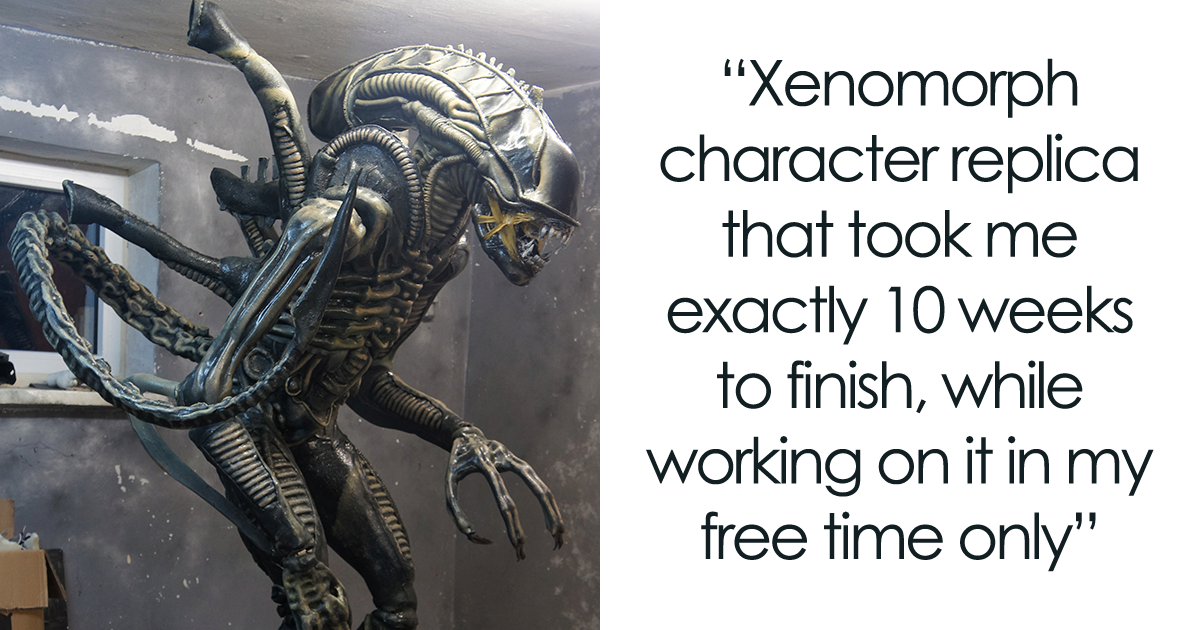
Some movie characters politely live on the screen. Others kick open the door of your imagination, drip acid on the carpet, and refuse to leave. The Warrior Alien from James Cameron’s 1986 science fiction classic Aliens belongs firmly in the second category. It is not just a monster. It is a walking nightmare, a biomechanical insect, a shadow with teeth, and quite possibly the worst roommate in the known universe.
That is exactly why replicating it is such a deliciously difficult creative challenge. The creature looks simple only if you squint from another galaxy. Up close, it is a maze of ribs, tendons, hoses, armor plates, claws, ridges, and wet-looking surfaces that seem alive even when they are made from foam, latex, paint, and patience. Lots of patience. The kind of patience that stares at a half-finished alien leg at 1 a.m. and says, “Yes, obviously this needs more terrifying ankle texture.”
This article explores what it takes to replicate a character from Aliens, why the Warrior Alien remains one of the most memorable creatures in science fiction film history, and how practical effects continue to inspire prop makers, sculptors, cosplayers, collectors, and movie fans decades after the film’s release.
Why the Warrior Alien From Aliens Still Feels So Real
Released on July 18, 1986, Aliens took the claustrophobic horror of Ridley Scott’s Alien and transformed it into a high-pressure action thriller. James Cameron did not simply repeat the original formula. He expanded the world, added Colonial Marines, deepened Ellen Ripley’s emotional journey, introduced Newt, and made the Xenomorph threat feel like a full-scale infestation.
The film’s official setup is brilliantly efficient: Ripley wakes after decades in hypersleep, warns people about the creatures, is ignored, and then returns to LV-426 with a military unit after contact with a colony is lost. It is a classic “please listen to the person who has already survived the disaster” situation. Naturally, almost nobody listens. Science fiction has many rules, and one of them is that corporations in space have the survival instincts of a toaster.
The Warrior Alien became iconic because it was not treated as a clean, brightly lit movie monster. Cameron understood that fear grows in fragments. The audience rarely gets a calm, full-body museum-view look at the creature. Instead, we see movement, claws, teeth, limbs, tails, silhouettes, and flashes of a ridged head in industrial darkness. That visual strategy is important for anyone trying to build a replica: you are not only copying a shape; you are copying an impression.
The Creature Design: Insect, Machine, Skeleton, Nightmare
The Xenomorph’s visual DNA comes from H.R. Giger’s biomechanical art, which blended organic anatomy with industrial machinery. For Aliens, Stan Winston and his team had to adapt that legacy for a faster, more aggressive film. The creatures needed to run, crawl, leap, attack, and appear in greater numbers. In other words, they had to look like nightmares but behave like athletes with absolutely no respect for personal space.
The Warrior Alien design in Aliens has a different feel from the original “Big Chap” creature in Alien. The smooth dome is replaced by a more exposed, ridged head. The body feels harder, more insect-like, and more battle-ready. The rib cage, tail, hands, feet, spine tubes, and skeletal structure create the illusion of a life-form that is both biological and engineered. It looks born and manufactured at the same time, which is precisely why it is so unsettling.
For a replica artist, this means every part of the figure has to carry visual tension. The skull cannot look like a helmet. The ribs cannot look like ordinary ribs. The hands cannot look like Halloween gloves. The surface needs to suggest bone, rubber, shell, tendon, and machinery all at once. That is not a beginner-friendly checklist. It is more like a shopping list written by a haunted mechanic.
Starting the Replica: Research Before the First Cut
Before cutting foam or opening a bottle of latex, the most important tool is research. The Warrior Alien is often hidden in the movie, so reference gathering becomes a project of its own. Screenshots, behind-the-scenes photographs, collectible figures, production stills, museum images, prop auction photos, and licensed statues can all help reveal details that the film keeps in shadow.
This stage matters because the human brain loves to “fill in” missing shapes. If you rely only on memory, the replica will slowly become your idea of the Xenomorph rather than the movie’s actual design. The creature is famous enough that everyone recognizes it, but complex enough that small mistakes are immediately noticeable. A misplaced ridge or overly chunky limb can turn terrifying into “space lizard wearing gym pads.” Nobody wants that.
A strong reference board should include front, side, and rear views, close-ups of the head, hand shapes, foot structure, rib layering, back tubes, tail length, jaw details, and color variations. Since the movie lighting is dark and blue-gray, it also helps to study physical collectibles and production materials where the sculpture is easier to see.
Choosing Materials: Foam, Rubber, Latex, and Flexible Structure
A life-size Warrior Alien replica can be made in several ways. Some artists sculpt in clay, mold the parts, and cast them in resin, silicone, or fiberglass. Others use 3D printing for hard components. For a more flexible, handmade approach, foam sheets and latex can be surprisingly effective. They allow the artist to build large forms without creating an object that weighs as much as a small motorcycle.
Foam is useful because it can be cut, layered, carved, bent, and adjusted. Different thicknesses help create ribs, tendons, plates, tubes, and muscle-like shapes. Latex adds skin texture and unifies the surface. Paint brings the sculpture to life, especially when dark tones, metallic hints, wet highlights, and subtle color variation are applied carefully.
The basic toolkit may include sharp knives, contact adhesive, hot glue, carving tools, brushes, liquid latex, acrylic paints, an airbrush, flexible tubing, wire, support rods, and a mannequin or internal frame. A full-size figure also needs balance. The Xenomorph is tall, narrow, and dramatic, which means it can become a very expensive falling hazard if the skeleton is not planned correctly. A monster is scary. A monster that collapses onto your bookshelf is just rude.
Building the Body: The Art of Controlled Chaos
The Warrior Alien’s body is not symmetrical in the boring, clean sense. It has rhythm. The shapes repeat, but they are layered and organic. The torso is especially important because it creates the “biomechanical skeleton” effect. A strong build usually begins with a central structure: spine, rib cage, hips, shoulders, and legs. Once the silhouette is correct, the smaller details can be added.
The biggest mistake is rushing into surface texture before the proportions work. The Xenomorph’s long head, extended arms, narrow waist, arched back, and powerful legs must read correctly from across the room. If the silhouette fails, no amount of shiny paint will save it. Movie creature design is ruthless that way. Glitter cannot fix anatomy, even in space.
After the main form is built, details can be layered. Foam strips can become tendon lines. Curved pieces can form ribs. Tubes can suggest mechanical breathing structures. Thin latex-coated elements can create membrane-like areas. The tail should feel dangerous, not decorative. The hands should look capable of opening doors, climbing walls, and ruining everyone’s afternoon.
The Head: Where the Replica Wins or Loses
The head is the crown jewel of the Warrior Alien replica. It is also the part most likely to cause creative suffering. The elongated skull must feel sleek but not smooth, detailed but not cluttered, familiar but not cartoonish. The ridged head of the Aliens Warrior is one of its defining traits, so those repeating forms need careful spacing and depth.
The jaw is equally important. The Xenomorph’s mouth is not just a mouth; it is a threat display. The outer teeth, inner jaw, lips, and tendons should work together to create a predatory expression. Even if the inner jaw does not move, it should look as if it could launch forward at any moment. That single detail is responsible for a large percentage of the creature’s “no thank you, I will be leaving now” energy.
Paint and finish make the head believable. Dry brushing can catch raised details. Gloss varnish or selective wet-look coating can create the famous slimy surface. Dark washes settle into cracks and help the sculpted forms pop. The goal is not to paint it black and call it done. The goal is to make black feel alive.
Painting the Xenomorph: Not Just Black, But Many Kinds of Darkness
One of the most fascinating parts of building a Warrior Alien replica is learning that the creature is not simply black. On screen, it often appears dark because of lighting, smoke, and fast editing. In physical form, however, a flat black paint job can make the details disappear. A convincing replica needs layers: charcoal, blue-black, brown-black, graphite, gray highlights, metallic undertones, and glossy accents.
An airbrush is especially useful for subtle shading. It can darken recesses, soften transitions, and add depth around ribs, joints, and the skull. A sponge can create mottled organic texture. Brushes can pick out edges and sharpen small forms. The final finish should look damp and dangerous without turning the whole figure into a freshly waxed car.
Lighting should also be considered during painting. If the replica will be displayed indoors, strong overhead light may flatten the figure. Side lighting, low lighting, or cool-toned illumination can echo the movie’s atmosphere and make the sculpture more dramatic. In other words, the display environment is part of the artwork. The right light makes it cinematic. The wrong light makes it look like the alien is waiting in line at the DMV.
Why Practical Effects Still Matter
One reason fans love Aliens is that its practical effects have physical weight. The creatures occupy real space. Actors react to tangible things. Miniatures, puppets, suits, sets, lighting, and editing all work together to sell the illusion. Modern digital effects can be extraordinary, but practical effects offer a different kind of magic: they are present.
That physical presence is exactly what replica artists chase. A life-size Xenomorph in a room changes the room. It is not an image on a screen. It has height, shadow, texture, and a slightly unreasonable number of teeth. You can walk around it and discover details. You can see where the light catches the head, where the tail curves, where the hands hang like weapons.
Replicating a character from Aliens is therefore more than fan art. It is a tribute to the era of creature shops, hand-built monsters, foam latex, sculpted details, and filmmakers who understood how to hide just enough from the audience to let imagination do the rest.
The Emotional Side of Building a Movie Monster
Every long creative project has a secret second project hidden inside it: endurance. Building a life-size Warrior Alien is not a weekend craft unless your weekends occur in a different dimension. The work involves planning, measuring, cutting, gluing, carving, coating, painting, correcting, repainting, and occasionally staring silently at the project while questioning your life choices.
But that endurance is part of the satisfaction. The creature becomes a record of effort. Each rib represents a decision. Each claw represents a problem solved. Each painted highlight represents a tiny victory over flatness. The final replica is impressive not only because it resembles the movie character, but because it carries the maker’s persistence in every surface.
There is also joy in translating a cinematic illusion into a physical object. The original film uses camera angles, editing, darkness, sound, and motion. A replica must stand still and survive inspection. That is a tougher job. It cannot rely on a one-second flash in a hallway. It has to remain convincing when someone leans closer and says, “How did you make that?”
Lessons for Anyone Who Wants to Build a Xenomorph Replica
1. Respect the Silhouette First
Before obsessing over texture, make sure the outline is recognizable. The long skull, hunched posture, extended limbs, narrow torso, and tail are essential. If the silhouette works, the details have a strong foundation.
2. Use References From Multiple Sources
The movie hides the creature beautifully, so do not rely on one image. Use film stills, production photos, licensed collectibles, behind-the-scenes material, and fan builds to understand the form from every angle.
3. Build in Layers
The Warrior Alien looks complex because it is layered. Foam construction works best when the artist thinks in levels: frame, large forms, medium details, small textures, latex skin, paint, and finish.
4. Do Not Overpaint
Too much gloss can make the replica look plastic. Too little variation can make it look flat. A believable finish balances matte shadows, satin surfaces, and selective wet highlights.
5. Plan the Display
A life-size Xenomorph needs space, support, and lighting. A good pose can make it feel alive. A poor pose can make it look like it is waiting for a bus after a very stressful day.
My Experience Replicating a Character From Aliens
Replicating a character from Aliens taught me that movie monsters are not made from fear alone. They are made from repetition, correction, and a strange willingness to spend an entire evening improving one small piece that most people will never consciously notice. The Warrior Alien is especially demanding because the design is famous, but the details are slippery. You think you understand the shape, then you study a close-up and realize the rib section has more going on than a tax form.
The first challenge was scale. A small model forgives mistakes because the eye reads it quickly. A life-size figure is different. Every proportion becomes louder. If the arms are too short, the creature loses menace. If the head is too wide, it becomes goofy. If the legs are too human, the whole illusion collapses. I learned to step back constantly. Close-up work is necessary, but distance tells the truth.
The second challenge was texture. Foam is friendly, but it also wants to reveal itself. The goal was to make soft material look like hard shell, tendon, wet skin, and mechanical structure. Latex helped unify the surface, but it also introduced surprises. It thickened some areas, softened others, and occasionally behaved like it had signed a contract with the enemy. Still, once the paint started going on, the figure began to transform. Suddenly, rough foam became anatomy. Flat pieces became armor. The creature started to look less like a project and more like something that should be monitored by Colonial Marines.
Painting was the most rewarding stage. The Xenomorph seems black, but black alone kills detail. I used layered dark tones to create depth, then added highlights carefully so the ribs, skull ridges, hands, and tail could catch light. The best moments happened when a small highlight made a form appear sharper or when a dark wash settled into a groove and made the surface look more organic. It felt less like coloring and more like revealing something that had been hiding inside the sculpture.
The hardest part emotionally was accepting compromise. A handmade foam-and-latex build will not behave like a molded studio casting. Some details must be suggested rather than perfectly reproduced. But that limitation also gives the replica character. It becomes a fan-built tribute rather than a factory object. The small imperfections tell the story of hands, tools, late nights, and problem-solving.
By the end, the project felt like a conversation with the original film. Cameron’s Aliens uses darkness, speed, and suspense to make the creature terrifying. A replica has to create fear through stillness. It must stand in silence and somehow suggest movement. That was the real goal: not merely to copy the Warrior Alien, but to capture the feeling that it might move when nobody is watching. And yes, after finishing it, I did look over my shoulder more than once. Art is powerful. So are long tails in dim rooms.
Conclusion: A Tribute Built One Rib at a Time
Replicating the Warrior Alien from James Cameron’s Aliens is not just a craft project; it is a deep dive into film history, practical effects, creature design, and fan devotion. The character endures because it combines elegant design with pure threat. It is both beautiful and horrible, familiar and impossible, physical and mythic.
A successful replica respects that balance. It studies the original design, honors the practical-effects tradition, and translates cinematic fear into a tangible object. Foam, latex, paint, and patience may sound ordinary, but in the right hands, they can become something extraordinary: a life-size reminder that some movie monsters never really leave the screen. They just wait for someone brave enough, or foolish enough, to build them again.
Note: This article is an original, fully rewritten synthesis based on real information about Aliens, James Cameron’s film, the Warrior Alien design, practical special effects, and fan replica-making practices. It is written for web publication and does not include source-link artifacts or automated citation placeholders.