

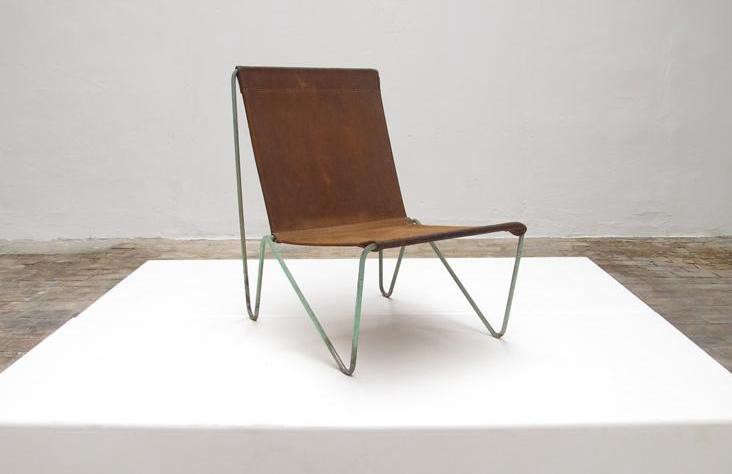
The Panton Bachelor Chair is the kind of chair that looks simple at first glance, then quietly starts showing off. A slim metal frame, a relaxed sling-style seat, a low lounge posture, and just enough Scandinavian cool to make your living room feel like it has opinions about jazz records. Designed by Danish visionary Verner Panton in the early 1950s and produced by Fritz Hansen, the Bachelor Chair is one of those pieces that proves good design does not need to shout. Sometimes it just leans back, crosses its legs, and lets everyone else panic about trends.
Although Panton is best known for the famous plastic Panton Chair, the Bachelor Chair tells a different story. It belongs to the designer’s early period, before the psychedelic interiors, space-age forms, and boldly colored plastic icons took over the design conversation. This chair is quieter, lighter, and more practical, yet it already shows Panton’s fascination with structure, movement, portability, and modern living.
What Is the Panton Bachelor Chair?
The Panton Bachelor Chair is a mid-century lounge chair built around a minimal tubular metal frame and a suspended seat made from fabric, suede, canvas, or similar upholstery depending on the version. Historical examples often feature chrome-plated or nickel-plated steel tubing with suede or canvas seats, while modern versions from Montana Furniture use stainless steel and durable canvas-style upholstery.
The design is low, casual, and slightly rebellious. It is not a throne. It is not a stiff dining chair. It is not the chair your great-aunt covers in plastic and guards like a museum dragon. The Bachelor Chair is meant for easy living: reading, talking, stretching out with a footstool, or sitting in the corner looking effortlessly cultured.
A Brief History of the Bachelor Chair
Verner Panton Before the Pop-Futurist Fame
Verner Panton, born in Denmark in 1926, became one of the most daring designers of the twentieth century. His later work is famous for bright colors, futuristic interiors, molded plastic furniture, and playful lighting. But before he became the master of optical drama, he worked within the world of Danish modernism, learning from architecture, industrial production, and the elegant restraint of Scandinavian furniture.
The Bachelor Chair dates from the early 1950s, with design references commonly placing it around 1952 to 1955. The variation in dates usually reflects the difference between initial design, prototype development, and serial production. Fritz Hansen’s heritage records associate the chair with 1955, while specialist design archives also connect it to the broader 1952–1955 period.
Fritz Hansen and the Rise of Danish Modern Design
Fritz Hansen was already an important name in Danish furniture when Panton’s Bachelor Chair appeared. The company had worked with major designers and helped shape the international reputation of Danish modern design. In that context, the Bachelor Chair stood out because it was lighter, more casual, and easier to disassemble than many traditional lounge chairs.
It was designed for modern homes, smaller spaces, and flexible interiors. Even the name “Bachelor” suggests independence, portability, and a little bit of youthful practicality. It feels like a chair for someone with books, records, one excellent lamp, and possibly no matching dinner plates. In other words: stylish, but not trying too hard.
Design Features That Make the Panton Bachelor Chair Special
1. A Minimal Tubular Frame
The chair’s frame is its visual signature. Early versions used bent metal tubing arranged in a clean, geometric structure. The frame is light but expressive, giving the chair its architectural outline. It has the clarity of a line drawing, except you can actually sit in it without being accused of damaging the art.
2. A Sling Seat That Softens the Geometry
The suspended seat creates a relaxed lounge experience. Instead of relying on bulky upholstery, the Bachelor Chair uses tension and material flexibility. This gives it a casual, almost campaign-chair feeling, but with far more design pedigree. The result is a chair that looks airy rather than heavy, making it useful in small rooms, patios, studios, and open-plan spaces.
3. Disassembly and Portability
One of the most practical aspects of the original design is that it can be taken apart. That may sound ordinary today, when half the furniture in the world arrives in a box with a tiny wrench and a test of emotional endurance. But in the 1950s, a refined lounge chair designed for portability and easy assembly was genuinely forward-thinking.
4. Indoor and Outdoor Flexibility
Modern versions of the Panton Bachelor Chair are often promoted for both indoor and outdoor use. With stainless steel framing and durable canvas upholstery, the chair works in a living room, garden, terrace, sunroom, office lounge, or teenager’s room. It is light enough to move when extra seating is needed, which is excellent news for anyone who enjoys rearranging furniture at 11 p.m. because “the room feels weird.”
Panton Bachelor Chair Dimensions and Materials
Current versions of the Panton Bachelor lounge chair are commonly listed at approximately 52 cm wide, 75 cm high, and 73.5 cm deep, with a low seat height of roughly 33 cm. That low profile is important. It gives the chair its relaxed lounge character and makes it better suited for slow sitting than quick perching.
Historical models vary slightly depending on production period, upholstery, and condition. Vintage examples are often described with steel, chrome, nickel-plated metal, suede, canvas, or fabric. Some were paired with matching ottomans or cushions, making them even more lounge-friendly.
Panton Bachelor Chair vs. Panton Chair
People often confuse the Panton Bachelor Chair with the better-known Panton Chair. The names are similar, but the designs are completely different.
The Panton Chair
The Panton Chair is the famous S-shaped plastic chair developed later with Vitra. It became an icon because of its single-piece molded form, cantilevered shape, and futuristic look. It is bold, sculptural, and instantly recognizable.
The Bachelor Chair
The Bachelor Chair is earlier, lighter, and more restrained. Instead of molded plastic, it uses a metal frame and a sling seat. Instead of looking like it came from a space lounge in 1968, it looks like Danish modernism packed a weekend bag and headed for the coast.
Both chairs reveal Panton’s experimental spirit, but they express it differently. The Panton Chair is theatrical. The Bachelor Chair is clever, relaxed, and quietly radical.
How to Style the Panton Bachelor Chair
In a Living Room
Place the Panton Bachelor Chair near a low coffee table, a wool rug, and a warm floor lamp. Because the frame is open and airy, it will not visually crowd the room. This makes it especially useful in apartments, compact homes, or interiors where every square foot has to earn its rent.
In a Reading Corner
Add a small side table, a textured throw, and a stack of books. The Bachelor Chair works beautifully as a reading chair because it has an informal posture. It invites you to settle in, not sit upright like you are waiting outside the principal’s office.
On a Patio or Terrace
Modern outdoor-friendly versions can bring classic Danish design to patios and gardens. Pair the chair with a simple metal table, terracotta pots, linen cushions, and a cold drink. Suddenly the patio becomes less “forgotten outdoor rectangle” and more “architectural lifestyle moment.”
In a Home Office
The Bachelor Chair is not a task chair, but it makes a great secondary seat in a home office or studio. Use it for reading, brainstorming, phone calls, or pretending to think deeply while actually deciding whether to order another coffee.
Why Collectors Still Love the Panton Bachelor Chair
Collectors value the Bachelor Chair because it represents an early chapter in Verner Panton’s career. It is not merely a beautiful object; it is a clue. It shows the designer exploring lightweight construction, modular thinking, and modern materials before his later work became more colorful and futuristic.
Vintage Fritz Hansen examples can be especially desirable when they retain original upholstery, authentic frames, matching cushions, or ottomans. Condition matters, of course. Patina can add charm, but structural damage, poor reupholstery, or missing parts may reduce value. As with any collectible design piece, provenance is important. Documentation, original catalogs, dealer records, and careful restoration history can make a meaningful difference.
Buying Tips for a Panton Bachelor Chair
Check the Frame
Look closely at the metal tubing. A strong frame should feel stable, not wobbly. Minor wear is normal on vintage pieces, but cracks, severe bending, corrosion, or weak joints deserve caution.
Study the Upholstery
Original suede or canvas may show wear, staining, fading, or stretching. That is not always a problem, especially if you love authentic vintage character. However, if the fabric has been replaced, ask whether the reupholstery respects the original shape and construction.
Confirm the Version
Because the Bachelor Chair has appeared in different materials and production periods, confirm whether you are looking at an original Fritz Hansen piece, a later vintage example, or a modern Montana version. Each has its own appeal. Original pieces may attract collectors; modern versions may suit buyers who want durability, outdoor usability, and easier maintenance.
Measure Your Space
The chair is light in appearance, but it has a lounge-chair footprint. Make sure there is enough depth for comfortable placement. It pairs best with low tables and relaxed seating arrangements rather than tall dining surfaces.
Care and Maintenance
For modern stainless steel and canvas versions, follow the manufacturer’s care instructions. Keep the frame clean, wipe away moisture, and avoid leaving the chair exposed to harsh weather for long periods if you want it to age gracefully. Outdoor-friendly does not mean indestructible. Even superheroes need sunscreen.
For vintage examples, be gentler. Avoid aggressive cleaners, protect suede from moisture, and consult a professional restorer if the upholstery needs serious work. The goal is to preserve the chair’s character without turning it into a shiny imitation of itself.
Experience: Living With the Panton Bachelor Chair
The first thing you notice about the Panton Bachelor Chair in real life is not just its shape. It is the mood it brings into a room. Some chairs arrive and immediately demand attention. The Bachelor Chair behaves differently. It makes the room feel lighter, calmer, and more considered. It has presence, but it does not block the view, interrupt the layout, or behave like a giant upholstered marshmallow.
In a small apartment, that visual lightness matters. A bulky armchair can make a corner feel cramped, but the Bachelor Chair leaves breathing room around itself. You can see through the frame, so the floor, rug, and surrounding furniture remain part of the composition. This is especially useful in modern homes where living rooms often serve as office, reading nook, guest zone, and occasional snack headquarters.
Sitting in the chair feels casual rather than formal. The low seat encourages a relaxed posture, so it is better for slow moments than quick tasks. It is not the chair you choose for typing a spreadsheet for four hours. It is the chair you choose for reading a design magazine, listening to music, scrolling through furniture listings you definitely do not need, or having a long conversation that starts with “just five minutes” and somehow becomes midnight.
The chair also plays well with different styles. In a minimalist room, it adds warmth through texture and history. In a mid-century interior, it feels right at home beside teak, walnut, ceramic lamps, and low tables. In a contemporary space, it introduces a smart vintage note without making the room look like a museum display. It is refined, but not precious. That balance is one of its greatest strengths.
One practical experience is how easy it is to move. The lightweight frame makes rearranging simple, which is surprisingly useful. When guests come over, it can shift into the conversation area. When the sun moves, it can slide toward the window. When you suddenly decide the room needs “better energy,” it can participate without complaining. Many lounge chairs are beautiful until you try to move them and realize they have the personality of a small refrigerator. The Bachelor Chair is much more cooperative.
There is also a tactile pleasure in the contrast between metal and fabric. The frame gives structure; the sling seat gives softness. That tension is exactly what makes the chair visually interesting. It is engineered, but not cold. Relaxed, but not sloppy. Simple, but not boring. In the world of furniture, that is a rare combination. Most chairs manage two of those qualities at best, then ask for applause.
Owning or styling a Panton Bachelor Chair also changes how you think about classic design. It reminds you that “iconic” does not always mean loud. Some icons are famous because they changed materials, production methods, or visual culture in dramatic ways. Others endure because they solve ordinary problems beautifully. The Bachelor Chair belongs to that second category. It is portable, comfortable, efficient, and elegant. It proves that practical furniture can still have soul.
For anyone considering one, the best advice is to think about how you actually live. If you want a sculptural lounge chair that works in flexible spaces, this design makes sense. If you want a deep, overstuffed nap machine, you may want something else. The Bachelor Chair is for people who enjoy furniture with history, clarity, and a little wink of personality. It is not flashy, but it is memorable. Like the best guests at a dinner party, it knows when to speak, when to listen, and when to make the room feel better simply by being there.
Conclusion
The Panton Bachelor Chair remains one of Verner Panton’s most fascinating early designs. It combines Danish modern restraint with practical intelligence, lightweight construction, and a relaxed lounge attitude. Whether you are drawn to an original Fritz Hansen version, a carefully restored vintage piece, or a modern Montana production, the Bachelor Chair offers more than a place to sit. It offers a compact lesson in design history.
Its appeal lies in its balance: metal and fabric, structure and softness, collectibility and everyday use. It is elegant without being fussy, casual without being careless, and historic without feeling trapped in the past. For design lovers, collectors, and homeowners who appreciate furniture with both brains and charm, the Panton Bachelor Chair is still very much worth knowing.