

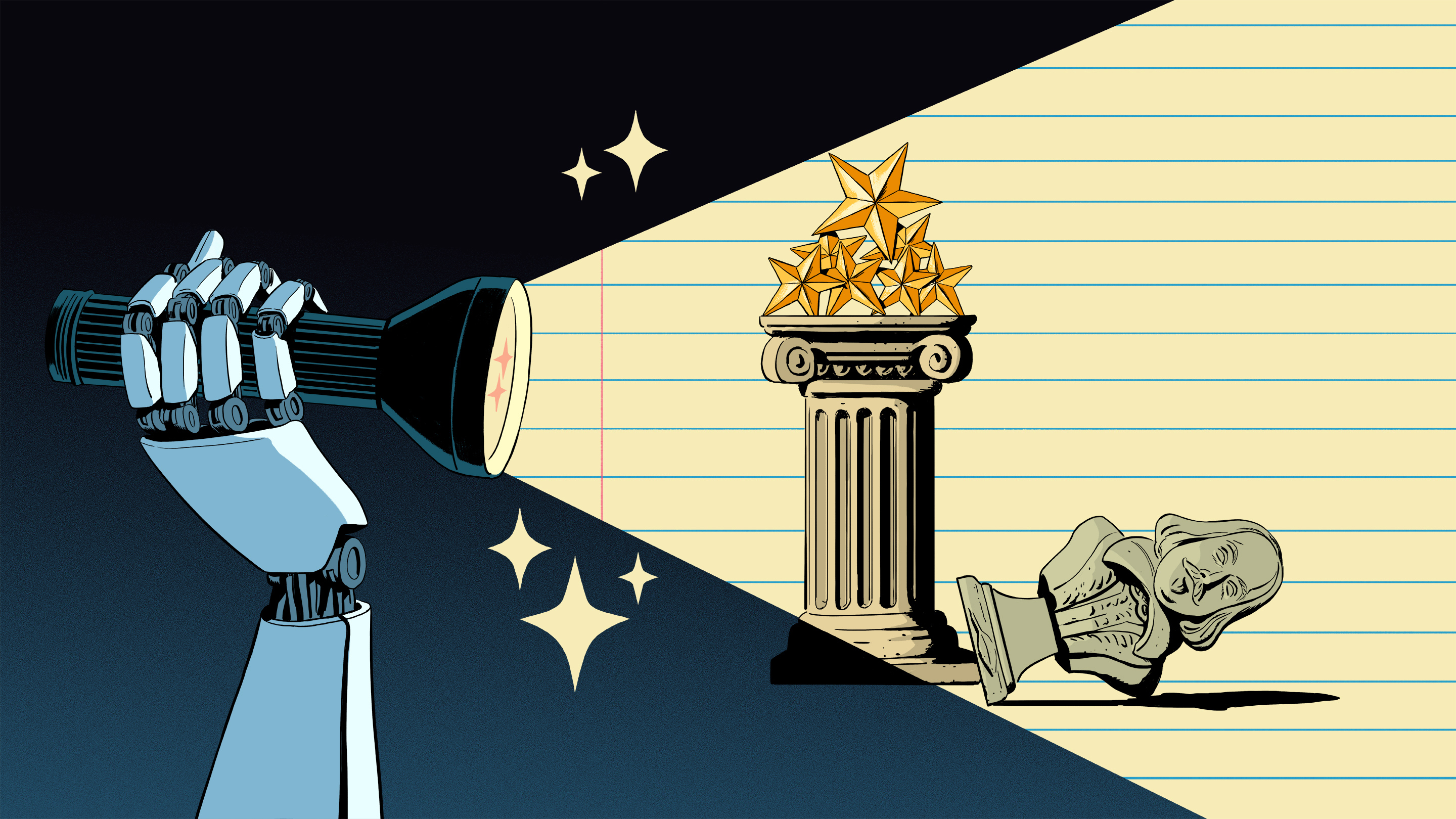
Artificial intelligence has walked into secondary classrooms like a student who did not ask for a hall pass: loudly, confidently, and already holding everyone’s attention. Some students use AI to brainstorm, summarize, translate, quiz themselves, or polish a paragraph. Others use it to complete an assignment while technically moving only three fingers. For secondary teachers, the question is no longer, “How do we keep AI out?” The better question is, “How do we keep learning at the center when AI is everywhere?”
The good news is that teachers do not need to become software engineers, surveillance officers, or full-time prompt detectives. The heart of the work is still familiar: clear goals, meaningful tasks, strong relationships, honest assessment, and daily opportunities for students to think. AI changes the tools, but it does not change the purpose of school. Students still need to read deeply, write clearly, argue with evidence, solve problems, collaborate, create, reflect, and develop the confidence to say, “I understand this because I worked through it.”
This guide offers practical, classroom-tested ways for secondary teachers to prioritize learning despite AI. The goal is not to panic, punish, or pretend. The goal is to redesign the learning environment so students see AI as a tool, not a shortcut around their own brains.
Why AI Feels Like a Crisis in Secondary Classrooms
Generative AI did not create the school problem of “doing work for points.” It simply made the problem impossible to ignore. Many students have learned that the goal of school is to collect grades, finish tasks, protect GPA, and move on. When that becomes the game, AI looks like the world’s most convenient cheat code.
Secondary students are especially vulnerable to this mindset because they are juggling grades, sports, jobs, family responsibilities, social pressure, college plans, and the delightful emotional weather system known as adolescence. If an assignment feels disconnected from real learning, some students will ask, “Why should I spend two hours on this when AI can do it in twenty seconds?” That question may be uncomfortable, but it is also useful. It forces teachers to examine whether assignments truly require thinking, skill-building, and personal engagement.
The Real Challenge Is Motivation, Not Machines
AI is powerful, but it is not magic. It can generate a five-paragraph essay, explain a math process, draft lab conclusions, or summarize a chapter. What it cannot do is replace the long-term benefits of productive struggle. Students still need to wrestle with ideas, test explanations, make mistakes, revise, ask better questions, and connect learning to their own lives.
A classroom that prioritizes learning makes that struggle visible and valuable. Instead of asking only, “Did you submit the final product?” teachers ask, “How did your thinking change? What evidence shaped your answer? What strategy did you try? What feedback did you use? What can you now do that you could not do before?”
Start With Clear Learning Goals
The most effective defense against lazy AI use is not a better detector. It is a better purpose. Students need to know what they are learning, why it matters, and how the task helps them build a skill they will actually need.
Before assigning a task, secondary teachers can ask three simple questions:
- What should students know or be able to do by the end?
- Which parts of the task must come from the student’s own thinking?
- Where, if anywhere, could AI support learning without replacing learning?
For example, if the goal is to practice thesis development, students should create, test, and revise their own thesis statements before using AI for feedback. If the goal is to understand a historical event, students should analyze primary sources directly before asking AI to compare interpretations. If the goal is mathematical reasoning, students should explain their process in their own words rather than submitting a polished AI-generated solution that looks smarter than it is.
Teach AI Literacy Instead of Only AI Rules
Rules matter, but rules alone are not enough. Students need AI literacy: the ability to understand what AI can do, where it fails, how bias can appear, why privacy matters, and how to use AI ethically. Secondary students are old enough to handle honest conversations about technology. In fact, they usually appreciate being treated like thinkers rather than suspects.
AI literacy lessons do not need to take over the curriculum. They can be woven into English, history, science, math, arts, world languages, career and technical education, and advisory periods. A science teacher might have students compare an AI explanation of climate feedback loops with a textbook explanation. An English teacher might ask students to evaluate whether an AI-generated paragraph has evidence, voice, and original insight. A history teacher might show how AI can confidently invent details when prompted poorly. A math teacher might ask students to identify the step where an AI solution goes wrong.
Use the “Trust, But Verify” Routine
One helpful routine is “trust, but verify.” When students use AI, they must check the output against reliable sources, class notes, data, examples, or their own reasoning. This teaches a crucial habit: AI output is not knowledge until a human evaluates it.
Teachers can make this routine concrete with a simple classroom protocol:
- Ask AI a focused question.
- Highlight one useful idea and one questionable idea.
- Verify the questionable idea using a trusted source or class material.
- Explain what changed after verification.
This turns AI from an answer machine into a thinking partner, which is where its classroom value becomes more interesting.
Redesign Assignments Around Process
Assignments built only around final products are easy for AI to imitate. Assignments built around process are much harder to fake and much better for learning. That does not mean every task needs to become a thirty-step project with color-coded binders and a small ceremonial parade. It means teachers should collect evidence of thinking along the way.
In writing, students can submit brainstorming notes, annotated sources, outlines, rough drafts, peer feedback, revision reflections, and final drafts. In science, they can include predictions, lab observations, data analysis notes, error explanations, and conclusions. In math, they can show multiple solution strategies, error analysis, and written reasoning. In social studies, they can turn in source annotations, claim-evidence-reasoning charts, and short oral defenses.
Make Thinking Visible
Visible thinking helps teachers see where students are growing. It also helps students recognize that learning is not the same as producing. A finished essay may look impressive, but a messy draft with thoughtful revisions tells a richer story. A correct answer may be nice, but a student who can explain why three wrong strategies failed is building durable understanding.
Consider adding “process checkpoints” to major assignments. These checkpoints can be short and manageable:
- A one-minute audio explanation of the student’s current thinking.
- A photo of handwritten planning or problem-solving work.
- A brief reflection on the hardest decision made during the task.
- A conference note from a teacher-student conversation.
- A revision log showing what changed and why.
These small artifacts reduce the temptation to outsource the entire task to AI because students know their thinking will be part of the grade.
Clarify Acceptable AI Use
“Do not use AI” is clear, but it is not always realistic. “Use AI responsibly” sounds nice, but students may have no idea what it means. Secondary teachers need practical AI guidelines that match the learning goal.
A helpful approach is to create assignment-specific AI use categories:
- No AI: The task must show only the student’s independent thinking.
- AI for support: Students may use AI for brainstorming, vocabulary help, study questions, or feedback.
- AI with citation or disclosure: Students may use AI, but they must explain exactly how they used it.
- AI as an object of study: Students analyze, critique, improve, or compare AI-generated work.
This approach removes confusion. It also teaches students that ethical technology use depends on context. A calculator is fine during some math tasks and not fine during others. A peer editor can help with revision but should not write the paper. AI works the same way: the boundary depends on the learning goal.
Assess What AI Cannot Easily Replace
If every assessment asks students to produce something AI can generate instantly, frustration is guaranteed. Teachers can reduce that tension by assessing skills that require personal reasoning, classroom context, live performance, and human judgment.
Strong assessment options include:
- In-class writing connected to prior discussion.
- Oral explanations, interviews, and short presentations.
- Project-based learning with local or personal connections.
- Collaborative problem-solving observed by the teacher.
- Portfolios that show growth over time.
- Student reflections that connect choices to feedback.
None of these methods are brand new. AI simply makes them more urgent. A student who can defend a claim, answer follow-up questions, revise after feedback, and connect learning to specific class experiences is demonstrating understanding in ways a generated answer cannot fully capture.
Use Oral Checks Without Turning Class Into a Courtroom
Oral checks can be friendly, quick, and low-pressure. A teacher might ask, “Which sentence are you proudest of and why?” or “What part of this solution gave you trouble?” or “Which source changed your opinion?” Students who did the thinking can usually answer naturally. Students who outsourced the work often discover that the final product knows more than they do, which is awkward for everyone, including the final product.
Build a Classroom Culture Where Learning Beats Points
Students are more likely to misuse AI when they believe school is only about grades. Teachers cannot single-handedly dismantle the entire points-based universe, but they can shift classroom culture. The message should be consistent: learning is the goal, grades are feedback, and mistakes are part of the process.
Practical culture shifts include allowing revisions, grading selected standards rather than every tiny task, using formative feedback before final evaluation, and celebrating improvement. When students know they can revise, ask questions, and recover from mistakes, they are less likely to panic-use AI as a rescue helicopter.
Teachers can also talk openly about productive struggle. A student who spends time thinking through a difficult paragraph or confusing equation is not “slow.” That student is doing the work learning requires. In a world of instant answers, patience becomes an academic superpower.
Use AI to Support Teachers, Not Replace Teacher Judgment
AI can help teachers save time, especially with planning, differentiation, examples, rubrics, discussion questions, parent communication drafts, and practice materials. Used carefully, it can reduce workload and create more space for human teaching. That is a win. Teachers deserve tools that make the job less like juggling flaming notebooks during a thunderstorm.
Still, teacher judgment must stay in charge. AI-generated materials should be checked for accuracy, bias, reading level, cultural relevance, accessibility, and alignment with standards. An AI-created lesson may look polished while quietly missing the point. Teachers know their students. AI does not know that third period needs more movement, that Jamal understands the concept but freezes on tests, or that yesterday’s assembly shortened class by twelve minutes and everyone came back emotionally made of pudding.
Try AI for Differentiation
One useful teacher workflow is asking AI to generate multiple versions of practice questions at different levels. A biology teacher might request three versions of questions about cellular respiration: basic recall, application, and analysis. A history teacher might ask for sentence frames to help multilingual learners explain cause and effect. An English teacher might generate mentor sentences, vocabulary supports, or discussion prompts.
The teacher should then revise the materials. AI gives the first draft; the professional educator gives it a brain, a heart, and a seating chart.
Address Academic Integrity With Fairness and Humanity
Academic integrity matters. Students need to learn honesty, ownership, and responsibility. However, AI detection tools are not perfect, and false accusations can damage trust. Teachers should avoid relying only on detection scores to make serious decisions.
A better approach combines clear policies, process evidence, student conversation, and consistent expectations. If a submission seems suspicious, teachers can ask the student to explain their process, identify key choices, discuss sources, or complete a short related task. The goal is not to “catch” students like a detective in a badly lit hallway. The goal is to protect learning and respond fairly.
Consequences should distinguish between confusion, poor judgment, and intentional deception. A student who used AI for grammar help without disclosure may need instruction on transparency. A student who submitted an entire AI-written essay as original work needs a stronger intervention. In both cases, the response should bring the student back to learning.
Practical Classroom Strategies for Secondary Teachers
1. Add an AI Use Statement to Assignments
Include a short note explaining whether AI is allowed, how it may be used, and what students must disclose. Keep it simple. For example: “You may use AI to brainstorm questions, but your claim, evidence, reasoning, and final wording must be your own. At the end, write two sentences explaining any AI support you used.”
2. Require Reflection After AI Use
Ask students to explain how AI helped, where it was wrong, and what they changed. This keeps the student in the driver’s seat.
3. Use AI Comparison Tasks
Give students an AI-generated answer and ask them to critique it. What is accurate? What is vague? What evidence is missing? How could it be improved? This builds critical thinking while making AI visible.
4. Increase In-Class Creation
Not every major task must happen entirely at home. Begin essays, projects, problem sets, and labs in class so teachers can observe early thinking.
5. Conference More, Grade Less
A two-minute student conference can reveal more than a stack of polished submissions. Ask targeted questions and jot quick notes.
6. Teach Prompting as Question Design
Good prompting is really good questioning. Students should learn to ask specific, ethical, useful questions and evaluate the answers carefully.
7. Protect Student Privacy
Students should not paste personal information, private data, or sensitive school content into AI tools. Teachers should follow district guidance and choose approved tools whenever possible.
Experiences From the Classroom: What Prioritizing Learning Despite AI Can Look Like
Imagine a ninth-grade English class beginning a unit on argument writing. In the old version, students might have received a prompt, written an essay at home, and submitted it two weeks later. In the AI era, that structure practically sends an engraved invitation to outsource the thinking. A learning-first version looks different. Students begin by debating the topic in class. They list claims on chart paper, sort evidence by strength, and write a rough thesis by hand. The teacher walks around, asks questions, and notes who is struggling with reasoning. Only after students have a working claim do they use AI as a critic: “What counterargument might someone make?” Students then decide whether the AI suggestion is useful. The final essay is not just a product; it is the visible result of discussion, drafting, revision, and judgment.
In a high school biology class, AI can become a lab partner that is not allowed to touch the equipment. Students conduct an experiment, record observations, and analyze their own data first. Then they ask AI to suggest possible sources of error. Some suggestions are helpful; others do not fit the actual classroom procedure. Students must explain which suggestions apply and which do not. This turns AI into a tool for metacognition. Instead of letting a machine write the conclusion, students use it to sharpen their own scientific reasoning.
A middle school social studies teacher might use AI to strengthen source evaluation. Students compare a textbook passage, a primary source excerpt, and an AI summary of the same event. They highlight differences, identify missing context, and discuss why historical interpretation requires evidence. The lesson becomes more than “AI can be wrong.” It becomes “knowledge is built by checking claims, comparing perspectives, and asking who benefits from a particular version of the story.”
In math, a teacher might give students an AI-generated solution that contains a subtle error. Students work in pairs to find the mistake, correct it, and explain why the error matters. This is powerful because students are not passively receiving an answer. They are diagnosing reasoning. That skill transfers far beyond one equation. It teaches students to slow down, inspect logic, and trust their own mathematical sense.
One of the most important experiences for secondary teachers is realizing that students are not all using AI in the same way. Some use it to cheat. Some use it because they are overwhelmed. Some use it because they do not understand the assignment. Some use it to translate, organize, or get unstuck. Some are genuinely curious. A learning-first classroom makes room for these differences. Instead of treating every AI use as a moral emergency, teachers can ask, “What support did this student need? What skill was missing? What expectation was unclear? What structure would make learning more likely next time?”
Teachers also learn that transparency works better than secrecy. When a teacher models AI use in front of students, the mystery fades. Students see that AI can produce bland writing, make factual mistakes, overstate confidence, and offer useful suggestions. They also see the teacher questioning, editing, rejecting, and improving the output. That modeling is valuable. It shows students that responsible AI use is not copying and pasting. It is thinking with a tool while remaining accountable for the final result.
Perhaps the most encouraging classroom experience is watching students take pride in work that clearly belongs to them. A student’s draft may be imperfect, but it has a voice. A project may be messy, but it reflects real decisions. A presentation may include nervous pauses, but the student can answer questions honestly. In those moments, teachers remember the point. AI can generate text, but it cannot generate a student’s growth. It cannot replace the confidence that comes from struggling through confusion and arriving at understanding.
Conclusion: Keep the Main Thing the Main Thing
AI will keep changing. Tools will become faster, smoother, and harder to detect. Some school policies will improve; others will lag behind. Students will experiment. Teachers will adapt. Through all of it, the central mission remains steady: help young people learn deeply, think critically, act ethically, and develop the skills they need for a complicated world.
Prioritizing learning despite AI does not mean rejecting technology. It means refusing to let technology define the purpose of education. Secondary teachers can design assignments that value process, teach AI literacy, clarify expectations, use assessment wisely, and build classroom cultures where growth matters more than points. AI may be able to produce an answer, but education is about helping students become the kind of people who can question, improve, and own their answers.
Note: This publication-ready article synthesizes current U.S.-based education guidance and classroom practice on AI literacy, academic integrity, assessment, teacher judgment, student privacy, and responsible AI use. No source-link placeholders or citation artifacts are included.