

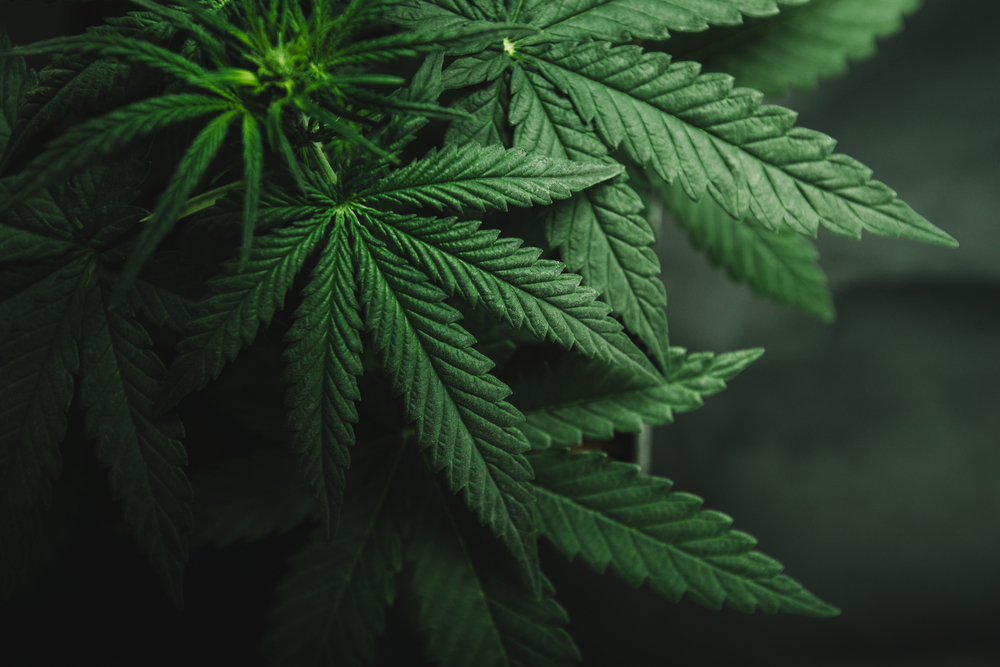
Cannabis might be one of the few topics in America that can start a debate at a dinner table, a doctor’s office, a statehouse, and a group text all at once. Depending on who is talking, it is either a misunderstood plant, a public-health headache, a medical tool, a legal mess, or all four before dessert. That is exactly why this conversation needs more light and less smoke.
For years, the public discussion around marijuana has swung between two cartoonish extremes. On one side, cannabis gets treated like a miracle leaf that can do no wrong. On the other, it is framed as a one-way ticket to disaster. Reality, as usual, is less dramatic and far more useful. Cannabis can affect the brain and body. It can impair driving. It can pose real risks for teens, pregnant people, and children who accidentally ingest THC products. It can also play a legitimate role in certain medical settings, though the strongest evidence is narrower than many headlines suggest.
So what exactly can cannabis do, and what can’t it do? Let’s sort the facts from the fog and talk honestly about health, safety, law, and everyday life.
What cannabis can do
It can change how you think, feel, and function
This is the most obvious point, but it is also the one people love to pretend is either trivial or shocking. Cannabis is psychoactive when it contains THC, which means it can alter mood, perception, coordination, reaction time, and judgment. In plain English: it can make people feel relaxed or euphoric, but it can also make ordinary tasks less safe and clear-headed than they seem in the moment.
That matters most when cannabis and daily responsibilities collide. Driving, biking in traffic, supervising kids, handling tools, or making fast decisions are all activities that depend on alertness. Cannabis is not a magic pause button for consequences. If your brain is working differently, your risk profile is working differently too.
It can have legitimate medical value in limited situations
This is where nuance earns its paycheck. Cannabis and cannabinoids are not medically useless. Some cannabinoid-based medicines have recognized benefits for specific conditions. In the United States, certain cannabinoid drugs have approved uses, including rare seizure disorders and some cases of chemotherapy-related nausea and vomiting. There is also evidence suggesting modest benefit in some cases of chronic pain or multiple sclerosis symptoms.
But “some medical value” is not the same as “helpful for absolutely everything with a pulse.” Cannabis is not a universal cure-all, and the evidence is uneven across conditions. That difference matters because internet enthusiasm tends to sprint far ahead of clinical proof.
It can create public confusion faster than almost any other substance
Few products arrive wrapped in as much legal and marketing confusion as cannabis. Some people assume that if a product is sold openly in one state, it must be fully legal everywhere. Not true. Others assume that if something is labeled hemp, CBD, or delta-8, it must be mild, regulated, and predictable. Also not true. The cannabis marketplace has a bad habit of making consumers feel informed while quietly asking them to guess.
And guessing is a poor safety strategy. Potency varies. Labels can be misleading. “Natural” does not automatically mean safe, gentle, or appropriate for everyone. Arsenic is natural too, and nobody is putting that in a wellness smoothie.
What cannabis can’t do
It can’t erase risk just because it is popular
One of the strangest features of modern cannabis culture is the belief that wider acceptance equals lower risk. That is not how biology works. Plenty of Americans now live in places where medical or adult-use cannabis is allowed under state law, but popularity is not the same thing as harmlessness. Public-health agencies continue to warn about impairment, dependence, accidental poisonings, and the effects of cannabis on the developing brain.
The lesson here is simple: a shifting social norm does not rewrite human physiology. A substance can be common and still have downsides. Ask sugar. Ask alcohol. Ask any adult who has tried to assemble furniture after two margaritas and a strong opinion.
It can’t make driving safe
This one deserves neon lights. Cannabis can impair coordination, reaction time, attention, and decision-making. That means it does not belong in the driver’s seat, no matter how confident someone feels. In fact, confidence can be part of the problem. People often judge their own impairment poorly, which is a deeply unhelpful talent when several thousand pounds of metal are involved.
Mixing cannabis with alcohol or other substances raises the risk even more. The body does not hand out bonus points for multitasking badly.
It can’t fix weak evidence with strong marketing
Cannabis advertising often speaks in a fluent dialect of suggestion. Supports calm. Promotes balance. Helps wellness. Encourages recovery. Sounds nice. Says almost nothing. When products start hinting that they can diagnose, treat, prevent, or cure diseases without going through proper approval pathways, regulators tend to notice for a reason.
Consumers deserve a boring but important truth: medical claims should be backed by solid evidence, not by leafy packaging, vague promises, or a cousin who swears a gummy changed his life and his playlist.
The legal reality: easier to buy than to understand
As of early 2026, cannabis remains a legal patchwork in the United States. Many states allow medical cannabis, and a substantial number also permit adult non-medical use under state law. But federal law still creates a separate, conflicting framework. That conflict is not just political theater. It affects banking, employment, travel, research, product regulation, and consumer expectations.
In other words, cannabis can be allowed by your state and still complicated by federal rules. It can be sold nearby and still create issues with your employer, your landlord, your insurance paperwork, or your travel plans. That disconnect is one reason the cannabis conversation feels so weirdly modern: the storefront says “normalized,” while the fine print says “please read all 37 exceptions.”
The proposed federal rescheduling debate has only added to the confusion. Many people hear “proposal” and assume “done deal.” Not so fast. A proposal is not a finished policy, and legal headlines tend to sprint ahead of legal reality.
The health reality: who faces the biggest concerns?
Teens and young adults
The younger the brain, the less casual the conversation should be. Health agencies have repeatedly warned that cannabis use during adolescence is associated with increased risks involving attention, learning, memory, and mental health. Not every young person who uses cannabis will experience the same problems, but early and frequent use is not a harmless experiment just because it is common.
This is one area where adult jokes about “it’s just weed” stop being funny. A developing brain is not a testing lab for internet myths.
Pregnancy and breastfeeding
Pregnancy is another area where the evidence points toward caution, not vibes. Medical organizations and public-health agencies advise against cannabis use during pregnancy and lactation because THC can reach the baby and may affect development. This is not a corner of healthcare where “probably fine” should be treated as good enough.
The same goes for using cannabis as a self-directed remedy for pregnancy discomfort. Relief matters, but so does evidence, and pregnancy is not the time to let social media become your OB-GYN.
Children in the home
When THC products look like candy, snacks, or baked treats, accidental ingestion becomes a real hazard. This is one of the most alarming trends tied to the modern cannabis marketplace. Children can become seriously ill after consuming THC products, and emergency visits have risen in this area. Whatever adults think about legalization, child safety should not be controversial.
If a product can be mistaken for a gummy bear, a brownie bite, or a piece of candy, then storage is not a small detail. It is the whole ballgame.
People with heart, lung, or mental health concerns
Cannabis is not just a brain story. Smoking cannabis can irritate the lungs and contribute to symptoms such as cough, wheeze, and bronchitis. Emerging evidence also points to cardiovascular concerns, particularly in some users and patterns of use. And for people with certain mental health vulnerabilities, cannabis can intensify anxiety, paranoia, or psychotic symptoms.
That does not mean every user will experience the same effect. It does mean that blanket statements like “it’s safer than everything else” are lazy and medically unhelpful.
Medical cannabis is not the same as casual cannabis
One of the biggest public misunderstandings is the idea that all cannabis use exists on the same evidence level. It does not. There is a major difference between a prescribed, standardized cannabinoid medication used for a specific condition and a loosely regulated product bought because the label promised “premium plant vibes” in elegant serif font.
When doctors talk about evidence, dosage, interactions, side effects, and specific conditions, they are speaking the language of medicine. When marketing copy talks about unlocking your inner calm with tropical flavor notes, it is speaking the language of commerce. Those two languages should never be confused, though they often share a shelf.
Cannabis can also interact with medications, and CBD is not exempt from that concern. A product does not need to make you feel high to make your healthcare more complicated.
So what is the smartest way to think about cannabis?
The smartest view is neither panic nor worship. Cannabis is a substance with real effects, real risks, real policy confusion, and some real but limited medical roles. It deserves the same adult treatment we should give any health-related issue: evidence first, slogans last.
If someone is trying to decide how cannabis fits into their life, the right questions are practical ones. Is this legal where I am? Is it safe for my age and health status? Could it affect driving, school, work, pregnancy, parenting, or medications? Is this a medically supervised decision or a marketing-influenced gamble? Those questions are less glamorous than online hot takes, but much more useful.
The can and can’t of cannabis comes down to this: cannabis can help in some narrow contexts, can harm in others, and can confuse almost everyone if they stop reading after the first headline. It cannot replace evidence, cannot suspend common sense, and cannot turn a complicated public-health issue into a simple one-liner.
Real-world experiences around cannabis: where the confusion shows up
Talk to enough people about cannabis and a pattern appears: the biggest experience is not always intoxication, relief, or controversy. Often, it is confusion. A middle-aged patient may hear from a friend that cannabis helps pain and assume that means every product at every shop is medically meaningful. Then they talk to a doctor and discover that the evidence is more modest, that certain products are better studied than others, and that their blood thinner or other medication could complicate things. The experience is not “miracle cure” or “government scare tactic.” It is usually more like, “Wow, this is more complicated than I thought.”
Parents often describe a completely different experience: not curiosity, but anxiety. For them, cannabis becomes real when a brightly packaged edible looks far too much like ordinary candy. They are not debating public policy at that moment. They are thinking about kitchen counters, backpacks, sleepovers, and whether a visiting relative left something where a child could find it. In many households, the cannabis conversation shifts from abstract politics to practical safety very quickly.
Then there is the traveler’s experience, which is basically one long encounter with fine print. Someone may live in a state where cannabis is permitted, feel perfectly comfortable with that fact, and then run into restrictions tied to airports, workplaces, rental agreements, or destinations with very different rules. This is where the American cannabis landscape feels especially odd. People assume legality travels with them like a driver’s license. It often does not. The result is a lot of last-minute internet searching and a lot of “Wait, seriously?”
Healthcare workers see yet another version of the experience. They meet patients who are genuinely trying to make informed choices but have been handed a pile of mixed messages. One article says cannabis is harmless. Another says it is dangerous in every form. A product label suggests wellness. A regulator issues a warning. A patient may walk into an appointment thinking they are asking a simple question and walk out realizing they were actually asking five separate ones about safety, interactions, dosage, legality, and goals. That kind of uncertainty is common, not rare.
Older adults often describe cannabis with a mix of skepticism and surprise. Many grew up hearing one message about marijuana and are now watching it appear in polished stores, wellness ads, and family conversations. Some are curious because of pain, sleep issues, or stories from friends. Others are uneasy because they already manage heart conditions, medications, or fall risk. Their experience is often less about culture wars and more about risk management. They want straight answers, not a lecture and not a sales pitch.
Even people who support legalization frequently describe feeling overwhelmed by the marketplace itself. Terms like THC, CBD, hemp-derived, delta-8, full-spectrum, live resin, and cannabinoid blend can make a shopping shelf read like a chemistry quiz written by a branding agency. That experience matters because confusion is not harmless. When people do not clearly understand what they are dealing with, they are more likely to make poor assumptions about strength, timing, side effects, and safety.
In the end, the lived experience around cannabis in America is less about one dramatic story and more about many ordinary moments: a patient asking careful questions, a parent locking up products, a doctor correcting myths, a traveler discovering legal gray areas, and a family trying to separate evidence from hype. That is the real cannabis story. Not just the plant, but the uncertainty surrounding it.
Conclusion
Cannabis is not all good, all bad, all medicine, or all menace. It is a complicated substance sitting inside an even more complicated system of science, policy, marketing, and personal choice. The smartest response is not blind fear or blind faith. It is informed caution.
If the public conversation gets one upgrade this year, let it be this: less mythology, more accuracy. Cannabis can do some things. It can’t do everything. And in a topic this messy, honest limits are more useful than flashy promises.
Note: This article is for informational and educational purposes only. It is not medical or legal advice, and it does not encourage cannabis use. Laws vary by jurisdiction, and health risks vary by age, product type, medical history, pregnancy status, and possible medication interactions.