

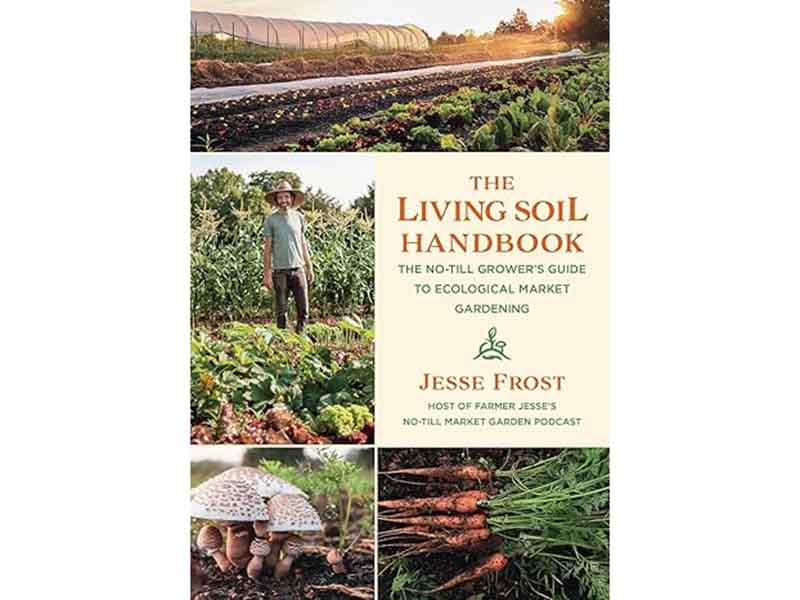
Some gardening books tell you how to grow lettuce. The Living Soil Handbook: The No-Till Grower’s Guide to Ecological Market Gardening points at the ground, clears its throat, and says, “Actually, the lettuce is only the intern. The soil is the CEO.”
Inspired by the practical no-till market gardening movement popularized by farmer-writer Jesse Frost, this guide is really about changing the grower’s relationship with soil. Instead of treating the garden bed like a mixing bowl that must be stirred every spring, ecological market gardening sees soil as a living system: fungi, bacteria, worms, roots, minerals, moisture, air, and organic matter all working together like a tiny underground city with terrible lighting but excellent productivity.
No-till gardening is not laziness with a pitchfork allergy. It is a deliberate system built around minimal soil disturbance, permanent beds, compost, mulch, cover crops, crop rotation, careful irrigation, and smart observation. For market gardeners, the goal is not simply to grow pretty carrots for Instagram. The goal is to build soil that becomes more resilient, fertile, and profitable over time.
What Is Living Soil?
Living soil is soil managed as an ecosystem rather than as a dead growing medium. It contains minerals, organic matter, water, air, roots, and billions of microorganisms. These life forms help cycle nutrients, build soil structure, improve water infiltration, and support healthier crops.
In conventional thinking, fertility often means “What should I add?” In living-soil thinking, fertility begins with a better question: “What is already happening below the surface, and how can I stop interrupting it?” That interruption often comes from excessive tillage, bare soil, poor rotation, overwatering, compaction, and treating compost like confetti at a parade.
Why No-Till Market Gardening Works
No-till market gardening is especially attractive to small-scale growers because it can reduce machinery needs, protect soil structure, improve bed consistency, and make crop turnover faster. Instead of plowing or rototilling before every planting, growers use permanent beds and feed the soil from the top down with compost, mulch, plant residues, and living roots.
1. Minimal Soil Disturbance
Tillage can temporarily make soil look fluffy and obedient, but it often breaks fungal networks, oxidizes organic matter, exposes weed seeds, and damages soil structure. No-till systems aim to disturb the soil as little as possible. A broadfork may be used occasionally to loosen compacted beds without inverting layers, but the rototiller is no longer the main character.
2. Permanent Beds
Permanent beds are the backbone of many ecological market gardens. Paths stay paths. Beds stay beds. Feet, carts, and harvest crates do not wander across growing areas like tourists in a museum. This helps prevent compaction and creates predictable spaces for seeding, transplanting, irrigation, and harvest.
3. Soil Cover
Bare soil is nature’s awkward silence. If a grower leaves soil uncovered, nature usually fills it with weeds. No-till growers keep soil covered with living crops, cover crops, mulch, crop residue, tarps, or compost. Cover protects the surface from erosion, temperature swings, crusting, and moisture loss.
4. Living Roots
Living roots feed soil biology. Plants release root exudates that support microorganisms, and those organisms help make nutrients available in return. A no-till garden tries to keep something growing whenever practical, whether that is a cash crop, a cover crop, or a relay planting.
5. Diversity
A market garden with only one crop is like a playlist with one song. Technically functional, but emotionally suspicious. Crop diversity supports more diverse soil life and helps disrupt pest and disease cycles. Rotating plant families, mixing flowers into vegetable systems, and using varied cover crops all contribute to ecological balance.
The Role of Compost in No-Till Beds
Compost is often the gateway into no-till gardening because it is visible, accessible, and satisfying. Spread a layer of compost on a bed, transplant into it, and suddenly you feel like a soil wizard. But compost should be used thoughtfully.
Good compost improves soil structure, supports microbial activity, contributes nutrients, and helps the soil hold water. However, more is not always better. Repeated heavy compost applications can lead to nutrient imbalances, especially phosphorus buildup. Serious growers should use soil tests, observe crop performance, and adjust applications based on actual need rather than the ancient farming method known as “vibes.”
Cover Crops: The Green Workforce
Cover crops are plants grown not primarily for sale but for what they do for the soil. Rye, oats, clover, vetch, peas, buckwheat, radish, sorghum-sudangrass, and other species can protect soil, add biomass, support beneficial insects, scavenge nutrients, fix nitrogen, and reduce weed pressure.
In a no-till market garden, cover crops must be chosen carefully because vegetable rotations are fast and space is valuable. A grower might use oats and peas before winter because they winter-kill in many climates, leaving a manageable residue. Buckwheat can be used in short summer gaps. Clover may serve between longer rotations. Winter rye produces excellent biomass but can become a management wrestling match if not terminated properly.
Cover Crop Timing Matters
The best cover crop is not simply the one that looks impressive. It is the one that fits the rotation. A bed needed for early carrots should not be locked under a vigorous overwintered rye crop that refuses to die until June. Likewise, a bed sitting empty after spring greens is begging for a summer cover crop instead of becoming a weed nightclub.
Tarping and Occultation
Tarping, sometimes called occultation, uses light-blocking plastic tarps to suppress weeds, encourage residue breakdown, and prepare beds without tillage. For small farms, tarps can be extremely useful. They can create stale seedbeds, protect soil from excessive rain, terminate tender crops, and help with fast bed flips.
Still, tarps are tools, not magic carpets. Leaving a bed tarped for too long means there are no living roots feeding soil biology. The smartest growers use tarps strategically: to solve specific timing and weed problems, not to replace ecological management altogether.
Weed Management Without Tillage
Many growers fear that giving up tillage means surrendering to weeds. In reality, no-till weed management can be excellent when the system is managed well. The key is prevention.
Permanent beds reduce the number of weed seeds brought to the surface. Compost mulch can bury tiny seedlings. Tarps can flush and kill weeds before planting. Dense crop spacing shades the soil. Cover crops occupy open windows. Hand tools like flame weeders, collinear hoes, wire weeders, and stirrup hoes handle small weeds before they graduate into botanical criminals.
The Golden Rule of Weed Control
Kill weeds when they are small. A weed at thread stage is a gentle suggestion. A weed with a taproot, flowers, and a five-year plan is a management failure wearing leaves.
Water, Mulch, and Soil Structure
Healthy no-till soil often holds water better because organic matter, aggregates, fungal networks, and root channels improve infiltration and storage. Mulch and compost protect the surface from drying. Drip irrigation works especially well in permanent beds because lines can stay organized and water can be delivered directly where plants need it.
However, no-till systems can also warm more slowly in spring, especially under heavy mulch or residue. Market gardeners must pay attention to climate, soil texture, and crop needs. In cool regions, early beds may need lighter mulch, clear scheduling, or temporary covers to encourage warmth.
Fertility in Ecological Market Gardening
Fertility in no-till gardening is not a one-time input; it is an ongoing conversation. Soil tests identify mineral levels and pH. Compost adds organic matter and nutrients. Cover crops capture and cycle fertility. Mulches reduce loss. Microbes help transform nutrients into plant-available forms.
Growers may still use organic amendments such as feather meal, fish meal, kelp meal, gypsum, lime, or rock phosphate when tests show a need. The difference is that amendments are used as corrections, not as blind annual rituals.
Crop Rotation and Pest Balance
Crop rotation matters even in small gardens. Replanting the same family in the same bed invites disease pressure and nutrient imbalance. Tomatoes, peppers, potatoes, and eggplants belong to the nightshade family. Cabbage, kale, broccoli, and radishes are brassicas. Carrots, cilantro, parsley, and dill are in the carrot family. Rotating these groups helps reduce recurring problems.
Ecological growers also plant flowers and habitat strips to support pollinators and beneficial insects. Sweet alyssum, dill, cilantro flowers, calendula, yarrow, and native flowering plants can attract insects that help manage pests. The goal is not a sterile garden. The goal is a balanced one.
Tools for the No-Till Market Gardener
No-till growers do not need a barn full of iron, but they do need thoughtful tools. Useful tools may include broadforks, tilthers, seeders, flame weeders, silage tarps, compost spreaders, wheel hoes, harvest knives, wash stations, drip irrigation, and durable row cover. The best tool is the one that saves labor without damaging the soil system.
Small-scale farming is often a game of minutes. If a tool saves thirty seconds per bed and you use it two hundred times a season, that is no longer a tool. That is a tiny employee who never asks for lunch.
Common Mistakes in No-Till Gardening
Using Too Much Compost
Compost is wonderful, but excessive compost can overload nutrients. Test soil regularly and match compost use to crop demand.
Leaving Soil Bare
Bare soil leads to weeds, erosion, crusting, and moisture loss. Keep beds covered with crops, cover crops, mulch, or compost.
Ignoring Compaction
No-till does not automatically fix compaction. Keep traffic in paths, use permanent beds, and loosen compacted soil carefully when needed.
Being Too Dogmatic
No-till is a principle, not a religion. Sometimes a grower must correct a serious soil issue, reshape a bed, or manage a disaster. The goal is less disturbance over time, not moral panic over a shovel.
A Practical No-Till Bed Preparation Example
Imagine a 30-inch-wide permanent bed that just finished producing lettuce. The crop residue is cut at the soil line, leaving roots in place. A thin layer of compost is added. The bed is covered with a tarp for two weeks to soften residue and suppress tiny weeds. After the tarp is removed, drip irrigation is checked, the surface is lightly raked, and transplants are set into the bed. The soil was never inverted, the microbial community stayed mostly intact, and the next crop moves in like a responsible tenant.
Why This System Matters for Market Farmers
Market gardening is not backyard gardening with a cash box. It is a business. Beds must produce on schedule. Crops must be harvested efficiently. Soil must improve while also paying bills. No-till ecological growing offers a path toward long-term productivity because it treats soil health as business infrastructure.
Healthy soil can reduce irrigation stress, improve crop quality, support better yields, and make the farm more resilient during extreme weather. It can also improve the daily experience of farming. Working rich, covered, biologically active beds is simply more pleasant than fighting compacted, crusted, exhausted soil every season.
Experience Notes: Lessons from Living Soil in Practice
The first experience many growers have with no-till is not spiritual enlightenment. It is usually confusion. The bed looks too still. Nobody is revving a tiller. No gasoline smell announces the beginning of spring. You spread compost, tuck in transplants, water carefully, and wonder whether you are gardening or simply decorating dirt.
Then the changes begin. The soil surface stops crusting after rain. Earthworms appear under mulch. Seedlings recover from transplanting faster. Beds become easier to prepare because they are no longer rebuilt from scratch every season. The garden starts to feel less like a construction site and more like a living workplace.
One of the most useful lessons is that observation beats panic. If a crop looks pale, the beginner often reaches for fertilizer immediately. A more experienced no-till grower asks better questions. Is the soil too cold? Is it too wet? Was the compost mature? Is nitrogen tied up in heavy carbon residue? Did the crop follow a hungry feeder? Did the bed need a soil test six months ago instead of a dramatic rescue mission today?
Another lesson is that no-till rewards planning. Fast crop turnover feels easy only when the next crop, compost, irrigation, row cover, and harvest schedule are already considered. A no-till system can be beautifully efficient, but it is not random. The grower must think several weeks ahead, especially with cover crops and tarps. Put a tarp down too late, and weeds laugh. Plant a cover crop too close to the next cash crop window, and you may create biomass at the exact moment you need a clean seedbed.
There is also a humility lesson. Living soil does not obey spreadsheets perfectly. One bed may thrive while another sulks because of past compaction, drainage, shade, or nutrient imbalance. The solution is rarely one heroic action. It is usually a sequence of small improvements: keep traffic off the bed, add measured compost, improve drainage, rotate crops, cover the soil, and give biology time to work.
The most satisfying experience is harvesting from a bed that has been cared for over multiple seasons. The soil is darker, more crumbly, easier to plant, and more forgiving during dry spells. Pulling carrots from that kind of bed feels less like extraction and more like cooperation. The grower did not force the soil into productivity. The grower created conditions where productivity became the soil’s natural response.
That is the quiet brilliance of The Living Soil Handbook philosophy. It does not promise that no-till market gardening is effortless. Farming is still farming. There will be flea beetles, weird weather, late nights, and at least one hose fitting that chooses betrayal. But it offers a better framework: feed the soil, protect the soil, disturb it less, keep it alive, and let the garden become more capable every year.
Conclusion
The Living Soil Handbook: The No-Till Grower’s Guide to Ecological Market Gardening is more than a title; it is a practical invitation to rethink how food is grown at human scale. No-till market gardening combines soil biology, compost, cover crops, mulch, permanent beds, tarping, crop rotation, and careful observation into one resilient system.
The heart of the method is simple: stop treating soil like a disposable input and start treating it like a living partner. When growers disturb less, cover more, plant often, diversify crops, and use compost intelligently, the soil can become healthier year after year. That healthier soil can support stronger plants, better harvests, fewer crises, and a market garden that works with nature instead of constantly arm-wrestling it.
No-till is not about doing nothing. It is about doing the right things with better timing, lighter hands, and more respect for the underground workforce that never appears on the payroll but keeps the whole farm alive.